Discoveries
“Yartsa Gunbu: The Billion-Dollar Fungus That Rivals Gold”. AI-Generated.
The Green Fortune: The Narrative of the Most Costly Plant Ever Unearthed In a realm where assets such as gold, diamonds, and petroleum are esteemed for their significance, few would contemplate that an unassuming plant could compete with these in value. Nevertheless, throughout history, certain flora have become invaluableeither due to scarcity, therapeutic qualities, spiritual relevance, or considerable market demand. Among these, one distinguishes itself: Yartsa Gunbu, often described as the “Himalayan Viagra,” recognized as the most costly plant-derived substance on Earth by weight. This article investigates the history, cultural significance, economic aspects, and controversies surrounding this enigmatic fungus-plant hybrid that has fascinated emperors, herbalists, traffickers, and global markets for centuries. What is Yartsa Gunbu? Yartsa Gunbu (Ophiocordyceps sinensis) is a parasitic fungus that infiltrates ghost moth larvae entombed in alpine meadows. Over time, the fungus consumes and mummifies the insect from within, ultimately producing a blade-like stalk from its head that protrudes from the earth. Although scientifically classified as a fungus, its traditional application as a medicinal "plant" in Traditional Chinese Medicine (TCM) and Tibetan Medicine has led to its cultural and commercial classification alongside rare herbs like ginseng and saffron. Its moniker, “Himalayan Viagra,” derives from its alleged aphrodisiac and energy-enhancing attributes. However, its medicinal applications extend beyond sexual enhancementclaims include curing cancer and enhancing immunity, endurance, and lifespan. A History Rooted in Mountains and Myths Yartsa Gunbu has been harvested and esteemed for over a millennium throughout the high-altitude regions of Tibet, Nepal, Bhutan, and northern India. The earliest documented references appear in Tibetan literature around the 15th century, where it was lauded for enhancing vitality in both humans and animals. Its reputation expanded significantly during the Ming and Qing dynasties in China, where emperors and affluent families sought it as a luxury remedy. By the 1700s, it had reached imperial courts in China and was believed to be so potent that it was reserved for emperors and warriors. In the 20th century, as China opened to international markets and traditional medicine re-emerged as a luxury, the demand for Yartsa Gunbu soared. By the 2000s, it emerged as one of the most profitable commodities obtained from the Himalayas. The Cost of Nature’s Gold So just how costly is Yartsa Gunbu? Its worth fluctuates based on quality, size, and freshness, but at its pinnacle: Top-tier specimens commanded over $140,000 per kilogram. Even mid-tier variants fetched $20,000–$40,000 per kilogram. In comparison, that is 3–4 times the value of gold by weight. Harvested within a brief window each spring, locals risk their lives ascending to altitudes exceeding 4,000 meters to extract it from frozen soil. Entire Himalayan communities rely on the annual harvest for sustenance, with some families earning year-round incomes from just a few weeks of collection. Its rarity, the limited harvesting period, and soaring demand in China and Southeast Asia all contribute to its astronomical value. Cultural and Medicinal Importance To traditional medicine practitioners, Yartsa Gunbu is regarded as a “valuable warming tonic”, believed to balance the body’s energy and enhance life force. It is prescribed for: Chronic exhaustion Sexual impairment Respiratory issues Hepatic and renal ailments Immunodeficiency conditions While contemporary science often questions many of these assertions, recent studies have validated antioxidant, antimicrobial, and anti-inflammatory characteristics, and its chemical constituents (like cordycepin) exhibit promise in oncological treatment. In China, it is also regarded as a representation of prestige and healthcommonly bestowed during commercial transactions and diplomatic interactions. Environmental and Ethical Issues With value arises consequence. The increase in demand has resulted in: Overexploitation: Numerous areas report diminishing outputs, jeopardizing both the fungus and the ecological system. Illicit trade: Its worth incites smuggling and corruption. Certain Himalayan territories now necessitate permits and impose quotas. Violence and discord: In Nepal and Tibet, harvest seasons have sparked territorial conflicts, even homicides among gatherers. Fraud: Imitations or chemically enhanced variants inundate markets, endangering consumers. In response, governments and NGOs have initiated programs for the sustainable harvesting and cultivation of the fungus, although cultivation has proven to be exceptionally challenging due to its intricate life cycle. The Future of the Priciest Plant Notwithstanding its mythical reputation, Yartsa Gunbu may be endangered by climate change, which is modifying the fragile alpine habitats it requires to prosper. Coupled with overharvesting, its long-term existence in nature is dubious. Simultaneously, researchers are striving to cultivate Cordyceps artificially in laboratories, which may eventually provide a sustainable substitute, although present lab-cultivated variants lack the prestige and potency associated with wild specimens. Nonetheless, to date, no plant or natural material commands the same worth per gram as wild Yartsa Gunbu. Conclusion The narrative of Yartsa Gunbu serves as a compelling reminder of the interplay between nature, tradition, and economics. From elevated terrains to royal estates and high-end medical centers, this diminutive fungus-plant hybrid has influenced lives and landscapes. It remains the globe's most costly plant, not due to its appearance, but because of its ancient heritage, spiritual significance, and contemporary market fascination. As humanity continues to seek wonders in nature, the value of such rare, enigmatic plants is likely to escalate.
By Say the truth about a year ago in History
Biography of John Logie Baird the world's first mechanical television system
John Logie Baird FRSE ( 13 August 1888 – 14 June 1946) was a Scottish inventor, electrical engineer, and innovator who demonstrated the world's first mechanical television system on 26 January 1926. He went on to invent the first publicly demonstrated colour television system and the first viable purely electronic colour television picture tube.
By Favour Nyimbiliabout a year ago in History
"Flor de la Mar: The Billion-Dollar Shipwreck of the Malacca Conquest"
The Flor de la Mar (1511): The Lost Wealth of the Malacca Conquested In the early 16th century, amid Portugal’s assertive expansion across Asia, one vessel epitomized the immense fortune and danger of European conquest: the Flor de la Mar. Constructed as a Portuguese carrack and utilized in Asia during the golden period of maritime exploration, the Flor de la Mar was reputed to be transporting one of the largest fortunes ever extracted in historyyet it vanished eternally in the Strait of Malacca. This narrative recounts the 1511 conquest of Malacca, the extraordinary wealth appropriated from the Malacca Sultanate, and the manner in which it all plunged into the depths aboard the ill-fated Flor de la Mar. Origins of the Ship The Flor de la Mar, translating to “Flower of the Sea,” was built in 1502 in Lisbon. It was one of the most substantial and technologically advanced carracks of its era, exceeding 400 tons in weight and heavily armed for both cargo transport and combat. Initially employed for the India RunPortugal’s route between Lisbon and Goathe ship faced a troubled past, including leaking problems that rendered it perilous in turbulent waters. Regardless of these shortcomings, it persistently served the Portuguese Empire, ultimately becoming Admiral Afonso de Albuquerque’s flagship during Portugal’s expansion to the East. The Conquest of Malacca In 1511, Portugal sought to control the Strait of Malacca, a crucial trade passage between the Indian Ocean and East Asia. At that period, Malacca (modern-day Melaka in Malaysia) was a wealthy, cosmopolitan metropolis and the heart of the Sultanate of Malaccaa flourishing Muslim kingdom overseeing the spice and goods trade from China, India, and the Indonesian archipelago.
By Say the truth about a year ago in History
"The Vanished Galleon: The Mysterious Fate of San Miguel (1519)" . AI-Generated.
San Miguel (1519): The Spanish Galleon That Vanished Into the Depths of the Bahamas During the prosperous era of Spanish exploration, the Caribbean seas served as both thoroughfares to immense wealth and cemeteries for those who dared to confront their wrath. Among the numerous vessels lost to history, few are as enigmatic and captivating as the San Miguel, a treasure-laden Spanish galleon that disappeared in 1519 while traversing the perilous waters near the Bahamas. As the Spanish Empire expanded swiftly across the Americas, galleons such as the San Miguel played a vital role in transporting newly acquired wealth particularly gold, silver, and precious gemstones back to the royal coffers in Europe. However, in an era lacking precise maps, hurricane forecasts, or secure ports, each voyage bore significant risk. The destiny of the San Miguel remains one of the most enduring and intriguing shipwreck enigmas in the Western Hemisphere. The Era of Empire and Exploration The early 16th century signified the commencement of Spain’s worldwide maritime supremacy. Following Christopher Columbus's 1492 expedition, Spanish conquistadors and navigators rapidly expanded through the Caribbean and into the mainland of Central and South America. With conquest came extraordinary wealth gold from Aztec temples, silver from Andean mines, and pearls from Caribbean ocean floors. To oversee this influx of riches, Spain established the flota system, fleets of heavily laden vessels that would sail back to Europe. The San Miguel was one such vessel, part of the initial convoys journeying from the New World to the Old, long before formal naval escort systems were established. The Journey of the San Miguel Constructed in Cuba around 1518 and commissioned for the Spanish Crown, the San Miguel was a mid-sized galleon designed to carry substantial cargo and endure extensive ocean voyages. It was equipped with cannons to defend against pirates and indigenous resistance, manned by an experienced crew of sailors, soldiers, and royal officials. In early 1519, after loading a cargo of gold bars, silver ingots, pearls, and emeralds likely procured from Spanish outposts in Hispaniola, Cuba, and the Yucatán the San Miguel set sail for Seville, Spain. Her last recorded stop was somewhere near the northern Bahamas. Then, she vanished. The Disappearance The particulars of the San Miguel’s final voyage are vague at best. Spanish naval records confirm her departure but make no reference to her ever reaching Europe. No distress signals if any were feasible were received. No crew or cargo washed ashore. She simply disappeared into the abyss. What likely transpired with the San Miguel was a combination of adverse weather, navigational errors, and perilous reefs. The Bahamas, while picturesque, are encircled by shallow shoals and coral formations that can tear apart the hull of any vessel. Moreover, the hurricane season in the Caribbean, particularly from August to October, posed lethal threats to wooden ships. A sudden storm or a fierce tropical cyclone could have sent the San Miguel to the depths in mere minutes. Treasure and Search Efforts Throughout the centuries, numerous treasure seekers, historians, and explorers have endeavored to locate the wreck of the San Miguel. Speculation regarding her remarkable cargo has motivated both hobbyist divers and professional recovery teams to journey to the Bahamas. According to historical maritime records and colonial documentation, it is projected that the San Miguel could have transported treasure valued between $100 million and $500 million in contemporary currency potentially more if emeralds or sacred artifacts were aboard. Some individuals assert they have discovered items possibly associated with the San Miguel, such as Spanish coins and ballast stones; however, no officially verified recovery has ever occurred. The wreck remains elusive, hidden beneath coral-encrusted sands. A Symbol of Lost Glory The San Miguel represents more than merely a missing vessel. It embodies the dangers of colonial avarice, the vulnerability of human aspiration against the might of nature, and the persistent fascination of nautical enigma. Her disappearance constituted one of the earliest documented treasure ship losses in the New World, a trend that would recur throughout the 16th and 17th centuries as Spain dispatched thousands of vessels across the Atlantic, many of which never returned. Numerous missing ships contributed to the myth of “lost fleets,” inspiring narratives of phantom ships, pirate curses, and untapped fortunes still resting undiscovered beneath the waves. Conclusion More than 500 years following her vanishing, the San Miguel remains an enigma interred in time and tide. Whether she lies fragmented on the ocean floor near the Bahamas or was dispersed by storms beyond recognition, her narrative persists in maritime tradition. For historians, her disappearance serves as a cautionary account of the ambitions and risks of the era. For treasure hunters, it represents an undeniable allure a submerged time capsule filled with the aspirations of empire and conquest, still waiting to be unearthed. Until the sea reveals its secret, the legend of the San Miguel will persist, haunting the depths.
By Say the truth about a year ago in History
"USS Cyclops: The Greatest Sea Mystery in U.S. Naval History"
Vanished Without a Trace: The Enigmatic Disappearance of the USS Cyclops (1918) Within the extensive chronicles of naval history, few vanishings are as perplexing and unsettling as that of the USS Cyclops, a U. S. Navy collier that disappeared in 1918 during World War I. With 306 crew and passengers on board, it signifies the largest non-combat loss of life in U. S. Navy history. Disappearing without a distress call, debris, or survivors, the USS Cyclops has become an emblem of wartime enigma and a significant component of Bermuda Triangle folklore. Over a century later, the inquiries pertaining to her destiny remain unresolved. The USS Cyclops: A Colossus of Its Era The USS Cyclops (AC-4) was launched in 1910 and commissioned into the U. S. Navy in 1917. She was one of four Proteus-class colliers, constructed to transport bulk coal and subsequently manganese ore essential for wartime steel production. With a length of 542 feet, a beam of 65 feet, and a cargo capacity surpassing 12,000 tons, the Cyclops was among the Navy’s most substantial fuel transport vessels of the era. She was sluggish but robust, a logistical workhorse rather than a combatant. During World War I, she was assigned to convey coal and ore to support American and Allied wartime efforts. However, it was during a routine journey that her legacy would be enshrouded in enigma. The Final Voyage In March 1918, the USS Cyclops departed Salvador, Brazil, laden with 10,800 tons of manganese ore and headed for Baltimore, Maryland. Prior to her final leg, she made a stop in Barbados for provisions and inspection. On March 4, 1918, she departed Barbados and was never seen again. No SOS signal. No wreckage. No survivors. Just silence. She was declared missing, presumed lost with 306 individuals on board. Theories Behind the Disappearance 1. Structural Failure The Cyclops was heavily laden with manganese ore, which is dense and liable to shift in turbulent seas. Some experts theorize that the cargo may have shifted during a storm, causing the vessel to overturn. Reports indicate that she experienced engine difficulties prior to departure and potentially had a compromised hull any of which could have contributed to a catastrophic failure in tumultuous waters. 2. Enemy Attack World War I was at its peak, with German U-boats actively operating in the Atlantic. Some speculated that the ship may have been torpedoed by a submarine. However, no German U-boat reported engaging the Cyclops, nor did Germany ever assume responsibility. Moreover, a sudden assault would likely have left debris yet none was discovered. 3. Sabotage or Mutiny One of the more captivating theories pertains to her captain, George W. Worley. Born Johann Frederick Wichmann in Germany, Worley was regarded as eccentric and bore a controversial reputation. Certain crew members complained of severe treatment, and he purportedly wore slippers and a revolver on deck. Rumors circulated that he was sympathetic to Germany and might have sabotaged the vessel or engaged in malevolent conduct yet no evidence has ever substantiated such claims. 4. The Bermuda Triangle The USS Cyclops disappeared in what would eventually be referred to as the Bermuda Triangle, an area of the western Atlantic notorious for inexplicable vanishings. Although the phrase “Bermuda Triangle” would not be introduced until many years later, the Cyclops emerged as one of its earliest and most renowned “victims. ” Advocates of supernatural theories highlight the total absence of wreckage and radio distress signals as indicative of enigmatic forces. Skeptics contend that natural phenomena such as adverse weather conditions, strong currents, and human mistakes more accurately account for such disappearances. Legacy and Contemporary Investigations In spite of comprehensive Navy inquiries and subsequent research endeavors, the USS Cyclops has never been located. No evidence of her hull, cargo, or crew has appeared. In recent years, marine archaeologists have endeavored to identify shipwrecks in the Atlantic, yet none have conformed to the specifications of the Cyclops. She lingers as a phantom vessel, hidden somewhere in the tranquil, deep waters. The ship's three sister vesselsUSS Proteus, USS Nereus, and USS Jupiter (subsequently USS Langley)encountered similarly bizarre destinies, further igniting speculation. Both Proteus and Nereus also vanished in the Atlantic during World War II. Conclusion The vanishing of the USS Cyclops is not merely a naval calamity; it constitutes a historical riddle. Despite over a century of conjecture, the reality of what transpired that March in 1918 remains concealed beneath the ocean’s depths. Regardless of whether the cause was mechanical failure, hostile engagement, or natural disaster, the destiny of the Cyclops and her 306 souls serves as a poignant reminder of the perils of the seaand the persistent enigmas of wartime history. Until her wreck is discovered, the USS Cyclops will endure as one of America’s most significant maritime mysteries.
By Say the truth about a year ago in History
Plastic Surgery
Plastic Surgery: Changing Lives, One Procedure at a Time Plastic surgery has become a major part of modern medicine. Cosmetic and reconstructive procedures are included. Beauty, utility, and healing are just a few of the many reasons people choose it.
By articelmunafabout a year ago in History
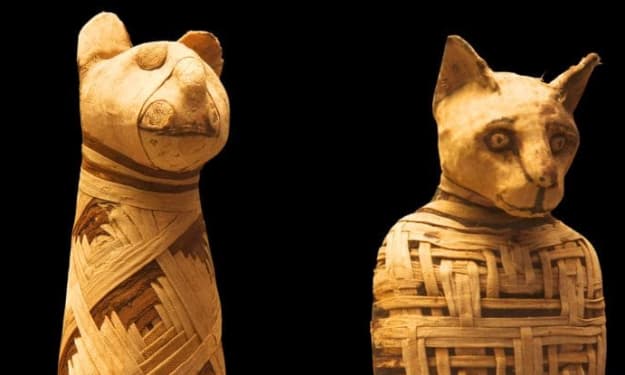
The Modern Cat May Have Emerged From Ancient Egyptian Ritual Sacrifice. AI-Generated.
The Modern Cat May Have Emerged From Ancient Egyptian Ritual Sacrifice When we think of the domestic cat — sleek, independent, and beloved by millions — we often imagine it as a timeless companion of humankind. However, recent studies suggest that the modern cat's origins may be closely tied to ancient Egyptian rituals, particularly those involving mass sacrifice. This surprising connection sheds new light on the long and complex relationship between humans and felines.
By Adnan Rasheedabout a year ago in History
The Unbelievable WWII Story You’ve Never Heard
Picture this: a lone fisherman, bobbing on the choppy Atlantic waves, scanning the murky depths for a shimmer of sardines. It’s April 30, 1943, and José Antonio Rey María is out doing what he does best-spotting fish for his tiny village of Punta Umbría, Spain. But today, something’s off. The water’s rough, the fish are nowhere to be found, and José’s starting to wonder if he’s wasted his morning. Then, far out on the horizon, he spots… something. A lump, floating on the surface. At first, he thinks it’s a dead animal. But as he rows closer, his stomach twists. That’s no animal. It’s a man. And he’s very, very dead.
By KWAO LEARNER WINFREDabout a year ago in History
The Mystery of Le Griffon: The Lost Ship of Lake Michigan. AI-Generated.
Origins of Le Griffon In the late 17th century, France sought to expand its influence deep into the interior of North America. The fur trade was booming, and the Great Lakes held the promise of tremendous wealth. To support his ambitious exploration of the Mississippi River system and to dominate the lucrative fur trade, La Salle envisioned building a sturdy ship capable of traversing the Great Lakes. Constructed near Niagara Falls on the banks of the Niagara River, Le Griffon was a technical marvel for its time — a brigantine rigged with sails and armed with several cannons. Historical accounts suggest the vessel was about 40 to 45 tons burden and roughly 45 to 60 feet long — modest by oceanic standards but enormous for the lakes. Le Griffon was not only the first ship of its kind in the region, but it also symbolized French ambition to control vast interior territories of North America. The Maiden Voyage In August 1679, Le Griffon set sail on its maiden voyage across Lake Erie, Detroit River, Lake St. Clair, Lake Huron, and finally into Lake Michigan. La Salle and his men were headed toward what is now Green Bay, Wisconsin, to trade for valuable furs with Native American tribes. By early September, La Salle and his crew had successfully loaded the vessel with a rich cargo of furs — reportedly worth a small fortune at the time. La Salle then made a fateful decision: he would continue exploring overland while Le Griffon would be sent back to Niagara with the precious cargo. Six crew members were tasked with the return journey aboard Le Griffon. On September 18, 1679, Le Griffon sailed into the horizon — and was never seen again. Theories of Disappearance What happened to Le Griffon remains a mystery. Numerous theories have emerged over the centuries: 1. Storm The Great Lakes are notorious for their sudden, violent storms. Many believe Le Griffon was caught in a fierce gale shortly after leaving Green Bay and was overwhelmed by the rough waters of Lake Michigan. Given the lack of wreckage found for centuries, it’s plausible that the vessel sank in deep, remote waters. 2. Mutiny and Theft Another theory suggests betrayal from within. Some historians argue that the crew, tempted by the rich cargo, might have intentionally sabotaged the ship, killed loyalists aboard, and tried to escape with the furs. If this theory holds, it's possible the conspirators themselves perished before reaching safety, or were killed by hostile tribes. 3. Native American Attack Tensions between French traders and certain indigenous groups were high at the time. Some reports hint that Native warriors, resentful of French encroachment and trade practices, may have attacked and destroyed Le Griffon. However, no definitive archaeological evidence supports this claim. Modern Search Efforts For over 300 years, treasure hunters, historians, and archaeologists have searched for the lost Le Griffon. Numerous alleged discoveries have been made: In 1898, bones and timbers were found near Manitoulin Island, but could not be conclusively linked. In the 2000s, underwater explorers claimed to have found a bowsprit in Lake Michigan — possibly from Le Griffon. However, later studies suggested it was just a submerged tree. In 2018, two treasure hunters announced a promising find, but disputes over permits and verification clouded the claim. The truth remains elusive. No discovery has yet been officially confirmed as the remains of Le Griffon. Cultural Impact The story of Le Griffon endures not just because of its historical importance, but because it represents the spirit of early exploration: bold, ambitious, and often tragic. It has inspired countless novels, legends, and television specials. For the Great Lakes region, Le Griffon is a symbol of mystery — a maritime ghost haunting the inland seas. Moreover, its tale raises timeless questions about human ambition: how far we are willing to go for wealth, exploration, and national pride — and how the forces of nature can swiftly undo the best-laid plans. Conclusion More than three centuries after it vanished, Le Griffon remains one of North America's most tantalizing maritime mysteries. Was it wrecked by storm, sabotage, or war? Somewhere in the vastness of the Great Lakes, the answers — and possibly the remains — still lie waiting. Until then, the legend of Le Griffon sails on in our collective imagination, a timeless reminder that some treasures are not meant to be found, but to be forever chased.
By Say the truth about a year ago in History