Discoveries
Ancient High Tech Machinery Used to Build Egypt’s Pyramids Study Claims
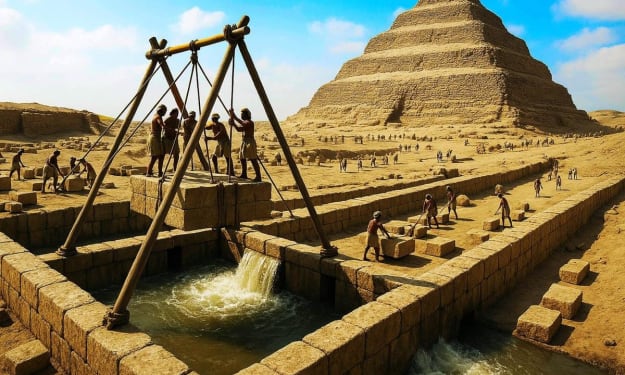
Ancient High Tech Machinery Used to Build Egypt’s Pyramids Study Claims For centuries the Great Pyramids of Egypt have fascinated historians engineers and tourists alike. Built over 4,500 years ago these towering monuments have sparked countless theories about how ancient civilizations managed to construct them with such precision and scale. While the mainstream archaeological consensus holds that the pyramids were built using simple tools manual labor and ingenious techniques a new controversial study claims that ancient high tech machinery may have played a crucial role in their construction.
By Adnan Rasheedabout a year ago in History
Atlantis: The Eternal Mystery Beneath the Sea
Is Atlantis a Lost Civilization or a Philosophical Allegory? The legend of Atlantis is one of the few ancient myths that has sparked so much interest, discussion, and speculation. First introduced by the Greek philosopher Plato around 360 BCE in his dialogues Timaeus and Critias, Atlantis was described as a vast, technologically advanced island civilization that met a sudden and catastrophic end—vanishing beneath the ocean in a single day and night.
By Shahriar Kabir Emonabout a year ago in History
An Islamic horse story, which conveys Islamic values in a fantastic way
A long time ago, in a desert, there was a special horse—his name was “Noor”. He was white in color, had a deep look and his eyes were full of intelligence. People used to say, Noor is not an ordinary horse, he is a word of caution and mercy.
By Hazrat Omarabout a year ago in History
Gog & Magog: Secrets Behind the Wall
1. Dhul-Qarnayn (AS): Who Was He? In the Qur'an, Dhul-Qarnayn (AS) is mentioned as a powerful and righteous ruler (Surah Al-Kahf, 18:83–98). His exact historical identity is still up for debate—some claim he was Alexander the Great, while others suggest Cyrus the Great—but he is portrayed as a just king who helped oppressed people wherever he went. During one of his journeys, he reached a place between two mountains where he encountered a community that complained about the corruption caused by Gog and Magog (Ya’juj and Ma’juj). They requested that he construct a barrier to safeguard them. ⸻
By Shahriar Kabir Emonabout a year ago in History
The Causes and Consequences of the World Wars
The 20th century witnessed two cataclysmic conflicts that reshaped the world: World War I and World War II. These wars, although separated by two decades, were deeply intertwined in their causes and consequences. Together, they brought unprecedented destruction, altered global power dynamics, and influenced the political, economic, and social direction of nations for generations.
By Haseeb Mujaddidiabout a year ago in History
The Mysterious Egyptian Sistrum. A Sacred Instrument That Opened Portals and Changed the Skies
The Rattle of the Gods Deep within the stone chambers of ancient Egypt, past columns carved with forgotten glyphs, lies a sound few have heard, one said to shake the heavens and stir the Earth. It is the sound of the sistrum, a sacred instrument held not by musicians, but by priestesses, pharaohs, and gods. To the untrained eye, the sistrum is a rattle. But to the initiates of the old temples, it was far more. It was a key. A tool of vibration. A portal-opener.
By The Secret History Of The Worldabout a year ago in History
"Frozen Fortune: Revealing the Concealed Net Worth of Antarctica"
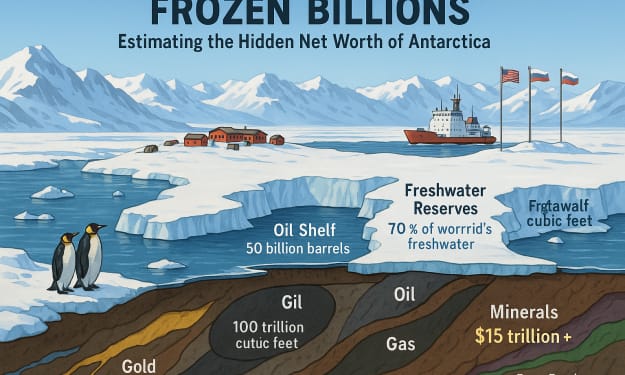
Antarctica: A Unique Continent Antarctica, the planet's southernmost landmass, encompasses over 14 million square kilometers, positioning it as the fifth-largest continent. Despite being 98% enveloped in ice, it is far from being devoid of value. Its distinct geophysical attributes, resource abundance, and global scientific relevance rank it among the most valuable unexploited territories on the planet. Although regulated by the Antarctic Treaty System (established in 1959), which prohibits military operations and mineral extraction, escalating geopolitical interest is amplifying discussions regarding the continent’s prospective utilization. The Resource Abundance of Antarctica 1. Minerals and Metals Although large-scale mining is forbidden, geological investigations indicate that Antarctica contains substantial amounts of minerals such as: Iron ore Gold Platinum Chromium Copper Uranium Rare Earth Elements (REEs) In East Antarctica, particularly in regions like the Prince Charles Mountains, there are signs of iron ore and coal deposits, while the Transantarctic Mountains may harbor valuable copper and gold veins. Projected Mineral Wealth: Exceeding $15 trillion in mineral assets, grounded in potential yield, global market prices, and extrapolated geological assessments. 2. Oil and Natural Gas The Southern Ocean and certain offshore segments of the Antarctic continental shelf may possess significant hydrocarbon deposits. Estimates fluctuate, but some conjecture up to: 50 billion barrels of oil More than 100 trillion cubic feet of natural gas The oil alone could be valued at over $4 trillion at current market rates. However, extraction is virtually unattainable under existing international regulations and harsh environmental conditions. 3. Freshwater Supplies Antarctica holds approximately 70% of the world's freshwater, trapped within its extensive ice sheets. As global freshwater scarcity escalates, this "frozen reservoir" could prove invaluable in the coming years. Projected Freshwater Value: If utilized sustainably and globally transported (theoretically), its value in future decades could surpass $10 trillion. 4. Marine Resources The Southern Ocean encircling Antarctica brims with marine biodiversity: Krill biomass is estimated at 500 million tons. Krill serves a role in pharmaceuticals, health supplements, and aquaculture. Abundant fisheries, including toothfish and icefish, are presently being exploited under stringent regulations. Projected Marine Resource Value: Ranging from $200 to $500 billion, contingent upon sustainability practices and future demand. Strategic and Scientific Significance While direct monetary appraisal is intricate, Antarctica harbors immense scientific and climatic data reserves. Its ice cores contain atmospheric records spanning back 800,000 years, which are critical for comprehending Earth’s climatic history and predictions. Nations like the USA, China, Russia, and India operate permanent research facilities not solely for scientific inquiry but to assert geopolitical influence. Strategic Value (non-monetary): Geopolitical leverage in forthcoming territorial claims Early warning mechanisms for climate change Sophisticated astronomy and cosmic research installations Legal Obstacles to Exploitation The Antarctic Treaty and the Madrid Protocol (1991) explicitly prohibit any commercial exploitation of Antarctica's land and resources. Nevertheless, the agreement is scheduled for reevaluation in 2048, and there is increasing speculation that nations may seek to modify its terms, particularly in light of escalating global resource scarcity. Environmental Factors Exploiting Antarctica's resources entails significant environmental hazards: - Ice sheet destabilization - Sea-level elevation - Ecosystem disruption - Climate feedback mechanisms The expenses associated with establishing infrastructure capable of functioning under such extreme conditions (average temperature: −57°C) are also considerable. Total Estimated Net Value Resource/Asset Estimated Value Mineral Deposits $15 trillion Oil & Gas Reserves $4 trillion Freshwater Reserves $10+ trillion Marine Resources $500 billion Scientific & Strategic Value Immeasurable Total Estimated Net Value $30 trillion+ The Future of Antarctica Antarctica continues to be the sole unowned continent, safeguarded by legislation and predominantly unspoiled by industrial exploitation. However, the global landscape is evolving. As climate change melts parts of its ice, new pathways and opportunities arise. Technological innovations may one day render mining and transportation viable. If the Antarctic Treaty diminishes in strength following 2048, the continent may transform into a contentious stage for geopolitical rivalry, resource competition, and environmental ethics. For the time being, Antarctica remains an unblemished bastion of ice. Yet its concealed riches continue to allure the world’s powerswaiting, observing, frozen in time.
By Say the truth about a year ago in History
“The Golden Hamlet: The Untold Wealth of Kodiyankulam – Tamil Nadu’s Richest Village”
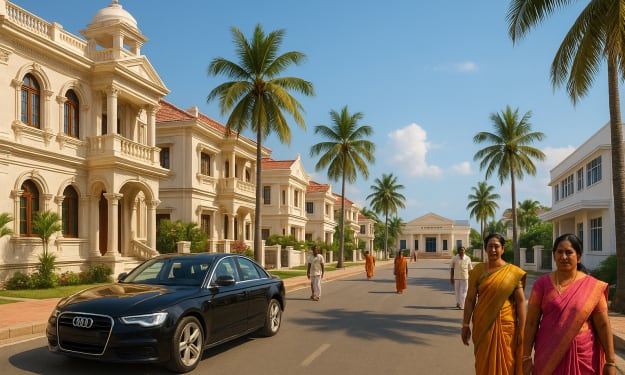
The Rise of a Rural Powerhouse Located about 30 kilometers from the southern port town of Thoothukudi, Kodiyankulam is a village like no other. Though it has fewer than 5,000 residents, the average household income and asset ownership are drastically higher than in most urban centers. Much of the wealth originates from decades of foreign employment, particularly in Persian Gulf nations, where many villagers migrated during the oil boom of the 1970s and 80s. Others have made fortunes in the US, UK, and Southeast Asia. Remittances over the decades transformed Kodiyankulam from a modest farming village to a land of marble bungalows, designer clothing, and luxury vehicles. Life in Kodiyankulam: Luxury Amid Simplicity Take a walk through the streets of Kodiyankulam and you’ll find: Hundreds of palatial homes, often worth ₹1 to ₹3 crore each, with Italian marble, gold-trimmed interiors, and imported furniture. Luxury cars like BMWs, Audis, and Mercedes-Benz, some even with Dubai or UK number plates. Residents dressed in branded attire and wearing gold jewelry even for day-to-day errands. Wedding ceremonies costing upwards of ₹1 crore, with international cuisine and imported décor. Private schools with English-medium instruction and digital classrooms funded by NRIs. Despite its wealth, the village maintains strong cultural roots—celebrating local festivals, temples, and traditions with pride. The Global Network An estimated 60% of households in Kodiyankulam have at least one family member living abroad. Gulf countries—especially UAE, Qatar, and Saudi Arabia—form the backbone of this global diaspora. Younger generations are also exploring opportunities in Canada, the UK, Australia, and Singapore. Many villagers have established construction businesses, restaurants, and trading companies overseas, funneling wealth back into their hometown. These NRIs have built community centers, schools, and even financed roads and water projects in the village. The Real Estate Boom Land prices in Kodiyankulam have skyrocketed. In some parts, real estate sells for over ₹1 crore per acre, especially on the highway stretches. That figure rivals even some suburban areas near Chennai and Coimbatore. Many villagers now engage in land dealings as a secondary source of income. Net Worth Estimation Let’s break down an approximate net worth of the village: Asset Category Estimated Value 1,000+ luxury homes (avg ₹1.5 crore) ₹1,500 crore 500+ luxury vehicles ₹200 crore Land holdings (agricultural + realty) ₹1,000 crore Business assets (in India & abroad) ₹1,500 crore Jewelry & luxury goods ₹300 crore Foreign investments & remittances ₹700 crore Estimated Total ₹5,200 crore+ (approx. $625 million USD) This makes Kodiyankulam potentially the richest village in Tamil Nadu, and among the wealthiest in India. Social Change and Education Wealth has also brought positive change. Education levels are high, especially among girls. Many residents are now doctors, engineers, and lawyers, both in India and abroad. Kodiyankulam boasts multiple schools, libraries, and even private coaching centers. Community welfare projects are often funded collectively by residents and their overseas kin.
By Say the truth about a year ago in History
A Candle Called Hope
The Beginning of Darkness In a small, forgotten village surrounded by endless hills and thick forests, there was a girl named Lina, just twelve years old, with eyes full of dreams. Her village, once full of joy, was now covered in shadows. The sun rarely peeked through the clouds, the trees stopped blooming, and people had started to lose their smiles. Something strange had happened a deep sadness had spread, and no one knew why.
By Muhammad Hayatabout a year ago in History
Google CEO Sundar Pichai's Education, Salary, and Net Worth
Sundar Pichai: The Influential CEO of Google's Education, Salary, and Net Worth In the world of technology, Sundar Pichai, CEO of Google and Alphabet Inc., is a name associated with leadership and innovation. Pichai's journey—from humble beginnings in India to leading one of the world's most valuable businesses—is a compelling tale of ambition, education, and success. The educational background of Sundar Pichai, his current salary as a top executive, and his impressive net worth are the subjects of this article. Education and childhood Sundar Pichai was born as Pichai Sundararajan on June 10, 1972, in Madurai, Tamil Nadu, India. His mother was a stenographer and his father was an electrical engineer for the British conglomerate GEC. He was raised in a Chennai middle-class household. Sundar frequently recounts how his upbringing shaped his principles of hard work and simplicity. The family lived in a modest two-room apartment. From a young age, Pichai excelled academically. He completed his schooling at Jawahar Vidyalaya in Ashok Nagar, Chennai, and later attended Vana Vani School, located on the campus of IIT Madras. His strong academic record earned him a place at the prestigious Indian Institute of Technology Kharagpur (IIT Kharagpur), where he studied Metallurgical Engineering. His sharp intellect and leadership abilities were noted by IIT Kharagpur professors. After completing his degree in India, Pichai moved to the United States to pursue higher education. Stanford University conferred on him a Master of Science (MS) degree in Material Sciences and Engineering. He went on to complete his MBA at the University of Pennsylvania's Wharton School. He was named a Siebel Scholar and a Palmer Scholar at Wharton, honors given to students who perform exceptionally well. Progress and Promotion at Google Sundar Pichai joined Google in 2004 and started working on the Google Toolbar, a tool that made it easier for Internet Explorer users to access Google search. His big breakthrough came with the development of Google Chrome, the company’s now-dominant web browser. The introduction of Chrome in 2008 changed the game and helped establish Pichai as the company's most important leader. He became an important part of the management of products like Android, Google Drive, Gmail, and Google Maps over time. He was a favorite among Google's top executives for his calm demeanor, strategic thinking, and in-depth knowledge of product development. Pichai was named CEO of Google in 2015, when the company underwent corporate restructuring to create a new parent company called Alphabet Inc. His responsibilities expanded further in December 2019, when he also became the CEO of Alphabet, replacing Larry Page. Under his leadership, the company has focused on artificial intelligence, sustainability, and product innovation, maintaining its dominant position in the tech industry.
By GLOBAL NEWSabout a year ago in History