Discoveries
Beautiful Bangladesh. AI-Generated.
Bangladesh, a vibrant tapestry of culture, nature, and resilience, is nestled in the heart of South Asia. Bordered by India on three sides and the Bay of Bengal to the south, this nation of over 170 million people is renowned for its rich heritage, lush landscapes, and dynamic progress.
By Tanvirul Islam about a year ago in History
White House still calling for confirmation of controversial US attorney nominee despite diminishing odds
Washington, D.C. — The Biden administration is continuing its push to confirm a controversial U.S. attorney nominee, even as support in the Senate appears to be eroding. The White House has reiterated its support for the candidate despite growing opposition from Republicans and some Democrats. This indicates that it will not withdraw the choice despite the ever-increasing likelihood that it will be successful. A Divisive Nomination
By Juwel Ranaabout a year ago in History
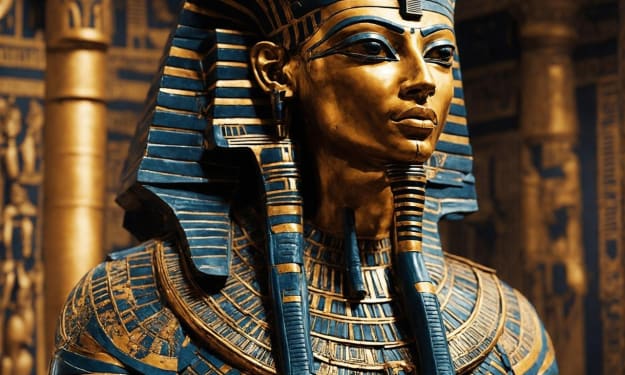
Akhenaten: Was He an Alien Pharaoh of Ancient Egypt?
The Mysterious Pharaoh In the heart of Egypt’s ancient history, one name stands out as an enigma: Akhenaten, the heretic king, the ruler who shattered the traditional religious order, and the architect of a radical transformation. He wasn’t just another Pharaoh; his reign brought forth a monotheistic vision centered on the sun god Aten, a stark departure from the traditional polytheistic worship of Egypt’s powerful pantheon of gods.
By The Secret History Of The Worldabout a year ago in History
Thailand Unveiled: The Soul of Southeast Asia. AI-Generated.
Thailand Unveiled: The Soul of Southeast Asia Thailand, fondly known as the "Land of Smiles," is a country that captures the heart of every traveler with its vibrant culture, rich traditions, stunning landscapes, and warm hospitality. Nestled in the heart of Southeast Asia, Thailand is a land where ancient customs blend harmoniously with modern life, creating a unique and enchanting experience for all who visit. A Culture Rooted in Tradition Thai culture is deeply influenced by Buddhism, which plays a central role in the daily lives of its people. Over 90% of Thais practice Theravāda Buddhism, and this spiritual path is visible everywhere—from golden temples rising over city skylines to serene monks in saffron robes walking the streets at dawn. Temples such as Wat Phra Kaew in Bangkok and Wat Pho, home to the Reclining Buddha, offer a glimpse into the country’s spiritual devotion and architectural brilliance. Respect and humility are core values in Thai society. The traditional greeting, called the wai—a slight bow with palms pressed together—is a gesture of respect and gratitude. Thai people are known for their politeness and warm demeanor, which is why Thailand is often called one of the friendliest countries in the world. Festivals and Celebrations Thailand’s cultural calendar is filled with vibrant festivals that showcase its traditions. One of the most famous is Songkran, the Thai New Year, celebrated every April with nationwide water fights that symbolize cleansing and renewal. Loy Krathong, held in November, sees locals floating decorated baskets down rivers to pay respect to the water goddess and wash away bad luck. These festivals are not just colorful spectacles; they are deeply rooted in Thai beliefs and provide an opportunity for communities to come together and celebrate their heritage. A Culinary Paradise Thai cuisine is renowned globally for its bold flavors, balance, and diversity. From spicy Tom Yum Goong (shrimp soup) to sweet Mango Sticky Rice, every dish tells a story of Thailand’s geography and culture. Street food is a major part of Thai life—bustling night markets serve everything from grilled meats and noodles to tropical fruits and desserts. Cities like Bangkok and Chiang Mai are street food heavens, offering a taste of local life with every bite. Cooking in Thailand is considered an art form, and many visitors take cooking classes to learn how to recreate their favorite dishes back home. Nature and Landscapes Beyond the cities and cultural sites, Thailand offers breathtaking natural beauty. The south boasts idyllic islands like Phuket, Ko Phi Phi, and Ko Samui, with white-sand beaches, turquoise waters, and vibrant coral reefs. In the north, lush mountains, cool weather, and hill tribe villages offer a completely different experience. Cities like Chiang Mai and Pai provide a more laid-back atmosphere, with opportunities for trekking, elephant sanctuaries, and exploring ancient ruins. The Blend of Old and New Modern Thailand is a fusion of past and present. Bangkok, the capital, is a city of contrasts—gleaming skyscrapers and luxury malls sit beside centuries-old temples and traditional floating markets. The country has embraced modernization, yet it has preserved its cultural identity with grace and pride. Whether you're watching a Muay Thai fight, receiving a traditional Thai massage, or exploring the ruins of Ayutthaya, Thailand offers a journey through time, taste, and tradition. --- Conclusion Thailand’s charm lies in its ability to make visitors feel both thrilled and at peace. With a welcoming spirit, rich cultural heritage, delicious cuisine, and stunning natural beauty, Thailand is more than a destination—it’s an experience of the soul. Whether you're exploring its cities, savoring its food, or immersing yourself in its traditions, Thailand has a way of staying with you long after you’ve left.
By Shahab Ali awanabout a year ago in History
The Evolution of Human History: From Prehistoric Times to the Modern Era
From prehistoric times to the present, the evolution of humankind History is the collective memory of human civilization, chronicling the journey of humanity from primitive beginnings to the complexities of modern society. The story of human history is vast, interwoven with the rise and fall of empires, technological innovations, social revolutions, and cultural transformations. The major epochs of human history and the ways in which each one shaped the world we live in today are the subject of this article. The Beginning of Humanity: The Age of Prehistory Human history begins long before the advent of writing. The Paleolithic, Mesolithic, and Neolithic periods are all examples of prehistoric times. The Paleolithic Era, also known as the Old Stone Age, lasted between about 2.5 million and 10,000 BCE. Early humans were hunter-gatherers who lived in small, nomadic groups and used simple stone tools. The development of language and the discovery of fire were significant era achievements. Humans entered the Mesolithic Era after the Ice Age ended, which was characterized by more sophisticated tools and the gradual domestication of animals. By the Neolithic Era, or New Stone Age, people began to settle in one place, cultivating crops and raising livestock. Beginning around 10,000 BCE, this agricultural revolution established the foundation for permanent settlements and eventually civilization as a whole. The Rise of Civilizations
By Abid Sadifabout a year ago in History
The Naupa Huaca Portal: Proof That Ancient Civilizations Were Secretly Connected?
The Door That Shouldn’t Exist High in the Andean mountains of Peru, carved into living rock and forgotten by time, lies a doorway to a mystery that refuses to be ignored. Hidden near the Sacred Valley, in a place untouched by modern roads or maps, the Naupa Huaca Portal emerges from the cliffside like a deliberate fracture in reality. It is not a ruin. It is not a temple. It is something else entirely.
By The Secret History Of The Worldabout a year ago in History
“Vanished Galleons: The Lost Shipwrecks of the Dutch East India Company”
“Disappeared in the Abyss: The Catastrophic Shipwrecks of the VOC Fleet” The Dutch East India Company (VOC), once the most prosperous trading entity in history, presided over global maritime commerce for nearly two centuries. Yet beneath the splendor and fortune exists a lesser-known narrative the numerous VOC vessels that encountered disastrous fates in perilous waters. Stretching from the Indian Ocean to the rugged shorelines of Australia and the Cape of Good Hope, hundreds of VOC ships were lost to tempests, reefs, sabotage, and navigational mistakes. These wrecks not only transported commodities and riches but also embodied tales of aspiration, colonization, and sacrifice. This article examines the history, significant calamities, treasure recoveries, and the enduring enigma surrounding VOC shipwrecks. Article: The Dutch East India Company (VOC): A Nautical Titan Established in 1602, the Vereenigde Oostindische Compagnie (VOC), or Dutch East India Company, represented the world’s inaugural multinational corporation and the first to distribute shares. Charged with monopolizing the Dutch spice trade with Asia, the VOC developed extensive trade networks from Indonesia to Japan and South Africa. It commanded its military, minted currency, and deployed one of the most formidable naval fleets of its era. At the zenith of its influence in the 17th and 18th centuries, the VOC dispatched thousands of vessels on hazardous expeditions between Europe and Asia, transporting spices, silk, porcelain, gold, and silver. However, the perils were immense and the ocean, relentless. The Magnitude of VOC Shipwrecks Documentation reveals that over 1,600 vessels sailed under the VOC banner during its two-century lifespan. Of these, more than 250 ships were lost at sea due to tempests, shipwrecks, piracy, and navigational blunders. Many did not survive past the Cape of Good Hope, while others disappeared in the waters near Indonesia, Sri Lanka, India, and Australia. While some vessels were lost with all hands aboard, others left behind survivors who recounted stories of calamity, endurance, and treasure. The VOC’s meticulous record-keeping and archival resources preserved numerous tales, rendering VOC shipwrecks among the most extensively researched in maritime archaeology. Notable VOC Shipwrecks Batavia (1629) Possibly the most notorious VOC wreck, the Batavia served as a flagship en route to contemporary Jakarta (formerly Batavia). It ran aground on the Houtman Abrolhos islands off the western coast of Australia. What ensued was a harrowing saga of rebellion and homicide, wherein numerous survivors were murdered by fellow crew members. The wreck was uncovered in 1963, and artifacts retrieved unveiled invaluable cargo coins, silver, and ceramics. Vergulde Draeck (1656) Referred to as the Gilt Dragon, this VOC vessel struck a reef near present-day Western Australia. Of the 193 individuals aboard, merely 75 reached the shore. A rescue operation was initiated but was unsuccessful, and the fate of the survivors remains undetermined. The wreck was located in 1963, and divers recovered coins, cannons, and porcelain. Zuytdorp (1712) Transporting a fortune in silver coins, the Zuytdorp collided with cliffs north of Kalbarri, Western Australia. No survivors made it to civilization, and the wreck was largely overlooked until the 1920s. Theories persist that survivors may have intermarried with Indigenous communities. Amsterdam (1749) Wrecked on her inaugural voyage off the coast of England, the Amsterdam was a substantial VOC cargo vessel loaded with silver, spices, and textiles. Remarkably well preserved in the sand, the wreck is discernible at low tide near Hastings and remains a prominent archaeological site. Wealth Lost to the Ocean The VOC’s sunken vessels did not solely transport spices and provisions they frequently bore significant amounts of gold, silver, and valuable artifacts. Conservative estimates appraise the overall value of lost VOC cargo in contemporary currency at over $1 billion USD, although some estimates are considerably higher. With each maritime disaster, fortunes disappeared beneath the waves some yet to be recovered. For example, the Rooswijk, which sank in 1740 near England, was discovered to contain silver ingots and coins valued in the millions. Its recovery in 2004 constituted one of the largest VOC treasure discoveries of the modern era. Contemporary Archaeology and Recovery Initiatives Shipwrecks of the VOC are esteemed by archaeologists for their historical significance and by treasure seekers for their wealth. Numerous sites are safeguarded under national and international heritage regulations, particularly in Australian and Indonesian waters. Sophisticated technologies such as magnetometers, sonar, and underwater drones are employed to identify and excavate these submerged vessels. Teams must strike a balance between preservation and exploration, ensuring that artifacts are not plundered or damaged. Recovered items ranging from cannonballs to coins, porcelain, navigational instruments, and even preserved food are exhibited in museums throughout the Netherlands, Australia, and South Africa, providing insights into a golden era of trade and empire. Legacy of the VOC Shipwrecks Beyond the treasure and misfortune, the VOC shipwrecks narrate a broader tale one of global commerce, colonial aspiration, and maritime peril. They unveil the immense cost, both human and material, associated with the VOC’s supremacy in world trade.
By Say the truth about a year ago in History
“Lasseter’s Reef: Australia’s Lost Treasure of Gold and Legend”. AI-Generated.
"The Hidden Wealth of Australia: Discovering the Continent’s Most Significant Concealed Treasure" Australia encompasses more than merely arid deserts and ancient terrainsit conceals narratives of substantial, undiscovered fortune. From the legendary Lasseter’s Reef, purported to be an unparalleled gold deposit buried deep within the outback, to the sunken Dutch vessels carrying silver and gold, as well as the loot of outlaw bushrangers hidden in the wilderness, this article delves into the most persistent and valuable treasure legends of the land down under. Join us as we investigate the history, enigma, and contemporary endeavors to reveal Australia’s greatest treasure. Image Prompt: A lifelike digital illustration of the Australian Outback featuring red sandstone cliffs, a group of adventurers examining maps and tools, alongside glimmering gold partially concealed in the desert ground. A spectral image of Harold Lasseter gesturing toward the horizon lingers in the background. Include camels, indigenous flora, and a radiant sunset sky. Title: The Myth of Lasseter’s Reef: Australia’s Most Significant Lost Treasure Introduction Nestled within the blistering core of the Australian Outback resides one of the most enduring and enigmatic legends in the nation's history: the narrative of Lasseter’s Reef. Alleged to be a considerable gold deposit concealed in the desert, this "reef" (a term utilized in mining to indicate a vein of gold-bearing rock) has fascinated prospectors, explorers, and treasure seekers for more than a century. Despite countless expeditions and relentless quests, the elusive treasure remains unlocateda spectral promise of immense wealth buried beneath limitless red sands. The Genesis of the Legend The tale commences with Harold Bell Lasseter, a man of intricate character and profound conviction. In 1929, Lasseter asserted he had discovered a colossal gold reef in Central Australia as a youth in 1897, at the age of 17. He recounted that his camel had fled during a solo expedition, and while searching for water and security, he encountered a lustrous, golden ridge extending for miles. Lacking the tools to extract it and driven by survival instinct, he memorized the site and subsequently returned to civilization. For many years, Lasseter clung to his secret, disheartened that nobody believed his account. However, as Australia grappled with the aftermath of the Great Depression in the 1930s, his narrative gained momentumproviding optimism to a desperate nation yearning for wealth and stability. The 1930 Expedition With governmental support and private investment, the Central Australian Gold Exploration Company (CAGE) was established, and an expedition was assembled to seek out the reef. Lasseter was designated as the guide and led a team of explorers, camels, provisions, and radio apparatus deep into the desert from Alice Springs. Nevertheless, conflicts rapidly intensified. Lasseter’s ambiguous instructions, secretive demeanor, and insistence on proceeding independently estranged his team. Ultimately, the group dissolved in exasperation, leaving Lasseter solitary in the desert. For several weeks, he endeavored to survive, reportedly assisted by Aboriginal individuals. His final journal entries, later discovered by rescuers, recount his ongoing pursuit of the reef, his solitude, and his gradual demise in a secluded cave near the Petermann Ranges in early 1931. His remains were located in a deteriorated state, yet his narrative endured. Reality or Fabrication? Since Lasseter’s demise, contention has erupted regarding the existence of his reef. Some theorize it was a figment of imaginationpossibly heat-induced hallucinationsor an elaborate deception. Conversely, others assert its authenticity, citing: Lasseter’s meticulous journal, in which he documented distances, sites, and details. Independent testimonies from other adventurers and Aboriginal oral histories that suggest gold in the same vicinity. The likelihood that Lasseter employed an alternative coordinate system or had forgotten the precise location after thirty years. While no conclusive physical proof has ever been discovered, numerous treasure seekers and explorers persist in exploring the myth. Contemporary Searches and Technology The evolution of satellite imaging, geological surveying, and GPS technology has rekindled interest in the quest for Lasseter’s Reef. Numerous expeditions in the 20th and 21st centuries have traversed the central Australian deserts, particularly around the Petermann and Rawlinson Ranges, yet the reef remains undiscovered. In 2005, a private exploration team asserted they had found “evidence” of a gold-rich area consistent with Lasseter’s account, but no commercial achievement ensued. Others continue to finance investigations, convinced that a concealed fortune lies beneath the crimson soil. Cultural Significance
By Say the truth about a year ago in History
"The Lost Riches of Australia: Uncovering the Continent’s Greatest Hidden Treasure" . AI-Generated.
"Australia’s Forgotten Fortune: The Legend of the Lasseter’s Reef and Other Lost Treasures" Australia may be best known for its rugged outback and gold rush towns, but hidden beneath its red earth lies a legend of unimaginable wealth — the tale of Lasseter’s Reef, a massive gold deposit supposedly buried in the heart of the desert. This article delves into the history of Australia's biggest rumored treasure discoveries, including gold rushes, sunken ships, outlaw loot, and the still-unfound fortunes that have lured explorers for over a century. Introduction: A Continent of Mystery and Riches Australia, the world’s sixth-largest country, has long held the reputation of being a land of natural wonders. But beneath its scorching deserts, tropical rainforests, and jagged coastlines lies a rich — and often hidden — history of buried treasure. From massive gold rushes in the 19th century to legends like Lasseter’s Reef, Australia’s search for fortune has fascinated adventurers, scholars, and treasure hunters for over 150 years. The Gold Rush Era: When Fortune Sparked a Nation Australia’s greatest tangible treasure boom began in the mid-1800s with the discovery of gold in New South Wales and Victoria. The 1851 gold rush in Ballarat and Bendigo triggered a wave of immigration, wealth, and global attention: Over 1 million kg of gold were extracted in the 19th century. The town of Ballarat became one of the richest places on Earth. The Welcome Stranger Nugget (1869), found in Victoria, remains the largest alluvial gold nugget ever discovered, weighing 72 kg and valued at over $4 million USD today. But while these documented finds changed the economy and culture of the young colony, other riches remained elusive — hidden in legend and myth. The Legend of Lasseter’s Reef The most famous lost treasure in Australian history is Lasseter’s Reef, a supposed vein of gold so rich that it would rival any mine on Earth. In 1929, Harold Bell Lasseter, an Australian explorer, claimed he had discovered a 30-kilometer-long gold reef in the central Australian desert as a young man in the 1890s. He mounted an expedition in 1930 to rediscover the reef, but was abandoned by his team, perished in the desert, and left behind only a diary describing the location. The exact location of Lasseter’s Reef was never found, and no one has definitively proven its existence. Despite numerous expeditions, satellite mapping, and even government-backed searches, the treasure remains lost. Some believe it was a fabrication; others insist it’s still hidden in the remote Petermann Ranges of the Northern Territory — just waiting to be found. Estimated Value: If real, Lasseter’s Reef could contain billions of dollars worth of gold — making it one of the largest lost treasures in modern history. The Wreck of the Gilt Dragon Not all treasure legends lie in the desert. Along Australia’s treacherous western coastline, dozens of Dutch East India Company (VOC) ships were wrecked during the 17th century on their way to Batavia (now Jakarta). The most famous among them, the Vergulde Draeck (Gilt Dragon), sank in 1656 with a cargo of silver coins, trade goods, and gold bullion. Modern estimates suggest the cargo was worth millions even in 17th-century value. Only fragments have been recovered off the coast of Western Australia. Many believe much of the treasure was buried or looted by survivors and remains hidden in the bushland. Bushranger Gold: Thunderbolt and Others Australia’s outlaw era also left behind tales of buried loot. The bushrangers, especially Captain Thunderbolt, Ben Hall, and Ned Kelly, were known to rob gold shipments and bank vaults. Captain Thunderbolt is rumored to have buried several caches of gold and coins in New South Wales. While some have been found, most treasure maps are considered lost or hoaxes.
By Say the truth about a year ago in History