Discoveries
Samsung Eligible device for oneUi7 . AI-Generated.
The official rollout of Samsung's One UI 7 update, which is based on Android 15 and brings a slew of new features and improvements to a wide range of Galaxy devices, has begun. The update began rolling out to various device series in phases in April 2025.📱 Eligible Devices for One UI 7
By Aprub Hasan Afifabout a year ago in History
THE HISTORY OF PAPER
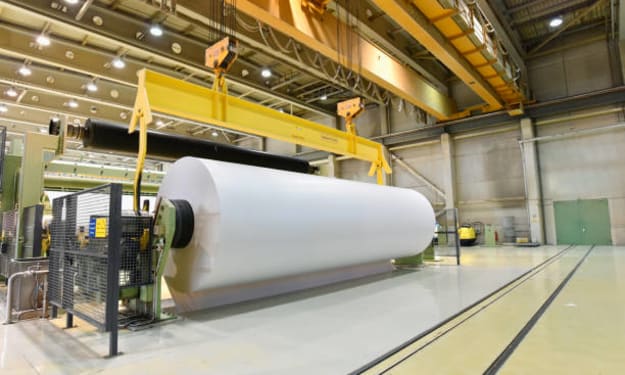
There was a time when people learned to write, not make paper. In some countries it was customary to write on stones. some would write on soft soil and then burn that soil to make brick tiles. Their paperwork would go away in that brick. But you can easily understand the special difficulty of studying with such bricks. Imagine a student going to a classroom. Along with him came three baskets of brick and a pulm of mud for writing. Just sending a few letters takes a lot of hard work, fetching soil, fetching water, compacting mud, polishing, making tiles, but there is no end to writing letters, burning, cooling, and calling. It is much easier and convenient than this to write on the leaves of the tree, which has been used for a long time in our country. 6000 years ago in Egypt, the young bark of the papyrus tree was used to make paper. Like some sort of thing was made. The English word paper comes from the word papyrus. But even this papyrus material cannot be properly called paper. Papermaking was first introduced in China. But the Chinese did not teach this science to anyone. For about 100 years, some Chinese artisans learned to make paper, and from that time, this knowledge spread far and wide. From Arabia to Egypt, from Egypt to other places in Africa. Then, in Spain, Germany, and England, paper mills appeared everywhere. At that time, all papers were made from torn paper, and it was done by hand. A clean rag would be wetted and poked with a toothed object; at that, the rag was torn to shreds like threads. Add water to it and knead it for a long time to form a thin paste. The dough of this rag was sieved and sifted in various ways to make paper as white as silk. At that time, people thought of paper as a very nice thing, but gradually the price of paper came down, various mills for making paper came out, and the cut of paper increased so much that the paper workers saw that it was not possible to collect so many torn sheets. Then there was a search around, what other things can be made of paper? First: Spain's esparto grass was very papery, then gradually it was seen that it did not wash. It is impossible to say how many things have been tasted to make paper from it. Sugarcane husks, banana peels, jute, straw, grass, bamboo, fiber-like wood threads, all kinds of things like sugarcane are not left. In general, paper is made from wood, esparto grass, and old rag paper. The chalk that Bolata makes has a substance in it that is just like paper. Nowadays, mills also produce different types of paper from wood pulp, etc. The wood from which the paper is made comes from gulal in America and Norway. The foresters cut the trunks of large trees and throw them into the mouth of the mill, and the wood is chopped up at the other end of the mill. The sap is ground, boiled, and cleaned, then the latex-soft wood is pressed into wafers, and the wafers are shipped to papermakers. Paper workers make manda by mixing the wafer again in water, then boiling the manda and making it like broth. This broth is poured into a paper mill and an iron tube. The mill feeds on wood, grass, or rag pulp on one side and produces 4/5 mile long paper bales on the other side. When the mills run all day and night, a sheet of paper twelve cubits wide and two and a half miles long is produced. After that, the broth is prepared by mixing the dough in a bowl of hot water. As the broth is run through the mill, it falls over a long moving strainer. The strainer keeps moving and gives and gives a kind of shake now and then, the water falls out, and the broth gradually comes under the pressure. In this way, the broth falls into the other head of the faucet – there are many ‘rollers’ like balloons which are used for rolling bread. The strainer comes here and spills the broth into a roller. But that broth is no longer broth; now it looks like wet blotting paper. By now, it's just a paper. As soon as the paper touches the roller, the roller pulls it. Then the paper is moved between many rollers. In this way, the paper has to be continuously pressed, sanded, rubbed, and polished, and the paper gradually becomes thinner and softer. Of course, all these tasks are done automatically in the factory. There are a couple of people who just make sure all the factories are going well. Work runs as equal to twenty-four hours; one head of the mill has a continuous flow of the broth-free strainer is only resting, the paper congealed from the strainer is constantly jumping onto the roller, the roller has no rest, and is also pulling and pushing the paper out.
By Afroza Islamabout a year ago in History
The Civil Rights Movement in the USA: A Turning Point in American History. AI-Generated.
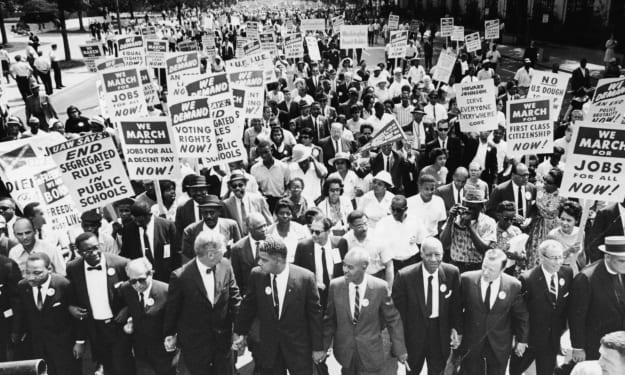
The Civil Rights Movement in the USA: A Story of Courage and Change There was a time in America when people with dark skin were not treated equally. They could not sit where they wanted, go to the same schools, or even drink from the same water fountains as white people. This was called racial segregation, and it was unfair. But things did not stay like this forever. A powerful movement started — made of brave people who stood up and said, **"Enough is enough."** This was the **Civil Rights Movement**, and it changed the face of the United States forever. Where It All Began Let’s go back to the **1950s and 1960s** — a time when America was full of rules that separated people by skin color. This was especially common in the southern states. One day in **1955**, in Montgomery, Alabama, a Black woman named **Rosa Parks** was riding a bus. When a white man asked her to give up her seat, she said **"No."** That one word was small — but it shook the world. Her arrest led to the **Montgomery Bus Boycott**, where thousands of Black people stopped riding buses for over a year. This peaceful protest hurt the bus companies financially, and finally, the courts said, “segregation on buses is illegal.” > **Highlight:** Rosa Parks’ quiet courage became a loud call for change. The Rise of Dr. Martin Luther King Jr. During the Montgomery Bus Boycott, a young preacher named **Dr. Martin Luther King Jr.** became a leader. He believed in **non-violence**, inspired by Mahatma Gandhi. He said: > “Hate cannot drive out hate. Only love can do that.” Dr. King and others led **peaceful marches**, gave **powerful speeches**, and organized **boycotts** — all to demand **equal rights for Black Americans.** One of his most famous moments was the **March on Washington in 1963**, where he stood in front of the Lincoln Memorial and said: > “**I have a dream**... that one day... children will not be judged by the color of their skin, but by the content of their character.” More than 250,000 people stood and listened that day. > **Highlight:** Dr. King’s dream became a message of hope for all generations. --- Brave Children and the Power of Schools In 1954, the **Supreme Court** ruled in **Brown v. Board of Education** that separating children in schools based on race was wrong. But many schools still refused to allow Black children. One of the bravest stories is of **Ruby Bridges**, a six-year-old Black girl who, in 1960, walked into an all-white school in New Orleans. People shouted at her, but she kept walking — protected by U.S. Marshals. She didn’t cry. She just wanted to learn. > **Highlight:** A little girl with a big heart taught America what courage really looks like. Bloody Sunday and the Fight for Voting Rights In 1965, many Black Americans still couldn’t vote due to unfair laws. To protest, activists marched from **Selma to Montgomery, Alabama.** But on **“Bloody Sunday,”** police attacked peaceful marchers on a bridge — beating them with sticks and spraying tear gas. The pictures shocked the nation. After that, President **Lyndon B. Johnson** signed the **Voting Rights Act of 1965**, which gave Black citizens the right to vote without fear. > **Highlight:** Their pain on the bridge opened the road to justice. - Civil Rights Laws That Changed America** Because of the Civil Rights Movement, the U.S. government passed powerful laws: * **Civil Rights Act of 1964** – No more discrimination in schools, jobs, or public places. * **Voting Rights Act of 1965** – Protected every citizen’s right to vote. * **Fair Housing Act of 1968** – Stopped racial discrimination in housing. These laws helped break down the legal walls that kept people apart. > **Highlight:** Protest turned into policy, and policy brought change. Not Just Black and White While the movement began to fight for **African Americans**, it inspired many others: * **Women** began fighting for equal rights in the workplace. * **Latinos**, **Asians**, and **Native Americans** started their own justice movements. * **Disabled people**, **LGBTQ+ communities**, and others found hope through civil rights actions. > **Highlight:** The Civil Rights Movement lit a flame that spread across America. Why This story matters Today Even today, the fight for justice and equality continues. People still march for **Black Lives Matter**, for **fair treatment**, and for **human dignity**. The spirit of Dr. King, Rosa Parks, and Ruby Bridges still walks in today’s streets. > **Highlight:** The movement may have started in the past — but its heart beats in the present. Conclusion: A Story of the People The Civil Rights Movement was not just about laws or leaders — it was about **people**. Ordinary people. Mothers, students, teachers, and workers. They changed the world with their voices, their marches, and their courage. It’s a story of pain, yes — but also of power. A story of hate — but answered with love. And most of all, a story that reminds us: > *When we stand together, change is possible.*
By Tanushree Dasabout a year ago in History
120 Days Underwater
In an impressive achievement that embodies human perseverance, scientific ingenuity, and extreme exploration, Rudiger Koch, a German aerospace engineer, is the new record holder for the longest time living in a submerged underwater chamber without the use of depressurization. Koch surfaced from his submerged capsule on Friday off the coast of Panama after spending an astounding 120 days, 11 meters (36 feet) under the Caribbean Sea. The feat, verified by Guinness World Records adjudicator Susana Reyes, saw Koch break the previous record of 100 days, which was set by American Joseph Dituri, who resided in an underwater lodge in a Florida lagoon.
By Rohitha Lankaabout a year ago in History
The Great Underground Pyramid of Alaska: Secrets Beneath the Frozen Tundra
Beneath the Frost, a Hidden Legacy Beneath the endless expanse of Alaska's tundra lies an enigma that has puzzled explorers, researchers, and conspiracy theorists for decades. For years, the whispers have circulated, tales of a massive underground pyramid, an ancient structure far older than anything recorded in history. Hidden deep within the wild, remote regions of the state, this pyramid is said to be a relic of an advanced civilization, one that predates all known ancient cultures.
By The Secret History Of The Worldabout a year ago in History
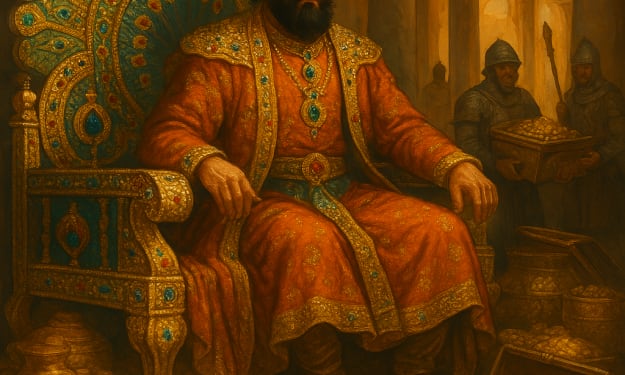
"The Golden Empire: Inside the Wealth of the Mali Empire under Mansa Musa" . AI-Generated.
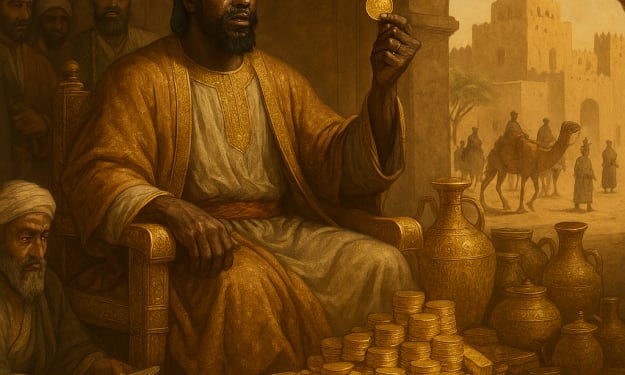
“The Gold Mines of Kings: The U"The Golden Empire: Inside the Wealth of the Mali Empire under Mansa Musa" nrevealed Treasures of the Mali Empire” The Mali Empire, during the governance of Mansa Musa, represented the most affluent empire in African heritage and potentially the globe. Founded upon substantial gold assets and trans-Saharan commerce, Mali's principal cities such as Timbuktu and Niani thrived with splendid palaces, mosques, and riches beyond comprehension. This article delves into the ascendance of the Mali Empire, its astounding net worth, and the legendary pilgrimage of Mansa Musa that amazed the world with its golden magnificence. Introduction: A Golden Era in West Africa While Europe was still recovering from the Dark Ages, a remarkable civilization emerged in the heart of West Africa the Mali Empire. Established in the 13th century, Mali evolved into one of the most prosperous empires in history, attaining its peak under the leadership of Mansa Musa, the 10th monarch. Mali’s wealth was so extensive that Mansa Musa’s name became emblematic of unimaginable affluence, and his 1324 pilgrimage to Mecca was so lavish that it induced inflation in Egypt for more than a decade. But what contributed to the Mali Empire’s opulence? From where did the riches originate, and what heritage does it leave for posterity? Gold: The Cornerstone of Empire The foundation of Mali’s economic strength resided beneath the ground: gold. West Africa housed some of the largest and most fruitful gold mines in the ancient world, particularly in Bambuk, Bure, and Galam. These mines supplied the empire’s coffers and established Mali as the foremost gold provider for the Mediterranean and Islamic civilizations for over 500 years. During a time when gold represented currency, Mali was perched atop a fortune. Scholars estimate that Mali may have controlled half of the global gold supply during its pinnacle. Trade and Commerce In addition to its mines, Mali prospered due to its strategic location along trans-Saharan trade routes. Caravans of camels occasionally numbering in the thousands transported: Gold, salt, and ivory northward Silks, spices, books, and textiles southward Cities such as Timbuktu, Gao, and Djenné evolved into hubs of wealth and culture. Timbuktu’s renowned market and libraries attracted scholars and merchants from as far as the Middle East and Europe. Taxes were imposed on traders, further enhancing the empire’s wealth. A merchant navigating through Mali was reportedly greeted by gates embellished with gold, silk-adorned pavilions, and marketplaces brimming with luxurious goods. The Pilgrimage of Mansa Musa: The Wealthiest Individual in History In 1324, Mansa Musa embarked on the Hajj pilgrimage to Mecca, traversing more than 4,000 miles accompanied by a retinue that astonished the world: 60,000 men, including 12,000 slaves 100 camels, each bearing up to 135 kg (300 lbs) of gold Countless horses, dancers, scholars, and attendants Musa distributed gold so generously in Cairo that he incited hyperinflation, diminishing the value of the metal for over a decade. Historians estimate that his personal net worth might surpass $400 billion in contemporary terms, establishing him as arguably the wealthiest individual in human history. Cultural Wealth and Legacy Mansa Musa didn’t merely utilize wealth he allocated resources towards education, architecture, and religion: Established Sankore University in Timbuktu, which rivaled Oxford and Al-Azhar. Constructed numerous mosques, palaces, and libraries. Financed educational institutions, scholars, and scribes to replicate thousands of manuscripts. These endeavors transformed Mali into a beacon of knowledge within the Islamic realm. At its zenith, Timbuktu boasted 25,000 students and housed over 700,000 manuscripts, many of which endure today in private collections. The Decline and Dispersal of Wealth Following Mansa Musa's demise in 1337, the empire's prominence gradually diminished. Political turmoil, internal conflicts, and pressure from emerging powers such as the Songhai Empire contributed to fragmentation. Many of Mali's riches were: Plundered during invasions. Concealed or hidden to evade confiscation. Exchanged by lesser rulers in times of desperation. Despite its decline, remnants of Mali’s wealth persist in oral traditions, Arabic manuscripts, and the dusty repositories of European collectors who once obtained African artifacts during colonial periods. Estimating the Wealth Contemporary economic historians assess: Annual gold exports at peak: 1–2 tons per annum. Mansa Musa's net worth: $400 billion+. Empire-wide wealth: Easily in the trillions by contemporary metrics, when accounting for trade income, land, and cultural capital. This positions Mali among the most affluent civilizations in world history, eclipsing many European kingdoms of the same era. Conclusion The narrative of the Mali Empire extends beyond mere gold. It encapsulates a civilization that intertwined commerce, culture, and faith into one of the greatest golden ages ever witnessed. While much of its wealth has been dispersed, Mali's legacy as a symbol of African magnificence remains formidable. And beneath the sands of West Africa, perhaps additional treasure still lies hiddenawaiting recognition from history.
By Say the truth about a year ago in History
"The Lost Treasure of Srivijaya: Southeast Asia’s Forgotten Maritime Empire". AI-Generated.
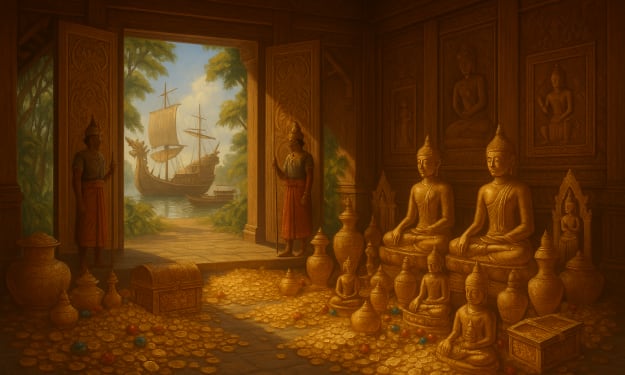
"The Golden Fortress of Srivijaya: Southeast Asia’s Forgotten Maritime Treasure" Summary: Long before the rise of modern global empires, the Srivijaya Empire ruled the waves of Southeast Asia, commanding trade routes, cultural influence, and immense wealth. Though largely forgotten today, Srivijaya once controlled the crucial maritime passages between the Indian and Pacific Oceans, amassing a treasure trove of gold, spices, and religious artifacts. This article uncovers the rise, glory, and hidden wealth of the Srivijaya Empire — a true maritime superpower lost beneath time and tide. The Rise of a Maritime Power The Srivijaya Empire emerged in the 7th century CE, centered around present-day Palembang, Sumatra in Indonesia. Unlike land-based empires, Srivijaya was a thalassocracy — a kingdom built on controlling the seas rather than territories. Its strategic location near the Strait of Malacca, one of the busiest maritime passages in the world, allowed Srivijaya to dominate global trade between China, India, and the Middle East for over six centuries. Sources of Wealth Srivijaya's treasure was built on multiple pillars: Maritime trade: Merchants from China, India, Arabia, and even Africa passed through Srivijayan ports. Goods included spices, gold, ivory, silk, porcelain, camphor, sandalwood, and textiles. Tributes: As a hub for Mahayana Buddhism, Srivijaya received religious tributes from powerful kingdoms like China and Tibet. Taxation and Tolls: All passing ships had to pay customs duties, contributing to royal coffers. One 10th-century Chinese record described the king of Srivijaya as owning ten thousand vessels and a treasury of pure gold bricks. The Royal Court and the Treasury The Srivijayan monarch, referred to as Maharaja, resided in a grand wooden palace decorated with gold-leafed ornaments, lacquerware, and foreign gifts. Archaeological evidence suggests that gold was abundant in the empire. Excavations in Sumatra have revealed: Gold jewelry weighing several kilograms Religious artifacts, including golden statues of Buddha Coinage used for trade and ceremonial offerings Gold was also used to plate royal palaces, religious shrines, and even the hulls of ships in elite fleets. Religious Treasures and Cultural Wealth Srivijaya was not just a political and commercial hub, but also a center for Buddhist learning. Monks from India and China — including the famous Yi Jing — visited and wrote about the empire’s grand monasteries and temples. These institutions were richly endowed: Temples adorned with golden stupas and relics Libraries with palm-leaf manuscripts and priceless religious texts Royal donations of jewels, incense, and spices to Buddhist communities The Srivijaya elite believed such donations earned spiritual merit and worldly prestige. Estimating the Wealth of Srivijaya Though exact records are scarce, modern historians and economists estimate the empire’s wealth by considering: Annual tribute and customs taxes from thousands of ships Gold reserves from Sumatra’s mines Trade profit margins on high-value goods like nutmeg, cloves, and camphor If valued in today’s terms, Srivijaya’s annual trade revenues could have exceeded $2 billion USD, with total stored treasure and assets reaching over $50–100 billion during its peak (8th–11th centuries CE). Naval Power and Maritime Control To protect this wealth, Srivijaya maintained a large naval fleet, including: Fast war canoes and ocean-going ships Merchant vessels with armed escorts Maritime garrisons stationed on key islands This control allowed the empire to deter piracy, enforce tolls, and maintain peace along thousands of kilometers of sea routes. Srivijaya also allied with pirate clans in the South China Sea, using them as both enforcers and intelligence agents. The Decline and the Lost Treasure In the 11th century, the Chola dynasty of South India launched devastating raids on Srivijayan ports, looting palaces and religious centers. Later, Srivijaya lost control over strategic ports to rivals like Majapahit and the Thai kingdoms. Eventually, the once-mighty empire collapsed, and its wealth disappeared into the jungles and sea. Treasure hunters, historians, and archaeologists believe that: Shipwrecks from Srivijaya’s fleet lie untouched beneath the South China Sea Buried vaults may still be hidden beneath modern Palembang Golden relics continue to be discovered — such as a golden Buddha unearthed in 2021 Legacy Today, Srivijaya’s legacy lives on in: The Malay and Indonesian languages, which carry influences from Sanskrit and Buddhism Religious monuments like Borobudur, which was funded partly through Srivijayan patronage Ongoing archaeological discoveries that continue to reveal a civilization of wealth, wisdom, and wonder Conclusion Srivijaya’s treasure wasn’t just gold and jewels — it was the wealth of ideas, trade, faith, and maritime brilliance. As modern technology uncovers more sunken ships and forgotten temples, the hidden fortune of Southeast Asia’s golden empire may still be waiting to emerge from beneath the sands and waves.
By Say the truth about a year ago in History
"Empire of Gold: The Mughal Treasure – Asia’s Greatest Lost Fortune". AI-Generated.
"The Golden Legacy: Revealing the Supreme Wealth in Asia's Historical Narrative" Asia, the origin of ancient societies, has been the residence of legendary affluence and overlooked fortunes. Among its numerous valuables, the treasure of the Great Mughal Empire distinguishes itself as the most lavish and historically crucial. Valued in billions at present, the Mughal treasure encompassing the Peacock Throne, the Koh-i-Noor diamond, and vaults filled with gold and gemstones epitomizes the pinnacle of imperial authority, craftsmanship, and political superiority in Asia. This article charts the ascent, magnificence, downfall, and heritage of Asia’s most significant historical treasure. The Wealthiest Empire in the East Within the chronicles of global history, few empires have gathered riches as vast and storied as the Mughal Empire of India. Established in 1526 by Babur, the empire reached its peak under rulers such as Akbar, Jahangir, and Shah Jahan. By the 17th century, the Mughal Empire governed an extensive area of South Asia and contributed nearly 25% of the world's GDP, as noted by historical economists. Its courts sparkled with gold, sapphires, diamonds, rubies, and emeralds. The Mughal emperors not only amassed wealth through military conquests and commerce but also preserved and exhibited it in the form of magnificent thrones, crowns, ornaments, palaces, and royal treasuries. The Peacock Throne: Gem of the Empire The most emblematic representation of Mughal opulence was indisputably the Peacock Throne, commissioned by Shah Jahan in the early 17th century. Constructed over seven years by master craftsmen and costing four times the value of the Taj Mahal, the throne was adorned with: The Koh-i-Noor diamond The Tavernier Blue (thought to be the precursor to the Hope Diamond) Rubies from Badakhshan Emeralds from Colombia Thousands of pearls and sapphires It is said that the throne’s richness astonished every foreign envoy who entered the Mughal court. The structure itself was designed like an expansive canopied bed supported by solid gold columns, embellished with peacocks inlaid with gemstones a representation of divine kingship. Estimated Modern Value: Over $1 billion, considering its composition and historical importance. The Koh-i-Noor Diamond: A Journey Through Empires The Koh-i-Noor, or “Mountain of Light,” is arguably the most renowned diamond globally. Weighing over 105 carats in its current state, the diamond has transitioned through the possession of various dynasties: Originally extracted from the Golconda region of India Held by the Kakatiya, Delhi Sultanate, and Mughals Seized by Persian ruler Nader Shah during his 1739 incursion into Delhi Ultimately came into British possession and became part of the British Crown Jewels Estimated Value: While invaluable historically, analysts estimate the diamond could be worth over $500 million if ever sold (though it is improbable to ever reach the market). Nader Shah’s Invasion: The Decline of a Wealth In 1739, Persian emperor Nader Shah invaded Delhi and plundered the Mughal treasury, including the Peacock Throne and the Koh-i-Noor. The enormous wealth transported back to Persia was so substantial that taxes were suspended for three years in Iran. Historians estimate that the Mughal treasure seized during this incursion was valued at: Over $1. 5 billion (in contemporary currency), encompassing: 700 elephants, 4,000 camels, and 12,000 horses laden with gold and jewels Countless ancient manuscripts, arms, and relics Dispersed and Dispersed Wealth Over the centuries, the riches of the Mughal Empire were dispersed across continents due to: British colonial annexation Persian pillaging Afghan raids (notably by Ahmad Shah Durrani) Localized uprisings and the decline of the empire Currently, portions of this once-enormous treasure reside in: The British Museum and the Tower of London The Iranian National Treasury in Tehran Private collections and auction houses globally Other Claimants Throughout Asia Although the Mughal treasure is frequently regarded as the most affluent in Asian history, other remarkable treasure troves include: Yamashita’s Gold: Allegedly seized by the Japanese military in Southeast Asia during WWII, potentially valued in the hundreds of billions Concealed treasures of the Khmer Empire in Cambodia Treasure caches of the Tang and Song Dynasties in China Nevertheless, none rival the verified historical magnificence of the Mughal wealth. Cultural and Political Heritage The legacy of Asia’s premier treasure extends beyond gold. It signifies: The apex of imperial artistry and patronage The interconnected trade and wealth pathways of Asia The susceptibility of even the wealthiest empires to invasions and colonization Presently, discussions regarding the restitution of treasures like the Koh-i-Noor reflect global calls for justice, historical acknowledgment, and the enduring echoes of imperial plunder. Final Thoughts The narrative of the Mughal treasure Asia’s most splendid historical wealth is a saga of glory, avarice, and magnificence. Although much of it is now lost or scattered, its influence persists in museums, royal jewels, and the annals of history. It serves as a potent reminder of the heights of imperial affluence and how even the most splendid treasures can disappear under the passage of time.
By Say the truth about a year ago in History