Discoveries
From Mud Floors to Million-Dollar Suites: The Untold Origins of the Hotel Industry
When you walk into a hotel lobby today — glossy floors, scented air, smiling staff, and buffet breakfasts — it feels like magic. Like a pause from the chaos of the real world. But have you ever stopped to wonder... Who invented this idea? Who first said, "Let’s build a place where strangers can sleep, eat, and rest for a price"? The answer isn’t simple. Because the “hotel” wasn’t born in a day. It was carved through history, survival, culture, and evolution. --- 🏺 1. The First Check-In — Before Civilization Had Maps Let’s rewind 4,000 years. Back in Ancient Mesopotamia, weary traders crossing deserts by donkey and camel needed shelter — not luxury, just safety. Mud-brick structures were built near roads for these travelers. These were the earliest lodging houses.
By Junaid Khanabout a year ago in History
Empire of the Isles. AI-Generated.
Long before it painted the globe red, the British Empire was a patchwork of islands battered by wind and war. Nestled off the coast of continental Europe, England, Scotland, and Wales were once little more than feuding kingdoms, often fighting among themselves and occasionally uniting only to fend off invaders. But over the course of a few centuries, something extraordinary happened: this modest cluster of isles rose to dominate the oceans, reshape global trade, and influence cultures across continents.
By Raza Ullahabout a year ago in History
Spectral Sails: The Mary Celeste
I've been thinking of ways to make things interesting on my profile for a while now. The movie stuff is fun and all, but I realize not everyone is too keen on that. My Crime Chronicles series seems to be doing well, and I wanted to add something else - another bit of 'serious' content - to my profile.
By Greg Seebregtsabout a year ago in History
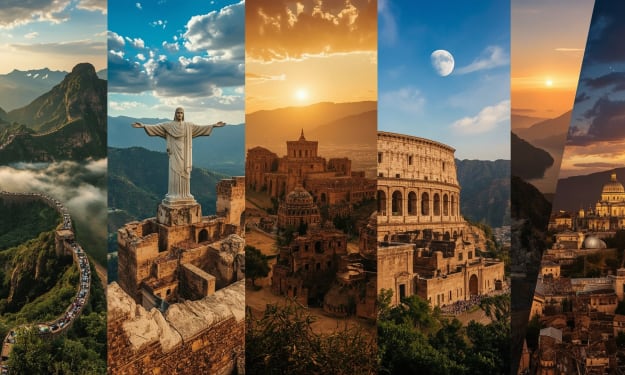
7 Wonders, 1 World: Secrets, Science & Soul of Earth's Greatest Marvels
A World Beyond the Obvious There are places on Earth that don't just exist — they echo. Whispers of ancient brilliance, thunderous feats of engineering, and stories carved in stone, all waiting to be uncovered. From jungles of Peru to deserts of Jordan, humanity has sculpted legacies so grand, they defy time, weather, and logic.
By DRE Explainsabout a year ago in History
Alexander the Great: The Lion of Macedon
Alexander the Great: The Lion of Macedon Long ago, in the land of Macedon, a boy was born under a sky lit by omens. His name was Alexander, son of King Philip II and Queen Olympias. From the very beginning, it was clear that he was not like other children. While others played with wooden swords, Alexander listened to the tales of Achilles, the mighty warrior of Troy, dreaming of glory on distant battlefields.
By Inamullah Rahimiabout a year ago in History
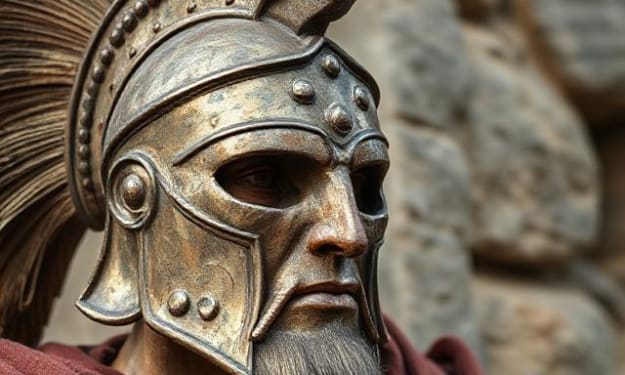
Spartacus: Born in Chains, Died a Legend
Spartacus: The Slave Who Defied an Empire In the heart of ancient Rome, where emperors ruled and gladiators bled for applause, there rose a man who would shake the foundations of the Republic. His name was Spartacus, and though he was born a slave, he died a symbol—of defiance, freedom, and the unyielding will of the oppressed. The Making of a Gladiator Spartacus was not born a Roman, nor was he destined for greatness by blood. He hailed from Thrace, a rugged region in the Balkans where fierce tribes resisted Rome’s expansion. Originally a soldier—perhaps even a Roman auxiliary—Spartacus was eventually captured and sold into slavery, a common fate for prisoners of war. Deemed strong and capable, he was sent to a gladiatorial training school in Capua, a brutal institution where men were forged into entertainers of death. Under the watchful eyes of Roman lanistae (trainers), Spartacus learned to fight not for honor, but for survival—and for the amusement of the Roman elite. Armed with nothing but short swords and the hope of living another day, he was forced to battle in the arena, where blood was currency and mercy a myth. But Spartacus's spirit remained unbroken. Within the confines of the arena, he forged not only strength, but unity—connecting with other enslaved gladiators who, like him, dreamed of freedom. The Great Escape In 73 BCE, that dream ignited into action. Spartacus, along with about 70 fellow gladiators, staged a daring escape. Armed with kitchen knives and seized weapons, they broke free from the gladiator school and fled to Mount Vesuvius, a dormant volcano that would become their fortress. From this unlikely stronghold, the fugitives launched raids on surrounding Roman towns, freeing slaves and gathering supplies. Their numbers swelled as word of rebellion spread like wildfire. Farmers, slaves, deserters—tens of thousands joined the cause. What began as a desperate bid for freedom became a full-scale insurrection. The War Begins Rome was stunned. A group of escaped slaves had defied the Republic—and won battles. The Senate, humiliated, sent hastily assembled forces to crush the revolt. Spartacus, however, proved more than just a brawler—he was a tactician. Using clever ambushes and superior knowledge of the terrain, he outmaneuvered several Roman commanders. He defeated army after army, seizing weapons, horses, and the confidence of his growing force. His army grew to possibly 100,000 men, a mix of gladiators, former slaves, and others who sought to overturn the existing order. Despite his success, Spartacus never claimed to be king. He refused a crown, speaking instead of liberty, of returning home. His aim, some say, was not to conquer Rome, but to escape Italy altogether, to lead his people north across the Alps to freedom. But freedom was not easily won in a world ruled by legions. The Empire Strikes Back The Senate, alarmed by the rebellion’s success, turned to Marcus Licinius Crassus, the wealthiest man in Rome. Crassus was ruthless and ambitious. He took command with full authority and imposed brutal discipline on his troops, even reviving the ancient punishment of decimation—killing every tenth soldier in cowardly units. Crassus pushed Spartacus south, hoping to trap him in Calabria. Spartacus sought a way out, perhaps hoping to cross the sea to Sicily, but was betrayed by pirates who had promised him ships. Trapped and outnumbered, his army fractured. Some broke away, others lost hope. Spartacus, though, never surrendered. In 71 BCE, the final battle came. On the plains of Lucania, Spartacus led his remaining forces—perhaps 30,000 men—against the might of Rome. It was a fight for their lives, for dignity, and for a future free of chains. The Death of a Legend Spartacus died as he lived: sword in hand, refusing to bow. Ancient sources say he fought fiercely, cutting his way toward Crassus himself, before being overwhelmed. His body was never found—perhaps consumed by the chaos of battle, or perhaps hidden by his loyal followers. In the aftermath, Rome made a brutal example. 6,000 captured rebels were crucified along the Appian Way, the road from Capua to Rome. For miles, crosses lined the path—grim reminders of Rome’s wrath. But the message backfired. Instead of erasing Spartacus from memory, the crucifixions immortalized him. Though Rome won the war, it could not kill the idea he had inspired. The Legacy of Spartacus To Rome, Spartacus was a rebel and a threat. To history, he is much more: a symbol of resistance, of rising against impossible odds, of fighting for the right to be free. His name echoes through centuries—in revolutions, in literature, in film. Karl Marx saw him as a proto-revolutionary. The American abolitionists honored him. Modern storytellers turned him into a tragic hero. And his story, though drenched in blood, remains a beacon: proof that even in the darkest systems, someone will rise. Spartacus may have been a slave, but he died freer than most men of his time. And in that death, he carved his name into the eternal stone of history—not as a Roman citizen, but as a rebel who defied Rome itself.
By Soul Draftsabout a year ago in History
Galileo Galilei: The Father of Modern Science
Galileo Galilei (1564–1642) is widely regarded as one of the most influential scientists in history. Often called the “Father of Modern Science,” Galileo played a key role in the Scientific Revolution of the 16th and 17th centuries. Through his groundbreaking work in physics, astronomy, and scientific methodology, he challenged traditional beliefs, defended the use of observation and experimentation, and paved the way for the development of modern science. Despite fierce opposition from religious authorities of his time, Galileo’s legacy endures in nearly every branch of science today.
By Anwar Jamilabout a year ago in History
Charles Darwin: The Man Who Unlocked the Mystery of Life
Charles Darwin (1809–1882) is one of the most important figures in the history of science. His theory of evolution by natural selection revolutionized biology and forever changed the way we understand life on Earth. By proposing that all species, including humans, evolved over time from common ancestors, Darwin challenged long-held religious and scientific beliefs. His work laid the foundation for modern evolutionary biology and has had a profound impact on many other fields, from medicine to anthropology.
By Anwar Jamilabout a year ago in History
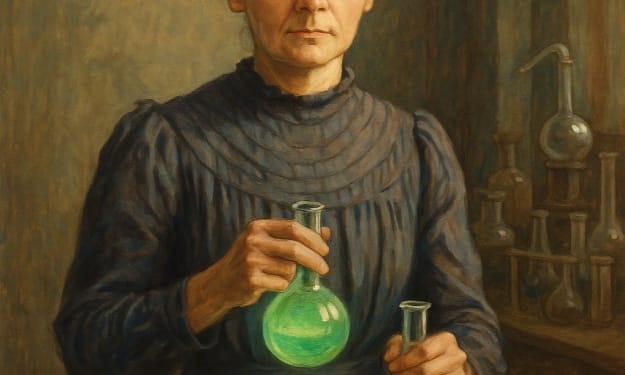
Marie Curie: Pioneer of Radioactivity and Scientific Courage
Marie Curie, born Maria Skłodowska in Warsaw, Poland, in 1867, was a scientist of extraordinary determination and intellect. She is best known for her pioneering work on radioactivity — a term she coined — and for being the first woman to win a Nobel Prize. Even more remarkably, she remains the only person in history to win Nobel Prizes in two different scientific fields: Physics and Chemistry. Curie’s contributions to science were revolutionary, and her life continues to inspire generations of scientists, especially women in STEM fields.
By Anwar Jamilabout a year ago in History
Isaac Newton: The Father of Modern Science
Sir Isaac Newton (1643–1727) is widely regarded as one of the greatest scientists in human history. His contributions to physics, mathematics, and astronomy laid the groundwork for centuries of scientific thought and innovation. With discoveries such as the laws of motion, the theory of universal gravitation, and the development of calculus, Newton transformed not only how people understood the natural world, but also how they explored and investigated it.
By Anwar Jamilabout a year ago in History