Books
The Vredefort Impact Crater: Earth’s Oldest and Most Valuable Cosmic Scar
Origins of a Cataclysmic Event Approximately 2.02 billion years ago, a massive asteroid—estimated to be 10 to 15 kilometers in diameter—collided with Earth at an unimaginable speed of around 20 kilometers per second. The energy released by this impact exceeded 10 billion Hiroshima-sized atomic bombs, making it one of the most violent events ever recorded in Earth’s geological history. The impact excavated a crater originally estimated to be 250–300 kilometers in diameter, dwarfing most other known terrestrial craters. At the time of impact, the event would have caused global earthquakes, atmospheric shockwaves, widespread fires, and possibly even short-term climate effects. Entire ecosystems near the impact zone were instantly annihilated. Today, erosion and tectonic activity have removed much of the crater’s rim, leaving behind a central uplift known as the Vredefort Dome, which remains clearly visible and scientifically invaluable. Geological Significance What makes the Vredefort Crater extraordinary is not just its size or age, but its role as a natural laboratory for understanding planetary impacts. The intense pressures and temperatures generated by the collision transformed the surrounding rocks, creating rare geological features such as: Shatter cones, cone-shaped rock fractures that are definitive evidence of meteorite impacts Shock-metamorphosed minerals, including quartz with planar deformation features Pseudotachylite, a glass-like rock formed from frictional melting during impact These formations allow scientists to study how planetary surfaces respond to extreme forces—knowledge that is directly applicable to understanding impacts on the Moon, Mars, and other celestial bodies. The Hidden Source of Immense Wealth While the crater itself is ancient, its economic legacy is ongoing. The Vredefort impact played a crucial role in shaping the Witwatersrand Basin, the world’s richest gold-bearing geological formation. The basin has produced over 40% of all gold ever mined on Earth, making it the single most productive gold region in human history. Although gold deposits existed before the impact, many geologists believe the asteroid collision reorganized and concentrated mineral-rich layers, making them more accessible to later mining. In addition to gold, the region contains: Uranium Diamonds (in nearby kimberlite fields) Platinum group metals Rare earth elements When economists estimate the total value of resources influenced by the Vredefort impact, figures often exceed tens of trillions of US dollars, placing it among the most valuable natural events in Earth’s history. Human History and Civilization The wealth generated from the Witwatersrand gold fields profoundly shaped South African history, global finance, and even modern capitalism. The gold extracted from this region helped establish Johannesburg as a major economic center and influenced: The global gold standard International banking systems Industrial expansion in Europe and North America In this sense, the Vredefort Crater is not merely a geological structure—it is a foundation stone of modern economic history. UNESCO World Heritage Status Recognizing its unparalleled significance, UNESCO designated the Vredefort Dome a World Heritage Site in 2005. The designation emphasizes its importance as: The oldest known impact structure on Earth A site of exceptional scientific value A well-preserved example of planetary-scale geological processes Protected status ensures that the crater remains available for scientific research, education, and sustainable tourism rather than unchecked exploitation. Scientific Research and Modern Relevance Even today, the Vredefort Crater continues to inform cutting-edge research. Scientists use it to: Model asteroid impact risks Improve planetary defense strategies Understand crustal deformation Study early Earth conditions With increasing awareness of near-Earth objects (NEOs) and potential asteroid threats, studying ancient impacts like Vredefort has become critically important. The crater serves as a reminder that large impacts are not theoretical—they are historical facts with lasting consequences. Cultural and Educational Importance Beyond science and economics, the Vredefort region has become a center for education and heritage tourism. Museums, guided tours, and research centers help visitors understand: Earth’s vulnerability in cosmic terms The deep timescales of planetary change Humanity’s reliance on geological processes Local communities also benefit from sustainable tourism, turning ancient destruction into modern opportunity. Estimating the “Net Worth” of the Vredefort Crater Assigning a monetary value to a geological structure is inherently speculative, but informed estimates suggest: Gold influenced by the impact: $10–15 trillion+ Other minerals and metals: $2–5 trillion Scientific, educational, and cultural value: Priceless When combined, the effective net worth of the Vredefort Crater easily exceeds $15–20 trillion, making it arguably the richest impact site on Earth. Conclusion The Vredefort Impact Crater stands as a powerful symbol of how cosmic events can shape planetary destiny. What began as a moment of unimaginable destruction became, over billions of years, a source of extraordinary wealth, scientific discovery, and human progress. It reminds us that Earth’s greatest treasures often emerge from its most violent moments—and that the story of our planet is inseparable from the story of the universe itself.
By Say the truth 10 months ago in History
Ancestors and Spiritual gifts.
I used to think spiritual gifts were something people chose—something you decided to develop once you became “spiritual enough.” I believed intuition, spiritual awareness, and psychic sensitivity were skills you learned over time. What I didn’t know was that many spiritual gifts are ancestral inheritances, passed down quietly through generations.
By divinefeminineOmo10 months ago in History
Ash and Ink
The air in Alexandria no longer smelled of salt and jasmine. It smelled of scorched papyrus and the metallic tang of fear. Kimon was nineteen, a junior scribe whose only contribution to history thus far was the steady transcription of tax records. But today, he wasn’t holding a ledger. He was standing in the Great Hall of the Serapeum, clutching a leather satchel to his chest as if it were a shield. Outside, the city was a symphony of chaos—the rhythmic thud of Roman boots, the crackle of timber, and the screams of a world being rewritten by the sword.
By LUNA EDITH10 months ago in History
The Net Worth of Nazi-Looted Wealth in History An Examination of One of the Largest Organized Thefts Ever Recorded. AI-Generated.
--- ## **What Was Nazi-Looted Wealth?** Nazi-looted wealth refers to assets stolen or forcibly seized by the Nazi regime between 1933 and 1945. This looting was not random; it was highly organized and supported by state policies. The stolen assets included: * Gold and silver * Cash and bank deposits * Artwork and cultural objects * Jewelry and personal valuables * Real estate and businesses * Industrial equipment and raw materials Much of this wealth was used to finance Germany’s war effort. --- ## **Systematic Theft from Individuals** One of the most devastating aspects of Nazi looting was the theft from individuals, particularly Jewish families. ### **Personal Property Confiscation** Victims were forced to surrender: * Gold, jewelry, and watches * Cash and bank savings * Homes, land, and businesses Before deportation, many people were stripped of all possessions. These assets were transferred to the German state or sold to loyal supporters. --- ## **State-Level Looting of Occupied Countries** Nazi Germany also looted national wealth from occupied countries. ### **Gold Reserves and Central Banks** Germany seized gold reserves from countries such as: * Austria * Czechoslovakia * Poland * Belgium * Netherlands This gold was often melted down and moved through neutral countries to disguise its origin. Historians estimate that **state-level gold theft alone would be worth tens of billions of dollars today**. --- ## **Art and Cultural Looting** The Nazis carried out unprecedented cultural theft. ### **Stolen Artworks** Hundreds of thousands of artworks were stolen from: * Museums * Private collections * Religious institutions Paintings by famous artists such as Rembrandt, Picasso, Van Gogh, and others were targeted. Many of these artworks remain missing today. Experts estimate that **Nazi-looted art alone may be worth $100–150 billion USD** in current market value. --- ## **Industrial and Economic Assets** The Nazis also looted: * Factories * Machinery * Raw materials * Agricultural production Occupied economies were forced to support Germany’s war industry. This economic exploitation generated enormous value beyond physical theft. --- ## **Total Estimated Net Worth (Modern Value)** Estimating the total net worth of Nazi-looted wealth is difficult because: * Records were destroyed * Assets were hidden or lost * Some wealth was never recovered However, historians and economists generally estimate: 👉 **$200 billion to $400 billion USD in today’s value**, with some higher estimates reaching **over $500 billion USD**, depending on methodology. This makes Nazi looting one of the largest thefts in recorded history. --- ## **Hidden Wealth and Missing Assets** Not all looted wealth was recovered after the war. ### **Hidden Gold and Assets** Some assets were: * Buried or hidden * Moved through secret accounts * Disappeared during the collapse of Nazi Germany Stories of hidden Nazi treasure continue to surface, though many remain unverified. --- ## **Post-War Recovery and Restitution** After World War II, Allied forces attempted to recover stolen assets. ### **Restitution Efforts** * Gold was returned to national governments * Some artworks were recovered and restored * Compensation programs were established However, full restitution was impossible. Many victims were dead, records were missing, and assets had changed hands. --- ## **Ethical and Legal Legacy** The issue of Nazi-looted wealth remains relevant today. ### **Ongoing Restitution Cases** Museums and private collectors still face legal claims for: * Stolen art * Cultural artifacts Countries and institutions continue to confront the moral responsibility of returning stolen property. --- ## **Why the Wealth Cannot Be Fully Measured** The true value of Nazi-looted wealth cannot be fully expressed in money because: * It represents lives destroyed * Cultural heritage lost * Generations displaced Financial figures only describe material loss, not human suffering. --- ## **Comparison With Other Historical Looting** Compared to other historical lootings: * Nazi looting was more systematic * It was supported by modern bureaucracy * It targeted entire populations This makes it unique in scale and organization. --- ## **Conclusion** The net worth of Nazi-looted wealth represents one of the darkest chapters in modern history. While estimates suggest hundreds of billions of dollars in today’s value, the real cost was far greater—measured in human lives, lost cultures, and broken communities. Understanding this history is essential not to admire the scale of theft, but to remember the importance of justice, restitution, and historical accountability. The legacy of Nazi-looted wealth serves as a reminder that economic crimes committed under state power can have consequences lasting generations. ---
By Say the truth 10 months ago in History
The Founding of Buenos Aires
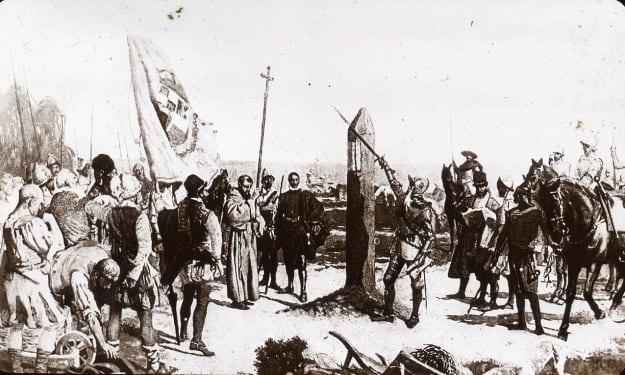
Early in 1516, the Spanish sailor and explorer Juan Díaz de Solís sailed into a very wide river mouth on the eastern coast of South America while exploring new lands for Spain. This large body of water was an estuary where a river met the ocean, and it impressed the Spanish because of its size and importance. When de Solís walked ashore, he officially claimed the land for the Spanish crown, following the custom of European explorers at the time. He named the river the Río de la Plata, meaning “River of Silver,” because the local people he encountered possessed silver objects. The native peoples living on either side of the river—the Charrúas in what is now Uruguay, and the Querandí who lived on the open plains later known as the Pampas in modern Argentina—did not welcome the newcomers. Instead, they viewed them with suspicion and anger. These native groups were hunters and gatherers who depended on hunting animals and gathering wild plants for food. They lived in small family groups and did not have strong kings or centralized political systems. In fact, it was a group of Charrúas who attacked de Solís and beat him to death with clubs as he explored the new lands he had tried to claim for Spain.
By Hafeez Alam10 months ago in History
A World in Conflict: How History Shapes Today’s Global Tensions
A World in Conflict: How History Shapes Today’s Global Tensions The world today feels restless. News headlines are filled with wars, political tension, economic struggles, and fear about the future. Many people ask the same question: Why does the world seem so divided? To understand modern global conflicts, we must look beyond daily news and examine how history, power, and human decisions shape world affairs.
By Wings of Time 10 months ago in History