Books
Why August Wilson’s Joe Turner’s Come and Gone Feels Urgent on Today’s Broadway Stage by NWO Sparrow
Why August Wilson’s vision of identity and movement resonates in today’s political climate by NWO Sparrow Joe Turner’s Come and Gone returns with urgency, reflection, and cultural weight
By NWO SPARROW9 months ago in History
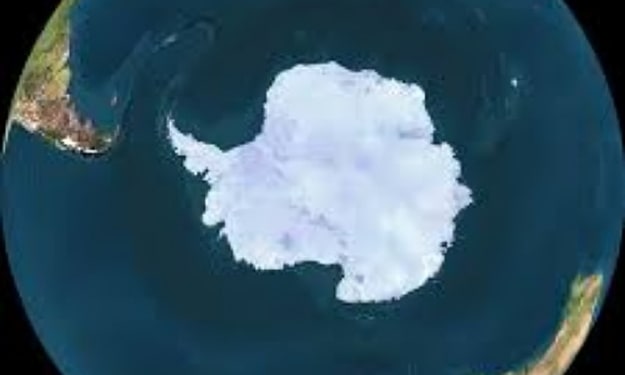
Antarctica Map
Antarctica is the coldest, driest, and windiest continent on Earth. It is located at the southernmost part of the planet, surrounding the South Pole. Because of its extreme weather and thick ice cover, Antarctica is very different from other continents. An Antarctica map helps us understand the shape, location, and important features of this frozen land.
By Farhan Sayed9 months ago in History
When Allies Disagree: How Global Partnerships Are Being Redefined
When Allies Disagree: How Global Partnerships Are Being Redefined For much of the modern era, global alliances appeared firm and predictable. Powerful countries formed blocs, promised mutual support, and stood together during times of war and crisis. But in today’s world, those alliances are changing. Recent disagreements between long-standing partners show that global cooperation is no longer based on automatic loyalty—it is increasingly shaped by national interests, public opinion, and long-term stability.
By Wings of Time 9 months ago in History
Saudi Arabia Warns Against War
Saudi Arabia Warns Against War: Why Riyadh Opposes a U.S. Attack on Iran As tensions between the United States and Iran continue to rise, Saudi Arabia has taken a notable and cautious position: warning against any U.S. military attack on Iran. This stance may surprise some observers given the long history of rivalry between Riyadh and Tehran, but it reflects a broader regional concern that another major war in the Middle East could spiral beyond control.
By Wings of Time 9 months ago in History
Is the U.S. Preparing to Attack Iran?
Is the U.S. Preparing to Attack Iran? Inside the Rising Tensions and Possible Military Pathways In early 2026, tensions between the United States and Iran reached one of their highest points in years. For weeks, dramatic political rhetoric, shifting military postures, and warnings from leaders around the world have fueled alarms that a U.S. military strike against Iran may be imminent. Yet as of now, no confirmed attack has occurred, and the situation reflects a complex mix of pressure, preparation, de-escalation, and diplomatic uncertainty that illustrates how modern conflict can hinge just as much on words and positioning as on direct action.
By Wings of Time 9 months ago in History
Seven Dials
Introduction Seven Dials is a famous and historic area located in London, England. It is found near Covent Garden, one of the busiest and most popular parts of the city. Seven Dials is known for its unique road design, rich history, old buildings, shops, cafés, and lively atmosphere. Today, it is a popular place for tourists and local people who enjoy culture, shopping, and history.
By Farhan Sayed9 months ago in History
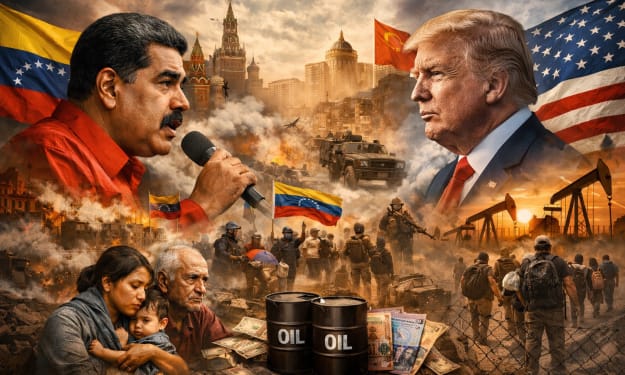
Venezuela’s President Under Pressure: Arrest Calls, Indictments, and a Nation at a Crossroads. AI-Generated.
How the Arrest Narrative Began The idea of arresting Venezuela’s president did not appear out of nowhere. It stems from years of accusations that range from human-rights abuses to corruption and drug-related activities. U.S. authorities have filed formal charges against Nicolás Maduro, linking him to cocaine trafficking networks and large-scale financial misconduct. These cases place him among the few sitting leaders facing active international legal pressure.
By Muhammad Islam khan swati10 months ago in History
A Crisis of Power, Politics, and the People. AI-Generated.
The relationship between Venezuela and the United States remains one of the most complicated political dynamics in the Western Hemisphere. Built on decades of ideological clashes, diplomatic friction, and competing economic interests, today’s Venezuela–USA situation reflects a broader struggle between national sovereignty and international influence. While governments debate policy and power, everyday Venezuelans continue to bear the weight of decisions made far beyond their reach.
By Muhammad Islam khan swati10 months ago in History
Alexander the Great’s Looted Wealth from India: A Historical and Economic Estimation
While his campaigns reshaped the ancient world politically and culturally, one of their most lasting impacts was the massive wealth he acquired from conquered territories, especially during his Indian campaign. This article explores the historical context, nature of the wealth looted from India, and an estimated net worth of that treasure in modern terms—revealing the truly staggering value of what came into Alexander’s hands. Alexander’s Indian Campaign: Setting the Stage Alexander entered the Indian subcontinent after securing Persia, moving his army across the Hindu Kush into the regions corresponding to modern-day Afghanistan and Pakistan. In 327–326 BCE, he fought several key battles in India, most famously the Battle of the Hydaspes (326 BCE) against King Porus near the Jhelum River. Although India was not as economically centralized as Persia, it contained: Rich tributary kingdoms Wealthy local rulers Fertile agricultural lands Long-distance trade networks India’s wealth was agricultural, manufactured goods (especially textiles), and precious metals. Alexander’s expedition was financed by looting Persian treasuries and accumulating more riches with every conquest. India provided unique economic opportunities, and his forces extracted immense wealth. Types of Wealth Alexander Acquired in India 1. Precious Metals and Jewelry India had long-standing traditions of gold and silver craftsmanship. Local rulers, nobles, and temples often held reserves of: Gold and silver coins Jewelry and ornaments Gemstones (diamonds, rubies, emeralds) When Alexander defeated Indian rulers or secured alliances, these hoards were taken or demanded as tribute. 2. War Booty from Defeated Kingdoms In battles like Hydaspes, spoils of war included: Royal treasuries Horses and elephants Luxury goods Armory and ceremonial items King Porus, though reinstated as a client ruler, still had to give substantial gifts. 3. Tributary Payments and Hostage Wealth Following victory, Alexander often demanded: Annual tribute payments Hostages from noble families Valuable gifts of gold, silver, trinkets, and textiles These were symbolic and economic concessions, adding to his wealth. 4. Trade Goods and Taxes Northern India was part of trade routes connecting Central Asia, the Middle East, Southeast Asia, and the Indian Ocean. Goods in motion included: Textiles and dyed fabrics Spices Exotic animals (especially elephants for warfare) Artisan products Alexander’s forces sometimes commandeered caravans, levied taxes, or took existing goods in transit. Estimating the Net Worth of Looted Indian Wealth Estimating Alexander’s wealth from India in modern monetary terms is challenging due to: Incomplete records Variations in coinage and value Differences in economic structure However, historians use available data to make plausible estimates. 1. Precious Metal Estimates Gold and Silver Taken Records from ancient Greek historians (like Arrian and Curtius) suggest that Alexander’s army accumulated massive quantities of gold and silver after Indian victories. While exact figures are not recorded, scholars estimate: Gold: 100–200 metric tons Silver: 500–700 metric tons (including coins and bullion) Modern value estimate: Gold (~$70 million per ton) → $7–$14 billion Silver (~$0.9 million per ton) → $450–$630 million Total from metals: ≈ $8–$15 billion These figures are rough but demonstrate that precious metals alone rival the wealth of entire modern economies in antiquity. 2. Gemstones and Jewelry India was famous for gemstones—especially diamonds from Golconda later, and other precious stones in earlier periods. Estimates for jewel hoards range widely: Estimated value: $5–$10 billion (modern equivalent) These items were portable, high-value, and easy to transport with an advancing army. 3. Trade Goods and Spoils Captured textiles, spices, elephants, weapons, and luxury items added value not just intrinsically but also in trade markets across Alexander’s empire. Estimated value: $3–$6 billion 4. Total Estimated Indian Loot Value Category Estimated Modern Value Gold & Silver $8–$15 billion Gemstones & Jewelry $5–$10 billion Trade Goods & Spoils $3–$6 billion Total Estimated Loot from India $16–$31 billion Relative Economic Impact To appreciate this in context: Ancient India was not a Roman-level coin economy, but its wealth was real and distributed. Alexander’s total accumulated wealth from all campaigns (Persia, Egypt, Central Asia, India) may have exceeded $60–$100 billion in modern value. Adjusted for economic power and GDP share of the time, Alexander’s treasure could represent a much larger fraction of world wealth than similar figures today. What Alexander Did with the Indian Wealth After India, Alexander planned further conquests but died suddenly in 323 BCE in Babylon. Before his death: Wealth was used to pay his army large bonuses. Treasures were stored in strategic locations (e.g., Susa and Babylon). Gems, gold, and luxury goods were distributed to allied rulers and officers. Some wealth later influenced the economies of: The Seleucid Empire Ptolemaic Egypt Hellenistic Greece The redistribution of Alexander’s treasure shaped successor kingdoms. Legacy of the Looted Wealth Cultural Transmission The influx of Indian gold and goods into the Mediterranean contributed to: Increased trade contacts Spread of Indian textiles and spices Greater cross-cultural awareness Historical Memory Greek and Roman historians recorded Indian wealth as exotic and immense, contributing to ancient legends of Eastern riches. Challenges in Estimation Historians must consider: Inflation of ancient accounts Lack of standardized coin reporting Regional variations in value So exact figures vary, but the scale of Alexander’s wealth from India is indisputably massive. Conclusion Alexander the Great’s Indian campaign was a pivotal moment in his imperial expansion, not only militarily but economically. Though ancient historians did not record precise figures, modern estimates suggest that the wealth he captured from India—through precious metals, gemstones, trade goods, and tribute—would be worth approximately $16–$31 billion in today’s terms. When combined with riches from his Persian and Egyptian conquests, Alexander’s total loot may rival the treasuries of empires. The capture and movement of such wealth not only funded his army but helped reshape economic and cultural networks across the ancient world. Alexander’s legacy is not only that of a conqueror, but also of a figure whose campaigns drove massive transfer of wealth, the effects of which echoed long after his empire fractured.
By Say the truth 10 months ago in History
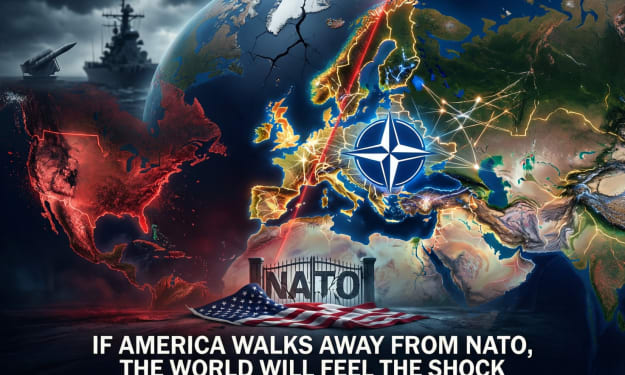
If America Walks Away from NATO, the World Will Feel the Shock
If America Walks Away from NATO, the World Will Feel the Shock For more than seventy years, NATO has stood as a symbol of collective security and shared responsibility. It was never a perfect alliance, but it worked because it was built on a simple idea: when nations stand together, wars are less likely to happen. Today, however, that foundation is being shaken—not by foreign enemies, but by growing voices inside the United States questioning whether NATO is still worth it.
By Wings of Time 10 months ago in History
Can the United States Leave NATO?
Can the United States Leave NATO? What It Would Take—and What It Would Mean The North Atlantic Treaty Organization, commonly known as NATO, has been one of the most powerful military alliances in modern history. Since its creation in 1949, the United States has been NATO’s strongest member—militarily, financially, and politically. But in recent years, debates have grown louder about whether the U.S. should remain in the alliance. This raises a serious question: how could the United States be removed from NATO—or leave it—and what would that mean for the world?
By Wings of Time 10 months ago in History
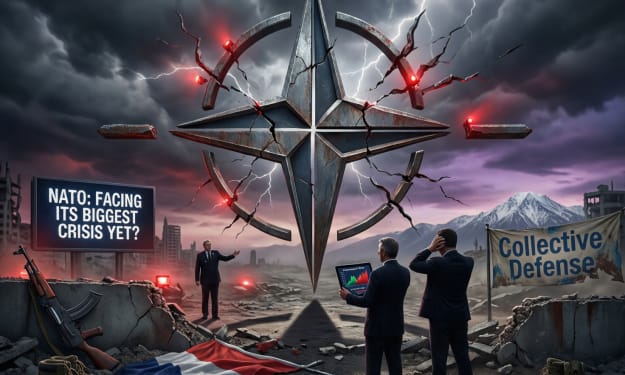
Is NATO Facing Its Biggest Crisis Yet?
Is NATO Facing Its Biggest Crisis Yet? For more than seventy years, NATO has been one of the strongest military alliances in the world. Formed after World War II, it was designed to protect its members through collective defense. An attack on one was considered an attack on all. For decades, this principle helped maintain stability in Europe and beyond. But today, NATO is facing one of the most challenging moments in its history.
By Wings of Time 10 months ago in History