Books
Can Global Peace Exist Without a Global Authority?
Can Global Peace Exist Without a Global Authority? The idea of global peace without a global authority sounds appealing to some people. In theory, nations could manage their own affairs, respect each other’s borders, and resolve disputes peacefully without an overarching institution telling them what to do. Supporters of this view argue that global bodies are slow, biased, and often ineffective. But history and current events raise a difficult question: can lasting global peace truly exist without a central authority to guide it?
By Wings of Time 9 months ago in History
Who Replaces the United Nations If It Fails?
Who Replaces the United Nations If It Fails? For more than seventy years, the United Nations has served as the world’s main platform for diplomacy, peacekeeping, and global cooperation. Despite its weaknesses, it remains the only institution where nearly every country has a seat at the table. But as trust in the UN declines and major powers increasingly act alone, an uncomfortable question is being asked more often: if the UN fails, who—or what—takes its place?
By Wings of Time 9 months ago in History
Can the United Nations Survive a Divided World?
Can the United Nations Survive a Divided World? The United Nations was born from the ashes of World War II, at a time when the world agreed on one powerful idea: global problems require global solutions. For decades, the UN served as a meeting ground for rivals, a coordinator of humanitarian aid, and a symbol of international cooperation. Today, however, the organization stands at a crossroads. A more divided, competitive, and unstable world is forcing a serious question—what will the UN become in the future?
By Wings of Time 9 months ago in History
Did Trump’s Retreat From the United Nations Undermine Global Peace?
Did Trump’s Retreat From the United Nations Undermine Global Peace? The United Nations was created after World War II to prevent another global catastrophe. Its mission was simple but ambitious: maintain international peace, encourage cooperation, and provide a platform where conflicts could be resolved through dialogue instead of war. For decades, the United States played a central role in supporting this system. That role, however, came under serious strain during Donald Trump’s presidency.
By Wings of Time 9 months ago in History
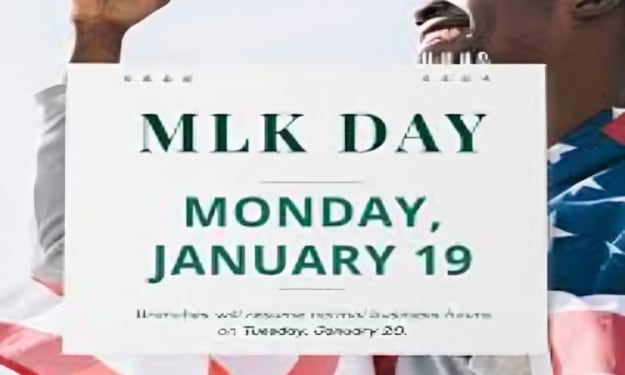
Are Banks Open on Martin Luther King Jr. Day?
Introduction Martin Luther King Jr. Day, also called MLK Day, is a national holiday in the United States. Many people enjoy a day off from work or school on this day. However, a common question people ask is: Are banks open on MLK Day?
By Farhan Sayed9 months ago in History
The Quiet Collapse of Global Arms Control
The Quiet Collapse of Global Arms Control For decades, arms control agreements helped prevent the world’s most powerful weapons from spiraling out of control. Treaties limited nuclear stockpiles, increased transparency, and built fragile trust between rival states. Today, that system is quietly unraveling—and its collapse may define the next era of global insecurity.
By Wings of Time 9 months ago in History
The Red Sea Crisis and the Fragility of Global Trade
The Red Sea Crisis and the Fragility of Global Trade The Red Sea has quietly become one of the most critical pressure points in global affairs. Once seen mainly as a commercial shipping route connecting Asia, Europe, and Africa, it is now a zone of rising military tension, disrupted trade, and geopolitical rivalry. What happens in this narrow stretch of water is no longer a regional issue—it is reshaping global economics and international security.
By Wings of Time 9 months ago in History
The Quiet Rise of Global Militarization
The Quiet Rise of Global Militarization Across the world, governments are increasing military spending, expanding defense industries, and modernizing weapons systems—often without openly acknowledging why. There are no formal declarations of war, no mass troop mobilizations, and no clear enemy named in many cases. Yet behind the scenes, a quiet shift is taking place. Global militarization is rising, not loudly, but steadily, reshaping international relations in ways that may define the coming decades.
By Wings of Time 9 months ago in History
The Fall of Tibet to a Communist State: History, Causes, and Consequences
The incorporation of Tibet into the People’s Republic of China (PRC) after 1950 was not a single event but a complex process involving military force, political negotiation, ideological conflict, and long-lasting resistance. Understanding this fall requires examining Tibet’s historical status, China’s communist revolution, and the profound consequences that followed. Tibet Before 1950: A Distinct Civilization Before the Chinese communist takeover, Tibet functioned as a de facto independent region for decades, especially after the fall of the Qing Dynasty in 1911. Although China historically claimed suzerainty over Tibet, actual control was minimal for long periods. Tibet was governed by a theocratic system led by the Dalai Lama, combining religious authority with political power. Tibetan society was deeply rooted in Buddhism, monasteries were central institutions, and cultural traditions had evolved largely isolated from the outside world. However, Tibet was not a modern nation-state in the Western sense. Its political system was traditional, its military weak, and its international recognition limited. While Tibet maintained its own administration, currency, and foreign relations to some extent, few countries formally recognized it as an independent state. This ambiguity later played a crucial role in China’s justification for intervention. Rise of Communist China and Its Ideology In 1949, the Chinese Communist Party, led by Mao Zedong, emerged victorious from the Chinese Civil War and established the People’s Republic of China. The new communist government was driven by Marxist-Leninist ideology, which emphasized territorial unity, central authority, and the elimination of feudal and religious systems viewed as oppressive. From the communist perspective, Tibet was considered an inseparable part of China that had been “liberated” from imperial control in the past. The Chinese leadership described Tibetan society as “feudal” and “backward,” arguing that communist intervention would free the Tibetan people from serfdom and religious exploitation. These ideological beliefs formed the moral and political justification for China’s actions in Tibet. The 1950 Invasion: Military Force and Political Pressure In October 1950, the People’s Liberation Army (PLA) crossed into eastern Tibet and defeated the small, poorly equipped Tibetan forces at Chamdo. This military action is often referred to by China as the “Peaceful Liberation of Tibet,” but for Tibetans, it marked the beginning of occupation. Facing overwhelming military pressure and lacking international support, Tibetan leaders were forced to negotiate. In 1951, Tibetan representatives in Beijing signed the Seventeen Point Agreement. This agreement affirmed Chinese sovereignty over Tibet while promising autonomy, protection of religious freedom, and preservation of the Dalai Lama’s authority. Importantly, the agreement was signed under duress, and the Dalai Lama later stated that it did not reflect the true will of the Tibetan people. Broken Promises and Growing Tensions Initially, China adopted a cautious approach, especially in central Tibet, allowing traditional institutions to continue. However, in eastern regions like Kham and Amdo, radical communist reforms were introduced. Land redistribution, collectivization, and attacks on monasteries sparked widespread resentment and armed resistance among Tibetans. By the mid-1950s, tensions escalated as Chinese authorities increasingly interfered in religious affairs and governance. Monasteries were closely monitored, monks were arrested, and traditional elites were sidelined. For a society where religion was central to daily life, these actions were deeply traumatic. The 1959 Uprising and Exile of the Dalai Lama The situation reached a breaking point in March 1959 when a massive uprising erupted in Lhasa. Thousands of Tibetans surrounded the Dalai Lama’s palace, fearing that the Chinese planned to abduct him. The revolt was brutally suppressed by the PLA, resulting in thousands of deaths and widespread destruction. Following the uprising, the 14th Dalai Lama fled Tibet and sought asylum in India, where he established a government-in-exile in Dharamshala. His exile symbolized the definitive collapse of Tibet’s traditional political system and marked a turning point in the Tibetan struggle. Cultural Revolution and Cultural Destruction The fall of Tibet deepened during China’s Cultural Revolution (1966–1976). Religious practice was banned, monasteries were destroyed, sacred texts were burned, and monks were forced to abandon monastic life. An estimated 6,000 monasteries were damaged or demolished. Tibetan culture, language, and identity faced systematic suppression under the banner of revolutionary ideology. This period left deep scars on Tibetan society and reinforced the perception that communist rule threatened not just political autonomy, but the very survival of Tibetan civilization. Long-Term Consequences and Global Impact
By Say the truth 9 months ago in History
The Dalai Lama: Life, Teachings, and Global Influence. AI-Generated.
Early Life and Recognition The 14th Dalai Lama was born on July 6, 1935, in a small farming village called Taktser in northeastern Tibet (present-day Qinghai Province, China). His birth name was Lhamo Dhondup. Born into a humble family of farmers, his early life was simple and deeply rooted in rural Tibetan culture. At the age of two, he was identified as the reincarnation of the 13th Dalai Lama by a search party of Tibetan monks. According to Tibetan Buddhist tradition, the Dalai Lama is believed to be the reincarnation of Avalokiteśvara, the Bodhisattva of Compassion. After rigorous tests and spiritual confirmations, the child was officially recognized and taken to Lhasa, the capital of Tibet, to begin monastic training. He was renamed Tenzin Gyatso, meaning “Ocean of Wisdom.” The Dalai Lama: Life, Teachings, and Global Influence The Dalai Lama is one of the most respected spiritual leaders in the world, known for his teachings on compassion, non-violence, peace, and universal responsibility. He is the spiritual head of Tibetan Buddhism and a global symbol of harmony and moral leadership. Over the decades, the Dalai Lama has transcended religious boundaries, inspiring millions across cultures, nations, and belief systems.
By Say the truth 9 months ago in History