Books
The Mysterious Sword of King Tutankhamun: A Weapon from the Heavens
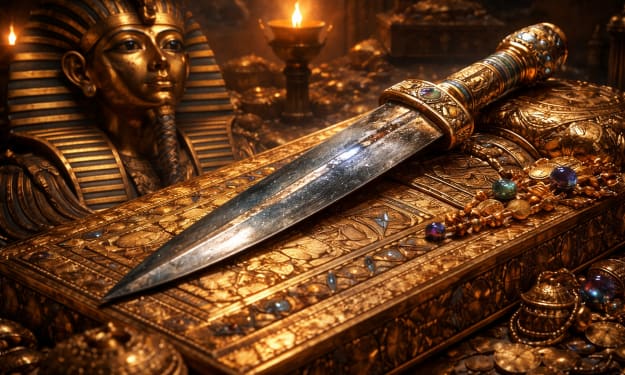
Discovery of the Tomb and the Blade In 1922, British archaeologist Howard Carter uncovered the nearly intact tomb of King Tutankhamun in the Valley of the Kings. Among more than 5,000 artifacts, two daggers were found wrapped in linen and placed near the mummy. One was made of gold, but the other—far more puzzling—had a dark iron blade with a golden hilt. This discovery raised immediate questions. Tutankhamun lived around 1332–1323 BCE, during the Bronze Age, when iron smelting technology was either unknown or extremely rare in Egypt. Iron objects from this period were almost unheard of, leading scholars to wonder: How did an iron blade end up in the tomb of a Bronze Age pharaoh? The Problem with Ancient Iron Iron is far more difficult to produce than bronze. It requires much higher temperatures to extract from ore, technology that Egypt would not fully develop until centuries later. For this reason, iron was extremely rare and valuable in Tutankhamun’s time—often more valuable than gold. Ancient texts refer to iron as “metal from heaven”, suggesting that early civilizations recognized its unusual origin. This description hinted that the blade might not have been forged from earthly iron at all. Scientific Breakthrough: A Blade from a Meteorite For decades, the true origin of Tutankhamun’s iron dagger remained a mystery. In 2016, scientists conducted non-invasive tests using X-ray fluorescence spectroscopy, allowing them to analyze the blade without damaging it. The results were astonishing: The blade contained high levels of nickel and cobalt This composition perfectly matched that of iron meteorites The metal was consistent with meteoritic iron that fell to Earth naturally This confirmed that Tutankhamun’s dagger was forged from a meteorite, making it one of the earliest known examples of meteoritic iron craftsmanship. Craftsmanship Beyond Its Time What makes the dagger even more remarkable is its exceptional craftsmanship. The blade shows no rust, cracks, or flaws, even after more than 3,300 years. The golden hilt is decorated with intricate designs, and the blade fits perfectly into its sheath. This level of metallurgical skill suggests that ancient craftsmen not only recognized the value of meteoritic iron but also knew how to cold-hammer and shape it without advanced furnaces. Such expertise indicates a sophisticated understanding of materials long before the Iron Age officially began. Symbolic and Religious Significance To the ancient Egyptians, objects from the sky were deeply sacred. Meteorites were associated with the gods, the stars, and the afterlife. Using a blade forged from a fallen star would have had enormous symbolic meaning. The dagger likely represented: Divine power Royal authority Protection in the afterlife Some scholars believe the blade was meant to serve Tutankhamun in the afterlife, ensuring his protection among the gods. The idea that the weapon came from the heavens reinforced the belief that the pharaoh himself had divine origins. Was the Dagger a Gift? Another intriguing theory suggests that the dagger may not have been made in Egypt at all. Similar meteoritic iron artifacts have been found in regions such as Anatolia and the Near East, where advanced metalworking techniques existed earlier. Historical records show that Egypt had strong diplomatic ties with neighboring kingdoms. The dagger could have been: A royal gift A diplomatic offering A prized heirloom passed through generations If so, the weapon may represent international connections and elite trade networks of the ancient world. Sword or Dagger? Although often referred to as a sword, the weapon is technically a dagger due to its size. However, its ceremonial importance far outweighs its physical dimensions. It was not meant for battlefield combat but as a symbol of power, protection, and divine favor. Why the Mystery Endures Tutankhamun’s dagger continues to fascinate historians, scientists, and the public because it challenges assumptions about ancient technology. It proves that: Ancient civilizations used advanced materials creatively Knowledge and skill existed beyond what textbooks once suggested Mythological references to “heavenly metals” were rooted in real experience The blade stands at the intersection of science, history, and mythology.
By Say the truth 9 months ago in History
The Calvine Photo: Best UFO Picture Ever Taken... or the Best-Kept Secret?
Picture this: It's a crisp August evening in 1990, deep in the Scottish Highlands near the tiny hamlet of Calvine. Two young guys-let's call them friends out for a simple hike, nothing fancy-are trudging along a quiet road, probably chatting about the weather or where to grab a pint later. The sun's dipping low, casting long shadows over the rolling hills. Then, out of nowhere, a low humming sound starts. Not mechanical exactly. More like... something alive, but silent in a way that makes the hair on your arms stand up.
By KWAO LEARNER WINFRED9 months ago in History
Wealth Reserves and Economic Power of the Madurai Rulers during the First Sangam Age. AI-Generated.
The Madurai rulers of the Sangam Age possessed immense wealth derived from trade, agriculture, tribute, and natural resources, making them among the richest monarchs of ancient India.
By Say the truth 9 months ago in History
The Chola Dynasty and the Legend of the Hundred-Elephant-Slaying Warrior. AI-Generated.
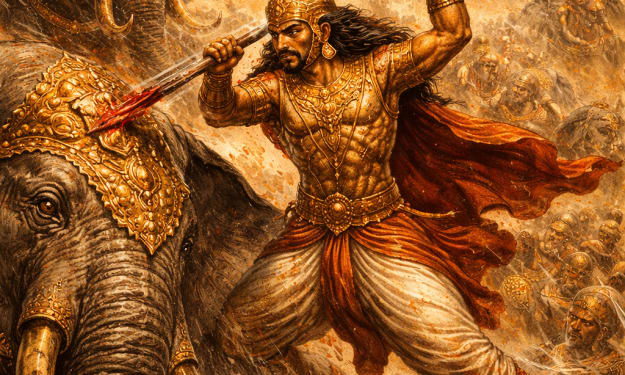
Among the many heroic traditions associated with the Cholas is the legendary account of a warrior said to have slain one hundred war elephants in battle—a symbol of unmatched courage, strength, and battlefield mastery. Though this account blends history and legend, it reflects the martial culture of the Chola era and the extraordinary challenges faced by warriors during medieval warfare. Rise of the Chola Dynasty
By Say the truth 9 months ago in History
The Epic of 1917
Before discussing the cannons of Mărăști, one must understand the deplorable state of the country at the beginning of 1917. Following the disastrous campaign of 1916, two-thirds of Romanian territory, including Bucharest, was under German and Austro-Hungarian occupation. The Government, the Royal Family, and the remnants of the army had retreated to Moldavia.Moldavia had become a vast refugee camp. Famine, the biting cold, and typhus were ravaging the population, killing more people than the enemy's bullets. However, amidst this apocalyptic landscape, a miracle occurred: the reorganization of the army. Under the guidance of the French Military Mission led by General Henri Berthelot, the Romanian soldier was rearmed, trained in modern warfare tactics, and, most importantly, restored to his dignity. King Ferdinand’s promises regarding land reform and universal suffrage transformed peasants into soldiers ready for the ultimate sacrifice.
By alin butuc9 months ago in History
Can World War III Be Prevented?
Can World War III Be Prevented? The idea of World War III is no longer limited to history books or fictional movies. Rising global tensions, regional wars, arms buildups, and political rivalries have made many people wonder whether another world war is possible—and more importantly, whether it can still be prevented. While the risks are real, global conflict is not inevitable. Prevention depends on choices made by leaders, institutions, and societies today.
By Wings of Time 9 months ago in History
What Would World War III Look Like Today?
What Would World War III Look Like Today? When people imagine World War III, many still picture massive armies, tanks rolling across borders, and cities reduced to rubble by bombs. While traditional warfare would still play a role, a modern world war would look very different from the conflicts of the 20th century. Advances in technology, global interdependence, and new forms of power have changed how wars are fought—and how they affect the world.
By Wings of Time 9 months ago in History
A Jealous God. Content Warning.
My boyfriend and I had a conversation about religion the other day that sparked my thoughts on something that has long confused me. My God is from the Bible and jealousy is often deemed a "bad" emotion, so... why does the Bible say that God is a jealous God?
By Adora Hooper9 months ago in History
UAE and India Sign a Major Defense Agreement
UAE and India Sign a Major Defense Agreement The United Arab Emirates (UAE) and India have taken another important step in their growing relationship by signing a new defense cooperation agreement. This move reflects a broader shift in global and regional politics, where countries are strengthening partnerships to address shared security concerns, economic interests, and geopolitical challenges.
By Wings of Time 9 months ago in History
Reform or Replace? The Future of Global Governance
Reform or Replace? The Future of Global Governance Global governance stands at a critical crossroads. Institutions created after World War II—especially the United Nations—were designed to prevent another global catastrophe. For decades, they provided platforms for dialogue, coordination, and conflict management. But today, many people question whether these institutions still work as intended. The growing debate is no longer just about reform. It is about whether global governance should be repaired or replaced entirely.
By Wings of Time 9 months ago in History