Books
The Rise and Fall of Bobby Fischer: Chess Genius, Troubled Soul
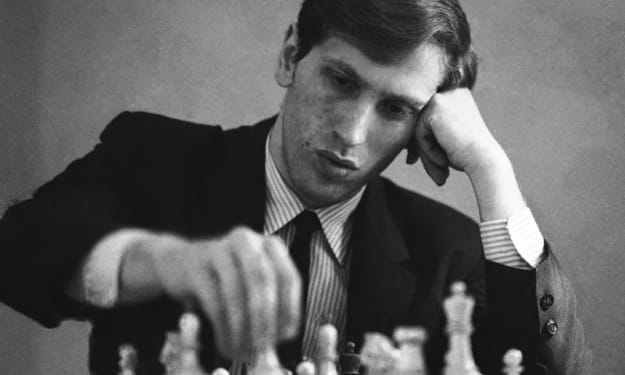
Some people seem destined for greatness in a single pursuit. Lionel Messi was born to dazzle on the soccer field, Mozart to compose timeless symphonies, and Einstein to unravel the mysteries of the cosmos. For Robert James Fischer—known to the world as Bobby—his calling was chess. A prodigy unlike any other, Fischer didn’t just play the game; he redefined it, shattering records and overwhelming opponents with a brilliance that remains unmatched. At his peak, he took on the Soviet Union’s chess empire—a powerhouse that had ruled the board for 25 years—and emerged victorious, cementing his status as a legend. Yet, his story is as much about triumph as it is about tragedy, a tale of a man who conquered the chess world only to lose himself to his own unraveling mind.
By KWAO LEARNER WINFRED2 years ago in History
The Harrowing Tale of the Medusa: A Maritime Tragedy Unraveled
On July 2, 1816, a French frigate named the Medusa met a disastrous fate when it struck a hidden reef 30 miles off the coast of what is now Mauritania. With over 400 souls aboard and too few lifeboats to accommodate them all, the ship’s captain devised a desperate backup plan: construct a massive raft to ferry the excess passengers to safety. Towed by the lifeboats, this makeshift vessel was meant to be a lifeline. Instead, it became a floating nightmare, spiraling into one of history’s most gruesome maritime catastrophes.
By KWAO LEARNER WINFRED2 years ago in History
A Doctor Who Killed 500 Patients Caught By One Mistake.
A Doctor Who Killed 500 Patients Caught By One Mistake. Harold Shipman is considered one of the most horrifying serial killers in history committing crimes that seemed unbelievable to the world. He was a doctor whom people trusted with their lives but he turned out to be the one taking them away. Throughout his career Shipman murdered more than 500 patients and for years there was no evidence against him. He was an extremely intelligent and cunning criminal who skillfully concealed his crimes but in the end a small mistake exposed his horrific secret to the world. Harold Shipman was born in England in 1946. He came from a modest background and after completing his medical education became a well known doctor. He had mastered the art of winning patients' trust. People saw him as a compassionate and caring physician. But behind this façade lay a terrifying truth. He deliberately administered lethal doses of morphine and other drugs to his patients causing their deaths. These deaths appeared natural as most of his victims were elderly patients.
By Adnan Rasheed2 years ago in History
The Mysterious Incident of Anjikuni Lake.
The Mysterious Incident of Anjikuni Lake. The history of humanity is filled with mysterious events that defy explanation but some enigmas become even more baffling with time. One such inexplicable mystery is the disappearance of an entire village near Anjikuni Lake in Canada in 1930. The most astonishing aspect of this story is that an entire settlement vanished without a trace and to this day no satisfactory explanation has been found. This event remains one of the most perplexing and unbelievable cases in history with numerous theories proposed yet none conclusively proven. Anjikuni Lake is located in the Nunavut region of Canada known for its cold climate icy landscapes and vast lakes. The area was home to the Inuit people who relied on hunting and fishing for their livelihood. In the winter of 1930ban experienced trapper named Joe Labelle who frequently visited the region for hunting arrived at a familiar Inuit village. However what he encountered this time was beyond belief. The entire village was deserted there were no signs of life no voices and no human presence anywhere.
By Adnan Rasheed2 years ago in History
"The Berlin Wall: A Monument to Division and the Triumph of Unity". AI-Generated.
The Berlin Wall: A Attribute of Analysis and the Celebration of Unity The Berlin Wall, erected in 1961 and dismantled in 1989, stands as one of the best almighty symbols of the Cold War. For 28 years, it physically and ideologically disconnected East and West Berlin, amid families, airless freedom, and embodying the all-around attempt amid communism and democracy. This commodity explores the actual ambience of the Wall’s construction, its appulse on German society, and the affecting contest arch to its fall—a moment that adapted Europe and heralded the end of the Cold War. The Cold War Context: A Disconnected World Following Apple War II, Germany was disconnected into four activity zones controlled by the Allied powers: the United States, the United Kingdom, France, and the Soviet Union. Berlin, amid abysmal aural the Soviet zone, was analogously split. Tensions amid the Soviet Union and the Western Allies escalated, culminating in the Berlin Blockade (1948–1949) and the consecutive analysis of Germany into two states:
By Say the truth 2 years ago in History
"Echoes of Division: The Berlin Wall and the Struggle for Freedom". AI-Generated.
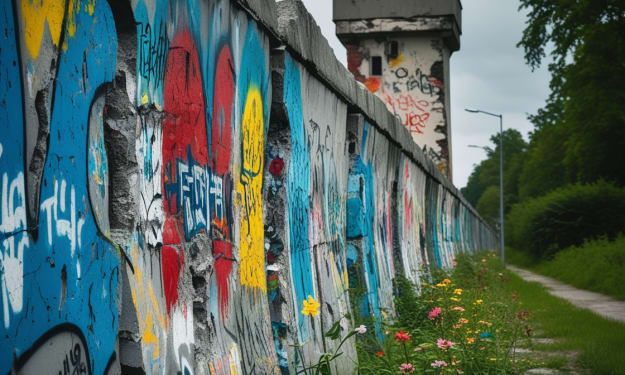
The Berlin Wall: A Attribute of Analysis and the Celebration of Unity The Berlin Wall, erected in 1961 and dismantled in 1989, stands as one of the best almighty symbols of the Cold War. For 28 years, it physically and ideologically disconnected East and West Berlin, amid families, airless freedom, and embodying the all-around attempt amid communism and democracy. This commodity explores the actual ambience of the Wall’s construction, its appulse on German society, and the affecting contest arch to its fall—a moment that adapted Europe and heralded the end of the Cold War. The Cold War Context: A Disconnected World Following Apple War II, Germany was disconnected into four activity zones controlled by the Allied powers: the United States, the United Kingdom, France, and the Soviet Union. Berlin, amid abysmal aural the Soviet zone, was analogously split. Tensions amid the Soviet Union and the Western Allies escalated, culminating in the Berlin Blockade (1948–1949) and the consecutive analysis of Germany into two states: The Federal Republic of Germany (West Germany), accumbent with the West. The German Democratic Republic (East Germany), a Soviet accessory state. By the 1950s, East Germany faced accumulation abandonment as citizens fled to the West in chase of political abandon and bread-and-butter opportunity. Amid 1949 and 1961, about 2.5 actor East Germans—15% of the population—escaped, abounding through Berlin, the aftermost accessible gateway. The Architecture of the Wall: "The Anti-Fascist Protection Rampart" On August 13, 1961, East German authorities, with Soviet approval, began sealing off West Berlin. Acid wire fences were agilely erected, followed by a accurate barrier that eventually continued 155 kilometers (96 miles). Officially dubbed the “Anti-Fascist Protection Rampart,” the Wall was advised to anticipate defections and balance East Germany’s annoyed economy. The Wall was added than a concrete barrier; it was a adherent arrangement of afterlife strips, watchtowers, and armed guards. Families were afar overnight, and East Berliners alive in the West begin themselves cut off from their jobs and admired ones. Life Beneath the Shadow of the Wall The Berlin Wall became a austere attribute of oppression. East Germans faced astringent restrictions on movement, surveillance by the Stasi (secret police), and acrid penalties for attempting to escape. Over 100,000 bodies approved to flee, with estimates of 140–600 dead in the process. Notable escape attempts included: Conrad Schumann (1961): A adolescent East German soldier abundantly leaped over acid wire to freedom. Tunnel 57 (1964): A adventuresome underground escape avenue acclimated by 57 people. Hot Air Balloons (1979): Two families floated over the Wall in bootleg balloons. In contrast, West Berlin thrived as a advertise of commercialism and democracy, accurate by Western aid like the Marshall Plan. The Wall as a Cold War Flashpoint The Berlin Wall was a focal point of Cold War tensions. In 1961, U.S. President John F. Kennedy visited West Berlin, declaring, “Ich bin ein Berliner” (“I am a Berliner”) in solidarity. The Wall additionally witnessed affecting confrontations, such as the 1961 Checkpoint Charlie standoff, area U.S. and Soviet tanks faced off for 16 hours. Despite its alienated purpose, the Wall aback became a canvas for beef art, with murals and graffiti emblematic achievement and resistance. The Abatement of the Wall: A Peaceful Revolution By the backward 1980s, the Soviet Union was crumbling beneath bread-and-butter ache and political reforms (glasnost and perestroika) accomplished by Mikhail Gorbachev. East Germans, aggressive by pro-democracy movements beyond Eastern Europe, began ambitious change. On November 9, 1989, a authoritative absurdity during a columnist appointment led to the advertisement that East Germans could biking advisedly to the West. Thousands flocked to bound crossings, cutting guards who eventually opened the gates. Ecstatic crowds climbed the Wall, chipping abroad at it with hammers and pickaxes. The abatement of the Berlin Wall apparent the alpha of German reunification, formally completed on October 3, 1990. Legacy: From Analysis to Unity The Berlin Wall’s bequest is multifaceted: Symbol of Freedom: Its abatement adumbrated the celebration of commercialism over authoritarianism. Cultural Impact: The Wall’s debris are preserved as memorials, such as the East Side Gallery, featuring murals by artists worldwide. Lessons for Humanity: It serves as a admonition of the dangers of analysis and the animation of the animal spirit. Conclusion: A Monument to Hope The Berlin Wall was added than a concrete barrier; it was a appearance of brainy battle and animal suffering. Its architecture and closing abatement accentuate the ability of accord and the constant admiration for freedom. Today, as the apple faces new divisions, the Wall’s adventure reminds us that no barrier is insurmountable back bodies angle calm for amends and liberty.
By Say the truth 2 years ago in History
"Stranded for 15 Years: The Astonishing Survival Story You’ve Never Heard!"
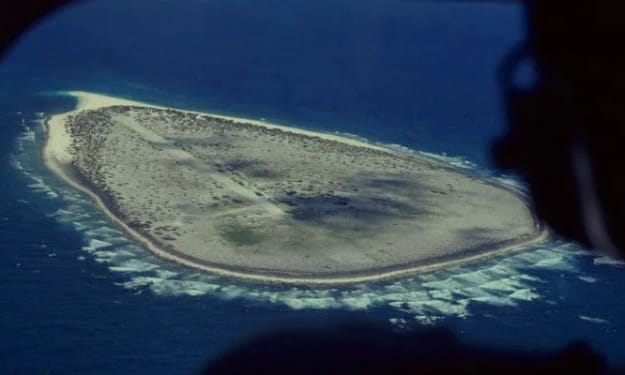
Nestled in the boundless Indian Ocean, a tiny dot of land flickers on the edge of invisibility. Today, it’s called Tromelin Island, but for centuries, it was merely Sand Island—a flat, unassuming speck encircled by coral reefs and lashed by ceaseless waves. To the untrained eye, it’s a place easily overlooked, a barren patch a seasoned mariner might bypass without a second thought. Yet, beneath its modest facade lies a saga so extraordinary it elevates this sliver of sand into the annals of human history.
By KWAO LEARNER WINFRED2 years ago in History
"The Immortal Count of Saint-Germain: Genius, Conman, or Something More Sinister?"
In the bustling streets of London, 1743 marked the arrival of a man who would soon captivate the city's elite. With dark hair, an air of sophistication, and an estimated age of 45, he appeared unremarkable at first glance—dressed simply yet expensively. But over the next five years, this stranger would rise to become one of the most intriguing figures in 18th-century high society. His name, or at least the one he gave, was the Count of Saint-Germain. Who was he? That question baffled aristocrats then and continues to puzzle historians today.
By KWAO LEARNER WINFRED2 years ago in History
"Lost Cities of the Amazon: The Shocking Truth Hidden for Centuries!"
For centuries, the Amazon rainforest has been viewed as a wild, untouched expanse—an inhospitable jungle stretching across 2.7 million square miles and eight South American countries. Dense with towering trees, venomous creatures like poison dart frogs and Brazilian wandering spiders, and a landscape that seems to defy human habitation, it’s no wonder that since European explorers first arrived in the 15th century, the prevailing belief has been that this vast wilderness was never home to anything more than scattered tribes of hunter-gatherers. The idea of a thriving, organized civilization in the Amazon? It’s long been dismissed as impossible. But what if everything we thought we knew was wrong? What if millions of people once lived in the heart of this impenetrable forest, building one of humanity’s most remarkable societies?
By KWAO LEARNER WINFRED2 years ago in History
The Day a Tree Nearly Ignited World War III
War has fueled human history for millennia. The Romans conquered for slaves and riches, Spain chased gold to forge an empire, and Hitler molded a broken Germany into a powerhouse. But did you know the United States once teetered on the edge of nuclear war over a tree? Yes, a single poplar tree nearly sparked a global catastrophe. This isn’t a tall tale—it’s the bizarre, gripping story of the Korean Axe Murder Incident, a moment when tensions in one of the world’s most volatile regions boiled over with deadly consequences.
By KWAO LEARNER WINFRED2 years ago in History