Books
HISTORICAL LOVE LETTER. AI-Generated.
**The Setting:** Victorian England, 1845 **The Characters:** Eleanor Whitaker, a young woman of modest means, and Thomas Harrow, a gentleman of a higher social standing, bound by the rules of society but drawn to one another by a fierce, forbidden love.
By Sirikot Traders, Hamidchar2 years ago in History
9 million year old shark ancestor fossil found in the desert
9 million year old shark ancestor fossil found in the desert. A recent discovery has left scientists and enthusiasts alike astonished a 9 million year old shark ancestor fossil was found buried beneath layers of scorching desert sand. This revelation challenges our understanding of prehistoric life and raises fascinating questions about how an ocean predator ended up in an arid landscape. While the idea of a shark fossil in the middle of a desert seems almost unbelievable it is a testament to the ever changing nature of our planet. To understand this phenomenon it is essential to look back millions of years when the Earth was vastly different from what we see today. Scientists explain that the very desert where the fossil was found was once submerged beneath a vast ocean. This prehistoric body of water teemed with marine life including sharks before geological and climatic shifts transformed it into the barren land we now see. The fossilized remains of this ancient shark serve as a reminder of a time when this region was part of a thriving underwater ecosystem. One of the key reasons behind such drastic transformations is the movement of tectonic plates. These massive sections of the Earth's crust are constantly shifting albeit at an imperceptibly slow pace. Over millions of years these movements can cause oceans to retreat and landmasses to rise reshaping entire continents. What was once a deep ocean floor eventually became exposed land subject to erosion and the relentless forces of nature.
By Adnan Rasheed2 years ago in History
The Tallest Man History
The tallest man in recorded history was Robert Wadlow, who reached the astounding height of 8 feet 11 inches, a record that has yet to be beaten. Born Robert Pershing Wadlow on Feb. 22, 1918, in Alton, Ill. He was not only the tallest person in the world, but in many ways he seemed larger than life itself , as he grappled with a condition that turned him into a medical wonder.
By Rohitha Lanka2 years ago in History
The Eternal Love of Radha and Krishna😘😘😘😘
Title: The Eternal Love of Radha and Krishna ❤️❤️❤️❤️❤️❤️❤️❤️❤️❤️❤️❤️❤️❤️❤️❤️ Once upon a time in the sacred land of Vrindavan, the divine love between Radha and Krishna blossomed like the most enchanting flower. Their love was not ordinary; it transcended time, space, and worldly attachments. It was a love that resonated through the universe, sung by poets and cherished by devotees for eternity.❤️❤️❤️❤️❤️❤️❤️
By Badhan Sen2 years ago in History
The Forgotten Train of Freedom: An Untold Partition Story. Content Warning. AI-Generated.
The Partition of 1947 stands as one of the most significant and traumatic events in South Asian history. Amidst the chaos, numerous stories of bravery, sacrifice, and humanity have remained untold. One such story is that of a train bound for Pakistan, which became a symbol of freedom, resilience, and unimaginable sacrifice.
By Muhammad Sarfraz Nawaz2 years ago in History
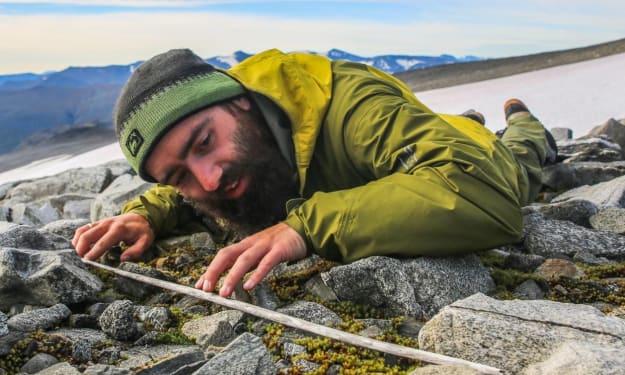
Archaeologists are finding mysterious ancient objects on Norway's melting glaciers.
Archaeologists are finding mysterious ancient objects on Norway's melting glaciers. The melting glaciers of Norway are exposing a hidden world frozen in time objects from the Stone Age Iron Age and medieval periods that provide rare glimpses into the lives of ancient humans. As climate change accelerates glacial melt archaeologists are racing against time to recover and study these remarkable artifacts before they are lost forever. From primitive wooden tools and well preserved textiles to weapons and human remains each discovery helps researchers unravel the mysteries of the past.
By Adnan Rasheed2 years ago in History
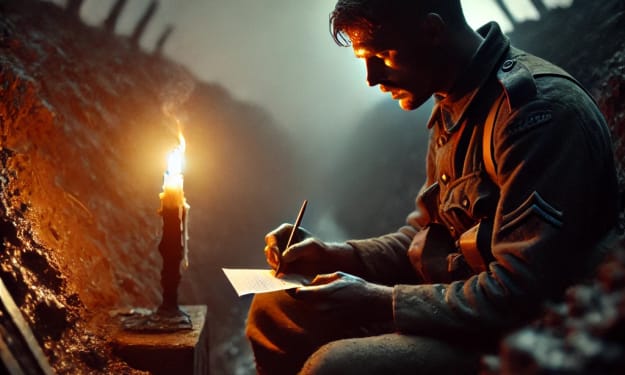
January 18, 1945 – A Soldier’s Last Goodbye from World War II
January 18, 1945 – 101st Airborne Division, Bastogne Somewhere in a frozen battlefield, with life slipping away… My dearest Eleanor, If you are reading this, it means I did not make it home. My hands tremble as I write, my fingers stained with blood—some mine, some from the brothers I fought beside. The battle still rages on in the distance, but for me, it is over. My leg is gone, taken by a landmine, and the cold is creeping into my bones faster than I can stop it. I do not have much time. But before I go, before the darkness takes me, I need to speak to you one last time. I don’t know if this letter will ever reach you, but I have to believe it will. I have to believe that some part of me will make it back to you, even if my body never does. Eleanor, my love, I am so sorry. I promised you I would return. I swore I would hold you again, that I would kiss you beneath the oak tree where I first asked you to be mine. I told you I would come home and hold our son in my arms. But fate is cruel, and war is even crueler. Our little boy is only five months old, and I have never even seen his face. That is the pain that cuts deeper than any bullet ever could. I close my eyes, and I try to picture him. Does he have your golden hair? Your warm, kind eyes? Does he have my stubbornness, my laugh? I will never know. I will never hear his first words, never watch him take his first steps. I will never get to tell him how much I love him. That is why I need you, Eleanor. You must tell him for me. Tell him that his father was not just a soldier, not just another name carved into a memorial. Tell him I was a man who dreamed of coming home. A man who fought not for war, but for peace. A man who loved him, even before he took his first breath. I am alone now. The others have moved on, charging into the fight, leaving me behind in the snow. The sky above is gray, the wind howling like the cries of the fallen. The warmth is leaving my body, but in my mind, I am not here. I am with you. I am back in our little house, sitting by the fire with you curled up beside me, your head on my chest, listening to my heartbeat. It is still beating, Eleanor. Faint, weak, but still beating. But not for long. I wish I could hold you one last time. I wish I could press my lips to yours, feel the softness of your skin, run my fingers through your hair. I wish I could watch the way your eyes crinkle when you laugh, hear you call my name, tell me everything will be alright. But I know better now. War takes everything. It takes young men and turns them into ghosts before they even die. It takes love and replaces it with silence. It steals fathers from sons, husbands from wives, leaving behind nothing but grief. But promise me one thing, my love. Promise me you will live. Do not let my death steal your joy. Do not let it darken the life we dreamed of building together. Raise our son in laughter, in love. Let him know happiness, let him chase dreams. Tell him it is okay to miss those who are gone, but that life must go on. And Eleanor, if one day you hear my name in the wind, if you feel a soft touch when no one is there, know that it is me. I will always be with you. Watching, waiting, loving you from beyond. This is not goodbye, my love. This is just a pause—a brief moment of separation—until we meet again. Forever yours, James
By News Vortex 2 years ago in History
Archaeologists Discovered 22000 Year Old Tracks That May Be From the World’s First Vehicle.
Archaeologists Discovered 22000 Year Old Tracks That May Be From the World’s First Vehicle. The discovery of 22000 year old tracks at White Sands National Park in New Mexico has shed new light on early human innovation and transportation methods. These tracks as revealed in a recent study published in Quaternary Science Advances suggest that ancient humans used a rudimentary vehicle known as a travois to transport goods or belongings. This finding challenges conventional perspectives on early transportation pushing back the timeline of non wheel based vehicles much further than previously thought. At the heart of this discovery are the linear impressions found alongside human footprints. Unlike ordinary tracks left by people walking these marks suggest the dragging of wooden poles indicating the use of a travois. This is a simple yet effective means of carrying heavy loads by lashing two poles together often in the shape of a triangle and pulling them along the ground. Such a transport method was widely used by Indigenous peoples in North America well into recent history particularly among the Plains tribes who adapted it for use with horses. However, this new discovery suggests that its use dates back much further to a time when humans were still navigating the challenges of Ice Age survival.
By Adnan Rasheed2 years ago in History
Whispers Through the Walls: A Love Forged in the Flames of the Albigensian Crusade". Content Warning. AI-Generated.
In Carcassonne: Love Letters Under Siege In 1209, as the Albigensian Crusade ravaged southern France in a purifying fire, the walled city of Carcassonne remained a bastion of Cathar belief and defiance. Inside its aged stone walls, through the twisting streets and foreign alleys, two hearts were forged together by the hand of fate asiled. And Amélie de Montfort, daughter of one of the minor nobility, whose family lands had been taken by the crusading forces, sought refuge behind the walls of the city. Her soft features and kindly temperament masked a spirit hardened by loss and tempered by faith.
By Abdur Raffay2 years ago in History
"Echoes from the Trenches: A Love and Loss Story of World War I"
Letter 1: Private James Whitford to Nurse Eleanor Hartley 12th November 1916, Somme Sector Dearest Miss Hartley, Do you recall the day we met? It was raining—a cold, spiteful drizzle that seeped through the seams of my greatcoat—and I’d been hauled into your field hospital on a stretcher, half-mad with pain from the shrapnel in my leg. The air reeked of carbolic and blood, and somewhere, a man was screaming for his mother. But you appeared like a specter in that chaos, your apron streaked with rust-colored stains, and pressed a tin mug of tea into my hands. “Drink this,” you said, your voice steady as a metronome. “You’ll live to see another sunrise.”
By sasanka perera2 years ago in History
Letters from the Trenches: A WWI Correspondence
Letter 1: Private James Whitford to Nurse Eleanor Hartley 12th November 1916, Somme Sector Dearest Miss Hartley, Do you recall the day we met? It was raining—a cold, spiteful drizzle—and I’d been brought to your field hospital with a shrapnel wound in my leg. You handed me a cup of tea, your hands steady despite the chaos around us, and said, “Drink this. You’ll live to see another sunrise.” I thought then that your voice was the kindest sound I’d heard since leaving Sussex.
By sasanka perera2 years ago in History
The Tormented Love of Lord Byron and Claire Clairmont. AI-Generated.
In the early 19th century, the world of literature and art was abuzz with the name of Lord Byron, the brilliant and brooding poet who had captured the hearts of readers everywhere. But few knew of the tumultuous and passionate love affair that Byron had with Claire Clairmont, a young and beautiful woman who would change the course of his life forever. Claire Clairmont was born in 1798, the daughter of a Scottish lawyer and his wife. She was a brilliant and free-spirited young woman, with a passion for literature and art. In 1812, she met Lord Byron, who was immediately drawn to her beauty, intelligence, and vivacity. Byron, who was already famous for his poetry and his scandalous personal life, was immediately smitten with Claire. He was 24 years old, and she was just 14, but he was undeterred by their age difference. He began to pursue her, showering her with attention, gifts and passionate letters. Claire, who was young and impressionable, was swept off her feet by Byron's charms. She was fascinated by his intelligence, his creativity, and his passion, and she quickly fell deeply in love with him. Despite the fact that Byron was already married to Anne Isabella Milbanke, Claire became his mistress, and the two began a torrid and all-consuming love affair. But their love was not without its challenges. Byron's marriage to Anne Isabella was loveless and unhappy, and Claire's presence only added to the tension. Byron's friends and family were shocked by his affair with Claire, who was so much younger than him and they urged him to end the relationship. Despite the opposition, Byron and Claire's love continued to grow. They spent countless hours together, talking, laughing, and making love. Claire became Byron's muse, inspiring some of his most beautiful and passionate poetry. But their love was also marked by tragedy. In 1817, Claire gave birth to a daughter, Allegra, who was widely believed to be Byron's child. But Byron refused to acknowledge the child, and Claire was left to raise Allegra on her own. The separation from Allegra was a devastating blow to Claire, who was heartbroken and grief-stricken. She became increasingly unstable and erratic, and her relationship with Byron began to unravel. In the end, Byron and Claire's love was doomed by their own passions and demons. Byron's refusal to acknowledge Allegra, combined with his own personal demons and addictions, ultimately destroyed their relationship. Claire was left alone, heartbroken, and grieving, while Byron went on to pursue other loves and adventures. *A Legacy of Love and Tragedy* The love story of Lord Byron and Claire Clairmont is a testament to the enduring power of love, even in the face of tragedy and heartbreak. Their love was a flame that burned brightly, but briefly, in the midst of a tumultuous and passionate life. Despite the challenges and obstacles they faced, Byron and Claire's love remained strong, a testament to the human spirit's capacity for passion, devotion, and sacrifice. Their legacy is a reminder that love can conquer all, even in the face of overwhelming adversity. *A Historical Context* The love story of Lord Byron and Claire Clairmont took place during a time of great social and cultural change in Europe. The early 19th century was a time of intellectual and artistic flourishing, with the rise of Romanticism and the emergence of new literary and artistic movements. It was also a time of great personal freedom and experimentation, with many artists and writers pushing the boundaries of conventional morality and behavior. Byron and Claire's love affair was a product of this time, a reflection of the passion, creativity, and nonconformity that defined the era. *A Lasting Impact on Literature* The love story of Lord Byron and Claire Clairmont has had a lasting impact on literature, influencing the way we think about love, passion, and creativity. Their love was a source of inspiration for many of Byron's most famous poems, including "Don Juan" and "Childe Harold's Pilgrimage." Their love story has also been the subject of countless literary and artistic works, including novels, plays, and films. It continues to captivate and inspire artists and writers to this day, a testament to the enduring power of their love. *The Tragic Fate of Allegra* Allegra, the daughter of Byron and Claire, was a tragic figure who was caught in the crossfire of her parents' tumultuous relationship. Born in 1817, Allegra was raised by Claire, who struggled to provide for her daughter in the face of Byron's refusal to acknowledge her. Despite the challenges she faced, Allegra grew into a beautiful and intelligent young woman. But her life was cut short when she died off. ...in 1822, at the age of just five. Her death was a devastating blow to Claire, who was consumed by grief and guilt. Byron, too, was deeply affected by Allegra's death, and it marked a turning point in his life. Despite his initial refusal to acknowledge Allegra, Byron had grown to love his daughter deeply. Her death was a tragic reminder of the consequences of his actions, and it haunted him for the rest of his life. *The Enduring Legacy of Byron and Claire* The love story of Lord Byron and Claire Clairmont is a testament to the enduring power of love, even in the face of tragedy and heartbreak. Their love was a flame that burned brightly, but briefly, in the midst of a tumultuous and passionate life. Despite the challenges and obstacles they faced, Byron and Claire's love remained strong, a testament to the human spirit's capacity for passion, devotion, and sacrifice. Their legacy is a reminder that love can conquer all, even in the face of overwhelming adversity. *A Lasting Impact on Art and Literature* The love story of Lord Byron and Claire Clairmont has had a lasting impact on art and literature, influencing the way we think about love, passion, and creativity. Their love was a source of inspiration for many of Byron's most famous poems, including "Don Juan" and "Childe Harold's Pilgrimage." Their love story has also been the subject of countless literary and artistic works, including novels, plays, and films. It continues to captivate and inspire artists and writers to this day, a testament to the enduring power of their love. *A Timeless Tale of Passion and Heartbreak* The love story of Lord Byron and Claire Clairmont is a timeless tale of passion and heartbreak, a reminder that love can be both beautiful and devastating. Their love was a flame that burned brightly, but briefly, in the midst of a tumultuous and passionate life. Despite the tragedy and heartbreak that surrounded their love, Byron and Claire's legacy continues to inspire and captivate us to this day. Their love story is a testament to the enduring power of love, even in the face of overwhelming adversity.
By Henry Lucy2 years ago in History