Books
Leave a trace.
The window is open. The chilly, rain-drenched breeze hasn’t stopped all night. The messy bed. The exhausted laptop. The unlocked wardrobe. Discarded shirts, vests, backaches, crumpled sheets, books—all blending to create a sense of familiarity. Once, sleep wouldn’t come easily in this room. But with time, a person grows accustomed to so many things.
By sobuj hossain2 years ago in History
Mysterious Landmarks on Mars Discovered by NASA
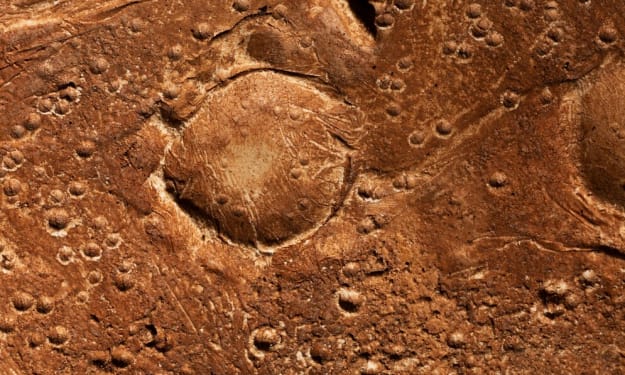
NASA has once again ignited global curiosity with the announcement of newly discovered mysterious landmarks on the surface of Mars. These strange and fascinating formations, captured by the Mars Reconnaissance Orbiter (MRO)'s powerful cameras, have intrigued and puzzled scientists. The images, which show landforms, unusual shapes, and symmetrical patterns that have never been seen before on Mars, are bringing up new questions about the planet's geological past and possibly even more mysterious possibilities.
By Ashiqur Rahman Khan2 years ago in History
Resistance Grows as Proposed Cuts Threaten Health Care for Over 79 Million in US
In the latest wave of political and economic debates, proposed cuts to federal health care programs have ignited a firestorm of opposition across the United States. At stake is the well-being of over 79 million Americans who rely on government-supported health services, particularly Medicaid and Medicare. These proposed reductions, aimed at curbing federal spending, have drawn sharp criticism from health professionals, advocacy groups, and ordinary citizens alike, who warn of devastating consequences for public health.
By Md polash Ali2 years ago in History
The Forgotten Queen and the Flowers of Truth
There was a king. He had seven queens. The six elder queens were very arrogant the younger queen was very quiet. That is why the king liked the younger queen more than anyone else. But the king had no sons or daughters. Who would enjoy such a big kingdom? The king was so sad. Days passed like this. After a long time, the younger queen would have a child. The king was very happy and the king called his servants and announced to the kingdom The king has opened the royal treasury come and take as much sweets sweets and jewels as you can. The six elder queens were burning with jealousy and began to die. The king tied a gold chain around the waist of the younger queen and said, When you have a son, shake this chain I will come and see the son Saying this the king went to the royal court. The younger queen will have a son who will go to the palace? The elder queen said Ah if the younger queen has a son why should I give it to someone else? We will go. The elder queens went to the palace and shook the chains. Immediately the royal court broke up played drums and played drums and the king came with jewels and jewels. He saw nothing The king went back. As soon as the king sat down in the court the chains shook again. The king ran away again. He went and saw that nothing happened this time either. The king got angry and said If you shake the chains again because you dont have a son I will cut off all the queens. Saying this the king left. One by one the little queen had seven sons and one daughter. Ah the children were like moon dolls flower buds. She waved her hands and feet in a frenzy and the palace became bright. The little queen said softly What a boy Bubu why didnt you show me once The elder queens made gestures near the little queens face waved their hands and shook their noses saying No boy its an elephant she will have another son How many rats and how many crabs have there been? Hearing this the little queen fell unconscious. The cruel old queens quietly brought pots and pans put the children in them and buried them in the nearby ditch. Then they pulled them by the chains. The king came running again playing the drums and drums bringing with him jewels. The old queens wiped their hands and faces and quickly brought out a number of baby frogs and baby mice. Seeing this the king got angry and threw the little queen out of the palace. The old queens could no longer smile and the sound of their feet could not stop. The thorn in their hearts was removed and the old queens began to cry in happiness. The little queen became a maid and started wandering around the streets. In this way the days passed. There is no happiness in the kings mind there is no happiness in the kings kingdom the palace is empty and no fruit blooms in the kings garden. One day the gardener came and said Your Majesty I cant find flowers to decorate the house but today seven chappas on the parul tree seven chappas and one parul are blooming. The king said Then bring those flowers I will decorate the house. The gardener went to get the flowers. Seeing the owner, the parul flower on the parul tree called out to the chapaphuul and said, Sat Bhai Champa, wake up Just then, the seven chappas stood up and responded, Why are you calling me sister Parul Parul said The king s gardener has come. Will you give me flowers or not The seven chappas hurriedly climbed up and shook their heads and said I will not give you flowers I will not give you flowers. Let the king come a hundred miles away but I will give you flowers The gardener was surprised to see it. He threw down the flower arrangement and ran to inform the king. The king and all the royal court came there in surprise. The king came and went to pick the flowers and Amni Parulphul called the Chapaphuls and said Seven brothers wake up The Chapaphuls replied Why is Sister Parul calling? Parul said The king has come will you give me flowers or not? The Chapaphuls said- I will not give you flowers I will climb a hundred miles, let the king s eldest queen come first then I will give you flowers. Saying this the Chapaphuls rose even higher. The king called the Bararanis. The Bararani came and went to pick the flowers. The Chapaphuls said I will not give you flowers I will climb a hundred miles let the king s eldest queen come first then I will give you flowers. Then the queen came the queen came the queen came the queen came but none of them got the flowers. The flowers went and remained blooming like stars in the sky. The king sat down on the ground with his hand on his cheek. Finally the queen came, and the flower girls said I will not give you flowers I will go a hundred miles away if the king s maidservant comes I will give you flowers. Then many people went out to look for the maidservant. The king sent Chaudola, and the pike and the pawns went to the field with Chaudola and found the maidservant Chotorani. The maidservant was wearing dung on her hands and feet and was wearing torn clothes so she went to pick flowers. The birds came down from the sky with a tickling sound the Parul flower went and mingled with them from among the flowers seven princes one princess beautiful like the moon called out Maa Maa and jumped into the arms of the maidservant the little queen. Seeing such a scene everyone was surprised Tears flowed from the king s eyes. The big queens started trembling with fear. The king immediately ordered the big queens to be cut down and buried. The king went to Rajpuri with the seven princes one princess and the little queen. The music of joy grew in Rajpuri. The king s ministers also started playing drums. Ended
By Story Maker2 years ago in History
Why the Israel philistine
After World War II, Jews began to return to their old homeland in Palestine. They were supported by several countries, including Britain and America. However, from the beginning, there was no peace with the local Arab Muslim community. In the meantime, the Jews decided to form an independent 'safe' country. In 1947, the year British rule in India ended, Palestine was also under British rule. The United Nations decided that the territory of Palestine would be divided between Arabs and Jews. On the other hand, Jerusalem would be under the rule of an impartial international authority. Naturally, Jewish leaders were happy with this plan. It was said that 56 percent of the land would be given to the Jews. The Arab League rejected this proposal.
By MD SAKIL AHMED2 years ago in History
How the Lessons of History Are Applicable in Contemporary Society
How the Lessons of History Are Applicable in Contemporary Society History is often described as a mirror reflecting the past, but its true value lies in its ability to guide the present and shape the future. The lessons of history remain profoundly relevant in contemporary society, offering insights into governance, conflict resolution, economic stability, and social progress. By studying historical patterns, societies can avoid past mistakes, replicate successes, and navigate modern challenges with greater wisdom.
By Manson Chakma2 years ago in History
The World’s Most Disliked Countries in 2024 – Understanding the Global Perception
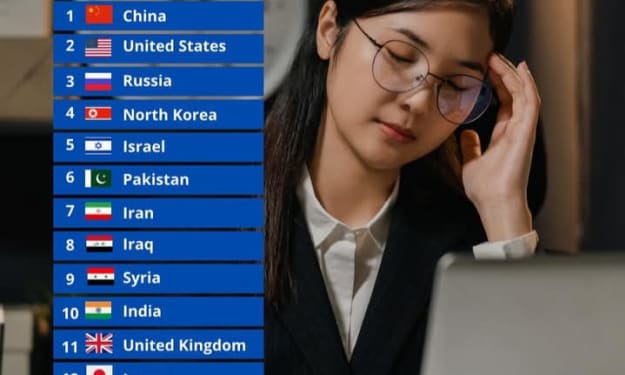
Introduction In a time when the world is more interconnected than ever, global perception carries significant weight. Nations are judged not just by their policies or leaders but by their international behavior, media portrayal, and historical context. A recent global survey conducted by the International Statistics Organization in 2024 has revealed a list of the 15 most disliked countries in the world. While such lists spark heated debate, they also invite deeper reflection. Why are some countries so disliked? Is it due to politics, war, culture, or something more complex? Let’s explore the reasons behind this ranking and the broader implications of such global opinions. The 2024 List: Top 15 Most Disliked Countries 1. China 2. United States 3. Russia 4. North Korea 5. Israel 6. Pakistan 7. Iran 8. Iraq 9. Syria 10. India 11. United Kingdom 12. Japan 13. Saudi Arabia 14. Germany 15. Nigeria This list might raise eyebrows, but it reflects a global sentiment shaped by many interconnected factors. --- Geopolitical Power and Controversy The countries at the top—China, the United States, and Russia—are not just global superpowers but also frequent players in international conflict and political manipulation. Their foreign policies often create division. China's aggressive stance in the South China Sea, surveillance concerns, and treatment of minority populations (like the Uyghurs) has drawn global criticism. The U.S. is frequently disliked for its military interventions, perceived cultural dominance, and polarizing foreign policy. Meanwhile, Russia’s war in Ukraine and its authoritarian internal politics have severely damaged its global image. These countries’ roles in world affairs naturally place them in the spotlight—making their actions highly scrutinized and often controversial. --- Human Rights and Authoritarianism Many nations on this list have been repeatedly criticized for their human rights records. North Korea, known for its closed society, lack of freedoms, and dictatorship, faces near-universal condemnation. Iran and Saudi Arabia, despite their unique cultural and religious heritage, are often accused of oppressing women, silencing dissent, and restricting freedoms. Even democratic nations like India and Israel face accusations—India for increasing religious intolerance and suppression of minority voices, and Israel for its ongoing conflict with Palestinians. Global audiences tend to react strongly to perceived injustices, especially when these issues dominate international headlines. --- Wars, Terrorism, and Instability Countries like Iraq, Syria, and Pakistan have been at the center of regional and global conflicts for decades. Although many of their people are victims of violence and foreign intervention, these nations are often associated with terrorism, war, and instability. Western media, in particular, has played a significant role in reinforcing these perceptions. Nigeria, too, suffers from internal conflicts and extremist groups like Boko Haram, which adds to its unfavorable image internationally. It’s important to note that public opinion doesn’t always distinguish between governments, radical factions, and ordinary citizens—an unfortunate generalization that fuels misunderstanding. --- Colonial Legacy and Cultural Clashes The presence of the UK, Germany, and Japan on this list may seem surprising at first glance. However, the colonial history of the United Kingdom and Germany's 20th-century wars still cast a long shadow. Japan, while technologically advanced and peaceful today, faces criticism from its Asian neighbors for failing to fully reckon with its World War II past. In addition, cultural friction plays a role in how certain populations view others. When traditions, values, or ideologies clash, mutual respect often gives way to mistrust or even resentment. --- The Role of Global Media Perception is powerfully shaped by media narratives. News outlets, social media, and film industries play a massive role in influencing how one country sees another. For example, Hollywood often portrays certain regions (especially the Middle East or Asia) through a lens of conflict, extremism, or backwardness. Likewise, state-run media in various countries may intentionally paint other nations as enemies or threats, reinforcing public fear and animosity. This cycle of media-driven judgment has created deep stereotypes—some of which are far removed from the actual experiences of those living in these nations. --- Perception vs. Reality It’s crucial to understand that public perception doesn’t always reflect the truth. Most people in these countries live normal lives, seek peace, and want progress. The dislike toward a country often stems from the actions of a government, specific policies, or dominant media portrayals—not the culture or people as a whole. Such rankings, while useful for discussion, can also reinforce harmful stereotypes if not handled with care. They remind us how easy it is to judge from afar—and how important it is to approach international opinions with nuance. --- Conclusion The 2024 list of the most disliked countries is not just a popularity chart—it is a mirror reflecting how deeply intertwined our world has become. Political decisions, historical grievances, media influence, and cultural differences all contribute to global opinion. While some criticism is justified, other elements are rooted in misunderstanding or bias. To build a more compassionate and informed world, we must look beyond headlines and recognize the complexity within each country. After all, a nation is more than its politics—it’s its people, its history, and its hope for the future.
By Insect Legends2 years ago in History
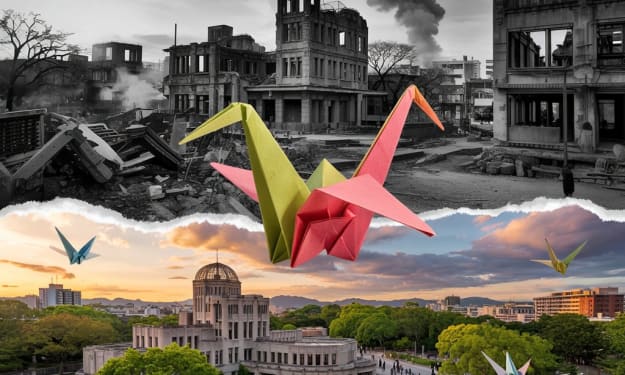
From Destruction to Peace: The Story of Hiroshima
In the quiet of a summer morning, Hiroshima stirred to life. It was August 6, 1945, and the city had already endured years of war. But beneath the tension, life persisted—vendors opened their stalls, children played in the streets, and mothers prepared breakfast for their families.
By Mohammad Tariq Sideeqi2 years ago in History
Houston Stuns Duke in Final Four Comeback to Reach NCAA Championship
SAN ANTONIO — In a thrilling Final Four showdown, Houston pulled off an incredible comeback to defeat Duke 70-67, overcoming a 14-point deficit in the final eight minutes. With this stunning victory, the Cougars are now set to face Florida in the NCAA Championship game on Monday night.
By Muhammad Hayat2 years ago in History
China says 'market has spoken' after US tariffs spark selloff
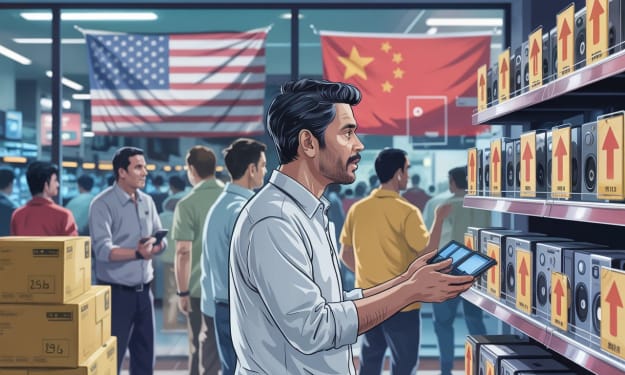
You know what’s funny? I never really cared about things like trade wars or tariffs before. Global economy stuff? Felt like something way out there—nothing to do with my day-to-day life. But now? It kinda feels like those big words are sitting right across from me at the dinner table. So how did this all start? Well, Trump made an announcement—not exactly breaking news, right? But this one hit different. He slapped a new 34% tariff on Chinese goods. Add that to the previous ones, and boom—total tax shoots up to nearly 70%. Crazy, right? And of course, China didn’t just sit there. They fired back with their own set of tariffs and even started holding back on some rare minerals that our tech world runs on. And we? The regular people? We’re stuck in the middle of this ping-pong match. Just the other day, I went out to buy a pair of headphones. Nothing fancy—something I’ve bought before, so I kinda knew the price. But this time? The guy at the shop asked for 600 Taka more than last time. I was like, “Wait… wasn’t this cheaper just a few weeks ago?” And he goes, “Yeah bhai, bringing stuff from China is costlier now. We gotta raise prices too.” That moment hit me. I mean, I’m just trying to listen to music, not fund a trade war. But here it is—global politics messing with my earphones. And it’s not just tech stuff either. Groceries? Prices are creeping up. Rice, lentils, even paper. Paper, man! And then there's the stock market. Don’t even get me started. I had some investments—pretty safe ones too. Thought I was being smart. Then bam! S&P 500 drops 9% in a week. Haven’t seen that kind of fall since the COVID days. I just sat there, staring at my screen, thinking, “Seriously? What now?” I remember this Chinese guy—Guo Jiakun—he once said, “The market has spoken.” Sounded simple at the time. But now? I get it. That sentence isn’t just about numbers. It’s about real people. Their savings, their struggles, their little dreams. And this whole mess? It’s not just about the US and China anymore. Europe’s feeling it. India too. Some countries are rushing to find new trade buddies. Others are trying to push local products into the spotlight. So, I started asking myself—are we just gonna sit and watch this unfold? ‘Cause if we don’t start doing something, even the basics might feel like luxury soon. These days, I try to buy local when I can. Sure, the quality’s not always top-tier, but it feels good—like I’m supporting people around me. But look, I’m not saying I can fix this alone. Nah, this needs everyone—government, business owners, buyers—pulling in the same direction. We can’t stop big countries from doing what they do, but maybe we can soften the blow. One last thing I wanna say—this whole trade war? It ain’t a movie. It’s not something we just watch and then move on. This is real life. One announcement from some leader somewhere, and suddenly your grocery bill goes up, your small business struggles, your plans take a hit. So yeah, maybe it’s time we stop just shaking our heads at the news and start thinking for ourselves. ‘Cause this isn’t just about politics—it’s about our lives."
By Md Motiur Rahman2 years ago in History