Books
Terrifying Facts About Indonesia's Horror Lore
Haunted Archipelago: Terrifying Facts About Indonesia's Horror Lore . Indonesia, a nation of over 17,000 islands, is known for its lush jungles, ancient temples, and rich cultural heritage. But beneath its natural beauty lies a darker side—a deeply rooted tradition of supernatural beliefs and spine-chilling horror stories passed down through generations. From ghostly apparitions in remote villages to cursed forests and haunted train stations, Indonesia's horror culture is a blend of ancient mythology, colonial history, and modern urban legends. An in-depth look at some of Indonesia's most terrifying and fascinating facts is provided below.
By Tamim Ahamed2 years ago in History
# "The Fed Chair warns that Trump's tariffs could cause inflation to rise and growth to slow," .. AI-Generated.
Federal Reserve Chair Jerome Powell has issued a stark warning: former President Donald Trump’s proposed tariff policies could lead to **higher inflation** and **slower economic growth** in the U.S. If Trump wins the election in 2024, he has promised to slap tariffs on Chinese goods of at least 60%, which could disrupt global trade and hurt American consumers. **What Are Tariffs and How Are They Implemented? ** Imported goods are subject to tariffs, which aim to shield domestic industries from foreign competition. While they may be beneficial to local manufacturers, they frequently result in "higher prices for consumers" and "trade wars." During his first term, which ran from 2017 to 2021, Trump slapped China and other trading partners with a lot of tariffs. There were some U.S. industries that benefited, but many consumers and businesses faced higher costs. Now, Trump wants even more severe tariffs, which economists, including Fed Chair Powell, say could cause the economy to become unstable. ## **The Concerns of Fed Chair Powell** Jerome Powell has expressed concern that "higher tariffs could fuel inflation," which has already been a significant obstacle for the U.S. economy. Inflation reached a 40-year high in 2022 and 2023, prompting the Federal Reserve to aggressively raise interest rates. The Federal Reserve's fight against inflation could become even more difficult if tariffs raise import costs. Additionally, Powell cautioned, "protectionist trade policies could slow economic growth." U.S. exports may suffer if other nations retaliate with their own tariffs, putting American manufacturers and farmers at risk. ### The Key Dangers of Trump's Tariff Plan 1. **Higher Consumer Prices** – Tariffs on Chinese goods (like electronics, clothing, and machinery) would increase costs for U.S. businesses, which would likely pass those costs onto consumers. 2. **Supply Chain Disruptions**: Many American businesses import from China. Supply chain shifts that are costly and necessitated by sudden tariffs could cause shortages and delays. 3. **Retaliatory Measures**: China may retaliate by imposing tariffs on U.S. exports—such as aircraft, semiconductors, and soybeans—harming American businesses. 4. **Inflationary Pressure**: The Federal Reserve has been attempting to control inflation, but tariffs could halt progress by raising the cost of goods. 5. **Slower GDP Growth** – Reduced trade and higher prices could dampen consumer spending and business investment, leading to weaker economic growth. ## Historical Lessons from Trump's Tariffs in the First Year Studies demonstrated the following when Trump imposed tariffs in 2018 and 2019 on Chinese goods worth $350 billion: - The cost was borne by American businesses and consumers, not by China. - Rising input costs hampered the manufacturing sector in the United States. - As imports simply moved to other nations like Vietnam and Mexico, the **trade deficit with China barely shrank**. Economists fear that **even steeper tariffs now could backfire**, worsening inflation without significantly boosting U.S. production. **Would the Fed be able to respond with additional rate hikes? ** The Federal Reserve may be forced to "keep interest rates elevated for longer"—or even raise rates once more—if tariffs raise inflation. This may lead to: - Increase the cost of borrowing money for business investments, car loans, and mortgages. - **Slow hiring and wage growth**, raising unemployment risks. - "Weaken" stock markets as investors worry about the economy for a long time. ## Consequences for the global economy Not only would Trump's tariffs affect the United States, but they could also "destabilize global trade." A new wave of tariffs could lead to legal battles and further fragmentation of international trade, as the World Trade Organization (WTO) has previously ruled against the United States' tariffs. ### **Possible Outcomes:** Price increases on imported goods (automobiles, electronics, and apparel) in the short term **Medium-term:** Businesses may shift supply chains, but it will be expensive. ✔ **Long-term:** Reduced trade could shrink global GDP growth. ## **Conclusion: A Risky Economic Gamble** Economists, including the Fed chair, warn that "aggressive tariffs could do more harm than good," despite Trump's assertion that tariffs safeguard American jobs. The U.S. recovery could be undermined by higher inflation, slower growth, and potential trade wars. Voters and policymakers must weigh the "trade-offs between protectionism and economic stability" as the 2024 election nears. One thing is certain: if Trump's plans for tariffs are implemented, the Fed may have to fight an even harder battle against inflation, and American consumers may have to pay the price.Start writing...
By Mihad Hasan Antor2 years ago in History
“India’s Hidden Fortunes: Uncovering the Lost Treasures of Ancient Empires”
The Concealed Riches of India: Revealing the Untold Narratives of Buried Wealth India’s past is characterized not only by empires and triumphs but also by remarkable stories of treasuresome discovered, many still concealed. While contemporary technology has revealed a few valuables interred beneath palaces and temples, an even greater wealth remains inaccessible to treasure seekers, archaeologists, and historians. This article continues our exploration into the enigmatic legacy of India’s uncharted riches by examining lesser-known myths, historical evidence, and royal mysteries that hint at unimaginable fortunes still hidden beneath the earth. The Chola Dynasty’s Nautical Gold The Chola Empire (9th to 13th century) represented one of the foremost maritime powers in Indian history, celebrated for their naval victories across Southeast Asia. With maritime commerce thriving during their reign, gold poured into the empire in substantial amounts. Ancient Tamil inscriptions reference temples receiving offerings of "ships laden with gold. " Some historians argue that to safeguard their wealth during the empire's decline, Chola rulers directed it to be concealed in secluded coastal caverns or buried deep in forests adjacent to the Bay of Bengal. Local folklore from Tamil Nadu and Andhra Pradesh narratives speaks of golden idols, jewelry, and coins secured within rock-hewn vaults, their precise locations lost over the centuries. The Mystery of the Vijayanagara Vaults Following the collapse of the formidable Vijayanagara Empire in the Battle of Talikota in 1565, its capital city, Hampi, was ransacked by the Deccan Sultanates. Nevertheless, travelers and Persian records depict a treasury so immense that it could not have been completely looted in a single raid. Legends suggest that numerous subterranean passages connected the royal palace to concealed chambers in the nearby hills. These vaults are said to have contained golden chariots, jeweled armaments, and temple donations accumulated over generations. Despite intermittent attempts, no official excavations have been permitted in these regions due to religious sensitivities and local beliefs of curses safeguarding the treasure. The Lost Mines of King Salivahana Within the Deccan region, the tale of King Salivahanathought to be the founder of the Shaka eraincludes allusions to gold mines operated during his dominion. These mines were reportedly rich in resources that were stored in fortified chambers beneath forts such as Daulatabad and Devagiri. While Devagiri was subsequently transformed into Daulatabad by Muhammad bin Tughlaq, the fortress’s intricate underground architecture continues to ignite speculation. Some contend that treasure chambers still exist, sealed behind stone edifices with no visible entrances. The Nawabs of Awadh and the Vanishing Gold Lucknow, the cultural epicenter of the Awadh region, was the residence of the Nawabs who were renowned for their lavishness and benevolence. Prior to the British annexation of Awadh in 1856, rumors began to circulate that the Nawabs had concealed vast amounts of gold and jewels in subterranean cellars beneath the Bara Imambara and other estates. When British troops examined the palaces during the uprising of 1857, they uncovered precious artifacts but not the riches depicted in regional narratives. Even now, segments of these ancient havelis remain closed, with murmurs of "zinda qabars" (living tombs) deterring treasure hunters. The Case of the Nizam’s Concealed Fortune The final Nizam of Hyderabad, Mir Osman Ali Khan, was once regarded as the wealthiest individual globally. Although much of his fortune was recorded, tales persist of concealed chambers brimming with diamonds and gold hidden within the Falaknuma and Chowmahalla palaces. Indeed, a steel safe uncovered in 2011 at King Kothi Palace contained vintage currency and uncut diamonds, yet many contend it represents merely a portion of the secret vault. The Nizam was also reputed to bury gold bars within his palace gardens, a measure intended to protect against British interference. Religious Reservoirs of Riches In addition to royal valuables, India’s temples have historically functioned as sanctuaries of the divine. Padmanabhaswamy Temple in Kerala astonished the globe with its estimated $22 billion in treasure. However, vault Bthought to contain the most valuable artifactsremains unopened due to religious restrictions. Temples such as Jagannath in Puri, Meenakshi in Madurai, and even deserted shrines in Odisha’s woodlands are believed to conceal similarly considerable wealth. Temple hoards often evaded plundering due to their isolated locations or were buried before foreign forces arrived. Obstacles to Revelation Despite advanced technology like ground-penetrating radar and satellite imagery, the unearthing of these treasures is obstructed by a combination of religious feelings, local opposition, legal limitations, and apprehension of supernatural curses. Furthermore, numerous legends are transmitted orally, lacking definitive maps or indicators. The intersection of myth and history renders treasure hunting in India a pursuit as intricate as it is intriguing. Conclusion India’s buried wealth transcends mere accumulations of goldit reflects remnants of its historical prosperity, artistry, and spiritual convictions. From the submerged cities of ancient Tamil monarchs to the sealed vaults of medieval dynasties, the endeavor to reveal them continues to enthrall the imagination. The demarcation between myth and fact remains fragile, but with each artifact uncovered, we draw closer to comprehending the grand wealth that once adorned this ancient land.
By Say the truth 2 years ago in History
Lost in the Fog of Morning
The early morning fog, thick and persistent, swirled around me as I walked through the silent forest. The air was damp, the earth beneath my feet soft with moisture from the overnight mist. There was no sound except for the occasional rustle of a branch swaying in the light breeze. The fog was so dense that I could barely see a few steps ahead of me, and yet, I continued forward, feeling as though I was being guided by an unseen force. This was my first true experience in the Dao—an experience that would reshape my understanding of the universe, of myself, and of the very nature of reality itself.
By MD SHAMIM RANA2 years ago in History
Great Big Beautiful Life. AI-Generated.
Emily Henry, the queen of heartfelt storytelling, is back with an exciting new novel that promises to captivate readers once again. Titled “Great Big Beautiful Life”This upcoming release is already making waves with its enchanting premise and highly anticipated cover reveal. Fans of Henry’s signature blend of wit, romance, and emotional depth are in for a treat as she takes them on another unforgettable journey. A Tale of Love, Loss and New Beginnings At the heart of “Great Big Beautiful Life” is a story that resonates with dreamers, wanderers and those searching for meaning in unexpected places. The novel follows a protagonist at a crossroads, grappling with past regrets while embarking on a journey of self-discovery. With Henry’s signature charm, readers can expect a mix of laugh-out-loud moments, poignant reflections and a romance that tugs at the heartstrings. While details about the full plot remain under wraps, early hints suggest a sweeping narrative that explores second chances, the beauty of imperfection and the magic found in life’s unpredictable twists. With Emily Henry at the helm, it’s safe to say that this novel will be a rollercoaster of emotions, offering both comfort and catharsis. Henry has a way of crafting characters that feel strikingly real, flawed and deeply relatable. Readers will undoubtedly see themselves in the protagonist’s struggles and triumphs, making “Great Big Beautiful Life” more than just a love story; it's a deeply personal journey that speaks to the heart of human experience. The themes of self-discovery, healing and growth are universal, ensuring that this novel will resonate with a wide audience. The Stunning Cover Reveal The exclusive cover reveal of “Great Big Beautiful Life” is nothing short of breathtaking. With dreamy hues, whimsical typography and a design that perfectly encapsulates the novel’s essence, it sets the stage for a story that is both visually and emotionally rich. Henry’s covers have always had a magnetic pull and this one is no exception hinting at the warmth, nostalgia and adventure that await inside its pages. The use of color and imagery in the cover art is particularly striking. It evokes a sense of longing and wonder, perfectly complementing the themes of the novel. The typography, carefully chosen to convey a sense of whimsy and sophistication, adds another layer of intrigue. Fans and critics alike are already discussing the artistic choices made for this cover, further fueling excitement for the book’s release. Why Readers Are Already Obsessed Emily Henry has carved a niche in contemporary fiction, delivering books that are not just love stories but deeply personal journeys. Her ability to craft characters that feel real, flawed and incredibly relatable has made her a household name. From “Beach Read” to “Happy Place”, her books have consistently topped bestseller lists, and “Great Big Beautiful Life” is poised to follow suit. Social media is already buzzing with excitement, with readers eagerly speculating about the novel’s themes, characters and of course, the inevitable moments that will leave them in tears (the good kind). Bookstagram and BookTok communities are alive with theories about the storyline, potential love interests and the emotional impact Henry’s latest work will have on its audience. The conversations taking place across platforms highlight just how influential Henry has become in the world of contemporary fiction. What makes Henry’s storytelling so compelling is her ability to balance humor with heartfelt emotion. Her characters are often witty, sharp and wonderfully flawed, creating a reading experience that is as entertaining as it is deeply moving. The anticipation surrounding “Great Big Beautiful Life” is a testament to the trust readers have in Henry’s ability to deliver a novel that will stay with them long after they turn the final page. A Literary Phenomenon in the Making With the novel’s release date fast approaching, bookstores and online retailers are preparing for what is sure to be one of the biggest literary events of the year. Henry’s past novels have achieved massive commercial success and “Great Big Beautiful Life” is expected to follow suit. Pre-orders are already stacking up and early readers who have had the chance to glimpse the manuscript are raving about its depth, humor and emotional resonance. Book clubs are already marking their calendars for discussions about the novel, eager to dissect its characters and themes. Many readers have expressed their excitement about the emotional rollercoaster Henry’s books tend to provide and “Great Big Beautiful Life” appears to be no exception. The combination of romance, self-discovery and expertly woven storytelling is what makes Henry’s novels stand out in the literary landscape. Mark Your Calendars! With anticipation at an all-time high, “Great Big Beautiful Life” is shaping up to be one of the year’s most talked-about releases. Whether you’re a longtime Emily Henry fan or new to her world of heartfelt storytelling, this book is sure to be a must-read. If you haven’t already, now is the time to pre-order your copy and prepare for a literary experience that promises to be both heartwarming and thought-provoking. Henry’s ability to create love stories that feel authentic, rather than formulaic, is a large part of why her books have resonated so strongly with readers. Her characters aren’t just falling in love, they're learning about themselves, making mistakes and growing in ways that mirror real-life experiences. “Great Big Beautiful Life” is expected to follow this tradition, providing readers with a story that feels both familiar and refreshingly new. A Story That Will Resonate for Years to Come As Emily Henry prepares to unveil “Great Big Beautiful Life” to the world, one thing is certain this novel is more than just a fleeting romance or a casual read. It’s a journey of self-discovery, of embracing the beauty in life’s unexpected turns and of finding love in the most unanticipated places. Fans can expect to be swept away in a whirlwind of emotions, laughter and tears, all wrapped in the magic of Henry’s unforgettable prose. This is a story that will linger in hearts long after the final page is turned. Henry’s novels have a way of staying with readers, providing comfort and inspiration long after they’ve been read. “Great Big Beautiful Life” is poised to be another masterpiece in her collection, one that will be revisited time and time again. Whether you’re looking for a heartfelt romance, an exploration of personal growth or simply a beautifully written story, this book is bound to deliver. In a literary world filled with fleeting trends and momentary sensations, Emily Henry continues to craft stories that stand the test of time. With “Great Big Beautiful Life”, she reaffirms her place as one of contemporary fiction’s most beloved authors. So get ready to laugh, cry and fall in love because this is a novel you won’t want to miss.
By Henry Lucy2 years ago in History
A Wallflower’s Guide to Viscounts and Vice. AI-Generated.
On April 22, a world of intrigue, romance and hidden desires unfolds in Manda Collins’ latest novel, A Wallflower’s Guide to Viscounts and Vice. Readers are invited into the life of Lucy Penhallow, a self-proclaimed wallflower whose quiet world takes a thrilling turn when she teams up with the enigmatic Viscount Gilford to solve a dangerous crime. But as secrets unravel and danger lurks, Lucy soon discovers that stepping out of the shadows might lead her straight into the arms of unexpected love. A Wallflower with a Hidden Spark: Lucy Penhallow is not your typical high-society debutante. Reserved, observant, and often overlooked in a ballroom filled with glittering gowns and charming suitors, she is content to blend into the background. But when a shocking crime disrupts the delicate balance of London’s elite, Lucy’s sharp mind and keen instincts make her an unexpected but invaluable asset in uncovering the truth. Enter Viscount Gilford, a man of power, charm and secrets of his own. While Lucy has spent years perfecting the art of remaining unnoticed, Gilford is no stranger to attention. Yet, when their paths intertwine in the pursuit of justice, they find themselves caught in a web of scandal, deception, and undeniable attraction. A Mystery That Binds Them Together: As Lucy and Gilford delve deeper into the case, the stakes grow higher. Clues lead them through shadowy alleys, whispered conversations and glittering ballrooms where deception is masked by elegance. The closer they get to the truth, the more dangerous their journey becomes. But amidst the peril, something even more unexpected begins to bloom an intoxicating romance that neither of them saw coming. For Lucy, who has spent her life on the fringes of society, the thrill of adventure is both terrifying and exhilarating. And for Gilford, a man accustomed to control and authority, the presence of this sharp-witted wallflower is nothing short of disarming. Together, they must navigate the treacherous waters of high society while battling the undeniable chemistry threatening to consume them. Why You Can’t Miss This Captivating Read: Manda Collins masterfully blends mystery and romance in A Wallflower’s Guide to Viscounts and Vice, offering readers a perfect balance of heart-pounding suspense and heart-fluttering romance. Fans of historical romance and Regency-era intrigue will be swept away by Lucy and Gilford’s journey, a tale of love found in the most unexpected of places. If you adore novels filled with intelligent heroines, dashing yet complicated heroes and mysteries that keep you turning pages late into the night, then this book belongs on your must-read list. With its April 22 release, now is the perfect time to dive into this enthralling story and discover the magic of a wallflower stepping into the light, finding both love and purpose in the arms of a viscount who never saw her coming. A Love Worth Fighting For: In the end, as the final piece of the mystery falls into place, Lucy and Gilford are faced with a choice to return to their separate worlds or embrace the undeniable bond that has grown between them. With society’s watchful eyes upon them and danger still lurking in the shadows, their love is tested like never before. But Lucy is no longer content to be a mere observer in her own life and Gilford is willing to defy expectations for the woman who has captivated his heart. As justice is served and their adversaries unmasked, they stand together, stronger than ever, ready to forge a new path where love and adventure go hand in hand. A Wallflower’s Guide to Viscounts and Vice is more than just a tale of romance; it is a celebration of stepping into the unknown, taking risks and finding love where one least expects it. Will Lucy and Gilford’s love withstand the trials ahead? Only time will tell, but one thing is certain their story is one for the ages.
By Henry Lucy2 years ago in History
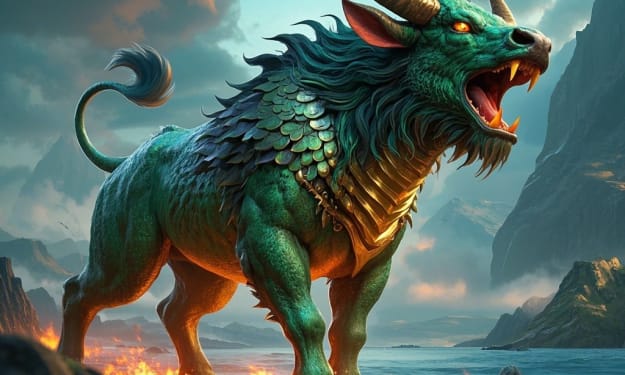
The Enigmatic Green Ox of the Classic of Mountains and Seas
In the vast pantheon of Chinese mythology, few creatures embody the fusion of mysticism and philosophical depth as vividly as the Green Ox (青牛) from the Classic of Mountains and Seas (Shan Hai Jing). Though not explicitly named in the text itself, this enigmatic beast has become intertwined with the cultural legacy of the Shan Hai Jing through centuries of interpretation, particularly in Taoist traditions. Its enduring allure lies in its dual role as a mythical creature and a spiritual symbol, inviting readers to explore the rich layers of ancient Chinese cosmology.
By hello-word2 years ago in History
Alexander the Great and Tutankhamun: Legends of Power and Mystery
Alexander the Great and Tutankhamun: A Chronicle of Two Icons in History Alexander the Great and Pharaoh Tutankhamun emerge as two of history’s most intriguing personalities. Although they existed over a millennium apart and governed in distinct regions of the world, their names persist in captivating the imagination due to their extraordinary legacies, enigmatic demises, and substantial impact on ancient civilization. While Alexander was a conqueror who established one of the largest empires in history, Tutankhamun was a youthful monarch whose tomb’s unearthing redefined contemporary Egyptology. This article delves into their lives, reigns, and the legends that envelop them. Tutankhamun: The Young Monarch of Egypt Early Life and Ascendancy Tutankhamun, frequently referred to as "King Tut," was born circa 1341 BCE during the 18th Dynasty of Ancient Egypt. He assumed the throne at the tender age of nine following the demise of his presumed father, Pharaoh Akhenaten, whose religious reforms unsettled Egyptian society. Under Tutankhamun’s governance, Egypt initiated the restoration of the ancient deities and temples after Akhenaten’s controversial singular worship of the sun god Aten. Despite his brief reign, which endured for approximately ten years (1332–1323 BCE), Tutankhamun is renowned today not for his accomplishments as a sovereign but for the finding of his nearly undisturbed tomb in 1922 by Howard Carter. The Enigma of His Passing Tutankhamun’s passing at around 19 years of age remains one of the most profound enigmas in Egyptology. Scholars have speculated whether he perished due to illness, a chariot mishap, or even foul play. CT scans of his mummy indicate a fractured leg, which may have led to an infection, yet no conclusive cause has been determined. Tutankhamun’s Tomb and Riches King Tut’s tomb in the Valley of the Kings housed over 5,000 artifacts, comprising a solid gold coffin, a renowned golden death mask, chariots, weaponry, and jewelry. The vast wealth entombed with him provides historians with unparalleled insight into Ancient Egypt’s funerary customs and royal affluence. Alexander the Great: The Conqueror of the World Early Life and Military Acumen Born in 356 BCE in Macedonia, Alexander received tutelage from the philosopher Aristotle and was groomed to be a warrior from an early age. At the mere age of 20, he ascended to kingship following the assassination of his father, King Philip II. Alexander promptly embarked on an endeavor to expand his empire, initiating a series of military campaigns that would render him one of history’s most formidable military strategists. The Conquest of Egypt and Establishment of Alexandria In 332 BCE, Alexander invaded Egypt, where he was embraced as a liberator from Persian domination. The Egyptians hailed him as Pharaoh, and he established Alexandria, which would evolve into a significant hub of learning, trade, and culture in the ancient world. His deference to Egyptian customs enabled him to earn the allegiance of the populace. The Most Extensive Empire of the Ancient World Alexander's dominion extended from Greece to Egypt, Persia, and India, encompassing over 2 million square miles. His capacity to adjust to diverse cultures facilitated his governance over his extensive conquests. However, after more than a decade of military campaigns, his forces became fatigued, and he was compelled to retreat from further advancement into India. The Enigma of Alexander’s Demise In 323 BCE, at merely 32 years of age, Alexander became ill and passed away in the palace of Nebuchadnezzar II in Babylon. Speculations range from malaria, typhoid fever, poisoning, or an autoimmune illness. His remains were subsequently interred in a splendid golden sarcophagus and transported to Alexandria, where it was exhibited for centuries before vanishingcontributing to the narrative surrounding his death. Connections Between Alexander and Tutankhamun Despite their disparities in chronological era and governance, Alexander and Tutankhamun possess numerous fascinating parallels: Both perished young (Tutankhamun at 19, Alexander at 32). Both bequeathed significant treasures, with King Tut’s tomb being the most affluent ancient burial ever uncovered and Alexander’s lost tomb still regarded as one of history’s profound enigmas. Both were associated with Egypt, with Tutankhamun being one of its indigenous pharaohs and Alexander ruling Egypt as an external conqueror. Both experienced ambiguous deaths, inciting centuries of discourse. Legacy and Influence The discovery of Tutankhamun’s tomb in 1922 sparked global intrigue in Ancient Egypt, impacting art, literature, and popular culture. Conversely, Alexander’s conquests influenced the trajectory of history, disseminating Greek culture and ideas across extensive territories, culminating in the Hellenistic period. His influence can still be observed in the numerous cities named in his honor, including Alexandria, Egypt. Conclusion Although Alexander the Great and Tutankhamun existed in distinct eras and had markedly different effects, both left behind lasting legacies that continue to enthrall historians and the general public alike. Whether through Tutankhamun’s golden artifacts or Alexander’s military achievements, these two leaders remain timeless emblems of authority, enigma, and magnificence.
By Say the truth 2 years ago in History
Baghdad Tales
Chapter One: The Beginning of the Adventure In the grand Abbasid Library of Baghdad, the young Ibn al-Ward sat immersed in a pile of old books and manuscripts. This place was his favorite sanctuary, where he could escape the noise of the streets and dive into worlds of imagination and creativity.
By mohamed elsayed2 years ago in History
The Dog Who Enjoyed Observing Dawns
A dog named Charlie lived in a tiny, peaceful hamlet surrounded by expansive, golden fields and undulating hills. Charlie was an elderly golden retriever with wise eyes and fur that was starting to turn gray around the nose. He was a calm, reflective person who frequently favored solitude even though he loved social interaction. But he was looking for more than simply isolation; he was looking for a tranquility that could only be found in the early morning hours before the world came up.
By MD SHAMIM RANA2 years ago in History
"The Greatest Invasion in History: Empires at War"
The Most Significant Invasions in History: When Empires Transformed the World Throughout the annals of history, formidable empires have endeavored to expand their domains through extensive invasions. These conquests shaped civilizations, redefined boundaries, and transformed cultures permanently. Below are some of the most consequential invasions in history that shaped the trajectory of humanity. 1. The Mongol Invasions (13th-14th Century) One of the most extensive and lethal military campaigns in history was orchestrated by Genghis Khan and his Mongol legions. Beginning in 1206, the Mongols invaded China, the Middle East, and Europe, establishing the largest continuous empire the world had ever witnessed. Cities such as Baghdad, Kyiv, and Samarkand were destroyed, resulting in the loss of millions of lives. The Mongols' exceptional equestrian skills, composite bows, and psychological warfare strategies rendered them nearly invincible. 2. The Roman Invasions (1st Century BC - 5th Century AD) The Roman Empire expanded through numerous invasions, but perhaps its most renowned campaigns were Julius Caesar’s conquest of Gaul (58-50 BC) and the invasion of Britain in 43 AD. Rome’s legions overwhelmed local tribes with superior discipline, engineering, and organization. Over the centuries, Rome incorporated extensive territories from Spain to the Middle East, disseminating its language, culture, and laws. 3. The Islamic Conquests (7th-8th Century) Following the emergence of Islam in the Arabian Peninsula, Muslim armies swiftly expanded into the Persian and Byzantine Empires. Under the Rashidun and Umayyad Caliphs, Islamic forces subdued Persia, North Africa, and Spain in less than a century. The proliferation of Islam, Arabic culture, and the establishment of the Caliphate transformed the political landscape of the medieval world. 4. The Norman Invasion of England (1066) One of the most renowned invasions in Western history, the Norman conquest of England by William the Conqueror in 1066, irrevocably altered England. The Battle of Hastings resulted in the defeat of Anglo-Saxon King Harold II, ushering in a new ruling class, the introduction of feudalism, and significant cultural shifts that continue to impact England today. 5. The Spanish Conquest of the Americas (15th-16th Century) The Spanish Empire, led by explorers like Hernán Cortés and Francisco Pizarro, seized extensive territories in the Americas. The Aztec and Inca Empires succumbed to Spanish forces due to superior weaponry, alliances with local tribes, and the catastrophic effects of European diseases. The conquest resulted in immense wealth for Spain but at the expense of indigenous civilizations and cultures. 6. Napoleon’s Invasion of Russia (1812) Napoleon Bonaparte’s ambitious endeavor to conquer Russia became one of the most significant military catastrophes in history. In 1812, he commanded over 600,000 troops into Russia, anticipating a swift triumph. However, severe winters, the scorched-earth tactics employed by the Russian army, and logistical shortcomings decimated his forces, culminating in a humiliating retreat and weakening the French Empire. 7. Hitler’s Invasion of the Soviet Union (1941) Operation Barbarossa, Nazi Germany's incursion into the Soviet Union in 1941, constituted the most extensive military undertaking in history. Hitler's objective was to seize Moscow and eradicate communism, yet the expansive Soviet terrain, severe winters, and resolute resistance reversed the momentum against Germany. The unsuccessful outcome of this invasion signaled the onset of the decline for Nazi Germany in World War II. Conclusion From the Mongols to the Nazis, history is replete with empires striving to expand through monumental invasions. While some of these conquests resulted in innovation and cultural interchange, others caused profound suffering and devastation. Each invasion imparted a significant influence, molding the world as we recognize it today.
By Say the truth 2 years ago in History
Secrets of the Pharaohs
Chapter One: The Discovery of the Ancient Papyrus On a scorching summer day, Dr. Ahmed Al-Najjar was working with his team at the archaeological site near Luxor. The golden sunrays penetrated the site, casting shadows over meticulously unearthed artifacts. The day seemed no different from the others; routine excavations, searching for artifacts, and documenting simple discoveries. However, Dr. Ahmed had no idea that this day would bring a discovery that would change the course of history.
By mohamed elsayed2 years ago in History