Biographies
Brothers of the Red Sea: The Barbarossa Legacy
The sea was not blue—it was bronze, burning under the Mediterranean sun and soaked with the blood of empires. On its restless waves sailed two brothers, born of a Turkic father and a Christian Greek mother on the island of Lesbos: Aruj and Khizr.
By Salah Uddinabout a year ago in History
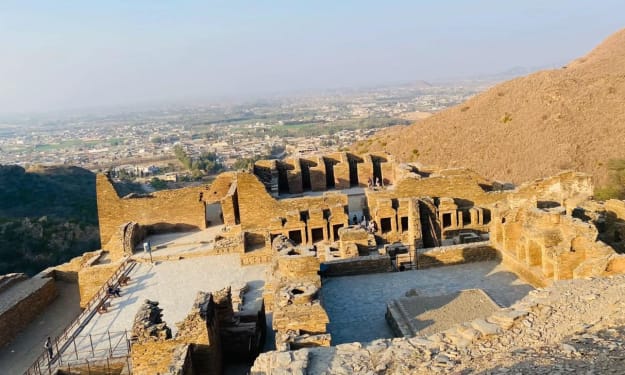
Takht Bhai, Echoes of an Ancient Monastery.
Narrator (voice-over): In the heart of Khyber Pakhtunkhwa, Pakistan, lies a place where stones speak and winds carry stories of centuries past. This is Takht Bhai — one of the most remarkable Buddhist monastic complexes of the ancient Gandhara civilization.
By USA daily update about a year ago in History
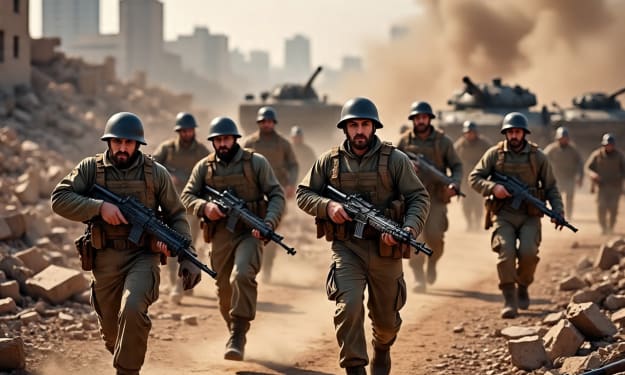
The war of Israel
The ongoing conflict involving Israel is one of the most complex and enduring disputes in modern history. Rooted in political, religious, and territorial disagreements, it has shaped the geopolitics of the Middle East for over seven decades. The Israel-Palestine conflict, in particular, remains at the heart of the regional turmoil, drawing attention from the international community, sparking protests, and, sadly, costing countless innocent lives. Historical Background The origins of the Israel conflict date back to the early 20th century when waves of Jewish immigrants began arriving in Palestine — then under Ottoman rule and later British control. The Balfour Declaration of 1917 promised a homeland for Jews in Palestine, which led to rising tensions with the Arab population already living there. In 1947, the United Nations proposed a plan to partition Palestine into separate Jewish and Arab states, with Jerusalem as an international city. While Jewish leaders accepted the plan, Arab leaders rejected it. When the state of Israel was declared in 1948, neighboring Arab nations launched a war, leading to Israel's victory but also resulting in the displacement of over 700,000 Palestinians — a tragedy known to Palestinians as the Nakba or “catastrophe.” Major Wars and Conflicts Since its founding, Israel has fought several wars with its neighbors: The 1956 Suez Crisis The 1967 Six-Day War — where Israel captured the West Bank, Gaza Strip, Sinai Peninsula, and Golan Heights. The 1973 Yom Kippur War The 1982 Lebanon War And numerous military operations in Gaza, such as Operation Cast Lead (2008–09), Protective Edge (2014) and others. Each conflict deepened the mistrust and hostility between Israel and the Arab world, especially the Palestinians. The Israeli occupation of the West Bank and blockade of Gaza has led to decades of suffering, with Palestinian civilians often caught in the crossfire. Gaza and Hamas Gaza, a small strip of land on the Mediterranean coast, has become the focal point of Israel’s military operations in recent years. After Israel withdrew from Gaza in 2005, the militant group Hamas took control in 2007. Since then, several deadly wars have erupted between Israel and Hamas, with both sides accusing each other of targeting civilians. Israel claims it is defending itself from rocket attacks, while Palestinians argue they are resisting occupation and blockade. Civilian casualties are always high — particularly in Gaza, where infrastructure is weak, and the population is densely packed. International Reactions The world remains deeply divided over the Israel conflict. Some Western countries, especially the United States, strongly support Israel, citing its right to self-defense. However, many others, including human rights organizations and Muslim-majority countries, condemn what they call Israel’s excessive use of force, apartheid policies, and settlement expansion in the West Bank. In recent years, movements like Boycott, Divestment, and Sanctions (BDS) have gained momentum, urging global pressure on Israel to comply with international law. Humanitarian Crisis The human cost of this war is staggering. Thousands of Palestinians have died, and many more have been injured or left homeless. Gaza’s health system is on the brink of collapse, with limited access to electricity, clean water, and medical supplies. Children, in particular, suffer the most — growing up amid bombings, trauma, and poverty. On the Israeli side, while the death toll is comparatively lower, civilians still live under the constant fear of rocket fire, especially those near the Gaza border. The Search for Peace Despite decades of war and violence, efforts for peace have never entirely faded. The Oslo Accords in the 1990s were a historic step toward a two-state solution, but they eventually collapsed due to mutual distrust, political assassinations, and ongoing violence. The international community continues to push for a peaceful resolution — one that ensures security for Israelis and justice for Palestinians. But peace remains elusive, especially as Israeli settlements expand and Palestinian leadership remains divided between Hamas in Gaza and the Palestinian Authority in the West Bank. Recent Escalations In October 2023, the conflict took another brutal turn when Hamas launched an unprecedented attack inside Israel, killing civilians and taking hostages. Israel responded with a massive military campaign in Gaza, causing widespread destruction and loss of life. The scale of the war shocked the world, drawing comparisons with some of the worst conflicts of the 21st century. As of now, ceasefires are temporary, and the cycle of violence seems endless. --- Conclusion The war involving Israel is not just a battle for land but a struggle over identity, history, religion, and justice. Both Israelis and Palestinians have suffered immensely. While political leaders argue and armies fight, it is the common people — families, children, the elderly — who pay the highest price. The world watches, protests, and prays. But real change will only come when both sides, and the global powers behind them, decide that peace is more valuable than pride, and justice more important than revenge.
By Movies Channelabout a year ago in History
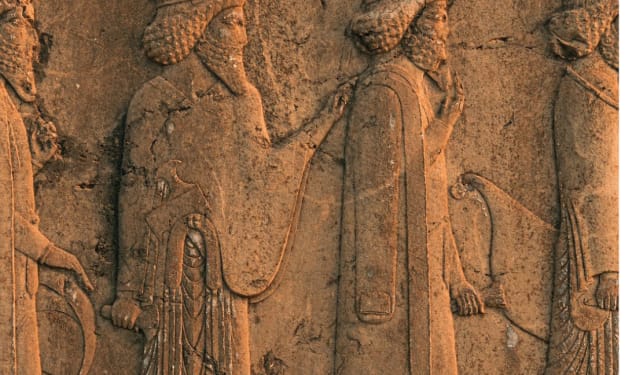
Ancient Warfare’s Strangest Tactics:
Warfare has always been a reflection of human ingenuity often brutal, sometimes bizarre. Long before modern weapons reshaped the battlefield, ancient generals turned to more unconventional means to gain an edge. These tactics didn’t just rely on muscle or metal they weaponized nature, fear, fire, and even disease. While some of these methods sound like they belong in a historical fantasy novel, they were very real, often surprisingly effective, and at times deeply unsettling.
By Lynn Myersabout a year ago in History
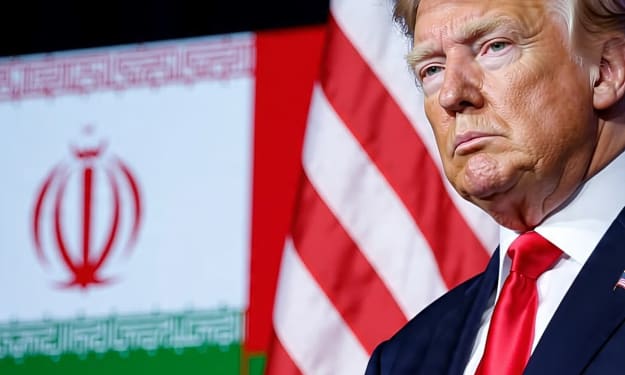
Trump and Iran: Sanctions, Standoffs, and Shifting Power in the Middle East
When Donald Trump took office as the 45th President of the United States in January 2017, one of his top foreign policy priorities was to reverse what he called the "disastrous" Iran nuclear deal. This agreement, officially known as the Joint Comprehensive Plan of Action (JCPOA), had been signed in 2015 under President Barack Obama, alongside other world powers including the UK, France, China, Russia, and Germany. Its aim was to prevent Iran from developing nuclear weapons in exchange for lifting crippling economic sanctions. Trump believed the deal was too lenient, allowing Iran to continue its missile program and destabilizing actions in the Middle East, while reaping economic benefits. On May 8, 2018, he officially withdrew the U.S. from the agreement and reimposed severe economic sanctions on Iran. This marked the beginning of a new era of hostility between the two nations—one characterized by economic warfare, military posturing, and regional unrest. The “Maximum Pressure” Campaign Trump's administration launched what it called a "maximum pressure" campaign. The U.S. reinstated sanctions targeting Iran’s oil exports, banking sector, shipping industry, and more. The goal was to force Iran to renegotiate the nuclear deal and curb its support for groups like Hezbollah in Lebanon, the Houthis in Yemen, and militias in Iraq and Syria. These sanctions hit Iran's economy hard. Its currency collapsed, inflation soared, and oil exports dropped significantly. Yet, instead of returning to the negotiating table, Iran chose a defiant path. It began breaching the terms of the nuclear deal—enriching uranium beyond agreed limits and stockpiling nuclear material. A Region on Edge The tensions escalated rapidly. In 2019, a series of mysterious attacks on oil tankers in the Persian Gulf were blamed on Iran, although Tehran denied involvement. Later that year, Iranian-backed militias were accused of attacking U.S. bases in Iraq. The standoff reached a boiling point in January 2020, when a U.S. drone strike near Baghdad International Airport killed General Qasem Soleimani, the commander of Iran’s elite Quds Force. The Trump administration claimed Soleimani was planning imminent attacks on American diplomats and troops. His death, however, was seen by many as a dangerous provocation. Iran responded days later by launching ballistic missiles at two U.S. bases in Iraq. Though no American lives were lost, over 100 soldiers suffered traumatic brain injuries. The world watched nervously, fearing a full-scale war might erupt. International Response Trump’s Iran policy was controversial globally. The European allies who had signed the original nuclear deal opposed the U.S. withdrawal, fearing it would destabilize the region and weaken diplomatic efforts. They tried to keep the JCPOA alive, but their efforts had limited impact as Iran’s violations grew. China and Russia criticized the U.S. for reigniting tensions. Within the U.S., critics argued that Trump’s policies had isolated America diplomatically and made the region more dangerous without achieving meaningful results. Impact on Iran's Internal Politics Inside Iran, Trump's policies fueled anti-American sentiment. However, they also deepened internal dissatisfaction. Widespread protests broke out in 2019 and 2020 over economic hardship and government corruption, though many were brutally suppressed. Iran's leaders, including Supreme Leader Ayatollah Ali Khamenei, portrayed Trump's actions as proof of American hostility toward the Iranian people. Interestingly, the confrontations with the U.S. allowed Iran's hardliners to strengthen their hold over domestic politics, weakening reformist voices who had supported engagement with the West. Trump’s Goal and Legacy Trump repeatedly said he wanted to negotiate a "better deal" with Iran—one that would not only limit its nuclear ambitions but also restrict its regional activities and missile program. But no such deal materialized during his presidency. By the time he left office in January 2021, Iran was closer to weapons-grade uranium than it had been in years. Relations were at a historic low, and the Middle East had become even more polarized, with new alliances forming—such as the Abraham Accords between Israel and Arab states—partly in response to Iran’s influence. Conclusion: A Lasting Shift Donald Trump’s approach to Iran marked a sharp departure from diplomacy to confrontation. His administration used economic power as a weapon, hoping to bring Iran to its knees. While the strategy weakened Iran economically, it failed to produce a new agreement or significantly change Iran’s behavior in the region. Instead, the years of Trump and Iran became a period of uncertainty, strategic gambles, and dangerous escalations. The long-term impact of these years continues to shape Middle Eastern politics, nuclear diplomacy, and U.S. foreign policy decisions today. As of now, the legacy of Trump's Iran policy remains a topic of intense debate—was it a necessary stand against a hostile regime, or a missed opportunity for lasting peace
By Movies Channelabout a year ago in History
The Man Behind the Word: How Charles Boycott’s Name Became a Symbol of Protest
In today’s world, the term “boycott” is used almost daily. People boycott products, companies, events, and even governments. It has become a powerful and peaceful way to express disapproval or demand change. But few know that this word comes from a real man whose name became forever linked to organized social resistance. His name was Charles Boycott, and the story of how his name became a verb is as fascinating as it is historically important. Charles Boycott was born in 1832 in Norfolk, England. He later became a British Army captain and eventually took up work as a land agent in Ireland during a time of serious social unrest. The country was in the grip of what is now remembered as the Land War. Irish tenant farmers were demanding fairer rents, security of tenure, and the right to own the land they worked on. Many of these farmers lived in poverty and were at the mercy of landlords who charged high rents with little concern for their well-being. Boycott worked in County Mayo for Lord Erne, a wealthy absentee landlord. In 1880, during a particularly difficult harvest season, the tenants asked for a rent reduction due to their poor crops. Lord Erne agreed to a small discount, but Boycott, acting on behalf of the landlord, refused to grant further concessions. Instead, he began the process of evicting eleven tenants who could not pay. This decision would mark the beginning of an extraordinary chapter in history. When the local community heard of the eviction attempts, they were outraged. Rather than respond with violence, the Irish Land League, a political organization fighting for tenants’ rights, decided to take a different approach. They encouraged the community to completely cut off Charles Boycott. His workers abandoned him. Local shops refused to sell him goods. Even the postman refused to deliver his mail. Isolated and unable to function, Boycott found himself completely alone. This strategy of nonviolent resistance proved incredibly effective. Within weeks, newspapers picked up the story and began using his name as a term for this new form of protest. “To boycott” someone came to mean to socially and economically isolate a person or organization to force change. The term spread rapidly beyond Ireland, appearing in British newspapers and eventually around the world. It was added to dictionaries and soon became part of everyday vocabulary. The power of this new tactic did not go unnoticed. It gave voice to people who had none and offered a peaceful means of protest that could disrupt powerful institutions. Over time, boycotting became a global strategy used by civil rights movements, labor unions, and concerned citizens everywhere. It was used by Mahatma Gandhi in India against British rule, by African Americans during the Montgomery Bus Boycott in the 1950s, and continues today through social media campaigns that call out unethical behavior. For Charles Boycott, however, the experience was deeply personal. He was forced to flee Ireland with his family under military escort. Though he lived out the rest of his life quietly, his name remained anything but. In fact, it became immortalized as a symbol of resistance. What makes this story remarkable is that the boycott was a peaceful response to injustice. It demonstrated the immense power of community action and civil disobedience. People chose not to harm or attack Charles Boycott. Instead, they chose to withdraw their support, and that alone was enough to bring his actions to a halt. The legacy of the boycott continues to grow. In today’s digital age, boycotts can be organized in minutes and reach millions of people online. From canceling subscriptions to avoiding certain products or companies, individuals use this method to make their voices heard. The roots of this power, however, lie in a small Irish village where one man’s refusal to compromise led to an extraordinary movement. Charles Boycott never intended to become part of history. He was just doing his job as a land agent. But the reaction to his decisions sparked something far greater than himself. It sparked a movement. A single word now serves as a reminder that collective action can make a difference, and that peaceful protest, when done right, can shake the foundations of the powerful. In remembering Charles Boycott, we are reminded that even the most ordinary events can lead to extraordinary outcomes. His story is not just about a man or a moment, but about the strength of community, the value of justice, and the enduring power of words.
By DigitalAddiabout a year ago in History
Benazir Bhutto
*Title:* "Benazir Bhutto: A Trailblazing Leader" *Subtitle:* "A Comprehensive Biography of Pakistan's First Female Prime Minister, Her Life, Politics, and Legacy" Here is the expanded article: Benazir Bhutto was a Pakistani politician who had a profound impact on her country's history. Born on June 21, 1953, in Karachi, Pakistan, she was the daughter of Zulfikar Ali Bhutto, a former Prime Minister of Pakistan, and Nusrat Bhutto, an Iranian-Pakistani woman of Kurdish descent. *Early Life and Education* Benazir Bhutto's early life was marked by privilege and politics. She attended Karachi Grammar School and later studied at Harvard University and the University of Oxford, where she honed her leadership skills and developed a passion for public service. Her time at Harvard and Oxford had a significant influence on her worldview and prepared her for the challenges she would face in her political career. At Harvard, Bhutto was exposed to the ideals of democracy, equality, and social justice. She was particularly drawn to the works of Mahatma Gandhi and Martin Luther King Jr., whose philosophies of non-violent resistance resonated with her. Her experiences at Harvard shaped her perspective on politics and governance, and she began to see the potential for positive change through democratic means. *Entry into Politics* Bhutto's entry into politics was prompted by her father's execution in 1979. Zulfikar Ali Bhutto had been overthrown in a military coup led by General Zia-ul-Haq, who subsequently had him tried and executed for murder. This event had a profound impact on Benazir Bhutto, who was deeply traumatized by her father's death. She became determined to continue her father's legacy and fight for democracy and human rights in Pakistan. *Rise to Power* Benazir Bhutto returned to Pakistan in 1986 and became involved with the Pakistan People's Party (PPP), which her father had founded. Her charisma and leadership abilities quickly propelled her to the forefront of the party. She became a vocal critic of General Zia's regime and advocated for democratic reforms. In 1988, Bhutto's party won the general elections, and she became the Prime Minister of Pakistan at the age of 35. She was the first female Prime Minister of Pakistan and a trailblazer for women in politics. *Prime Minister of Pakistan* Bhutto's tenure as Prime Minister was marked by significant challenges. She faced opposition from conservative elements in Pakistani society, who were opposed to a woman holding such a high office. She also faced economic challenges, including high inflation and unemployment. Despite these challenges, Bhutto implemented several significant reforms. She increased access to education and healthcare, promoted women's rights, and encouraged foreign investment. Her government also initiated several infrastructure projects, including the construction of new roads and bridges. *Assassination* Tragically, Bhutto's life was cut short by an assassination on December 27, 2007. She was killed in a suicide bombing and shooting attack during an election rally in Rawalpindi, Pakistan. The attack claimed the lives of 28 others and left over 100 wounded. Bhutto's assassination was widely condemned, and it sparked widespread protests and outrage across Pakistan. The investigation into her death was led by the Pakistani government, with assistance from international experts. *Legacy* Benazir Bhutto's legacy is complex and multifaceted. She was a pioneering leader who paved the way for women in politics and fought tirelessly for democracy and human rights. Her life and work continue to inspire people around the world. Bhutto's legacy is also marked by controversy. Her governments were criticized for corruption and mismanagement, and she faced several allegations of nepotism and cronyism. However, her commitment to democracy and her willingness to take risks to promote positive change are widely acknowledged. *Impact on Pakistani Society* Bhutto's impact on Pakistani society was significant. She challenged traditional norms and stereotypes, and paved the way for women to participate in politics and public life. Her leadership also helped to promote a more inclusive and tolerant society, where people of all backgrounds could feel valued and respected. *Conclusion* Benazir Bhutto's life was marked by her courage, conviction, and commitment to public service. Her legacy continues to shape Pakistan's politics and inspire future generations of leaders. Despite the challenges she faced, Bhutto remained committed to her ideals and worked tirelessly to promote democracy, equality, and social justice.
By Fazal Malikabout a year ago in History
Top 5 most powerful Empires
Hi there! Throughout the ages, history has been filled with empires that rose and fell, each leaving a unique imprint on our world. While some empires showcased sheer military might, others thrived through cultural or economic influence. Determining which were the "strongest" can be quite subjective, yet by looking at factors like land size, military power, governance, and lasting legacy, we can highlight five empires often regarded as the most formidable throughout history.
By Shahzaib ahmed khalilabout a year ago in History
Top 10 Most Powerful Prime Ministers in the World (2025 Edition)
Introduction: Top 10 Most Powerful Prime Ministers in the World (2025 Edition) In today’s complex geopolitical landscape, power no longer lies in military might alone it lies in influence, innovation, diplomacy, and the ability to lead in times of global crisis.
By Farooq Hashmiabout a year ago in History