Biographies
The Greatest General in History? Alexander the Great (Complete Series)
Part 1: The Making of a Conqueror From Prince to King Born in 356 BCE in Pella, the ancient capital of Macedonia, Alexander III would become one of history's most legendary military commanders. But his path to greatness began long before he donned armor or led troops into battle.
By jahidul Islam Sifatabout a year ago in History
Bahlool and His Friend – The Voice of Wisdom and the Sound of a Donkey
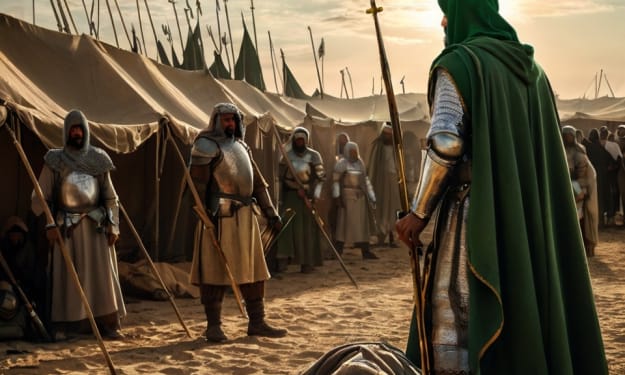
In the bustling streets of ancient Baghdad, during the reign of Caliph Haroun al-Rashid, there lived a man whose name became synonymous with wit, wisdom, and divine madness — Bahlool Dana. He was known throughout the city as the wise fool, a man who spoke in riddles yet revealed profound truths through humor and paradox. People laughed at him, but they also learned from him; even kings respected his insight.
By Amir Husenabout a year ago in History
Anarcha Westcott
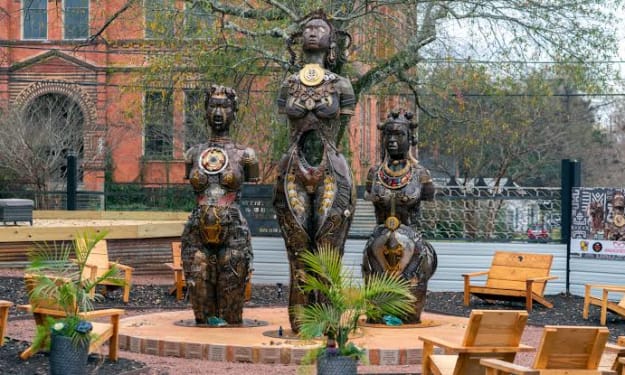
In the dusty medical archives of the 19th century, the name Anarcha Westcott appears quietly, not in headlines, but buried in surgical reports and footnotes. She was not a doctor. She was not a nurse. She was a young enslaved Black woman on a plantation in Montgomery, Alabama. Her body became the unwilling stage for a series of surgical experiments that would transform the field of medicine, at a devastating human cost. Anarcha suffered from a condition called vesicovaginal fistula, a severe childbirth injury that caused uncontrollable leakage of urine, chronic infections, and deep social stigma. In the 1840s, there was no known cure in America. Enter Dr. James Marion Sims, a physician who would later be celebrated as “the father of modern gynecology.” But before the accolades and fame, there was Anarcha. Sims saw in Anarcha and other enslaved women a chance to experiment and develop new surgical methods. These women had no choice; their bodies were controlled by their owners and by Sims himself. Between 1845 and 1849, Sims performed around 30 experimental surgeries on Anarcha in an effort to treat her fistula. He did this without anesthesia. Although ether anesthesia was already available during that period, Sims chose not to use it, driven by the racist belief that Black women did not feel pain in the same way white women did. The surgeries were brutal. Anarcha was fully conscious as Sims operated on her repeatedly. She screamed in pain while other enslaved women held her down. Surgery after surgery failed, leaving her in agony, but Sims persisted, not for her comfort, but for medical discovery. She wasn’t alone. Sims also experimented on at least ten other enslaved women, including Lucy and Betsy, whose names survive through fragments of historical records. But Anarcha became his most frequent subject, enduring four long years of procedures. Eventually, Sims developed a successful surgical technique to repair the fistula, a technique that would go on to revolutionize women’s healthcare. He published his methods, built a hospital for women, and was honored by the medical community. Statues were raised in his name. But Anarcha’s name was almost erased. Her suffering was the foundation on which Sims built his legacy, yet she received no recognition, no honor, and no freedom for her ordeal. Her body carried the weight of history, and her pain paved the way for modern gynecology. For decades, the world celebrated Sims while forgetting the women whose bodies he used. But history began to reckon with the truth. Activists, historians, and communities brought Anarcha’s story back into the light. In 2018, after public outcry, the statue of Sims in New York’s Central Park was removed. In its place, new voices began to speak the names of Anarcha, Lucy, Betsy, and the other women, acknowledging their pain and their forced contribution to medical history. Anarcha Westcott’s story is not one of medical glory. It is a story of injustice, survival, and truth. She endured unimaginable pain, not by choice but by force. Her body carried the weight of experiments that would go on to save countless lives, yet she remained voiceless for more than a century. Today, the world is beginning to remember her, not as a footnote, but as a central figure in the painful birth of modern gynecology. History remembered the doctor. But the world is finally beginning to remember the woman.
By Stories You Never Heardabout a year ago in History
Judith Barsi’s Fast-Track to Cinema—and the Tragedy That Froze a Rising Voice
Judith Barsi’s career didn’t so much begin as it accelerated. Petite and precociously focused, she moved from commercials to prime-time guest spots with the ease of a veteran twice her age. Casting directors loved her clarity, timing, and the way she could take direction on the first pass—a rare trait in any performer, rarer still in a child. By the time most kids are figuring out which school club to join, Judith had racked up dozens of credits, a studio-ready voice, and a calendar that blended network shoots with movie call sheets. Her ascent felt inevitable.
By Flip The Movie Scriptabout a year ago in History
The Trump Family History: The Life and Legacy of Friedrich Trump
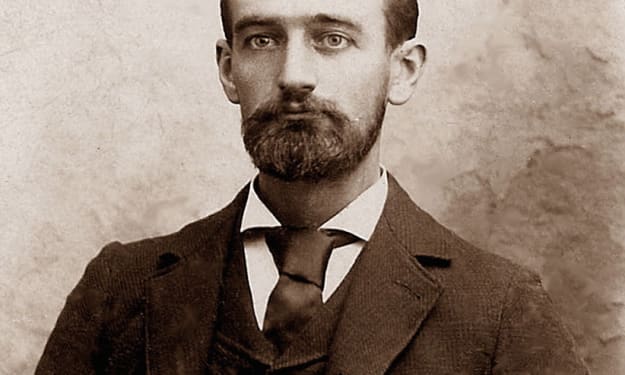
I am writing this article from a clearly objective point of view. Draw your own conclusions. Introduction The Trump family stands as one of the most prominent dynasties in contemporary American history. Frequently associated with business, real estate, and political influence, the roots of the family stretch across the Atlantic, beginning with Friedrich Trump, grandfather to Donald J. Trump, the 45th President of the United States. This article offers a comprehensive exploration of Friedrich Trump’s life ... from his German origins and emigration to America, to his entrepreneurial ventures in the Pacific Northwest, including his controversial involvement in brothel operations. By examining the details of Friedrich’s journey, we gain insight into how his choices shaped the trajectory of the Trump family and contributed to their legacy.
By Julie O'Hara - Author, Poet and Spiritual Warriorabout a year ago in History
Jesse James
In every family, some names carry pride, sadness, controversy- men and women whose stories never stayed tucked away in the past. For me, one such name echoes with both pride and sorrow: Jesse Woodson James. To the rest of the world, he was an outlaw and a legend, immortalized in print and film, but through his wife, Zerelda “Zee” Mimms, he is family, remembered as a man, a husband, a father. His life was tangled in violence and rebellion, yet it was woven with loyalty, family, and resilience. To speak of Jesse is not to recite his legend, but to tell the story of a man who carried scars inside and out, and who walked a path too tangled for most men to survive.
By Carolyn Pattonabout a year ago in History
The Rock That Wasn’t a Rock: A Journey Through 724 Million Kilometers of Mystery
When we look up at the night sky, we see twinkling dots that seem calm and distant. But hidden among those stars are travelers ancient, silent wanderers that have been moving through the darkness for billions of years. This is the story of one such wanderer a story that began on Earth but ended 724 million kilometers away, on the surface of something that wasn’t what scientists thought it was.
By Izhar Ullahabout a year ago in History
Potawatomi. AI-Generated.
Where the Earth Still Speaks and the Sky Still Listens The morning mist rolled softly across the edge of the forest, carrying with it the quiet songs of the river. The Potawatomi people called this land Bodewadmi, “the Keepers of the Fire,” for they believed that the flame of life and wisdom must never be allowed to die.
By shakir hamidabout a year ago in History
The Iron Fist of Karanja: Rise and Fall of General Nyota. AI-Generated.
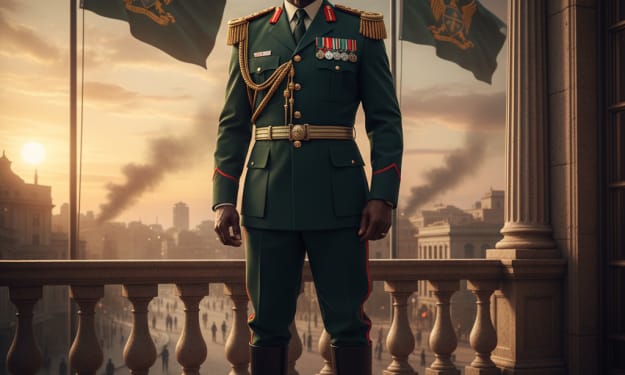
In the dusty hills of Karanja, a small East African nation, Samuel Nyota was born in 1948 into a poor farming family. His father toiled in the fields, his mother raised him and his siblings under the unforgiving sun, and from an early age, Samuel learned that life rewarded the strong and punished the weak. Tall, imposing, and fiercely intelligent, he quickly realized that survival required more than hard work — it demanded cunning, strategy, and ruthlessness.
By shakir hamidabout a year ago in History