Biographies
The Rise of China: A Historical Perspective
The rise of China is one of the most extraordinary transformations in modern history. In the span of just a few decades, China evolved from a largely agrarian and impoverished nation into a global superpower. Its journey from the chaos of imperial decline to becoming a major player on the world stage represents a story of vision, resilience, and calculated reform. The rise of China is not merely a tale of economic growth; it is a story of national revival — a renaissance that reshaped global politics, economics, and the very structure of world power.
By Muhammad Daud 12 months ago in History
Columbus Day
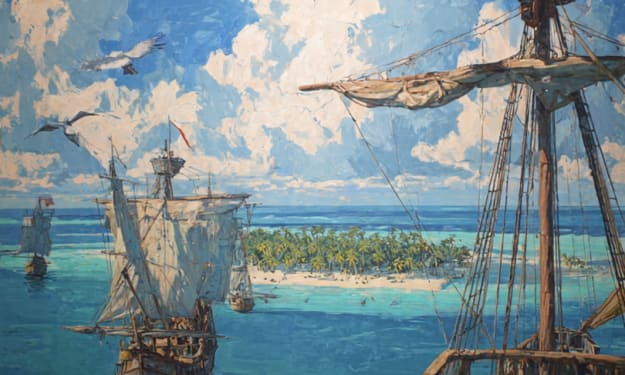
--- ## Columbus Day: An Overview and Key Questions Columbus Day is an American holiday observed on the second Monday in October to commemorate the arrival of Christopher Columbus in the Americas in 1492. It marks the moment when European exploration began an era of intense change, contact, colonization, and eventually global exchange. Over time, Columbus Day has evolved in meaning, significance, and controversy, becoming a flashpoint in debates over history, identity, and justice. ### Historical Background Christopher Columbus was an Italian navigator sponsored by the Spanish monarchy to find a western route to Asia. In October 1492, he landed in what is now the Bahamas, believing he had reached islands off the coast of Asia. Though his voyage did not find the intended route, it did initiate sustained European engagement with the lands and peoples of the Americas. The arrival of Columbus set in motion waves of migration, conquest, and colonial expansion by European powers. In the United States, the idea of commemorating Columbus’s voyage gained popularity in the 19th and early 20th centuries, especially among Italian American communities seeking recognition and acceptance in a society that often discriminated against them. A mass lynching of Italian Americans in New Orleans in 1891 was one trigger that drew attention to the need to honor Italian heritage in the U.S. Later, Columbus Day was officially made a federal holiday in 1937, and in 1971 its observance was fixed to the second Monday of October. ### Why People Ask About Columbus Day People often wonder: * What exactly is Columbus Day celebrating? * Is Columbus Day still officially observed everywhere? * Why is Columbus Day controversial today? * What alternatives have emerged to Columbus Day? * Who celebrates it, and in what way? Let me answer these in turn. **1. What is Columbus Day celebrating?** Originally, the day commemorated Columbus’s first arrival in the Americas in 1492. It is meant to mark European expansion and the “discovery” of a “New World” from a Eurocentric viewpoint. Over time, it became also a symbol of Italian heritage and pride in the United States. **2. Is Columbus Day still officially observed everywhere?** Columbus Day remains a federal holiday in the United States, meaning federal offices typically close and many employees receive the day off. However, observance at the state and local level varies widely. Some states observe it as a paid holiday, some as an unofficial recognition, and others have replaced or paired it with Indigenous Peoples’ Day or similar observances. **3. Why is it controversial today?** Critics argue that Columbus Day glosses over the suffering and displacement of Indigenous peoples initiated by European colonization. Columbus’s voyages and what followed brought violence, disease, enslavement, and the destruction of native societies. Many believe celebrating Columbus implicitly celebrates these harmful outcomes and ignores the voices of those who suffered. **4. What alternatives have emerged?** In response to criticism, many states, local governments, and institutions now observe **Indigenous Peoples’ Day** on the same date. This day honors Native American communities, their histories, resilience, and contributions. In some cases, Columbus Day and Indigenous Peoples’ Day are recognized jointly; in others, the latter replaces the former altogether. **5. Who celebrates it and how?** In many cities with large Italian American populations, parades and cultural events are held to honor Columbus’s legacy and celebrate Italian culture. Schools, religious organizations, and civic groups may perform ceremonies, educational programs, or displays of heritage. Meanwhile, Indigenous communities and their allies often hold counter-events, protests, or public education efforts about native histories and the impacts of colonization. ### Contemporary Debate and Meaning In recent years, the symbolic weight of Columbus Day has shifted. Many see it less as a simple celebration of exploration and more as a contested memory, where the legacy of colonialism must be weighed and reexamined. It has become a battleground over which version of history should be remembered, whose voices are centered, and how national identity should be defined. In some places, statues of Columbus have been removed or relocated after protests. Educational curricula are increasingly including the perspectives of Indigenous peoples and acknowledging the violence and disruption that followed European arrival. In some states, the renaming or dual observance with Indigenous Peoples’ Day is intended to strike a balance between acknowledging immigrant heritages and recognizing colonial harms. Yet the issue remains deeply divisive. Some view Columbus as a heroic explorer and symbol of discovery. Others view him as a figure tied to exploitation and genocide. The debate over whether to celebrate, reform, or abandon Columbus Day reflects deeper questions about power, memory, and jus
By America today 12 months ago in History
🌎 Columbus Day: Between Celebration and Reflection
Each October, as autumn leaves color the streets, America pauses for a day that has stirred debate, pride, and introspection for generations — Columbus Day. Once a straightforward celebration of discovery and progress, it has now become a mirror reflecting America’s evolving values and its willingness to confront uncomfortable truths.
By Shazzed Hossain Shajal12 months ago in History
A Guide to Authentic Indian Dishes
Calgary has many restaurants. Among them, Indian food stands out. It is full of bold spices, rich aromas, and classic recipes. In downtown Calgary, there is a restaurant that brings real Indian flavors to every plate. It serves traditional dishes, street food, and modern twists.
By VYB Social12 months ago in History
Pakistan’s Silent Role in Afghanistan’s Wars
Between Borders and Bullets: Pakistan’s Silent Role in Afghanistan’s Wars The rugged terrain along the Pakistan-Afghanistan border has long been more than just mountains, passes, and valleys. It is a region where national boundaries meet tribal loyalties, where political ideologies travel in the smoke of gunfire, and where the ambitions of states and ideologues spill across invisible lines. In the story of the Afghan wars, Pakistan has not merely been a neighbor—it has been a player, a conduit, a sanctuary, and sometimes a battleground in its own right.
By Wings of Time 12 months ago in History
The Grace of Being Unapologetically Oneself: A Reflection on Diane Keaton’s Enduring Truth
By Lynn Myers Published on Vocal Media — October 2025 When a legend like Diane Keaton passes, the world does not simply lose a performer. It loses a compass. Not the kind that tells us where to go, but the kind that reminds us who we are when the noise fades, when the expectations quiet, when the applause stops, and we are left with nothing but the mirror and the truth.
By Lynn Myers12 months ago in History