Biographies
Room 207 – The Haunted Hostel That Taught the Value of Time
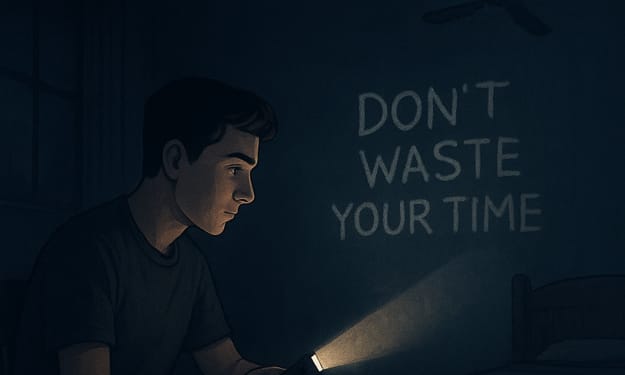
🕯️ Room 207 It was the first week of college, and the boys’ hostel was alive with laughter, music, and the chaos that only new beginnings can bring. Among the hundreds of students dragging their suitcases down the long, echoing corridors, Ahmed stood out — quiet, curious, and eager to start fresh. When the warden handed him his room key, he smiled politely. “Room 207,” the warden said. “Top floor, end of the hallway.” Then, almost as if by reflex, he added under his breath, “No one’s lasted there long.” Ahmed raised an eyebrow. “Why?” The warden looked away. “You’ll be fine,” he said curtly and walked off. --- The Room Room 207 was old — older than the rest of the hostel. The paint on the walls peeled in thin strips, the ceiling fan groaned like it carried secrets, and the window rattled every time the wind blew through the courtyard. But it had a good view — the college tower on one side and the football field on the other. Ahmed liked it. That night, he unpacked, played some music, and started arranging his books. Around midnight, when the hostel lights dimmed, he noticed something odd on the wall behind the study desk — faint white chalk marks. He leaned closer. It said: > “Don’t waste your time.” He smiled. “Some senior’s idea of a joke,” he thought, and rubbed it off. --- The Whisper Two nights later, while he was studying for his first quiz, the lights flickered and went out. The whole building fell silent except for the rain tapping against the window. He took out his phone flashlight — and froze. The same message was back on the wall. Fresh. > “Don’t waste your time.” This time, the handwriting looked… different. More deliberate. More recent. Ahmed laughed nervously, trying to shake off the chill creeping up his spine. “Must be one of the guys pulling a prank,” he muttered. But the door was locked from inside. He didn’t sleep much that night. --- The Story of Salman A few days later, Ahmed was chatting with his roommate from next door, Bilal, when he casually mentioned the writing on the wall. Bilal’s face went pale. “You don’t know about that room?” he asked. Ahmed frowned. “What about it?” Bilal looked around, lowered his voice, and said, “There used to be a student named Salman in that room. Brilliant guy. Always top of his class. But during finals last year, he… well, he didn’t make it.” Ahmed stared. “What do you mean?” Bilal sighed. “He pushed himself too hard. Barely slept, barely ate. The night before his last exam, they found him unconscious at his desk. Heart failure. He’d been awake for three nights straight.” He paused. “After that, people said strange things started happening in 207. The message started appearing — the same words Salman used to tell everyone: ‘Don’t waste your time.’” Ahmed didn’t know what to say. He laughed it off, but deep down, the story stayed with him. --- The Change That night, Ahmed sat at his desk again, staring at the blank wall. He whispered, “If you’re still here, Salman, I hear you.” From then on, things were different. He started managing his time better. He woke early, studied with focus, and took breaks when needed. The wall remained blank for weeks — until one night before finals. When Ahmed came back from the library, exhausted, he noticed a faint glow on the wall. The same words had returned: > “Don’t waste your time.” But this time, there was something new below it. > “You’re doing well.” He stood still for a long time, heart pounding — not from fear, but from something else. Gratitude. --- Graduation Day Three years passed. Ahmed became one of the top students in his department. Everyone admired his discipline and calm confidence. When people asked how he managed to stay so consistent, he always smiled and said, > “Someone once reminded me that time is precious.” The day he graduated, he returned to Room 207 one last time. The hostel was quieter now, almost peaceful. He unlocked the door, stepped inside, and looked around. The same peeling paint, the same creaking fan — and the same wall. He picked up a piece of chalk from the desk and wrote carefully beneath the old message: > “Thank you, Salman. Your words changed my life.” Then he placed his graduation cap on the desk, as if leaving a gift for an old friend. --- Years Later Five years later, a new batch of students arrived. One of them, a first-year named Hassan, got assigned to Room 207. The warden hesitated but handed him the key anyway. That night, as Hassan unpacked, he noticed faint words on the wall. > “Don’t waste your time.” He chuckled. “Must be the previous student’s handwriting,” he thought. He turned on some music, sat down to study — and for a brief moment, felt as if someone was sitting beside him, quietly turning the pages of his notebook. From that day, Hassan never procrastinated again. --- The Legacy Room 207 became more than just a room — it became a quiet legend. Students whispered about it in the mess hall, seniors warned juniors not to take it lightly, but those who stayed there always came out changed. Some said they felt a presence that pushed them to do better. Others claimed that whenever they were about to give up, they’d find that same message reappearing — glowing faintly on the wall. > “Don’t waste your time.” No one ever erased it completely. It became a symbol — a reminder that some lessons are too powerful to fade, even with time. --- The Realization One evening, Ahmed returned to campus as a guest lecturer. After his talk, he visited the old hostel, just for nostalgia. The corridors still smelled the same — like damp walls and chai. When he reached the third floor, he paused in front of Room 207. The door was open, light spilling into the hallway. Inside, a student sat studying, unaware of Ahmed standing there. The chalk writing was still visible on the wall — the same words that had once changed his life. Ahmed smiled, whispered softly, > “You kept your promise, Salman.” And as he turned to leave, the fan above creaked — once, gently — as if someone was acknowledging him. Outside, the sun dipped below the horizon, and the hostel lights flickered on, one by one. But in Room 207, the light never really went out. --- ✨ Moral: > Some people leave this world, but their lessons stay alive — written not just on walls, but in the hearts of those who choose to listen.
By Muhammad Daud 12 months ago in History
The Historical and Logical Case for Jesus Christ, the Son of God
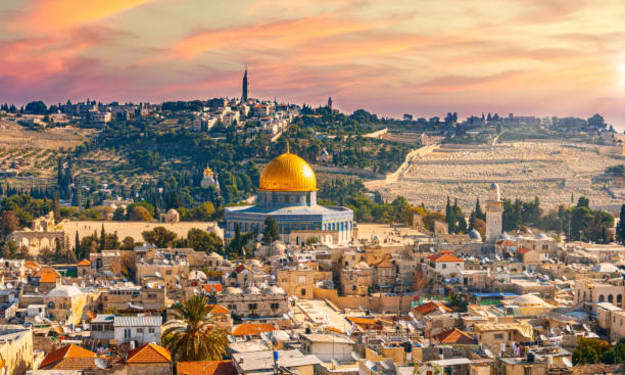
The following is not an appeal to blind faith or emotion. It is a reasoned argument grounded in history, logic, and evidence. Whether one accepts the divinity of Jesus Christ or not, the data surrounding His life, death, and resurrection demand an intellectually honest examination. Truth, by nature, does not depend on belief to exist; it simply is.
By Peter Thwing - Host of the FST Podcast12 months ago in History
The Mysterious Death of NFL Star Doug Martin in Oakland Police Custody
A Shocking Morning in Oakland In the early hours of Saturday morning, October 19, 2025, Oakland residents awoke to headlines that seemed surreal. Former NFL running back Doug Martin, a name once synonymous with explosive power and relentless determination on the football field, had died while in the custody of the Oakland Police Department (OPD).
By Lynn Myers12 months ago in History
"Shaping Tomorrow: Innovations and Unity in Today’s World"
In a time often dominated by uncertainty and challenge, a quieter revolution is unfolding—one driven by innovation, unity, and a growing global determination to shape a better tomorrow. From bustling labs in Singapore to clean energy farms in rural Kenya, people across the globe are collaborating in new and exciting ways. At the heart of this global movement is a common understanding: our biggest challenges—from climate change to inequality—require shared solutions. One of the most inspiring stories of the past year comes from a coalition of nations working to combat climate change. In 2025, the Global Green Accord was launched, a multi-nation initiative aiming to support the transition to clean energy in developing countries. Backed by more than 80 governments and hundreds of private organizations, the accord has already funded over 3,000 solar projects, bringing electricity to previously unpowered communities. Maya Fernandez, an energy engineer from Chile working on the accord, says it best: “We used to talk about who was responsible. Now we talk about who can help. That shift has changed everything.” And it’s not just energy. In the field of medicine, scientists from India, Germany, and South Africa recently co-developed a universal vaccine platform that can be rapidly customized for new viruses. Built using cutting-edge AI tools and open-source research, the technology has the potential to save millions of lives in future pandemics. “We’ve seen what happens when countries work in isolation,” says Dr. Neha Kapoor, one of the lead researchers. “This platform is proof that shared knowledge leads to shared survival.” Meanwhile, innovation is transforming education. In response to post-pandemic learning gaps, several countries have launched the Global Classroom Project. This initiative connects students from different continents through live-streamed classes, shared projects, and language exchange. A 12-year-old in Ghana now collaborates weekly with a peer in Norway on climate science experiments. “It’s not just about learning facts,” says Sofia Andersson, a teacher involved in the program. “It’s about building empathy, communication, and a sense of global citizenship in the next generation.” Technology is playing a central role in this transformation, but not at the expense of humanity. A growing movement toward ethical innovation is ensuring that AI, robotics, and digital tools are developed responsibly. In Japan, for example, a group of engineers partnered with elder care workers to create AI companions that enhance emotional well-being for seniors. Instead of replacing human caregivers, the technology supports them—reminding patients to take medication, offering mental stimulation, and even facilitating video calls with distant family members. And there’s more. Farmers in Nigeria are using satellite data to optimize crop yields and water usage. Entrepreneurs in Indonesia are creating biodegradable packaging from seaweed to combat plastic pollution. Artists in Ukraine and Poland are collaborating on virtual museums to preserve culture amid conflict. These efforts, though scattered across the globe, are deeply connected by one thread: hope. Of course, the world still faces complex problems. Climate disasters, political unrest, and economic inequality persist. But what’s different now is the sense that we are finally facing these challenges not as isolated nations or competing interests, but as a shared global community. International summits that once ended in vague promises are now producing action plans with real funding and measurable goals. Social movements are crossing borders, uniting people around values of justice, sustainability, and human rights. There is still work to be done. But if you look beyond the headlines, a different story is emerging—one of innovation, resilience, and unity. The future is not something we’re waiting for. It’s something we’re building—together. As the sun rises on a new chapter of human history, it’s clear that the most powerful force shaping our world isn’t fear or division. It’s the growing realization that together, we are capable of extraordinary things.
By Muhammad Saad 12 months ago in History
The Desperate Decree: How Hitler's October 1944 Order Mobilized the Volkssturm Against the Inevitable. AI-Generated.
The Desperate Decree: How Hitler's October 1944 Order Mobilized the Volkssturm Against the Inevitable October 1944 marked a dark turn in World War II. Allied forces pushed hard from the west, while Soviet troops crushed in from the east. Germany lost vast lands, cities lay in ruins from bombs, and the Wehrmacht bled dry. On October 18, Adolf Hitler issued a stark command: every man from 16 to 60 must join the Volkssturm, the people's storm or home guard. This wasn't a smart plan. It screamed panic as the Reich faced its end. What did this mean for ordinary Germans? It dragged the young and old into a fight they couldn't win, turning homes into battle zones.
By Story silver book 12 months ago in History