Biographies
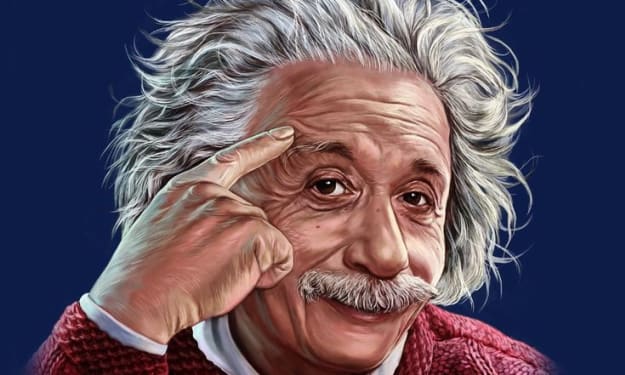
The Remarkable Journey of Albert Einstein's Genius
Imagine a world where your intellect is so profound that your brain becomes a museum piece, revered and studied for decades after your departure. While such reverence is not bestowed upon all brilliant minds, we delve into the life of one of history's greatest thinkers, Albert Einstein, whose brilliance has transcended generations. Our journey takes us back to the very origins of this luminary, in the town nestled between Stuttgart and Munich, known as Ulm—Einstein's hometown.
By Jeremiah “Jeremy” SEAL3 years ago in History
An Excursion of Striking Gifts
In the core of Africa, in the midst of the dynamic tones and rich social embroidery, there carried on with a kid named Kwame, whose life was a demonstration of the boundless capability of human ability. Kwame's story is a demonstration of the force of enthusiasm, flexibility, and assurance.
By Musa Muhammad Abubakar3 years ago in History
Nigeria: The Giant of Africa
Introduction Nigeria, often referred to as the "Giant of Africa," is a nation of remarkable diversity, rich cultural heritage, and immense potential. With its vast population, diverse landscapes, and economic significance, Nigeria holds a pivotal role not only within the African continent but on the global stage as well. This article delves into the multifaceted aspects that make Nigeria stand out as a prominent force in Africa.
By Favour Ogbadu3 years ago in History
15 MOST INCREDIBLE DISCOVERIES FROM WW2
Emerging from the depths of history, relics from World War II continue to offer profound insights into one of humanity's most defining epochs. These artifacts, often discovered unexpectedly, weave compelling narratives of valor, deception, loss, and discovery, vividly portraying the far-reaching impact of the war. In this article, we delve into the 15 most remarkable finds from the World War II era, shedding light on objects that silently bear witness to history.
By Francis Osei3 years ago in History
Who is Robert Mugabe
Robert Mugabe, the founding leader of Zimbabwe, has passed away at the age of 95. He was quite a controversial figure, with some seeing him as a liberator and others as a tyrant. Now, the big question is, what kind of legacy does he leave behind and how will Zimbabwe move forward from his shadow? Let's dive into this topic on Inside Story.
By Rotondwa Mudzweda3 years ago in History
Nelson Mandela's life story
Hey there! Today we're going to talk about the amazing life of Nelson Mandela, who was the first black president of South Africa. He was born in a small village on July 18th, 1918 and was the first in his family to attend school. Even though he was expelled from university for protesting against the institution, he continued to fight for what he believed in. Mandela believed that it was important to have knowledge in order to serve your country and your people. In 1944, he joined the African National Congress (ANC), a political party that aimed to give equal rights and freedoms to everyone in the country. Mandela was part of a group that formed the ANC Youth League, which used grassroots methods like boycotts, strikes, and civil disobedience to get their message across. However, in 1948, the National Party was elected to government and instituted a legal system of racial segregation called Apartheid. Mandela and the ANCYL continued their non-violent protests against racist policies, but he was targeted by the government and arrested on suspicion of treason in 1956. After a long trial, he was acquitted. Mandela then began to advocate for armed resistance against the government, which led to the formation of the Pan-Africanist Congress in 1959. Despite the challenges he faced, Mandela continued to Hello there! Let me introduce you to an extraordinary individual named Nelson Mandela. Although he was born as Johan, he later changed his name to Nelson Mandela. Fascinating, isn't it? As the son of a chief, he had access to the best education available to black people in South Africa during his upbringing.
By Rotondwa Mudzweda3 years ago in History
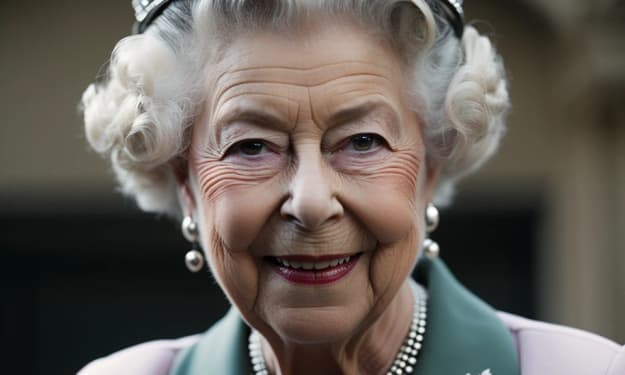
Queen Elizabeth II of the United Kingdom
Queen Elizabeth II of the United Kingdom: A Life of Dedication and Service Queen Elizabeth II, born Elizabeth Alexandra Mary Windsor on April 21, 1926, has reigned as the constitutional monarch of the United Kingdom and other Commonwealth realms since February 6, 1952. Her remarkable and enduring reign has made her the longest-reigning current monarch in the world, as well as the longest-serving female head of state in history. Let's explore the life, reign, and legacy of Queen Elizabeth II.
By Vasco Duarte3 years ago in History
One Friday Morning . Content Warning.
After a period of 148 days of striking, members of the Writers Guild of America have ceased their protest and resumed their work, armed with a tentative agreement. However, the picket lines outside the studio gates are still occupied by members of SAG-AFTRA, who are not alone in their efforts.
By Rasel Hossain3 years ago in History
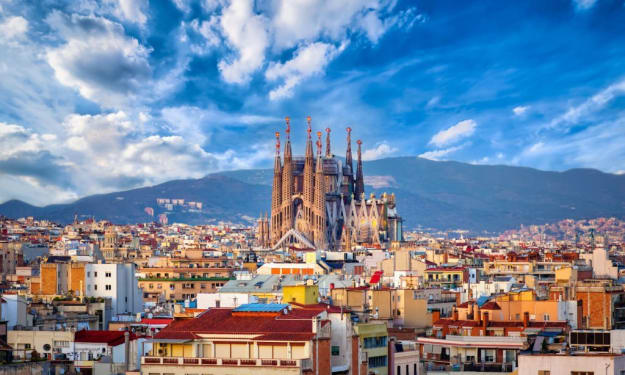
Barcelona
Barcelona: A Tapestry of Emotions Barcelona, a city nestled along the shimmering shores of the Mediterranean, has always been a place where emotions flow like the gentle sea breeze. It's a city that evokes a myriad of feelings, from the sheer awe inspired by its architectural wonders to the profound sense of connection experienced on its bustling streets. In this emotional tapestry, Barcelona weaves together moments of joy, passion, nostalgia, and resilience.
By Young jotter 3 years ago in History
Twelve Distinguished African Presidents Whose Lives Were Cut Short by Western Powers
The annals of African political leadership are marked by the weighty burdens that fell upon both the rulers and the ruled, both before and after independence. Two critical challenges that every African leader must confront are the high and often unyielding demands of their citizens and the significant pressure exerted by neocolonialist Western powers. It is an irrefutable fact that a notable number of African presidents have been removed from power through coups d'état, and a considerable number have been assassinated. This article aims to shed light on the top 12 African presidents who were assassinated, directly or indirectly, by Western powers due to their opposition to imperialism or neocolonialism. Some of these leaders may have contributed to their own demise through their actions.
By Francis Osei3 years ago in History
Dianne Feinstein: A Legacy of Leadership and Advocacy
In the dynamic landscape of American politics, there are figures whose impact resonates far beyond their time in office. Dianne Feinstein, a stalwart of California politics, is undeniably one such figure. With a career spanning nearly three decades in the United States Senate, Feinstein has left an indelible mark on the nation's legislative landscape, championing a wide range of critical issues and breaking barriers along the way.
By Sangita Nandi3 years ago in History
Hazrat Muhammad (SW)
**Birth and Early Life:** - Hazrat Muhammad was born in Mecca (now in Saudi Arabia) in the year 570 CE. - He belonged to the noble Quraysh tribe, specifically the Hashim clan. - Orphaned at a young age, he was raised by his grandfather and later by his uncle. **Prophethood:** - At the age of 40, while meditating in the Cave of Hira, Muhammad received his first revelation from God through the angel Gabriel (Jibril in Arabic). - Over the next 23 years, he received a series of revelations that were eventually compiled into the Quran, the holy book of Islam. **Teaching and Ministry:** - Hazrat Muhammad's message emphasized the worship of one God (Allah), monotheism, and moral and ethical conduct. - He preached against idol worship, social injustices, and other practices prevalent in pre-Islamic Arabia. - His followers, known as Muslims, grew in number, despite facing persecution from the Quraysh tribe. **Migration to Medina:** - In 622 CE, due to escalating persecution in Mecca, Hazrat Muhammad and his followers migrated to the city of Yathrib, later renamed Medina (the "Hijra"). This event marks the beginning of the Islamic calendar. - In Medina, he established a model Islamic community and served as a political and spiritual leader. **Return to Mecca:** - After several years of conflict and negotiations, Hazrat Muhammad and his followers returned to Mecca in 630 CE. - He forgave many of his former enemies and worked to establish a peaceful Islamic state. **Death:** - Hazrat Muhammad passed away in 632 CE in Medina. - His death marked the end of prophethood, and he is considered the final prophet in Islam. The life of Hazrat Muhammad (peace be upon him) is a central focus of Islamic history and theology. His teachings, recorded in the Quran and Hadith (sayings and actions attributed to him), continue to guide the lives of Muslims worldwide. His character and example serve as a model for Muslims to follow in their daily lives. Prophet Muhammad, known in Arabic as "النبي محمد" (pronounced as "An-Nabi Muhammad"), is regarded as the final prophet and messenger in Islam. He was born in Mecca, in present-day Saudi Arabia, in the year 570 CE (approximately). His full name is Muhammad ibn Abd Allah. Key points in his life: 1. **Early Life:** Muhammad was born into the Hashim clan, a part of the influential Quraysh tribe. He lost his father, Abdullah, before he was born, and his mother, Amina, passed away when he was only six years old. Afterward, he was cared for by his grandfather, Abdul-Muttalib, and later by his uncle, Abu Talib. 2. **Prophethood:** At the age of 40, Muhammad received his first revelation from Allah (God) through the Angel Gabriel (Jibril in Arabic) while meditating in the Cave of Hira near Mecca. These revelations continued over a period of 23 years and were eventually compiled into the Quran, the holy book of Islam. 3. **Mission and Ministry:** Muhammad's mission was to convey the message of monotheism (the belief in one God) and call people to worship Allah alone. He faced opposition and persecution from the Quraysh tribe and other leaders in Mecca. 4. **Migration to Medina:** In 622 CE, due to growing hostility and threats to his life, Muhammad and his followers migrated to the city of Yathrib, which later became known as Medina (meaning "the City of the Prophet"). This event, known as the Hijra, marks the beginning of the Islamic lunar calendar. 5. **Establishment of Islam:** In Medina, Muhammad continued his prophetic mission and also played a significant role in the governance and administration of the city. His leadership helped unite various tribes and communities under the banner of Islam. 6. **Return to Mecca:** In 630 CE, after years of negotiations and peaceful agreements, Muhammad and his followers returned to Mecca. The city eventually embraced Islam, and the Kaaba, the sacred house of worship, was purified and dedicated to the worship of Allah. 7. **Final Sermon:** In his Farewell Sermon, delivered during his last pilgrimage in 632 CE, Muhammad emphasized principles of equality, justice, and unity among all believers. 8. **Death:** Prophet Muhammad passed away on June 8, 632 CE, in Medina. His death marked the end of prophethood, as Muslims believe that he was the final messenger of Allah. Muhammad's teachings and actions, recorded in the Hadith (the collection of his sayings and actions), continue to guide the lives of Muslims worldwide. He is highly revered as a model of character, morality, and devotion to Allah, and his life serves as an inspiration for millions of people around the world.
By Shah Newaz Khan3 years ago in History