Biographies
Unlocking the Secrets of QWERTY
The QWERTY keyboard, an invention that has shaped the way we interact with technology on a daily basis, has a history as fascinating as it is functional. This quintessential keyboard layout, named for the first six letters in the top row of alphabetic characters, has been the industry standard for over a century. Its story is deeply intertwined with the history of typewriting, mechanical ingenuity, and the evolution of human-computer interaction.
By Rajeshkumar G3 years ago in History
Emerald Whispers: Unveiling Ardmore's Irish Landscape
In the heart of the enchanting Irish landscape, where rolling hills wore vibrant green like a proud cloak, Ardmore stood as a village painted with the brushstrokes of tranquility. Each emerald blade of grass seemed to tell a story, and every stone in the ancient walls whispered tales of the past.
By Lilly Zayla3 years ago in History
The Complex Victors of World War I: Unraveling the Threads of Success
World War I, often termed "The Great War," was a global conflict that lasted from 1914 to 1918, involving major powers from Europe and beyond. Determining a clear winner of World War I is a complex task, as the outcomes were multifaceted, with political, economic, and social ramifications reshaping the world order. While the Allies emerged victorious, attributing a singular triumph to any one nation or alliance fails to capture the intricate dynamics that shaped the aftermath of the war.
By Okosisi Great3 years ago in History
The Posthumous Execution of Oliver Cromwell. Top Story - December 2023.
Some events from history are so strange that we should all take a moment, look back, and collectively say WTF. This is one of those. It's about a man so hated that his corpse was dug up for the sole purpose of mutilating it because being dead wasn't good enough (bad enough?) for those who hated him. Can you think of anything more hate-fueled that could happen to a dead body?
By J.A. Hernandez3 years ago in History
10 archaelogical tools that scientists never discovered their purpose
1. The Enigmatic Crystal Carvings The mesmerizing allure of ancient crystal carvings continues to baffle scientists. The crystalline nature of these artifacts poses a unique challenge, as their composition often defies easy identification. Without comparable crystal artifacts from the same cultural context, scientists struggle to draw parallels and establish a framework for understanding the purpose behind these intricate carvings. The lack of inscriptions or accompanying artifacts compounds the mystery, leaving researchers without the linguistic or contextual clues essential for unraveling their enigma. 2. Unidentified Geometric Instruments The discovery of ancient tools displaying complex geometric shapes has intrigued archaeologists, yet decoding their purpose remains an elusive task. The abstract nature of these instruments challenges conventional classifications, as they deviate from known tool designs of the time. The absence of written records or complementary artifacts prevents researchers from contextualizing these geometric instruments within the daily lives or practices of ancient societies. As a result, the mystery persists, with scientists grappling to discern whether these tools held practical, symbolic, or ritualistic significance. 3. Mysterious Metallic Discs Metallic discs adorned with intricate patterns present a conundrum for archaeologists. The challenge lies in the identification of the metal itself, as advanced alloys or unique compositions may have been employed. The absence of comparable artifacts or metallurgical records hampers efforts to understand the purpose of these discs fully. Speculation abounds, with theories ranging from ceremonial objects to technological components. The enigma surrounding these metallic discs underscores the limitations of current analytical techniques in deciphering ancient materials. 4. Ceremonial Staffs with Unusual Markings Ceremonial staffs featuring cryptic markings raise questions about the ritualistic and cultural practices of ancient civilizations. The challenge in understanding their purpose lies in the symbolic nature of the markings, which, while aesthetically significant, lack direct correlations to known cultural symbols. The absence of accompanying artifacts or contextual information limits the ability of scientists to reconstruct the ceremonies or rituals associated with these staffs. The result is a captivating mystery that invites ongoing debate within the archaeological community. 5. Intricately Carved Stone Spheres Perfectly carved stone spheres scattered across archaeological sites present a puzzle that transcends their utilitarian or symbolic potential. The precision of their craftsmanship raises questions about the tools and techniques employed by ancient artisans. However, the absence of functional features and contextual information challenges conventional interpretations. Were these spheres purely aesthetic, symbolic, or did they serve practical purposes? The mystery deepens as scientists grapple with the scarcity of comparable artifacts or written records that could offer insights into their original use. 6. Unusual Composite Tools Tools crafted from a combination of materials, such as stone and metal alloys, stand as testament to the ingenuity of ancient artisans. Yet, their hybrid nature poses challenges in classification and interpretation. The absence of clear parallels in the archaeological record complicates efforts to discern their intended function. Were these tools the result of experimentation, craftsmanship, or did they serve a specialized purpose that eludes modern understanding? The lack of precedents and comparative examples leaves scientists with a tantalizing mystery that sparks both curiosity and frustration. 7. Ancient Precision Instruments The discovery of ancient instruments displaying an unprecedented level of precision challenges preconceptions about the technological prowess of past civilizations. Whether measuring astronomical phenomena or serving as tools of intricate craftsmanship, the purpose of these precision instruments remains a subject of debate. The lack of contextual information regarding their use, combined with the absence of comparable artifacts, leaves scientists with a void in understanding how such precision was achieved and for what specific purposes these instruments were crafted. 8. Symbolic Ceramic Artifacts Ceramic artifacts adorned with intricate symbols offer a glimpse into the symbolic language of ancient cultures. However, decoding this language presents a formidable challenge. The absence of written records or linguistic keys complicates the task of understanding the meanings behind these symbols. While the aesthetic value is evident, the cultural and religious contexts that would unlock their deeper significance remain elusive. The enigma of these symbolic ceramic artifacts highlights the limitations of current interpretative tools in the archaeological toolkit. 9. Unexplained Wooden Implements The preservation of wooden implements from ancient times is a rare occurrence, making their study particularly challenging. The organic nature of wood adds an additional layer of complexity, as the original function may have been altered by decay and environmental factors. Scientists face the formidable task of reconstructing the purpose of these wooden tools without clear evidence of use or accompanying artifacts. The mystery surrounding these implements prompts questions about the technologies employed by ancient cultures and the ways in which they adapted natural materials for practical tasks. 10. Cryptic Engravings on Stone Tablets Stone tablets covered in cryptic engravings present linguistic challenges that transcend decipherment. The absence of a decipherable script or linguistic context impedes efforts to understand the messages or information encoded in these ancient inscriptions. The ambiguity surrounding the language, coupled with the lack of bilingual inscriptions or known linguistic parallels, leaves scientists without a clear roadmap for interpretation. The quest to unlock the meanings behind these engravings is a testament to the ongoing challenges faced by epigraphers and linguists in decoding ancient scripts. CONCLUSION In conclusion, the persistent mystery surrounding these archaeological tools stems from a combination of factors, including the lack of contextual information, comparable artifacts, and clear cultural associations. Each tool presents a unique puzzle, and scientists are left with fragments of evidence and unanswered questions. The pursuit of understanding these enigmatic artifacts fuels ongoing exploration, pushing the boundaries of archaeological inquiry and inviting future breakthroughs in unraveling the secrets of our ancient past.
By Kelly Munala Brookes3 years ago in History
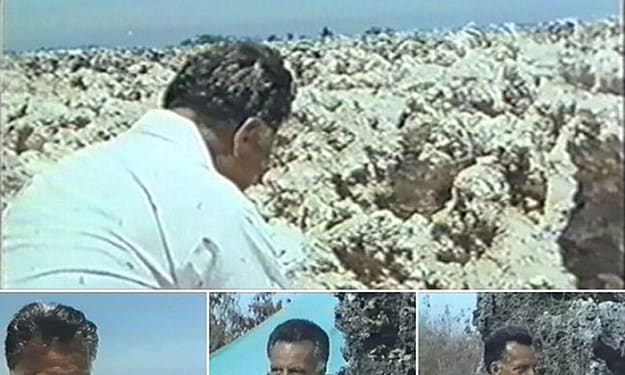
Banaban Landowners Visit their homeland
This 'Snippet’ of Ocean Island history was supplied by Banaban Heritage Society (BHS) [1] member, Marion Laritz from an article written by a fellow Island resident, Mr. R. Williams and published in the local newsletter, The Nautilus, Volume 2, Edition 3, November 1967.
By Stacey King3 years ago in History
Frederic Fletcher Webb . Content Warning.
~~~~~~~~~~~~~~~~~~~~ Early Life ~~~~~~~~~~~~~~~~~~~ His name was Frederic Fletcher Webb. You probably have never heard of his name before. I hadn't learned of him too long ago, either. But why would we? He wasn't found by name in any history books. He was found in the hidden pages of ancestry and of American history events. Mine to be precise. He was my 2 times great-grandfather, my grandmother's grandfather. And American history became very real to me as his story unfolded.
By Shirley Belk3 years ago in History
Napoleon Bonaparte: A Complex and Fascinating Figure
Napoleon Bonaparte, born Napoleone Buonaparte on August 15, 1769, in Ajaccio, Corsica, was a French military and political leader who rose to prominence during the French Revolution. He became First Consul of France in 1799 and Emperor of the French in 1804. Napoleon's military campaigns were some of the most successful in history, and he conquered much of Europe, establishing the largest European empire since the Roman Empire. However, he was ultimately defeated by the British and their allies at the Battle of Waterloo in 1815 and exiled to the island of Saint Helena in the South Atlantic, where he died on May 5, 1821, at the age of 51.
By Suresh Chand3 years ago in History