Biographies
Who is Bashir Zeb, the head of the banned organization BLA?
Before the attacks carried out on several cities including Quetta, the capital of Balochistan, the banned separatist organization Baloch Liberation Army (BLA) had released a video. In this picture , armed men can be seen riding three motorcycles at an unidentified deserted location. Only one of the six individuals’ face is visible. According to the banned organization, this person was the head of the BLA, Bashir Zeb, and it was also claimed that Bashir Zeb personally took part in these attacks. The BLA did not clarify where the video was recorded; however, Balochistan Chief Minister Mir Sarfraz Bugti claimed that the video was filmed in Afghanistan. It should be noted that last Saturday armed militants targeted various installations in Quetta, Mastung, Kalat, Nushki, Kharan, Dalbandin, Turbat, Tump, Gwadar, Pasni and several other areas. According to the provincial chief minister, a total of 31 civilians and 17 security personnel were killed in these attacks, while the government claimed that 145 militants were also killed. The banned BLA has been active in Balochistan for more than a decade, but in recent years the scope and intensity of attacks by the organization and its subsidiary group Majeed Brigade have increased. The BLA has been declared a banned organization by both Pakistan and the United States. It is worth recalling that since the attack on the Chinese Consulate in Karachi in November 2018, Bashir Zeb has been wanted by the Government of Pakistan in numerous cases involving attacks carried out by the BLA. These include the planning of the 2020 attack on the Karachi Stock Exchange, the planning of the female suicide bombing targeting Chinese teachers at Karachi University, and the attack on a convoy of Chinese engineers near Karachi Airport. In the airport attack case, a court has already declared him an absconder. However, there was a time when Bashir Zeb was active in student politics on the streets of Quetta. We spoke to journalists and former and current security officials, and also reviewed Bashir Zeb’s own writings and interviews given as chairman of BSO Azad, in order to understand who Bashir Zeb is and how he became part of this organization. Who is Bashir Zeb?
By Pets and animals 8 months ago in History
Alexander the Great: The Life, Conquests, Vision, and Legacy of History’s Greatest Warrior King
Part 1: Birth and Early Life Alexander was born in 356 BCE in Pella, the capital of Macedonia. He was the son of King Philip II of Macedon and Queen Olympias. From an early age, Alexander was surrounded by power, politics, and warfare. Olympias deeply influenced him, often telling him that he was descended from Achilles and even the god Zeus. These stories shaped Alexander’s belief that he was destined for greatness. His education was exceptional. At the age of thirteen, Philip appointed the philosopher Aristotle as Alexander’s tutor. Under Aristotle’s guidance, Alexander studied philosophy, science, medicine, literature, and politics. This education gave him intellectual depth, curiosity, and respect for different cultures—qualities rare among ancient warriors. Part 2: The Making of a Warrior Alexander showed military talent at a young age. At just sixteen, he was left in charge of Macedonia while his father campaigned elsewhere. When a rebellion broke out, Alexander crushed it decisively, proving his authority. At eighteen, he fought alongside Philip at the Battle of Chaeronea against the combined forces of Athens and Thebes. Alexander led the Companion Cavalry and delivered a decisive charge that shattered the enemy line. This battle demonstrated his bravery, leadership, and tactical intelligence. Part 3: Ascension to the Throne In 336 BCE, Philip II was assassinated under mysterious circumstances. At only twenty years old, Alexander became king. Many doubted his ability to rule, and rebellions erupted across Greece. Alexander responded swiftly and ruthlessly, destroying the city of Thebes as a warning. This act secured his control over Greece and cleared the path for his grand ambitions. Part 4: Conquest of the Persian Empire Alexander’s greatest achievements came through his war against the Persian Empire, the most powerful state of the time. Crossing into Asia Minor in 334 BCE, he defeated Persian forces at the Battle of the Granicus River. This was followed by a major victory at Issus, where he personally confronted King Darius III. The decisive moment came at the Battle of Gaugamela in 331 BCE. Despite being heavily outnumbered, Alexander used superior tactics, mobility, and leadership to crush the Persian army. Darius fled, and the Persian Empire collapsed soon after. Alexander captured immense treasures and took control of cities like Babylon, Susa, and Persepolis. Part 5: Egypt and the Birth of Alexandria In Egypt, Alexander was welcomed as a liberator from Persian rule. He was crowned pharaoh and founded the city of Alexandria, which would later become one of the greatest centers of knowledge in the ancient world. He also visited the oracle of Siwa, where he was declared the son of Zeus, further reinforcing his belief in his divine destiny. Part 6: Campaigns in Central Asia and India After Persia, Alexander pushed east into Central Asia, facing fierce resistance and harsh terrain. These campaigns were among his most difficult. He married Roxana, a local noblewoman, symbolizing his policy of cultural integration. In India, Alexander fought King Porus at the Battle of the Hydaspes River. Although victorious, Alexander was deeply impressed by Porus and allowed him to retain his kingdom. However, his troops, exhausted and homesick, eventually refused to march further east. This marked the limit of his expansion. Part 7: Leadership Style and Personality Alexander was a charismatic and inspiring leader. He fought alongside his soldiers, shared their hardships, and rewarded loyalty generously. However, he also had flaws. His temper could be violent, and he sometimes acted impulsively, most notably in the killing of his close friend Cleitus during a drunken argument. He believed strongly in unity between cultures and encouraged intermarriage between Macedonians and Persians. This vision of a blended empire was revolutionary but controversial among his own men. Part 8: Death and Mystery In 323 BCE, at the age of thirty-two, Alexander died in Babylon after a sudden illness. The cause of his death remains one of history’s greatest mysteries, with theories ranging from malaria and typhoid to poisoning. His empire, lacking a clear successor, quickly fragmented among his generals, known as the Diadochi. Part 9: Legacy and Historical Impact Alexander’s legacy reshaped the ancient world. His conquests spread Greek culture, language, and ideas across vast regions, creating the Hellenistic world. Cities he founded became centers of trade, science, and learning. His influence reached Rome, the Islamic world, and even modern military theory. Alexander became a symbol of ambition, courage, and the limitless potential of human will. He is remembered not only for what he conquered, but for how deeply he changed the course of history. Conclusion Alexander the Great lived a short life, but his impact was eternal. He combined intelligence with courage, vision with action, and ambition with belief. Through every part of his journey—from prince to conqueror to legend—Alexander proved that history is shaped not by time alone, but by those bold enough to challenge it.
By Say the truth 8 months ago in History
AI, Nuclear Weapons, and Accidental War
AI, Nuclear Weapons, and Accidental War In the modern world, wars are no longer fought only with soldiers, tanks, and planes. A new and dangerous element has entered global security: artificial intelligence (AI). While AI brings speed, efficiency, and advanced decision-making, it also introduces a serious risk—especially when combined with nuclear weapons. The greatest danger of the future may not be a planned nuclear war, but an accidental one.
By Wings of Time 8 months ago in History
Future Wars in the Age of Artificial Intelli
Future Wars in the Age of Artificial Intelligence If the new battlefield is hidden inside a nation’s systems, then Artificial Intelligence is becoming the most powerful weapon within it. Future wars will not begin with tanks crossing borders or fighter jets in the sky. They will begin with algorithms, data, and decisions made at machine speed. AI is changing not only how wars are fought, but also who controls power and how quickly conflicts can spiral out of control.
By Wings of Time 8 months ago in History
Looking Again at Frances Farmer
I am always surprised by the fact that Frances Farmer (1913 — 1970) was a movie star in the 1930s. There is something modern, hard-edged and contemporary about her image, perhaps because Jessica Lange played her as such in Frances, released in 1982.
By A. L. Fletcher 8 months ago in History
The Demanding Factors That Created Alexander the Great’s Path to Victory
1. The Foundation Laid by Philip II of Macedon One of the most important factors behind Alexander’s victories was the groundwork laid by his father, King Philip II of Macedon. Philip transformed Macedonia from a weak kingdom into a dominant military power. He reorganized the army, introduced the Macedonian phalanx, and armed soldiers with the long sarissa spear, which gave them a decisive advantage over traditional Greek hoplites.
By Say the truth 8 months ago in History
The Net Worth of the Peacock Throne: Valuing the World’s Most Luxurious Lost Treasure. AI-Generated.
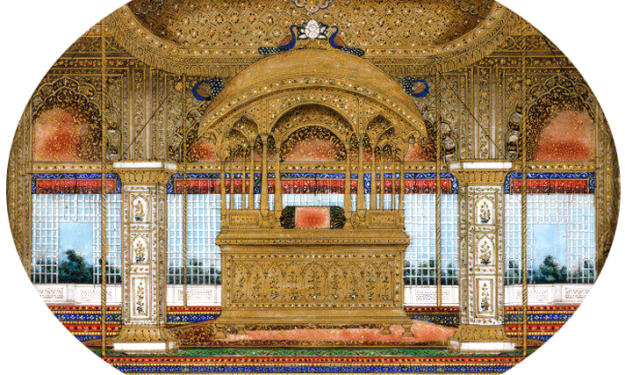
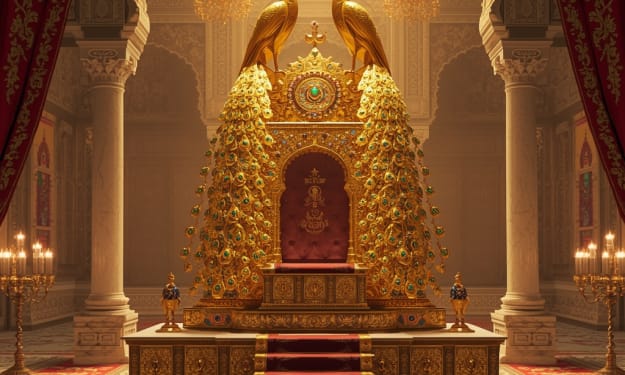
What Was the Peacock Throne? The Peacock Throne was completed around 1635 CE and placed in the Mughal imperial court at Delhi. It was constructed almost entirely of solid gold and covered with some of the most valuable gemstones known to humanity. At its center stood two jewel-encrusted golden peacocks, their tails raised high and spread wide, symbolizing royalty, immortality, and divine authority. Above the throne rose a golden canopy studded with gems, designed to represent the heavens. The emperor, seated at the center, symbolized the axis between heaven and earth. This symbolism alone elevated the throne from an object of luxury to a cosmic statement of power. Gold Content: The Foundation of Its Value Contemporary records suggest the Peacock Throne contained over 100 kilograms of pure gold, possibly much more. Even by conservative modern standards: 100 kg of gold × current average gold price ≈ $6–7 million USD (gold value alone) However, this figure represents only the raw metal value—not craftsmanship, rarity, or historical importance. The true value of the throne lay in what was mounted upon it. Gemstones That Redefined Wealth The Peacock Throne was famously encrusted with some of the most legendary gemstones in history, including: Koh-i-Noor diamond Darya-i-Noor diamond Massive emeralds from Colombia Burmese rubies Sapphires and pearls in the hundreds Today, single gemstones of this caliber are valued at hundreds of millions of dollars individually. For example: The Koh-i-Noor alone is considered priceless, with estimates ranging from $400 million to over $1 billion USD The Darya-i-Noor is valued between $200–500 million USD When all gemstones are combined, experts estimate the jewel value of the Peacock Throne would exceed $1.5–2 billion USD in today’s market. Craftsmanship and Artistic Value The Peacock Throne was created by the finest artisans of the Mughal Empire, blending Persian, Indian, and Central Asian artistic traditions. Thousands of labor hours, master jewelers, goldsmiths, and engineers were involved. In modern valuation terms, this places the throne in the same category as the world’s greatest artworks—such as the Mona Lisa or crown jewels—which are considered irreplaceable. Estimated craftsmanship and artistic value: $300–500 million USD Historical and Political Premium Objects associated with major historical turning points carry an additional historical premium. The Peacock Throne was not just decorative—it was the seat from which emperors ruled one of the richest empires in the world. The Mughal Empire at its peak controlled nearly 25% of the world’s GDP. The throne symbolized that dominance. Historians agree that such symbolic power alone adds at least: $500 million–$1 billion USD in intangible value The Persian Loot and Loss In 1739, Persian ruler Nader Shah invaded Delhi and looted the Mughal treasury. When he encountered the Peacock Throne, he reportedly declared it a “mountain of light.” He seized it and transported it to Persia along with vast quantities of treasure. After Nader Shah’s assassination in 1747, the throne disappeared from records. Most scholars believe it was dismantled, its gold melted down and gemstones redistributed among Persian rulers. This destruction ironically increased its mythical and historical value. If the Peacock Throne Existed Today If the original Peacock Throne were to resurface intact today and legally enter the market (a purely hypothetical scenario), experts believe it would become the most expensive man-made object ever sold. Estimated modern auction value: Conservative estimate: $2 billion USD High estimate: $3–4 billion USD Extreme private-collector estimate: $5+ billion USD This would surpass: The most expensive paintings ever sold The British Crown Jewels (individual items) Any single royal artifact on Earth Cultural Net Worth Beyond Money Beyond monetary valuation, the Peacock Throne holds enormous cultural net worth. It represents: The peak of Mughal artistic achievement India’s historical wealth before colonial decline The fragility of power and empire Museums, documentaries, books, and digital media continue to generate value from its story. In this sense, the Peacock Throne remains economically productive even in absence. Comparing the Peacock Throne to Other Treasures When compared with other legendary treasures: Tutankhamun’s mask: ~$2 billion (estimated) British Crown Jewels: ~$4–6 billion (collection) Codex Gigas (Devil’s Bible): ~$100–200 million Peacock Throne: $2–5+ billion (single object) This comparison reinforces its status as the most valuable throne in history. Conclusion: The World’s Richest Throne The Peacock Throne’s net worth cannot be reduced to gold weight or gemstone count alone. Its true value lies in the rare convergence of material wealth, artistic genius, and imperial symbolism. Even though the throne no longer exists, its estimated net worth—$2 to $5 billion USD—makes it the richest lost royal treasure ever known. More importantly, it remains a powerful reminder that the greatest riches of history often vanish, but their legends only grow stronger with time.
By Say the truth 8 months ago in History
The History of the Golden Peacock: The Rise and Fall of a Legendary Throne
Origins of the Golden Peacock The story of the Golden Peacock begins in 17th-century India, during the reign of Emperor Shah Jahan—the same ruler who built the Taj Mahal. Shah Jahan envisioned a throne that would surpass all others in the world, reflecting not only material wealth but also cosmic order and royal divinity. Construction of the Peacock Throne began around 1628 CE and took several years to complete. The throne was made primarily of solid gold and encrusted with some of the world’s most precious gemstones: diamonds, rubies, emeralds, sapphires, and pearls. At its center stood two magnificent golden peacocks, their tails raised and spread, covered in jewels—hence the name Golden Peacock. Symbolism of the Peacock In Indian and Persian culture, the peacock symbolized royalty, immortality, beauty, and divine protection. By placing peacocks at the heart of the throne, Shah Jahan declared himself not merely a king, but a ruler chosen by heaven. Above the throne was a jeweled canopy representing the sky, while the throne itself symbolized the earth—placing the emperor at the center of the universe. This symbolism made the Golden Peacock more than furniture; it was a cosmic statement of power. A Throne Beyond Imagination Contemporary accounts describe the Peacock Throne as one of the most valuable man-made objects in history. European travelers who witnessed it claimed its value exceeded that of entire kingdoms. The throne reportedly contained: Over 100 kilograms of gold The legendary Koh-i-Noor diamond The Darya-i-Noor diamond Hundreds of rubies, emeralds, and pearls Historians estimate that, in today’s value, the Golden Peacock may have been worth $2–3 billion USD, making it arguably the most expensive throne ever built. The Golden Age of the Mughal Court For over a century, the Golden Peacock stood in the Mughal court as a symbol of stability and dominance. Emperors including Aurangzeb sat upon it while issuing royal decrees. Foreign ambassadors were deliberately awed by its brilliance—diplomacy conducted through spectacle. The throne embodied the peak of Mughal power, when the empire controlled much of the Indian subcontinent and commanded enormous economic resources. The Invasion That Changed History The fate of the Golden Peacock changed forever in 1739, when Nader Shah of Persia invaded India and captured Delhi. Shocked by the wealth he encountered, Nader Shah looted the Mughal treasury. When he saw the Peacock Throne, he reportedly exclaimed, “This is a mountain of light,” giving rise to the phrase Koh-i-Noor. Nader Shah seized the throne and transported it to Persia along with massive quantities of gold and jewels. This single event drained the Mughal Empire of its greatest treasure and marked the beginning of its irreversible decline. Disappearance and Destruction After Nader Shah’s assassination in 1747, the Peacock Throne vanished from historical records. Most historians believe it was dismantled, its gold melted down and gemstones redistributed among Persian rulers. No verified fragments of the original Golden Peacock throne have ever been recovered. Its disappearance elevated it from history into legend. Influence on Later Empires The Peacock Throne inspired later rulers across Asia and Europe. Persian, Ottoman, and even Russian courts attempted to replicate its splendor. Several later “Peacock Thrones” were built, but none matched the original in scale or symbolism. The throne also influenced colonial fascination with Indian wealth, reinforcing the idea of India as a land of unimaginable riches. Myth, Mystery, and Cultural Legacy Today, the Golden Peacock occupies a powerful place in historical imagination. It represents: Lost imperial glory The fragility of power The danger of concentrated wealth The transition from Eastern dominance to colonial rule Writers, historians, and filmmakers continue to reimagine the throne, often blending fact and legend. Some treasure myths even claim parts of the throne remain hidden—but no evidence supports these claims. Conclusion: A Throne That Outlived Its Empire Though the Golden Peacock no longer exists, its legacy endures. It was not merely a throne—it was a declaration of supremacy, artistry, and divine kingship. Its destruction reminds us that even the greatest symbols of power are temporary. The Golden Peacock’s true treasure today lies not in gold or gems, but in its story—a story of ambition, beauty, conquest, and loss that continues to captivate the world centuries later.
By Say the truth 8 months ago in History
The Net Worth of the First United Chinese Empire’s Treasure: Wealth of the Qin Dynasty
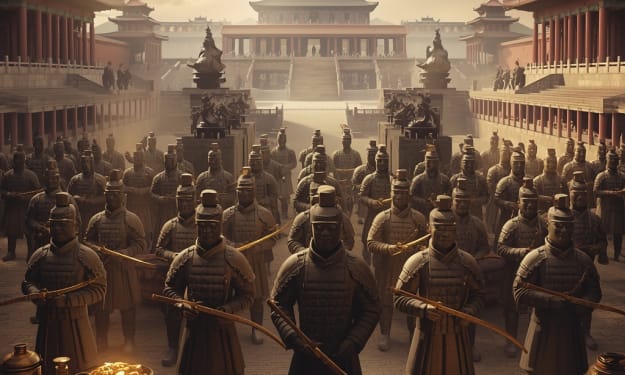
What Do We Mean by “Treasure” of the First United Empire? The Qin Empire’s treasure comprised several layers: Royal treasury assets (gold, silver, bronze, jade) Weaponry and military stores produced at industrial scale Land and taxation systems newly centralized Monumental projects (roads, canals, walls, palaces) Imperial burial wealth, including the mausoleum of Qin Shi Huang Unlike earlier feudal states, Qin centralized ownership. Wealth flowed into the state, not dispersed among nobles. This centralization is crucial to understanding the empire’s net worth. Precious Metals and Materials: A Conservative Valuation Archaeological finds from Qin sites reveal extensive use of bronze, gold, silver, and jade. Gold was not as dominant as in some Western empires, but jade held immense ritual and political value—often exceeding gold symbolically. Bronze: Tens of thousands of bronze weapons and tools have been excavated, many standardized and mass-produced. If valued today (material + craftsmanship), these alone could reach $5–10 billion USD. Gold and Silver: Direct quantities are unknown, but records suggest large royal reserves. A conservative modern estimate places precious metals at $10–20 billion USD. Jade: High-grade ancient jade artifacts today sell for millions per piece. The Qin court’s jade holdings—ritual disks, seals, burial objects—could conservatively be valued at $15–30 billion USD. Subtotal (materials only): $30–60 billion USD The Terracotta Army: Military Wealth Frozen in Clay The Terracotta Army is often discussed as art, but it also represents military capital. Each figure mirrors real soldiers, officers, chariots, and horses of the Qin army. Over 8,000 soldiers Hundreds of chariots and cavalry Originally equipped with real bronze weapons If this were valued as: Artistic heritage Military representation Technological achievement …the Terracotta Army alone would be worth $50–100 billion USD, comparable to the most valuable cultural assets on Earth. Importantly, this is just one component of the emperor’s burial complex. Infrastructure as Treasure: Roads, Canals, and Walls The Qin Empire invested heavily in infrastructure, which in modern economics is a core component of national net worth. Imperial road system spanning thousands of kilometers Early versions of what later became the Great Wall Canals enabling troop movement and trade Standardized measurements, coinage, and writing If these projects were valued as state assets today, similar to highways, dams, and defense systems, their worth would exceed $100–150 billion USD. This is “hidden treasure”: wealth not stored in vaults, but embedded in the empire itself. Weapons and Industrial Output The Qin state operated state-run workshops producing weapons at an industrial scale centuries ahead of its time. Mass-produced swords, crossbows, arrowheads Advanced metallurgy and quality control Stockpiles sufficient to conquer all rival states Valued as a military-industrial complex, these assets could add another $20–40 billion USD to the empire’s net worth. Land, Taxation, and Human Capital Perhaps the largest source of Qin wealth was land and people. By unifying China, the Qin emperor effectively controlled: Tens of millions of acres of agricultural land Millions of taxpayers Forced labor systems for state projects In modern economic terms, this is equivalent to state GDP control. When translated conservatively, the annual productive value of Qin-controlled land and labor could equate to hundreds of billions of dollars today. Even if we limit this to a single-year snapshot, it would add $100–200 billion USD to the empire’s net worth. The Mausoleum of Qin Shi Huang: The Ultimate Hidden Treasure Historical texts describe the emperor’s tomb as containing: Rivers of mercury simulating China’s geography Palaces, towers, and treasure chambers Traps to prevent looting Modern scientific surveys confirm abnormally high mercury levels, suggesting these accounts may be partly true. If fully excavated (which it has not been, for preservation reasons), the mausoleum could rival or exceed Egyptian royal tombs in value. Estimated potential value of the mausoleum contents: $50–100+ billion USD Total Estimated Net Worth of the First United Chinese Empire’s Treasure Combining conservative estimates: Precious materials & artifacts: $30–60 billion Terracotta Army: $50–100 billion Infrastructure assets: $100–150 billion Weapons & industry: $20–40 billion Land & productive control: $100–200 billion Imperial mausoleum: $50–100 billion 👉 Estimated total net worth: $350–650 billion USD This figure rivals or exceeds the estimated wealth of many modern nations and places the Qin Empire among the wealthiest political entities in human history. Conclusion: Wealth Beyond Gold The true net worth of the first united Chinese empire cannot be measured by gold alone. Its real treasure was centralization, standardization, and control—systems that outlived the dynasty itself and shaped China for over two millennia. While the Qin Dynasty was short-lived, its accumulated wealth—material, structural, and symbolic—was immense. Even today, as artifacts continue to be uncovered, the empire’s net worth continues to rise, not in bank accounts, but in historical value and global fascination.
By Say the truth 8 months ago in History