Biographies
The Rise of Richard the Lionheart
If you've ever watched a movie, read a book, or played a game depicting medieval England, chances are you’ve encountered Richard the Lionheart. Crowned King of England on September 3, 1189, Richard I remains one of the most celebrated monarchs in English history. Though modern scholars have questioned some aspects of his legacy, his name still echoes in legends, stories, and films, cementing his status as a timeless figure in folklore and pop culture. Richard I, known as Richard Cœur de Lion (or Richard the Lionheart), was born on September 8, 1157, likely in a royal palace in Oxford. He was the third son of King Henry II of England and Eleanor of Aquitaine, a powerful and influential political figure of her time. Richard’s mother played a crucial role in his life, as she did in European politics, wielding immense influence due to her vast inheritance and her position as the former queen of France and the queen of England. Richard was one of five children, and he became his mother’s favorite, a preference that would shape his upbringing and career.
By A História2 years ago in History
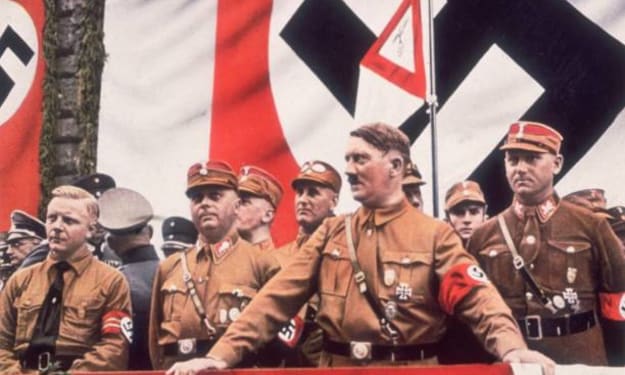
How Did Hitler Rise to Power?
The rise of Adolf Hitler, a dictator responsible for one of the most horrific genocides in history, is a chilling narrative that began in the aftermath of World War I. Germany had fought valiantly, but the successful advance of the Allied forces in1918 made it clear that the war was unwinnable. Consequently, Germany signed an armistice, bringing an end to the fighting. As Germany’s imperial government crumbled, civil unrest and widespread worker strikes erupted throughout the nation.
By DANIEL AKAM OKO2 years ago in History
Exploring the Resilient World of the Inuit
In one of the most inhospitable regions on Earth, where the night can last for months and survival is a daily challenge, a people have managed to thrive for millennia: the Inuit. Their story is one of remarkable resilience, ingenuity, and adaptation to a hostile environment that most would consider uninhabitable. Join us on a journey through the fascinating history and culture of the Inuit, uncovering their ancestral secrets and learning how they continue to prosper in one of the planet's most extreme environments.
By A História2 years ago in History
Things Britain Took from Added Countries: A Bequeathal of Colonialism and Empire
Things Britain Took from Added Countries: A Bequeathal of Colonialism and Empire** The British Empire, at its height, was the bigger advantage in history, accurate all-embracing territories aloft Asia, Africa, the Americas, and beyond. While Britain contributed to abstract advancements and basement in its colonies, it additionally affianced in great allocation of resources, cultural artifacts, and treasures from these nations. Abounding of the affluence and adeptness of Britain during the empire-building years was complete on the bribery of colonies, about involving addition of absolute goods, cultural symbols, and acclimatized resources.
By Say the truth 2 years ago in History
The Edo Period
In the core of seventeenth century Japan, settled between rich green mountains and streaming waterways, lay the flourishing city of Edo, the seat of influence under the Tokugawa shogunate. The Edo time frame, a period of incredible change and harmony, carried almost 250 years of strength to the country following quite a while of war. This is the account of two families — one of samurai and one of shippers — whose lives entwined in manners that reflected the progressions moving throughout Japan.
By Usman Zafar2 years ago in History
The Pinnacle of Modern Civilization and the Foundations of Western Thought
Modern civilization is often seen as the apex of human achievement, where mankind has reached unprecedented levels of technological and scientific capability. Innovations that would have been considered witchcraft by our ancestors are now a reality, such as artificial intelligence, space travel, and advanced medical treatments. Along with these physical tools, our logical and pragmatic reasoning has also been systematically refined, allowing for a structured understanding of the world around us. One of the greatest contributors to this advancement has been philosophy, particularly Western philosophy.
By A História2 years ago in History