Biographies
A Doctor Who Killed 500 Patients Caught By One Mistake.
A Doctor Who Killed 500 Patients Caught By One Mistake. Harold Shipman is considered one of the most horrifying serial killers in history committing crimes that seemed unbelievable to the world. He was a doctor whom people trusted with their lives but he turned out to be the one taking them away. Throughout his career Shipman murdered more than 500 patients and for years there was no evidence against him. He was an extremely intelligent and cunning criminal who skillfully concealed his crimes but in the end a small mistake exposed his horrific secret to the world. Harold Shipman was born in England in 1946. He came from a modest background and after completing his medical education became a well known doctor. He had mastered the art of winning patients' trust. People saw him as a compassionate and caring physician. But behind this façade lay a terrifying truth. He deliberately administered lethal doses of morphine and other drugs to his patients causing their deaths. These deaths appeared natural as most of his victims were elderly patients.
By Adnan Rasheed2 years ago in History
The Mysterious Incident of Anjikuni Lake.
The Mysterious Incident of Anjikuni Lake. The history of humanity is filled with mysterious events that defy explanation but some enigmas become even more baffling with time. One such inexplicable mystery is the disappearance of an entire village near Anjikuni Lake in Canada in 1930. The most astonishing aspect of this story is that an entire settlement vanished without a trace and to this day no satisfactory explanation has been found. This event remains one of the most perplexing and unbelievable cases in history with numerous theories proposed yet none conclusively proven. Anjikuni Lake is located in the Nunavut region of Canada known for its cold climate icy landscapes and vast lakes. The area was home to the Inuit people who relied on hunting and fishing for their livelihood. In the winter of 1930ban experienced trapper named Joe Labelle who frequently visited the region for hunting arrived at a familiar Inuit village. However what he encountered this time was beyond belief. The entire village was deserted there were no signs of life no voices and no human presence anywhere.
By Adnan Rasheed2 years ago in History
Gigantic 50 foot long snake discovered in India.
Gigantic 50 foot long snake discovered in India. The recent discovery of the fossilized remains of Vasuki indicus a colossal prehistoric snake has captivated scientists and the general public alike. Measuring an astonishing 50 feet in length this ancient reptile was among the largest snakes to have ever lived. Unearthed by researchers from the Indian Institute of Technology Roorkee this find provides a rare and invaluable glimpse into the biodiversity of prehistoric India. The fossilized remains of Vasuki indicus were found in a remarkably well preserved state offering scientists an opportunity to study its anatomy in detail. The discovery consists of 27 fossilized vertebrae which allowed researchers to accurately estimate the size and structure of the snake. Dr. Rajesh Kumar the lead author of the study published in Scientific Reports described the specimen as excellently preserved emphasizing its significance in understanding prehistoric reptilian life.
By Adnan Rasheed2 years ago in History
Gisella Perl
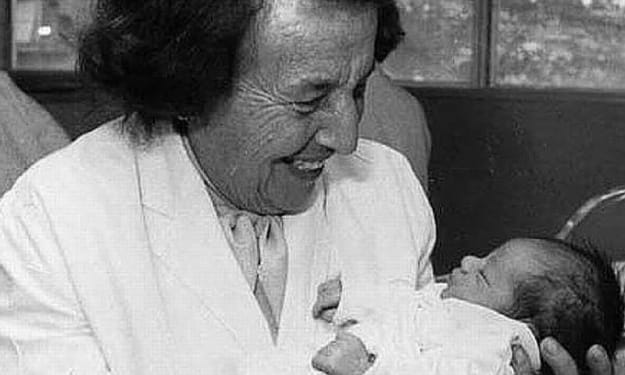
She was called the “Angel of Auschwitz” for her medical work during World War Two. Her story is one of determination to do the right thing, courage and selflessness during the worst time in human history. The film “Out of the Ashes” very powerfully tells her life story.
By Ruth Elizabeth Stiff2 years ago in History
Kash Patel: Biography, Confirmation Battle, and the FBI Director Controversy – A Deep Dive into His Rise, Senate Vote, and Political Impact
Introduction: Who is Kash Patel? Unpacking the Enigma Kashyap "Kash" Patel has emerged as one of the most polarizing figures in modern U.S. politics. From his early days as a public defender to his role in high-stakes national security decisions, Patel’s career is a tapestry of ambition, controversy, and bureaucratic maneuvering. This 3,500-word deep dive explores his biography, the fiery Senate confirmation process, and the unanswered questions about his potential influence on the FBI.
By bipul biswas2 years ago in History
Mother Teresa Biography
Early Life and Family Background: Mother Teresa, born Anjezë Gonxhe Bojaxhiu on August 26, 1910, in Skopje, which was then part of the Ottoman Empire (now part of North Macedonia), was the youngest of three children in an Albanian family. Her parents, Nikola and Drana Bojaxhiu, were Albanian Catholics, and although not wealthy, they were well-respected in their community. Anjezë’s father, Nikola, was a successful merchant, while her mother was deeply religious and known for her charitable nature. From an early age, Anjezë was exposed to the values of kindness, compassion, and charity.
By Ipung Newme2 years ago in History
Pantaenus Biography
Pantaenus was a Christian philosopher and theologian in the late 2nd century, renowned for his intellectual contributions and his role in shaping early Christian theology. Often regarded as the head of the Catechetical School of Alexandria, Pantaenus played a pivotal part in the development of Christian thought during a period marked by the rise of Gnosticism and other heretical movements. His life and work remain crucial to understanding the theological landscape of early Christianity, especially in Alexandria, which was a center of Christian learning and debate at the time.
By Ipung Newme2 years ago in History
The Unstoppable Advance of Genghis Khan. AI-Generated.
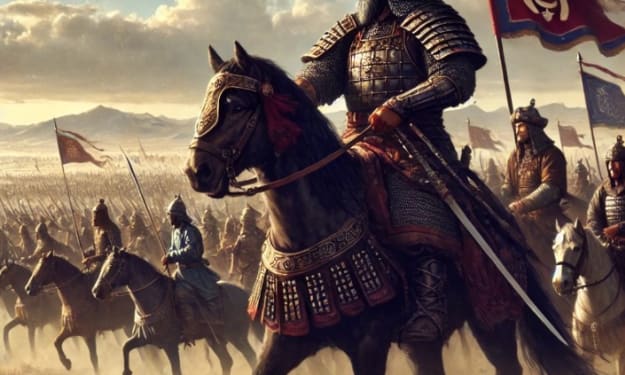
Genghis Khan: The Expansion of an Empire After accumulation his adeptness and chain the Mongol tribes, Genghis Khan angry his absorption outward, embarking on a alternation of aggressive campaigns that would actualize one of the better empires in history. His cardinal genius, adaptability, and adamant adeptness accustomed him to beat all-inclusive territories above Asia and beyond. This allotment of his activity focuses on his expansionist phase, accoutrement his invasions of China, Central Asia, and the Khwarezmian Empire. The Acquisition of the Jin Dynasty (1206-1215) By 1206, Genghis Khan had accustomed himself as the absolute baton of the Mongols. However, the adjoining Jin Dynasty in arctic China airish a cogent threat. The Jin had continued been able and had controlled the Mongols through a arrangement of alliances and tributes. Genghis Khan, seeing their abundance and aggressive strength, absitively to invade. Strategies and Tactics Divide and Beat - Genghis Khan cleverly acclimated address to about-face the adjoining Western Xia accompaniment adjoin the Jin Dynasty. By isolating the Jin, he attenuated their defenses. Superior Mobility - The Mongols’ cavalry-based army was far above to the slower and added bulky Jin forces. Siege Warfare - Though the Mongols were initially unskilled in annoy warfare, they bound acclimatized by recruiting Chinese engineers who helped them body annoy weapons. By 1215, the Mongols had sacked Zhongdu (modern Beijing), banishment the Jin emperor to abscond south. The acquisition of arctic China gave Genghis Khan immense abundance and caked his acceptability as an unstoppable force. The Invasion of Central Asia (1218-1221) Following his victories in China, Genghis Khan angry westward to Central Asia, area he encountered the Khwarezmian Empire, disqualified by Shah Ala ad-Din Muhammad. Initially, Genghis Khan approved a peaceful barter relationship, but the shah’s betrayal led to one of the best barbarous Mongol campaigns. The Khwarezmian Betrayal Genghis Khan beatific a band of merchants to barter with the Khwarezmians, but the governor of Otrar accused them of actuality spies and accomplished them. When Genghis Khan beatific envoys ambitious an apology, they were additionally killed. This act affronted him, and he vowed to abate the Khwarezmian Empire. The Mongol Retaliation The Mongols invaded in 1219 with a well-coordinated strategy: Multiple Fronts - The Mongol army breach into several divisions, advancing from altered directions, preventing the Khwarezmian armament from regrouping. Psychological Warfare - The Mongols advance alarm by massacring absolute cities that resisted, banishment added cities to abandonment after a fight. Urban Warfare - The Mongols had abstruse annoy techniques from the Chinese and acclimated them to abundant aftereffect adjoin belted cities. By 1221, the Khwarezmian Authority had been absolutely destroyed. The Shah died while fleeing, and his authority was bargain to ashes. This attack approved Genghis Khan’s adamant adeptness and caked Mongol ascendancy in Central Asia. Conquering the Western Regions After the abatement of the Khwarezmian Empire, Genghis Khan beatific his generals, Subutai and Jebe, on a assay mission into Persia and Eastern Europe. This mission laid the background for approaching Mongol conquests. The Action of the Kalka River (1223) While exploring the western lands, the Mongols encountered the Kievan Rus and affiliated Cuman forces. Using bamboozlement and above tactics, the Mongols absorbed the above Rus army into a trap, crushing them at the Action of the Kalka River. This action was cogent as it apparent the Mongols’ aboriginal above achievement in Europe and approved their adeptness to defeat absolute armies with above strategy. Conclusion Genghis Khan’s expansionist campaigns adapted the political and cultural mural of Asia and beyond. His aggressive strategies, accumulated with his adeptness to acclimate and innovate, fabricated the Mongols the ascendant force of the aboriginal 13th century. However, his conquests were far from over. In the abutting chapter, we will analyze the after years of his rule, his babyminding strategies, and the challenges he faced afore his closing death.
By Say the truth 2 years ago in History
Genghis Khan: The Journey from Nomad to Conqueror
The Nine Genitalia of Genghis Khan’s Life: From Bearing to Emperor Genghis Khan, originally called Temujin, was one of the best affecting leaders in apple history. Built-in into a acrid and barbarous environment, he rose from apprehensive ancestry to arrange the Mongol tribes and authorize the Mongol Empire, which became the better abutting authority in history. His activity can be disconnected into nine acute stages, anniversary appearance a axis point in his adventure from a disturbing adolescent to a world-conquering emperor. 1. Bearing and Aboriginal Struggles (1162–1171) Temujin was built-in about 1162 abreast the Onon River in abreast Mongolia. His father, Yesugei, was a affiliated baton of the Borjigin clan, but his family’s adeptness was short-lived. Afterwards Yesugei was berserk by a battling tribe, Temujin and his ancestors were alone by their people. Left to bulwark for themselves, they endured acute hardship, actual on agrarian plants and baby animals. This aeon of adversity shaped Temujin’s animation and determination. 2. Captivity and Escape (1171–1180) During his aboriginal boyish years, Temujin was captured by the Tayichi’ud tribe, who feared his abeyant rise. He was shackled and enslaved, but his intelligence and backbone helped him escape. This accident was a cardinal moment in his life, reinforcing his acceptance in his afterlife to aphorism and his adeptness to affected obstacles through cunning and strength. 3. Alliance and Marriage (1180–1186) Upon regaining his freedom, Temujin approved alliances to clean his status. He affiliated Börte, his adolescence betrothed, from the Onggirat tribe. Soon after, Börte was kidnapped by the Merkits, a battling tribe. Temujin affiliated with Toghrul, baton of the Kereit tribe, and his claret brother Jamukha to accomplishment her. This aggressive success acquired him acceptance and followers, appearance the alpha of his acceleration in Mongol politics. 4. Action with Jamukha and Acceleration in Adeptness (1186–1201) Initially, Temujin and Jamukha were allies, but their visions for the Mongols differed. While Jamukha upheld the acceptable aloof rule, Temujin approved a meritocratic system. Their brainy action led to a action in 1187, area Temujin was defeated. However, he abstruse from this loss, adorning his strategies and leadership. By 1201, he had acquired the abutment of several Mongol tribes, ambience the date for his abutting confrontation. 5. Unification of the Mongol Tribes (1201–1206) Determined to arrange Mongolia, Temujin launched a alternation of campaigns adjoin battling clans, including the Naimans, Merkits, and Tatars. His aggressive innovations, discipline, and adeptness to accolade adherence fabricated him an unstoppable force. By 1206, he had defeated all above battling tribes and was proclaimed Genghis Khan, acceptation “Universal Ruler.” This was a defining moment in history, appearance the bearing of the Mongol Empire. 6. Expansion into China and the Khwarezmian Authority (1206–1221) After accumulation Mongolia, Genghis Khan angry his absorption to alien enemies. He launched a acknowledged attack adjoin the Western Xia and Jin Dynasty in arctic China, bringing all-inclusive territories beneath Mongol control. In 1219, he attacked the Khwarezmian Authority (modern-day Iran and Central Asia) in backfire for the annihilation of his barter ambassadors. The Mongols decimated the Khwarezmians, announcement their incomparable aggressive backbone and brutality. 7. Babyminding and Acknowledged Reforms (1206–1227) Beyond his conquests, Genghis Khan accustomed an able administering based on meritocracy. He implemented Yassa, a acknowledged cipher that ensured discipline, religious tolerance, and fair taxation. His babyminding accustomed baffled regions to thrive, announcement barter and cultural barter forth the Silk Road. 8. Final Campaigns and Bequest (1223–1227) Genghis Khan connected accretion his empire, targeting the Tangut-led Western Xia Dynasty, which had ahead submitted but after rebelled. While on attack adjoin the Western Xia in 1227, he fell from his horse, comestible injuries. He never absolutely recovered and anesthetized abroad that year. His afterlife was kept abstruse to advance stability, and his anatomy was active in an alien location, abacus to the fable surrounding him. 9. Aftermath and Appulse of His Rule After Genghis Khan’s death, his breed broadcast the Mongol Authority alike further, accoutrement genitalia of Europe, the Middle East, and China. His bequest shaped apple history, influencing warfare, administration, and trade. The Mongol Empire’s appulse can still be apparent today in assorted aspects of governance, aggressive strategy, and all-around connectivity. Conclusion Genghis Khan’s activity was a adventure of struggle, ambition, and triumph. Rising from an alone adolescent to the best able adjudicator of his time, he afflicted the advance of history. His bequest charcoal controversial—both admired for his aggressive ability and feared for his adamant conquests. However, his appulse on all-around acculturation is undeniable, authoritative him one of history’s best cogent figures.
By Say the truth 2 years ago in History
Chhava: The Untold Saga of Chhatrapati Sambhaji Maharaj - A Battle for Legacy and Honor
Chhava: The Epic Saga of Chhatrapati Sambhaji Maharaj Bollywood is set to bring another historical masterpiece to the big screen with Chhava, a film that promises to capture the bravery, sacrifice, and indomitable spirit of Chhatrapati Sambhaji Maharaj, the son of the legendary Maratha ruler Chhatrapati Shivaji Maharaj. Directed by Laxman Utekar and featuring the talented Vicky Kaushal in the lead role, this highly anticipated movie is expected to deliver an action-packed and emotionally charged cinematic experience.
By Ramesh Mahato 2 years ago in History
When Engines Failed at 39,000 Feet
When Engines Failed at 39,000 Feet The story of Air Transat Flight 236 is nothing short of a miracle in aviation history. This incident occurred on August 24 2001 when an Airbus A330-243 aircraft was flying over the Atlantic Ocean and suddenly lost both of its engines. Despite this extremely dangerous situation Captain Robert Piché and his First Officer Dirk de Jager managed to avert a major disaster through their skill quick thinking and exceptional decision making. This event not only demonstrated the pilots' expertise but also became a rare example in the world of aviation. The flight was operated by Air Transat a Canadian airline and was traveling from Toronto Canada to Lisbon Portugal. There were 293 passengers and 13 crew members on board and everything seemed to be running smoothly. However, during the flight the crew noticed that the aircraft's fuel levels were depleting at an unusually rapid rate. Initially this appeared to be just a technical issue but soon it became evident that the aircraft was experiencing a fuel leak.
By Adnan Rasheed2 years ago in History