Biographies
Reevaluating Soy’s Role in Breast Cancer Mitigation: A Comprehensive Reassessment in Nutritional Oncology
Description: Breast cancer remains a pervasive global health challenge, particularly among women across diverse demographics. Historically, dietary constituents such as soy have faced extensive scrutiny due to their phytoestrogenic properties, which were presumed to potentiate oncogenic pathways. However, an expanding body of rigorous, peer-reviewed research now suggests that soy may paradoxically exert chemoprotective effects against breast carcinogenesis. This scholarly examination critically evaluates the evolving scientific discourse, elucidates clinical implications, and presents evidence-driven recommendations for incorporating soy into comprehensive cancer-preventive strategies. Breast Cancer Etiology: A Multifactorial and Molecularly Complex Paradigm Breast cancer emerges from malignant epithelial transformations within mammary tissues, driven by an intricate interplay of genetic, hormonal, behavioral, and environmental factors. The pathogenesis is underscored by several pivotal determinants: Genomic Susceptibilities: Germline mutations, particularly in BRCA1 and BRCA2, markedly elevate oncogenic potential and necessitate vigilant surveillance. Behavioral and Lifestyle Determinants: Dietary inadequacies, physical inactivity, tobacco use, and alcohol consumption significantly exacerbate cancer susceptibility. Endocrine Modulation: Chronic exposure to elevated endogenous estrogens—arising from factors such as early menarche, delayed menopause, or exogenous hormone therapies—intensifies oncogenic risk. Environmental Carcinogenesis: Exposure to ionizing radiation, industrial toxins, and endocrine-disrupting agents compounds the overall carcinogenic burden. Soy’s Reevaluation: A Paradigm Shift in Oncology Nutrition Soy, once vilified for its high concentration of phytoestrogens—particularly isoflavones—was historically implicated in exacerbating hormone-sensitive malignancies. Contemporary research, however, challenges this reductionist view. Seminal Findings from Emerging Research: Isoflavones as Context-Dependent Estrogen Receptor Modulators: Unlike endogenous estrogens, isoflavones function as selective estrogen receptor modulators (SERMs), preferentially binding to estrogen receptor-β (ERβ) and exerting antiproliferative effects on breast tissue. Recurrence Reduction: Meta-analytic reviews suggest a significant inverse correlation between soy intake and breast cancer recurrence rates, particularly in populations with habitual soy consumption. Enhanced Survival Metrics: Longitudinal cohort studies, particularly in East Asian populations, demonstrate improved post-diagnostic survival metrics associated with sustained soy consumption. Dose-Dependent Protective Efficacy: Quantitative analyses reveal a proportional relationship between soy intake volume and reduced breast neoplasm incidence. 📊 [Insert Infographic: Comparative Analysis of Breast Cancer Recurrence Rates Across Varied Soy Consumption Levels] Molecular Mechanisms Underlying Soy’s Chemoprotective Potential Beyond its phytoestrogenic activity, soy exhibits multifaceted chemopreventive properties through diverse biochemical pathways: Anti-inflammatory Modulation: Soy’s bioactive constituents attenuate pro-inflammatory cascades, notably those mediated by NF-κB and COX-2, implicated in tumorigenesis. Endocrine Equilibrium: Isoflavones modulate estrogen signaling by competitively binding to estrogen receptors, particularly stabilizing hormonal fluctuations in postmenopausal women. Oxidative Stress Reduction: The antioxidative profile of soy reduces reactive oxygen species (ROS)-induced DNA damage, enhancing genomic stability. Epigenetic Regulation: Preliminary investigations suggest soy’s potential role in modulating DNA methylation patterns and histone acetylation, thereby influencing tumor suppressor gene expression. Strategic Dietary Integration: Optimal Soy-Based Nutritional Sources To harness soy’s chemopreventive benefits, the following whole-food sources are recommended: Tofu: A versatile protein source adaptable across diverse culinary applications. Tempeh: A fermented soy product enriched with probiotic compounds that enhance gut microbiota resilience. Soy Milk: A nutrient-dense dairy alternative fortified with calcium and vitamin D. Edamame: A minimally processed source of complete plant proteins. Miso: A probiotic-rich fermented paste containing bioactive peptides. 🥗 [Insert Visual: Curated Display of Nutrient-Dense, Minimally Processed Soy-Based Dishes] Case Study: Integrative Nutritional Oncology from an Indian Clinical Perspective Anita, a 42-year-old educator from Mumbai, was diagnosed with early-stage invasive ductal carcinoma. As part of an integrative therapeutic protocol, her clinical nutritionist implemented a dietary intervention emphasizing increased soy consumption. Over a longitudinal three-year follow-up, Anita’s biomarker profiles remained stable, with notable improvements in energy levels and overall quality of life, underscoring the adjunctive potential of targeted nutritional strategies. Dispelling Misconceptions Surrounding Soy Consumption Misconception: Soy indiscriminately elevates systemic estrogen levels, thereby exacerbating tumor progression. ✅ Clarification: Isoflavones selectively bind to ERβ, exerting antiproliferative effects on breast tissue. Misconception: All soy derivatives confer identical health outcomes. ✅ Clarification: Whole, minimally processed soy sources confer chemoprotective benefits, whereas ultra-processed derivatives may lack similar efficacy. Misconception: Soy negatively affects thyroid function. ✅ Clarification: In euthyroid individuals with adequate iodine intake, moderate soy consumption exerts negligible effects on thyroid hormone regulation. Clinical Guidelines and Evidence-Based Consumption Recommendations Consult with an oncology specialist or registered dietitian prior to significant dietary modifications, especially in hormone-sensitive cases. Prioritize consumption of organic, non-GMO soy products to mitigate exposure to agricultural contaminants. Limit reliance on ultra-processed soy-based supplements unless clinically indicated. Proven Strategies for Breast Cancer Risk Mitigation ✔️ Integrate whole-food, minimally processed soy into daily dietary patterns. ✔️ Engage in consistent physical activity, targeting at least 150 minutes of moderate-intensity exercise weekly. ✔️ Eliminate tobacco use and moderate alcohol intake. ✔️ Undergo routine screenings and clinical examinations for early detection. 🔗 [Link: Indian Cancer Research Foundation for Comprehensive Educational Resources and Support Services] Conclusion: A Reappraisal of Soy’s Role in Breast Cancer Prevention The contemporary scientific consensus necessitates a reexamination of soy’s oncological implications. Rather than functioning as a carcinogenic agent, empirical evidence increasingly suggests that soy exerts protective effects when consumed within a balanced, evidence-informed diet. Personalized nutritional interventions, underpinned by robust clinical research, represent a promising adjunct to conventional cancer therapeutics. 🌟 [Insert Visual: Inspirational Quote from a Leading Indian Oncologist on Nutrition’s Integral Role in Comprehensive Cancer Care] Further Academic Engagement: 👉 Explore our advanced guide on integrative cancer-preventive nutritional strategies. 👉 Subscribe for updates on cutting-edge research in oncological nutrition. 👉 Contribute your clinical experiences with dietary soy—join the scholarly discourse below.
By Kajal Devi2 years ago in History
The Forgotten Majesty – A Crumbling Palace Lost in Time
The Crumbling Palace: A Forgotten Relic of Time (Part 2) The grandeur of ancient palaces has long captured the imagination of historians and travelers alike. These architectural marvels, once the epicenters of power and culture, now stand as haunting ruins, whispering stories of their glorious past. The passage of time, coupled with natural and human-inflicted damages, has left these structures in a state of slow decay. In this continuation of our exploration into the crumbling palace, we delve into its deteriorating walls, the mysteries hidden within, and the efforts (or lack thereof) to preserve its legacy.
By Say the truth 2 years ago in History
The Final Years of Genghis Khan. AI-Generated.
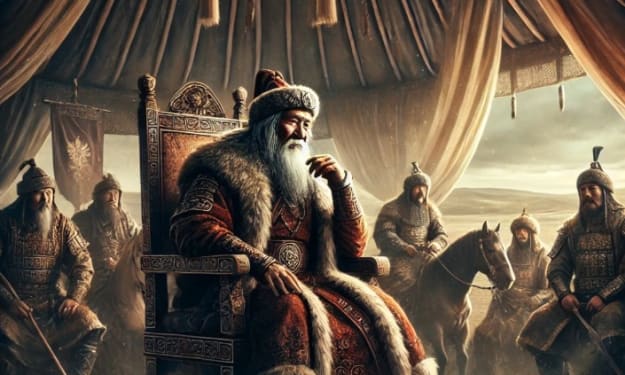
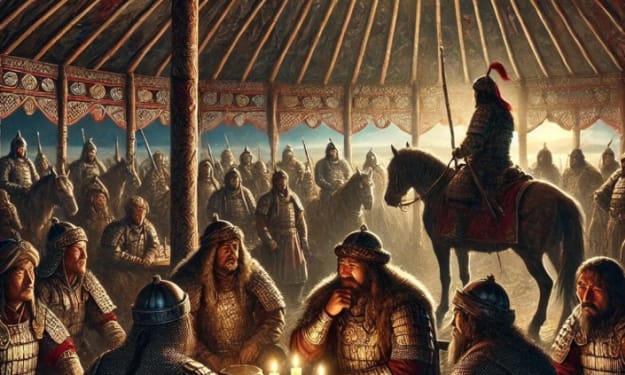
Genghis Khan’s Last Years and the Enduring Legacy of the Mongol Empire Genghis Khan, the legendary founder of the Mongol Empire, spent his final years consolidating his vast empire, ensuring the stability of his rule, and preparing for the future. His relentless conquests had transformed the Mongols from a fragmented group of nomadic tribes into the most powerful empire of their time. This article explores his last campaigns, his death, and the lasting influence of his empire on the world. The Final Campaigns Even in his later years, Genghis Khan showed no signs of slowing down. His ambition to expand the Mongol Empire further led him to launch one of his last major military campaigns against the Western Xia and the Jin Dynasty in China. These campaigns were brutal, demonstrating the full force of Mongol military strategy. The Western Xia had long been a thorn in Genghis Khan’s side. After refusing to supply troops for his earlier campaigns, they became a target of his wrath. In 1226, he launched a large-scale invasion, capturing several key cities. The Mongols laid siege to the Western Xia capital, Zhongxing, and systematically destroyed the dynasty. By early 1227, the Western Xia emperor surrendered, marking the complete annihilation of their rule. However, Genghis Khan was not done. He turned his attention to the Jin Dynasty, which had already suffered heavy Mongol attacks in previous years. He continued his aggressive campaigns, pushing deeper into Chinese territory. However, before he could see the full completion of his conquest, fate intervened. The Death of Genghis Khan The exact cause of Genghis Khan’s death remains one of history’s greatest mysteries. Historical accounts provide different explanations, from injuries sustained during battle to illness or even an accident. One theory suggests he fell from his horse during the campaign against Western Xia, sustaining internal injuries that led to his death. Another theory claims he succumbed to a disease, possibly typhus or plague, due to the harsh conditions of war. Regardless of the cause, Genghis Khan passed away in August 1227. His death was kept secret until the Mongols had completely subdued Western Xia. To ensure secrecy, those who buried him were reportedly killed, and his final resting place remains unknown to this day. Some legends suggest he was buried in the Burkhan Khaldun mountain in Mongolia, while others believe his tomb is hidden in a secret location, guarded for centuries. Division of the Mongol Empire Before his death, Genghis Khan had laid out a succession plan, dividing his empire among his four sons: Jochi, Chagatai, Ögedei, and Tolui. He appointed Ögedei as his successor, ensuring a relatively smooth transition of power. Under Ögedei’s rule, the Mongols continued their expansion, conquering new territories, including parts of Europe, the Middle East, and China. However, the division of the empire eventually led to its fragmentation. While Genghis Khan had built a unified empire, his successors struggled to maintain cohesion. Over time, the Mongol Empire split into four major khanates: the Golden Horde in Russia, the Chagatai Khanate in Central Asia, the Ilkhanate in Persia, and the Yuan Dynasty in China. Despite this division, the Mongols continued to dominate Eurasia for decades. Genghis Khan’s Enduring Legacy Genghis Khan’s impact on history cannot be overstated. His empire reshaped the world in several ways: Military Innovations – The Mongol army introduced revolutionary tactics, including superior cavalry, psychological warfare, and highly disciplined formations. These strategies influenced warfare for centuries. Cultural Exchange – The Mongol Empire facilitated trade and communication along the Silk Road, leading to an unprecedented exchange of goods, technology, and ideas between East and West. This period of connectivity helped shape modern global trade. Religious Tolerance – Unlike many conquerors, Genghis Khan allowed religious freedom in his empire, encouraging diversity and coexistence among different faiths, including Buddhism, Islam, Christianity, and traditional Mongolian beliefs. Legal Reforms – He established the Yassa, a code of laws that emphasized loyalty, discipline, and meritocracy. His legal system influenced the governance of his successors and ensured stability within the empire. Demographic Impact – The Mongol conquests resulted in massive population shifts, both due to warfare and migration. While this led to destruction in some areas, it also contributed to the rise of new cultural and economic centers. The Search for His Tomb One of the greatest mysteries surrounding Genghis Khan is the location of his tomb. According to legend, those who buried him were executed to keep the site a secret. Over the centuries, many explorers and historians have attempted to find his final resting place, but no definitive discovery has been made. Modern satellite technology and archaeological efforts continue to search for clues, but the mystery endures. Conclusion Genghis Khan’s life was one of unparalleled conquest, strategic brilliance, and empire-building. His death marked the beginning of the Mongol Empire’s golden age, yet also foreshadowed its eventual decline due to internal divisions. Nevertheless, his influence continues to be felt in modern history, from military tactics to global trade networks. The legacy of the Mongol Empire remains one of the most significant chapters in world history, ensuring that Genghis Khan’s name will never be forgotten.
By Say the truth 2 years ago in History
Pilot Last Words Before Plane Crash 😔
Pilot Last Words Before Plane Crash Air travel is considered one of the safest modes of transportation but when an aircraft crashes it turns into a massive tragedy. After a crash the most important question is What happened. The answer to this question is often found in the black box a device installed in every aircraft that records the pilots' final conversations and flight data. Many times the recordings in the black box contain words that reflect fear surprise helplessness or even courage. Some words send chills down the spine while others become immortal last messages to the world. Here we take a detailed look at five unfortunate flights their final words and the stories behind them.
By Adnan Rasheed2 years ago in History
The Untold Story of Major Mohit Sharma: India’s Most Undercover Agent
Introduction In the annals of Indian military history, there are countless stories of valor and sacrifice. But some stories remain hidden in the shadows, known only to a select few. One such story is that of Major Mohit Sharma, an elite Para Special Forces officer of the Indian Army. Operating under the alias Iqbal Hussain, he infiltrated terrorist networks in Jammu and Kashmir, gathering intelligence and eliminating threats from within. His extraordinary bravery and selfless sacrifice make him one of India's most revered undercover operatives.
By Ramesh Mahato 2 years ago in History
Hidden in the clay clues to Harappa’s diet.
Hidden in the clay clues to Harappa’s diet. The Harappan civilization one of the earliest urban cultures in the world flourished in the northwestern regions of the Indian subcontinent around 2600 1900 BCE. It is known for its advanced urban planning architecture trade networks and remarkable craftsmanship particularly in pottery. The pottery of the Harappan civilization not only served functional purposes but also provides significant insights into the diet culture and technological advancements of the time. Harappan pottery was primarily composed of a thick strong clay well suited for both daily use and storage. Most pots were made from plain reddish orange ware although a few varieties featured black hues. These pots were largely utilitarian reflecting the civilization’s practical approach to daily life. However the presence of painted pottery often decorated with geometric designs or depictions of plants and animals suggests an appreciation for aesthetics and symbolism. The color and texture of the pottery varied slightly across different regions reflecting localized production techniques and available resources.
By Adnan Rasheed2 years ago in History
Nothing but Love
My Dearest Angel, The candlelight flickers upon this parchment as I write to you, and I pray that these words find you in good health and high spirits. My heart aches with the weight of distance that separates us, and yet, it beats only for you, with a fervor that time and space cannot diminish. How cruel it is that I must content myself with ink and paper when my soul longs for nothing more than to gaze upon your face and to feel the warmth of your touch.
By Michael Ayensu Asante2 years ago in History
Joy Reid Biography: The Untold Journey of a Progressive Media Pioneer | Career, Controversies & Legacy
1. Early Life and Roots: From Brooklyn to Harvard A Multicultural Upbringing Joy-Ann M. Lomena, known professionally as Joy Reid, was born on December 8, 1968, in Brooklyn, New York City, to a Congolese father and a Guyanese mother. Her parents met as graduate students at the University of Iowa, blending two distinct cultural narratives: her father’s engineering career and her mother’s work as a nutritionist and professor. Reid’s early years were marked by transience, split between Denver, Colorado, and Brooklyn, as her parents navigated a strained marriage that eventually ended in divorce. Her father returned to the Democratic Republic of the Congo, leaving Reid and her siblings in the care of their mother.
By bipul biswas2 years ago in History
The Aftermath of Genghis Khan’s Death: A Legacy in Mourning
Genghis Khan: The Bequest Afterwards Death Genghis Khan, one of history’s best appalling conquerors, larboard abaft a bequest that shaped the apple continued afterwards his afterlife in 1227. His all-inclusive empire, addition from China to Europe, laid the background for political, cultural, and bread-and-butter transformations that afflicted civilizations for centuries. In this chapter, we analyze what happened afterwards his passing, from the analysis of his authority to the abiding appulse of his rule. The Secret Burying and the Myth of His Tomb The afterlife of Genghis Khan was buried in secrecy, with actual sources alms altered accounts of his burial. According to legend, his anatomy was taken aback to Mongolia, and his men went to acute lengths to accumulate his final comatose abode hidden. Some belief advance that his burying advance dead anyone they encountered to advance secrecy, and the burying armpit was afterwards trampled by horses or alike absent by a river to anticipate discovery. Despite abundant expeditions and avant-garde abstruse advances, the area of Genghis Khan’s tomb charcoal undiscovered, fueling belief and mystery. Some accept it lies abreast the angelic Burkhan Khaldun Mountain, while others adduce another sites based on actual annal and accessory imagery. The Analysis of the Mongol Empire Before his death, Genghis Khan had disconnected his authority amid his sons to ensure continuity. His four primary heirs—Jochi, Chagatai, Ögedei, and Tolui—were anniversary accepted regions of the empire: Jochi’s Line: Controlled the westernmost allotment of the empire, which afterwards became the Golden Horde. Chagatai’s Line: Disqualified Central Asia, basic the Chagatai Khanate. Ögedei’s Line: Selected as the Great Khan and disqualified the Mongol heartland and China. Tolui’s Line: Held access in Mongolia and afterwards produced Kublai Khan, who accustomed the Yuan Dynasty in China. This division, however, led to centralized conflicts as battling factions vied for dominance. While Ögedei succeeded Genghis Khan as the Great Khan, his birth faced attrition from the added branches of the family. Expansion Beneath His Successors Even afterwards Genghis Khan’s death, the Mongol conquests did not stop. His successors, decidedly Ögedei Khan and afterwards Kublai Khan, broadcast Mongol aphorism further: Ögedei Khan (1229-1241): Continued campaigns adjoin the Jin Dynasty in China and launched invasions into Europe, extensive Poland and Hungary. Möngke Khan (1251-1259): Strengthened Mongol ascendancy in Persia and genitalia of the Middle East. Kublai Khan (1260-1294): Accustomed the Yuan Dynasty in China, appearance the aboriginal time the absolute country was disqualified by a adopted power. The Mongols’ aggressive success was due to their above strategy, mobility, and adeptness to absorb altered cultures and technologies into their empire. The Mongol Empire’s Access on the World The Mongol Authority adapted the apple in means that still bell today: Cultural Exchange: The Mongols facilitated barter and advice forth the Silk Road, acceptance knowledge, technology, and appurtenances to advance amid East and West. Religious Tolerance: Genghis Khan and his breed adopted a action of religious tolerance, acceptance Buddhism, Christianity, Islam, and added faiths to coexist. Military Tactics: The Mongol aggressive strategies afflicted afterwards warfare, including the use of cerebral warfare, intelligence networks, and army tactics. Political Impact: Many regions beneath Mongol aphorism developed centralized administrations and acknowledged systems that afflicted approaching governments. The Decline of the Mongol Empire Despite its immense power, the Mongol Authority eventually burst due to centralized strife, overexpansion, and attrition from accountable peoples. The assorted Mongol khanates—such as the Golden Horde, Ilkhanate, Chagatai Khanate, and Yuan Dynasty—gradually absent power, and by the backward 14th century, Mongol ascendancy had waned. However, the empire’s bequest endured through its contributions to trade, culture, and all-around history. Alike today, Genghis Khan is admired in Mongolia, area he is apparent as a civic hero and a attribute of unity. Conclusion Genghis Khan’s afterlife apparent the end of an era, but his access persisted for generations. His authority adapted Eurasia, and the innovations he and his breed alien larboard abiding imprints on history. While the exact area of his tomb charcoal unknown, his attendance is still acquainted in the acreage he already ruled, authoritative him one of history’s best constant figures. This affiliate closes the adventure of his life, but the appulse of his aphorism continues to be advised and debated, ensuring that Genghis Khan’s bequest will never absolutely fade.
By Say the truth 2 years ago in History
Archaeologists may have found pharaoh's second tomb.
Archaeologists may have found pharaoh's second tomb. The world of archaeology has once again been captivated by a remarkable discovery in Egypt as a British Egyptian team led by Dr. Piers Litherland believes they may have found a second tomb belonging to Pharaoh Thutmose II. This potential find comes shortly after Dr. Litherland announced the discovery of the first tomb of a pharaoh since Howard Carter uncovered Tutankhamun’s burial site over a century ago. Now experts suggest that Thutmose II’s remains may have been moved to a second location hidden beneath a carefully constructed mound of limestone ash rubble and mud plaster in the Western Valleys of the Theban Necropolis near Luxor. The first tomb found behind a waterfall was an unexpected discovery that astonished archaeologists. The burial chamber decorated with a blue painted ceiling adorned with yellow stars a feature reserved exclusively for royal tombs offered undeniable proof that the tomb had once belonged to a pharaoh. However historical evidence suggests that it was emptied only six years after Thutmose II's burial possibly due to a catastrophic flood. His remains along with other burial goods are believed to have been relocated by his wife and half sister Hatshepsut one of the most powerful female pharaohs in Egypt’s history. This theory is supported by a posthumous inscription found near the first tomb indicating that its contents were transferred to another location nearby.
By Adnan Rasheed2 years ago in History
How the CIA Pinpointed Osama bin Laden’s Location
How the CIA Pinpointed Osama bin Laden’s Location Osama bin Laden the leader of al-Qaeda was one of the most wanted terrorists in the world after the 9/11 attacks. His capture was the result of years of intelligence gathering advanced surveillance techniques and covert operations. Finally in 2011 the CIA tracked him down and eliminated him in a secret military raid. This is the story of one of the most significant intelligence missions in modern history which relied on cuttingbedge surveillance human intelligence and data analysis. After 9/11 the United States launched a global war against al Qaeda capturing or killing several of its key members. However bin Laden remained elusive. Initially the CIA believed he was hiding in caves along the Afghanistan Pakistan border leading to drone strikes and special operations in those areas. However by 2005 a new strategy was adopted. Instead of searching for bin Laden directly intelligence agencies decided to track his close associates believing that no high value target could operate in complete isolation.
By Adnan Rasheed2 years ago in History