Biographies
At dawn, a melody was played.
With the tiniest hint of amber and gold coloring the horizon, the sky remained a blanket of gentle indigo. The promise of a new day and the aromas of grass caressed by dew were in the crisp, cool air. Not only did birds welcome the dawn, but they also started to stir, their soft singing filling the early calm. A tune started to emerge somewhere in the middle of the silent forest, far from the outside world. It was a haunting melody that bore the weight of emotion, longing, and history—a sound that had not been heard in a long time.
By MD SHAMIM RANA2 years ago in History
Trump Proposes to Assume Control of Ukraine's Nuclear Facilities During Conversation with Zelensky: A Daring Strategy or a Diplomatic Maneuver?
In an unexpected development, former U.S. President Donald Trump is said to have proposed assuming control of Ukraine's nuclear power facilities during a recent conversation with Ukrainian President Volodymyr Zelensky. This suggestion, which has ignited considerable discussion, arises as Ukraine faces the severe repercussions of Russia's persistent invasion. While some interpret Trump's offer as a daring initiative to bring stability to the area, others express skepticism regarding its practicality and the intentions behind it.
By Refayat Amin2 years ago in History
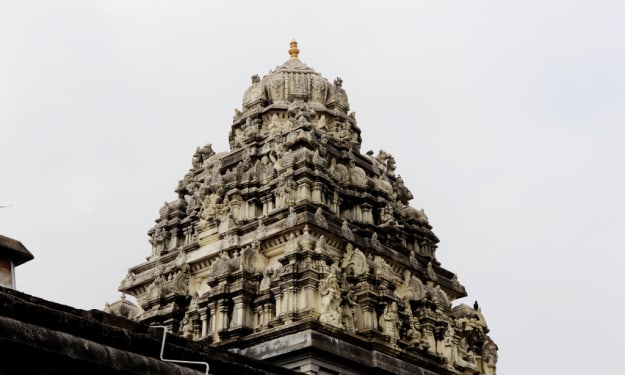
Kamakshi Amman Temple and the Philosophy of Self-Realization
Introduction: The Path to Self-Realization at Kamakshi Amman Temple The pursuit of self-realization is at the heart of many spiritual traditions, particularly within Hinduism, where it represents the ultimate goal of understanding one's true nature and divine essence. In this journey, temples like Kamakshi Amman Temple in Kanchipuram, Tamil Nadu, serve as sacred spaces where devotees can connect with their higher selves and the divine. The goddess Sri Kamakshi Ambal, who embodies the essence of compassion, power, and cosmic energy, plays a pivotal role in guiding seekers on their path to spiritual awakening.
By Sri Kamakshi Ambal Temple2 years ago in History
"The Brave Rajput Queen's Legend"
"The Brave Rajput Queen's Legend" Rajasthan was renowned in the 16th century for its majestic forts and ferocious soldiers. One of the most well-known tales from this area was that of Queen Padmavati, a monarch whose bravery, wit, and selflessness became legendary. Her tale is not just one of courage but also of insight, fortitude, and the victory of right over wrong.
By Rajoan Islam2 years ago in History
Atlantis: The Lost City of Wealth and Splendor. AI-Generated.
The Lost Wealth of Atlantis: Estimating the Net Worth of a Legendary Civilization Atlantis, the fabled civilization described by the Greek philosopher Plato, has fascinated humanity for millennia. A tale shrouded in mystery, the story of Atlantis speaks of a utopian empire that vanished beneath the sea in a cataclysmic disaster. Despite debates over its actual existence, Atlantis has been portrayed as a land of unimaginable wealth, advanced technology, and sophisticated culture. This article explores the estimated net worth of Atlantis, based on historical accounts, theories, and modern interpretations. The Origins of Atlantis Plato first introduced Atlantis in his dialogues Timaeus and Critias around 360 BCE. According to him, Atlantis was a powerful island nation located beyond the Pillars of Hercules (believed to be the Strait of Gibraltar). It was said to have existed 9,000 years before Plato’s time and was ruled by kings who wielded immense wealth, power, and wisdom. Atlantis was described as a prosperous empire with advanced architecture, a strong military, and flourishing trade networks.
By Say the truth 2 years ago in History
The Magnificence of Ancient African Empires. AI-Generated.
The Rich History and Resources of Ancient Africa: Part 1 Africa, often described as the cradle of humanity, has played a pivotal role in shaping world history. From the powerful empires of the past to its vast reserves of natural resources, Africa’s legacy is one of wealth, resilience, and cultural innovation. This article, the first in a nine-part series, delves into the ancient history, resources, and estimated economic impact of Africa's early civilizations, focusing on the period before European colonization.
By Say the truth 2 years ago in History
The Golden Age of Ancient Africa. AI-Generated.
The Wealth and Influence of Ancient African Empires Africa’s history is a rich tapestry woven with stories of kingdoms that flourished, built empires, and amassed wealth through trade, natural resources, and cultural achievements. While much of Africa's ancient history is overshadowed in mainstream narratives, the continent played a central role in global trade, resource extraction, and innovation for centuries. In this article, we’ll explore the legacy of prominent African empires, focusing on the wealth they accumulated and how natural resources and trade routes played a crucial role in shaping their dominance. 1. The Mali Empire: A Center of Wealth and Scholarship The Mali Empire, established in the 13th century, became one of the wealthiest empires in history due to its abundant gold reserves. Its most famous ruler, Mansa Musa, often cited as the richest person in history, put Mali on the world map when he embarked on a pilgrimage to Mecca in 1324. His caravan reportedly included thousands of attendants, camels carrying gold, and luxurious gifts that he distributed along the way, causing economic inflation in some regions. Mali’s economy thrived on gold, salt, and ivory trade. The empire’s cities, including Timbuktu and Gao, were not only trading hubs but also centers of learning. Timbuktu housed libraries and universities that attracted scholars from across Africa and beyond, cementing Mali’s reputation as a center of wealth and intellect. 2. The Kingdom of Aksum: Trade Hub of the Ancient World The Kingdom of Aksum, located in present-day Ethiopia and Eritrea, was a dominant trading empire from around 100 AD to the 7th century. Aksum controlled key trade routes connecting the Roman Empire, India, and the Arabian Peninsula. Its port city of Adulis facilitated the exchange of goods such as gold, ivory, spices, and textiles. Aksum was also known for minting its own gold and silver coins, a rare achievement in the ancient world that reflected its economic strength. The kingdom adopted Christianity in the 4th century, further boosting its influence and shaping its cultural legacy. The towering obelisks of Aksum remain architectural marvels, symbolizing the kingdom’s advanced engineering skills and wealth. 3. The Riches of the Great Zimbabwe The Great Zimbabwe civilization, flourishing between the 11th and 15th centuries, is another testament to Africa’s historical wealth. Its massive stone structures, including the Great Enclosure, were built without mortar, showcasing the advanced architectural techniques of the time. The economy of Great Zimbabwe was driven by gold mining and trade. The civilization was part of a larger trade network that extended to the Swahili Coast, the Middle East, and even China. Artifacts such as Chinese porcelain and Arabian glass have been found at Great Zimbabwe, indicating its role in global trade. 4. The Swahili Coast: Maritime Trade Powerhouse Stretching along the eastern coast of Africa, the Swahili Coast was a thriving maritime trading network that linked Africa to the Indian Ocean world. Cities like Kilwa, Mombasa, and Zanzibar were prosperous trade centers dealing in gold, ivory, spices, and slaves. The Swahili traders developed a unique culture that blended African, Arab, and Persian influences. The wealth generated from trade allowed these city-states to flourish, building coral-stone mosques, palaces, and trading posts that showcased their prosperity. 5. The Kingdom of Benin: Art, Trade, and Power The Kingdom of Benin, located in present-day Nigeria, was renowned for its sophisticated artistry and economic strength. The Benin Bronzes, intricate plaques and sculptures made from brass and bronze, are world-famous examples of the kingdom’s artistic legacy. Benin was a major player in the trans-Saharan trade, dealing in ivory, pepper, and textiles. Its powerful military and centralized government allowed it to maintain control over trade routes and expand its influence. 6. The Role of Natural Resources in Africa’s Wealth Africa’s natural wealth played a central role in the prosperity of its ancient empires. The continent’s vast reserves of gold, diamonds, copper, and other minerals made it a coveted region for trade and exploration. Gold: Gold from West Africa fueled the wealth of empires like Ghana, Mali, and Songhai. It was a key commodity in the trans-Saharan trade and was exchanged for salt, textiles, and other goods. Ivory: Ivory was highly prized in ancient times and was a major export from regions like the Congo Basin and the Swahili Coast. Salt: Known as “white gold,” salt was as valuable as gold in ancient Africa. It was essential for preserving food and was traded across the Sahara Desert. 7. Africa’s Lasting Legacy The wealth and influence of Africa’s ancient empires continue to inspire awe and admiration. However, the legacy of these civilizations is often overlooked in global narratives. Understanding the history of Africa’s wealth helps to challenge misconceptions and highlight the continent’s significant contributions to world history. Conclusion Africa’s ancient empires were centers of wealth, trade, and cultural achievement that played a crucial role in shaping global history. From the gold-laden caravans of Mansa Musa to the towering obelisks of Aksum, these civilizations left behind a legacy that endures to this day. As we uncover more about Africa’s past, it becomes clear that the continent’s history is one of resilience, innovation, and immense wealth. In the next part, we will delve deeper into the rise and fall of specific African empires, exploring the factors that contributed to their success and the challenges they faced. Stay tuned for part 3 of this series on Africa’s historical treasures.
By Say the truth 2 years ago in History