Biographies
Angela Burdett-Coutts
She was the granddaughter of Thomas Coutts, the founder of the famous London bank, and one of the wealthiest women in Victorian England. She was also one of the busiest women of her time, being actively engaged in an enormous range of philanthropic projects, giving millions of pounds to charities.
By Ruth Elizabeth Stiffabout a year ago in History
El Dorado: The Golden Legend — Chasing the Myth Across History
El Dorado: The Gilded Legend Historical Context and the Potential Reality Behind the Myth Few legends have captivated human fascination as intensely as the narrative of El Dorado, the legendary cityor individualof gold. For centuries, explorers, adventurers, and visionaries jeopardized everything to seek it, venturing into the perilous jungles of South America. Although no one ever conclusively discovered El Dorado, the myth has profoundly influenced history, geography, and culture. But was there ever any veracity to the legend? Could El Dorado have existed in some capacity? This article investigates the inception, transformation, and plausible reality behind one of history's most renowned legends. The Inception of the Legend The story of El Dorado originated in the early 16th century when Spanish explorers reached South America. They encountered murmurs among indigenous populations regarding a monarch who adorned himself in gold dust and subsequently washed it off in a sacred lake as part of a ceremonial rite. This golden figure, El Hombre Dorado ("The Gilded Man"), was said to govern a realm abundant with unimaginable wealth. The legend was first documented when conquistadors learned of a tribe known as the Muisca, who inhabited the highlands of present-day Colombia. The Muisca performed a ceremony at Lake Guatavita, where a new chief would be embellished with gold dust and plunge into the waters as a tribute to their deities, while treasures of gold and precious gems were cast into the lake. Over time, the notion of the ritual evolved from a singular ceremony to the idea of an entire city of gold, and eventually, a vast empire of gold concealed somewhere deep within the uncharted jungles. The Era of Exploration and Fixation The allure of vast wealth ignited a period of frantic exploration. Countless expeditions, motivated by greed and aspirations for glory, embarked into the expansive unknown territories of South America. Francisco de Orellana was among the initial Europeans to navigate the Amazon River in 1541, partly motivated by the ambition of discovering El Dorado. Gonzalo Pizarro, brother of the notorious conqueror Francisco Pizarro, also led disastrous ventures in pursuit of the golden city. Other explorers, such as Sir Walter Raleigh in the late 1500s, carried the obsession into the English-speaking realm. Raleigh set out on voyages to the Orinoco River (in present-day Venezuela), convinced that El Dorado resided somewhere along its path. He even disseminated embellished accounts of the riches he allegedly glimpsed, fueling additional expeditions. The quest for El Dorado claimed countless lives, exhausted treasuries, and devastated indigenous cultures, all without a single shred of evidence. Yet the legend endured, becoming progressively more intricate and richer with each succeeding generation. Lake Guatavita and the Spark of Reality One of the most alluring hints regarding El Dorado's existence was Lake Guatavita itself. In the late 16th century, the Spanish endeavored to drain the lake to retrieve the treasures from its depths. They managed to lower the water level slightly and retrieved some gold artifacts, but the endeavor was largely futile. Subsequently, in the early 20th century, another initiative was undertaken utilizing contemporary technology, which once more produced a limited number of exquisite gold artifacts but significantly failed to substantiate the existence of a golden empire. These discoveries implied that while the Muisca ritual was authentic, it entailed offerings from an affluent society rather than the reality of a city entirely composed of gold. Reality or Pure Fallacy? Currently, historians predominantly concur that El Dorado as a literal city of gold never materialized. Nonetheless, the likelihood that it was inspired by genuine and affluent indigenous culturessuch as the Muiscapersists strongly. The Muisca civilization possessed advanced metallurgy techniques and created complex gold items, including tunjos (small votive offerings), adornments, and religious relics. Other civilizations, like the Inca Empire to the south, also accumulated remarkable wealth that was exploited by the Spanish. Thus, while the notion of a city wholly constructed of gold was a myth, the existence of opulent, advanced civilizations in pre-Columbian South America was indeed factual. In various interpretations, El Dorado embodies a fusion of numerous stories, aspirations, and misconceptions that European explorers projected onto the New Worldan "golden" land abundant in wealth and marvel. El Dorado in Contemporary Culture The tale of El Dorado endures in the present day, celebrated in literature, cinema, video games, and even popular music. It signifies not only affluence but the persistent human yearning for exploration, adventure, and the chase of the unattainable. In Colombia, Lake Guatavita is a safeguarded heritage site, and a replica of the renowned "Muisca raft" (a golden representation of the ritual) can be viewed at the Gold Museum (Museo del Oro) in Bogotá. Simultaneously, the concept of lost cities and concealed treasures continues to motivate modern explorers and archaeologists, some of whom have uncovered genuine "lost cities" in the Amazon rainforest, constructed by ancient civilizations previously deemed impossible. Conclusion El Dorado may not have constituted the golden city of lore, but it embodies a deeper truth about human nature: our everlasting craving for discovery, wealth, and significance. It also serves as a reminder of the cultural treasures that existed long before European engagement, and the intricate, advanced societies that resided across the Americas. Ultimately, El Dorado was never merely a locationit was a vision. And in numerous ways, that vision continues to radiate vibrantly in our collective imagination.
By Say the truth about a year ago in History
The Wealth of the Chola Dynasty: Power, Prosperity, and a Lasting Legacy. AI-Generated.
The Resplendent Heritage: The Affluence of the Chola Dynasty Few dynasties in Indian history inspire as much reverence as the Chola Dynasty. Arising as a formidable entity in South India, the Cholas were not only valiant conquerors but also remarkable administrators and benefactors of art, culture, and commerce. Central to their prominence was their astonishing wealthgained through tactical military endeavors, extensive trade networks, innovative agricultural practices, and a highly structured economy. This article examines how the Chola dynasty, between the 9th and 13th centuries CE, constructed and sustained one of the most flourishing empires of ancient and medieval India. Origins of Chola Power and Wealth The early Cholas, referenced in Sangam literature (circa 300 BCE–300 CE), were regional sovereigns based around the fertile delta of the Cauvery River. However, it was during the Medieval Chola era (initiated by Vijayalaya Chola around 850 CE) that the dynasty achieved true imperial authority. By the time of Raja Raja Chola I (985–1014 CE) and his successor Rajendra Chola I, the Cholas had extended their domain beyond Tamilakam, subjugating parts of Sri Lanka, the Maldives, and even embarking on naval ventures to Southeast Asia. This imperial expansion became a foundational element for the dynasty's extraordinary wealth. Sources of Chola Wealth 1. Agriculture and Irrigation At the foundation of Chola affluence was agriculture. The Cholas excelled in irrigation by constructing substantial reservoirs, canals, and dams. The most renowned example is the Grand Anicut (Kallanai), originally built by the ancient Cholas and subsequently enlarged. The Cauvery delta transformed into a rice granary, generating surpluses that fueled urbanization and trade. The administration collected taxes both in kind (such as paddy) and currency, enriching royal coffers. Land revenue constituted the primary source of the state's income, meticulously documented in detailed temple inscriptions. 2. Trade and Commerce The Cholas actively promoted both domestic and international trade. Coastal cities such as Puhar (Kaveripattinam) and Nagapattinam flourished with merchants engaged in textiles, spices, pearls, ivory, precious stones, and exquisite metalwork. Overseas commerce with China, Srivijaya (Indonesia), the Middle East, and even Africa inundated the empire with gold and luxury commodities. Chola vessels traversed the Indian Ocean regularly, returning with substantial riches. Merchant guilds, including the Manigramam and Ainnurruvar (Ayyavole 500), were instrumental in foreign trade and amassed considerable fortunes, some of which were contributed to temples and public infrastructure. 3. Military Conquests and Tribute Military triumphs frequently yielded plunder and tribute. Following victories over the monarchs of Sri Lanka, Kerala, and Andhra, and even conducting expeditions into Southeast Asia (notably against the Srivijaya Empire), the Cholas secured vast quantities of gold, jewelry, and slaves. Rajendra Chola I’s illustrious campaign to the Ganges River (Gangaikonda Chola expedition) returned Ganges water and wealth, symbolized by the establishment of Gangaikonda Cholapuram, a magnificent city to rival his father’s Thanjavur. 4. Temples: Treasuries of Gold Temples under the Chola reign served not only as spiritual establishments but also as financial institutions, repositories of wealth, and centers of commercial activity. Monumental edifices such as the Brihadisvara Temple in Thanjavur (constructed by Raja Raja Chola I) were embellished with gold, silver, and exquisite gemstones. Historical records indicate that temples possessed vast tracts of land, employed a workforce comprising priests, artisans, dancers, and musicians, and received contributions in gold coins (kalanju), livestock, and other valuable commodities. Furthermore, temples provided loans to agriculturists and traders, levying interest and thereby augmenting their endowments. Assessment of the Chola Empire's Net Worth Determining historical assets poses difficulties; however, scholars estimate that at its pinnacle (11th–12th centuries CE), the Chola empire likely rivaled some of the richest states of the era. Considering land productivity, trade activities, and temple contributions, the annual revenue of the Chola Empire might be likened to several billion USD in contemporary financial terms. The wealth contained within temples such as Thanjavur's Brihadisvara alonebased on the gold-plated vimana (temple tower) and documented contributionswould amount to hundreds of millions if appraised today. In today's context, the net worth of the entire Chola Empire (factoring in land, treasures, military spoils, and profits from international commerce) would undoubtedly surpass $10–20 billion USD during its peak years, potentially even more when accounting for the collective wealth managed through merchant guilds. Diminution of Wealth and Legacy By the 13th century, internal strife, external invasions (notably by the Pandyas and subsequently the Delhi Sultanate), and alterations in trade routes resulted in the decline of Chola supremacy and their considerable wealth. Nevertheless, their legacy endures: Imposing temples remain today as UNESCO World Heritage Sites.
By Say the truth about a year ago in History
900 Year Old Crusader Sword Discovered Off Israel’s Coast A Glimpse Into the Medieval Past
900 Year Old Crusader Sword Discovered Off Israel’s Coast A Glimpse Into the Medieval Past In October 2021 an extraordinary archaeological discovery was made off the northern coast of Israel a 900 year old Crusader sword lying on the seabed encrusted with marine life and remarkably well preserved after centuries underwater. This iron sword measuring just under four feet in length is believed to have belonged to a Crusader knight who was journeying to the Holy Land around 1100 AD during the early years of the Crusades. The find has captivated historians and the public alike offering a tangible link to a pivotal era in medieval history. The sword was found by Shlomi Katzin a recreational diver from the town of Atlit. While exploring a popular diving site near Haifa he came across ancient stone and metal anchors pottery fragments, and finally a sword covered in marine organisms. Understanding the significance of the object and the risk of it being buried again by sand or taken by looters Katzin retrieved the artifact and immediately contacted Israel's Antiquities Authority (IAA). Upon examination the IAA confirmed the sword to be approximately 900 years old. It was discovered in a natural anchorage used by ships since ancient times. The site had been monitored by the IAA due to its archaeological richness but the sword had only recently become visible due to shifting sands.
By Adnan Rasheedabout a year ago in History
The Beautiful Chaos of Falling in Love . AI-Generated.
The Beautiful Chaos of Falling in Love One of the most powerful and transformative experiences a person can have is falling in love. At the same time, it's thrilling, perplexing, terrifying, and wonderful. Whether it's a slow burn or a sudden spark, love has a way of sneaking up on us, challenging what we thought we knew about ourselves and the world around us.
By articelmunafabout a year ago in History
New Analysis Casts Doubt on 'Biosignatures' Found on Planet K2-18b. AI-Generated.
New Analysis Casts Doubt on 'Biosignatures' Found on Planet K2-18b Introduction The quest to discover life beyond Earth has taken humanity on an exhilarating journey through the cosmos. Among the myriad of exoplanets identified, K2-18b has emerged as a particularly intriguing candidate. Located approximately 124 light-years away in the constellation Leo, this exoplanet has captivated scientists and the public alike with the potential detection of biosignature gases in its atmosphere. However, recent analyses have cast doubt on these findings, prompting a reevaluation of what we know about this distant world.
By Mamunur Rashidabout a year ago in History
India is a land of rich history, diverse cultures, and remarkable achievements. Here are some intriguing and lesser-known facts about this incredible country:
🧠 Ancient Innovations & Cultural Contributions Birthplace of Chess and Shampoo: India gave the world chess, originally called Chaturanga, and the concept of shampooing, derived from the Sanskrit word Champu, meaning to massage.
By Abjol Hussain Laskarabout a year ago in History
11 Million Year Old Panda Fossil Found in Germany Reveals Hidden Truth About Panda Evolution and Diet.
11 Million Year Old Panda Fossil Found in Germany Reveals Hidden Truth About Panda Evolution and Diet. In a groundbreaking discovery that challenges long standing beliefs about panda evolution paleontologists have uncovered the fossilized remains of an 11 million year old panda relative in southern Germany. What makes this discovery particularly astonishing is the dietary evidence unlike modern pandas this ancient bear species was not a strict herbivore. Instead it had an omnivorous diet meaning it consumed both plants and animals.
By Adnan Rasheedabout a year ago in History
The Samsung Galaxy S25 Edge's launch date and price have been revealed by a new leak.. AI-Generated.
On its website, Samsung accidentally discloses the Galaxy S25 Edge's price and release date. In a surprising development that has captured the attention of tech enthusiasts and smartphone fans worldwide, Samsung has accidentally revealed the pricing and launch date for its highly anticipated Galaxy S25 Edge model—on its own official website. This unexpected leak has sparked widespread interest and speculation, offering an early glimpse into the next big flagship in Samsung's 2025 smartphone lineup.
By candyboy rafeabout a year ago in History
An Ancient ‘Terror Crocodile’ Became a Dinosaur Eating Giant Scientists Say They Now Know Why
An Ancient ‘Terror Crocodile’ Became a Dinosaur Eating Giant Scientists Say They Now Know Why In the shadowy wetlands of prehistoric Earth some 95 million years ago a monstrous predator lurked a massive crocodile like creature capable of bringing down even the mightiest of dinosaurs. Known as the terror crocodile this ancient beast Deinosuchus grew up to 33 feet long and weighed more than 8,000 pounds. With crushing jaws and a bite force that rivaled that of Tyrannosaurus rex Deinosuchus was among the most fearsome predators of its time. For decades scientists have marveled at this creature trying to understand how it achieved such size and dominance. Now new research may finally have the answer.
By Adnan Rasheedabout a year ago in History
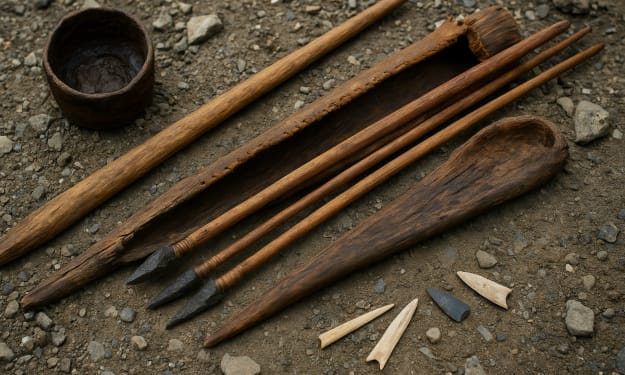
Archaeologists Discover 6,500 Year Old Hunting Kit Containing Poisoned Darts
Archaeologists Discover 6,500 Year Old Hunting Kit Containing Poisoned Darts In a remarkable discovery that sheds light on ancient hunting techniques archaeologists have uncovered a 6,500-year-old hunting kit complete with poisoned darts at an excavation site in Europe. This extraordinary find provides a rare glimpse into the lives and survival strategies of prehistoric humans and their advanced understanding of tools toxins and hunting.
By Adnan Rasheedabout a year ago in History
Yahoo Eyes Google’s Chrome Browser Amid Antitrust Storm: A High-Stakes Tech Shake-Up
April 25, 2025 | By Tech & Business Desk Yahoo, which is owned by Apollo Global Management, has stated its interest in acquiring Google's Chrome web browser—but only if federal regulators force Google to sell. This could lead to a reorganization of the internet's power structure. This surprising twist was revealed amid the ongoing U.S. Department of Justice (DOJ) antitrust trial against Google, a landmark case that could redefine how dominant tech companies operate.
By Md Shahadat Hossainabout a year ago in History