Biographies
The Mystery of Le Griffon: The Lost Ship of Lake Michigan. AI-Generated.
Origins of Le Griffon In the late 17th century, France sought to expand its influence deep into the interior of North America. The fur trade was booming, and the Great Lakes held the promise of tremendous wealth. To support his ambitious exploration of the Mississippi River system and to dominate the lucrative fur trade, La Salle envisioned building a sturdy ship capable of traversing the Great Lakes. Constructed near Niagara Falls on the banks of the Niagara River, Le Griffon was a technical marvel for its time — a brigantine rigged with sails and armed with several cannons. Historical accounts suggest the vessel was about 40 to 45 tons burden and roughly 45 to 60 feet long — modest by oceanic standards but enormous for the lakes. Le Griffon was not only the first ship of its kind in the region, but it also symbolized French ambition to control vast interior territories of North America. The Maiden Voyage In August 1679, Le Griffon set sail on its maiden voyage across Lake Erie, Detroit River, Lake St. Clair, Lake Huron, and finally into Lake Michigan. La Salle and his men were headed toward what is now Green Bay, Wisconsin, to trade for valuable furs with Native American tribes. By early September, La Salle and his crew had successfully loaded the vessel with a rich cargo of furs — reportedly worth a small fortune at the time. La Salle then made a fateful decision: he would continue exploring overland while Le Griffon would be sent back to Niagara with the precious cargo. Six crew members were tasked with the return journey aboard Le Griffon. On September 18, 1679, Le Griffon sailed into the horizon — and was never seen again. Theories of Disappearance What happened to Le Griffon remains a mystery. Numerous theories have emerged over the centuries: 1. Storm The Great Lakes are notorious for their sudden, violent storms. Many believe Le Griffon was caught in a fierce gale shortly after leaving Green Bay and was overwhelmed by the rough waters of Lake Michigan. Given the lack of wreckage found for centuries, it’s plausible that the vessel sank in deep, remote waters. 2. Mutiny and Theft Another theory suggests betrayal from within. Some historians argue that the crew, tempted by the rich cargo, might have intentionally sabotaged the ship, killed loyalists aboard, and tried to escape with the furs. If this theory holds, it's possible the conspirators themselves perished before reaching safety, or were killed by hostile tribes. 3. Native American Attack Tensions between French traders and certain indigenous groups were high at the time. Some reports hint that Native warriors, resentful of French encroachment and trade practices, may have attacked and destroyed Le Griffon. However, no definitive archaeological evidence supports this claim. Modern Search Efforts For over 300 years, treasure hunters, historians, and archaeologists have searched for the lost Le Griffon. Numerous alleged discoveries have been made: In 1898, bones and timbers were found near Manitoulin Island, but could not be conclusively linked. In the 2000s, underwater explorers claimed to have found a bowsprit in Lake Michigan — possibly from Le Griffon. However, later studies suggested it was just a submerged tree. In 2018, two treasure hunters announced a promising find, but disputes over permits and verification clouded the claim. The truth remains elusive. No discovery has yet been officially confirmed as the remains of Le Griffon. Cultural Impact The story of Le Griffon endures not just because of its historical importance, but because it represents the spirit of early exploration: bold, ambitious, and often tragic. It has inspired countless novels, legends, and television specials. For the Great Lakes region, Le Griffon is a symbol of mystery — a maritime ghost haunting the inland seas. Moreover, its tale raises timeless questions about human ambition: how far we are willing to go for wealth, exploration, and national pride — and how the forces of nature can swiftly undo the best-laid plans. Conclusion More than three centuries after it vanished, Le Griffon remains one of North America's most tantalizing maritime mysteries. Was it wrecked by storm, sabotage, or war? Somewhere in the vastness of the Great Lakes, the answers — and possibly the remains — still lie waiting. Until then, the legend of Le Griffon sails on in our collective imagination, a timeless reminder that some treasures are not meant to be found, but to be forever chased.
By Say the truth about a year ago in History
Heavy Duty Gravity Roller Conveyor Manufacturer & Exporter
Heavy Duty Gravity Roller Conveyor Manufacturer & Exporter in Worldwide Gravity roller conveyors have become a cornerstone in modern material handling, celebrated for their simplicity, efficiency, and cost-effectiveness. Unlike powered systems, these conveyors use the natural force of gravity to move goods along a slightly inclined path, eliminating the need for motors and reducing energy consumption. This makes them an eco-friendly and low-maintenance choice for industries such as warehousing, manufacturing, logistics, and packaging. Their straightforward design allows for easy installation and minimal upkeep, helping businesses lower operational costs while boosting productivity.
By Conveline Rollersabout a year ago in History
2,000 Year Old Sarcophagus Found in Türkiye's Gladiators' City
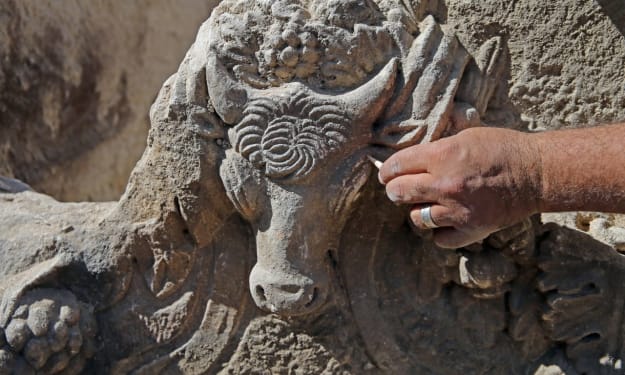
2,000 Year Old Sarcophagus Found in Türkiye's Gladiators' City Selçuk Türkiye In an extraordinary archaeological discovery a 2,000 year old sarcophagus has been unearthed in the historic district of Selçuk located in Türkiye's western İzmir province. This region once home to the legendary city of Ephesus has long been associated with ancient gladiators and the new find sheds even more light on its fascinating past. The excavation conducted near the famous Ayasuluk Hill and the St. John Basilica revealed the sarcophagus buried just 20 centimeters below the surface. The site rich with layers of history spanning millennia has already produced many important artifacts but this discovery stands out for its rarity and historical significance.
By Adnan Rasheedabout a year ago in History
"Ghosts of the Deep: The Lost Ships That Took Fortunes to the Bottom of the Sea"
Ghosts of the Deep: The Chronicle of Abandoned Vessels with Wealth Onboard Throughout human history, the oceans have presented promises of adventure, conquest, and unfathomable riches. However, they have also consumed innumerable vessels along with the treasures they bore into their frigid, silent abyss. From the gilded fleets of Spanish conquistadors to the merchant ships of the East India Company, some of the most valuable fortunes ever accumulated vanished beneath the waves, their remnants lying undiscovered for centuries. This article delves into the intriguing history of lost vessels with wealth onboard tales of ambition, misfortune, enigma, and timeless allure. Early Riches Lost at Sea The notion of "treasure vessels" dates back millennia. Ancient Egyptian records reference trading fleets disappearing in tempests. Phoenician mariners, among the earliest maritime traders, frequently transported gold, silver, and exotic commodities across the Mediterranean at times never to return. Nonetheless, it was during the Age of Exploration (15th–18th centuries) that maritime losses involving immense fortunes became tragically prevalent. European empires, expanding into the Americas, Africa, and Asia, transported vast quantities of wealth gold, silver, spices, silk across perilous waters. Legendary Lost Ships 1. The Nuestra Señora de Atocha (1622) Arguably the most renowned treasure vessel in history, the Spanish galleon Atocha was part of the 1622 Treasure Fleet returning from the Americas to Spain. Loaded with tons of silver, gold, emeralds, and invaluable artifacts, it sank off the coast of Florida during a hurricane. For over 350 years, treasure seekers pursued the Atocha. In 1985, explorer Mel Fisher ultimately unearthed its wreck revealing a fortune valued today at over $450 million. Even now, a significant portion of the ship's cargo remains submerged beneath the seafloor. 2. The Flor de la Mar (1511) The Flor de la Mar ("Flower of the Sea") was a Portuguese carrack laden with looted treasures from the conquest of Malacca (modern-day Malaysia). Caught in a fierce tempest near Sumatra, it sank along with its staggering cargo gold, gemstones, invaluable artifacts and much of the crew. Today, experts estimate the value of the lost cargo could exceed $2 billion, rendering it one of the wealthiest undiscovered wrecks in history. Despite numerous expeditions, the wreck of the Flor de la Mar has never been definitively located. 3. The Merchant Royal (1641) Referred to as the "El Dorado of the Seas," the Merchant Royal was an English merchant vessel transporting gold, silver, and jewels from Spanish colonies to Europe. It sank near the Isles of Scilly (off Cornwall, England) during a storm. Contemporary records suggest the cargo included over 100,000 pounds of gold and 400 bars of silver, possibly making it the most significant sunken fortune in British waters. Despite several modern search efforts, the ship remains concealed. Why So Many Ships Were Lost Maritime travel was perilous for numerous reasons: Poor Navigation: Early navigators lacked precise maps and instruments. Severe Weather: Hurricanes, typhoons, and unforeseen storms could easily overpower wooden vessels. Overloading: Ships frequently transported more cargo than was safe, resulting in instability. Piracy and War: Enemy vessels and pirates frequently assaulted treasure fleets. Structural Deficiencies: Numerous treasure vessels were constructed hastily or were aging crafts, susceptible to destruction. Additionally, once a vessel sank, the means to retrieve it simply did not exist until very recently. Contemporary Search and Recovery Presently, advancements in sonar technology, subaqueous drones, and deep-sea exploration have empowered treasure seekers to reencounter many of these lost riches. Nevertheless, recovery operations encounter significant obstacles: Legal Disputes: Issues regarding ownership emerge does the treasure belong to the discoverer, the original sovereign nation, or the nearest coastal state? Extreme Depths: Some wrecks rest miles beneath the ocean's surface. Environmental Hazards: Recovery operations can disrupt delicate marine ecosystems. Notable enterprises like Odyssey Marine Exploration have located and recovered several shipwrecks but not without controversy. The Fascination with Lost Treasure In spite of the perils and challenges, the lore surrounding lost treasure vessels persists. They epitomize the ultimate quest: untold wealth awaiting the brave and fortunate. Numerous wrecks are still presumed to be undiscovered, including: The San Miguel (1519) off the Bahamas. The Le Griffon (1679) in Lake Michigan. The USS Cyclops (1918) a World War I naval collier that vanished without a trace. Each could represent the next billion-dollar discovery, generating global headlines and rekindling aspirations of glory. Conclusion The oceans possess the narratives of human ambition, exploration, and avarice along with countless fortunes consigned to the deep. The history of lost treasure vessels reminds us of how vulnerable even the most magnificent human achievements can be against the forces of nature. With contemporary technology and persistent human curiosity, more secrets of these spectral ships will undoubtedly emerge offering wealth not just in gold, but in the timeless stories they carry with them. For every vessel discovered, hundreds remain concealed awaiting quietly beneath the waves.
By Say the truth about a year ago in History
"Persia's Eternal Fortune: The History of Iran’s Greatest Treasures"
Crown Jewels of Persia: The Lost and Living Treasures of Iran Iran, historically referred to as Persia, represents one of the most ancient civilizations on the planet. From the formidable Achaemenid Empire of Cyrus the Great to the splendid Safavid dynasty, Persia has served as an emblem of affluence, culture, and authority. Across the centuries, Persian monarchs amassed fortunes beyond imagination: vast reserves of gold, stunning crowns, swords adorned with rubies, and seas of invaluable gemstones. Among the most renowned collections is the Iranian National Jewels, regarded as one of the most precious and illustrious treasure troves on Earth. This article examines the origins, development, loss, and endurance of Iran’s imperial wealth and assesses its present-day value. The Ancient Foundations: Achaemenid Splendor The custom of royal treasures in Iran commenced with the Achaemenid Empire (550–330 BCE), initiated by Cyrus the Great. The Achaemenid sovereigns commanded one of the extensive empires in ancient history, spanning from Egypt to India. Wealth in gold and silver flowed in from 20 distinct satrapies (provinces). Darius the Great constructed Persepolis, a ceremonial capital filled with colossal palaces, golden effigies, and walls inlaid with precious stones. Herodotus, the Greek historian, depicted the Persian monarchs as possessing immense reserves of gold and silver treasures so substantial they appeared inexhaustible. However, the first significant loss transpired with Alexander the Great’s invasion in 330 BCE, when Persepolis was set ablaze and looted. Thousands of talents of gold and silver (equating to billions today) were transported back to Macedonia. The Sassanian Revival: Imperial Wealth Reborn Following centuries of external domination, the Sassanian Empire (224–651 CE) rejuvenated Persian magnificence. Khosrow I and Khosrow II accrued riches through conquest, commerce, and tribute. Legendary artifacts like the Throne of Khosrow, encrusted with pearls, rubies, and emeralds, became emblems of Persian dominance. The Sassanian monarchs upheld clandestine treasuries brimming with coins, gems, ceremonial armor, and royal insignia. Regrettably, much of this was lost during the Islamic conquests of the 7th century, when Arab forces vanquished the Sassanians and plundered royal treasuries. The Safavid Renaissance: Birth of the Modern Iranian Crown Jewels The most illustrious period for Iran’s imperial wealth emerged with the Safavid Dynasty (1501–1736). Shah Abbas the Great (1588–1629) established Isfahan as a radiant capital. Iran dominated crucial points along the Silk Road, enriching itself through commerce. The Safavid monarchs gathered Indian diamonds, Ottoman emeralds, and Chinese jade. They commissioned artisans to craft magnificent swords, shields, and thrones. This epoch laid the groundwork for what would later evolve into the Iranian National Jewels, the most prominent collection of Persian treasures. The Afghan Invasion and Nader Shah's Conquests In the early 18th century, Iran’s fortunes took a grim turn. In 1722, Afghan forces ransacked Isfahan and plundered Safavid treasures. Subsequently, Nader Shah (r. 1736–1747) ascended to power and led ruthless campaigns across India. In 1739, Nader Shah captured Delhi and seized the Mughal treasury, which included: The Koh-i-Noor diamond (one of the largest diamonds globally). The Darya-i-Noor diamond (still in Iran today). Enormous quantities of gold, silver, and jeweled artifacts. Nader Shah's devastation is approximated to have comprised hundreds of tons of gold and gemstones contemporary value could exceed $1 trillion USD. However, following Nader Shah's assassination in 1747, a significant portion of this wealth was dispersed among warlords and competing factions. The Qajar Dynasty and Modern Preservation During the Qajar dynasty (1789–1925), Iran’s remaining treasures were reorganized. Sovereigns such as Fath-Ali Shah commissioned ornate crowns and regalia, frequently utilizing gems from previous periods. The renowned Peacock Throne, emblematic of royal authority, was produced (distinct from the Mughal throne bearing the same name). The Iranian National Jewels were relocated to more secure facilities as political instability persisted. By the dawn of the 20th century, the Pahlavi dynasty initiated efforts to catalog and safeguard the treasures. The Iranian National Jewels Today Currently, the Iranian National Jewels also referred to as the Crown Jewels of Iran are housed in the Central Bank of Iran in Tehran. The collection encompasses: The Darya-i-Noor diamond (182 carats, one of the world's largest pink diamonds). The Naderi Throne and the Sun Throne, both adorned with hundreds of gems. Crowns, swords, shields, tiaras, and royal regalia. An entire encrusted globe, where oceans are represented by emeralds and continents by rubies and sapphires. Estimated Value: While the Iranian government does not disclose a public evaluation of the collection (due to national security considerations), experts estimate the Iranian National Jewels could be valued at well over $5–10 billion USD ranking it among the most valuable collections of royal treasures globally. Nevertheless, its symbolic significance to Iranian identity and history is truly invaluable. Conclusion Iran's treasure narrative is a tale of brilliance, loss, resilience, and pride. From the gilded halls of Persepolis to the vaults of Tehran’s Central Bank, Persia’s legendary wealth has captivated the world for over 2,500 years. Even today, the Iranian Crown Jewels serve not only as a testament to past grandeur but also as a reminder of a civilization whose cultural and material contributions continue to illuminate the globe.
By Say the truth about a year ago in History
Suspect charged with murder over Vancouver Filipino festival car ramming, police say victims were aged five to 65
Tragedy at Vancouver's Lapu-Lapu Day Festival: 11 Dead, Dozens Injured in Vehicle Attack A tragic incident occurred at Vancouver's Lapu-Lapu Day Festival, a celebration of Filipino heritage, on April 26, 2025, in the evening. A black Audi Q7 SUV drove into a crowd near East 43rd Avenue and Fraser Street, resulting in the deaths of 11 individuals and injuring over 20 others. The victims' ages ranged from five to sixty-five. Reuters
By Mahmodul hassan mojahidabout a year ago in History