Ancient
The Life of an Archaeologist
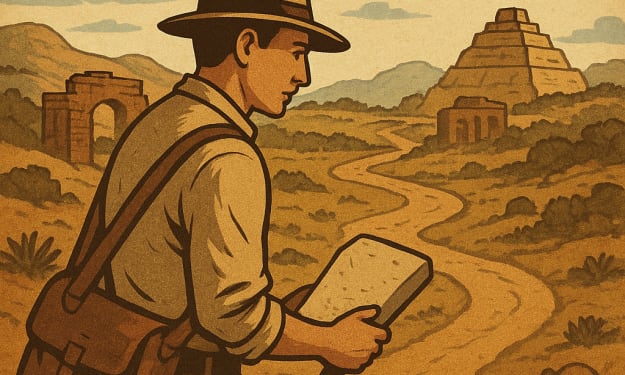
Introduction The life of an archaeologist is a fascinating journey into the depths of human history. It is a profession that bridges science, adventure, and storytelling. Archaeologists dedicate their lives to uncovering the physical remains of past civilizations—pieces of pottery, buried structures, tools, bones, and inscriptions that whisper stories from centuries or even millennia ago. Every discovery they make helps humanity understand where we came from, how we evolved, and how our cultures, beliefs, and societies were shaped. But behind every groundbreaking discovery lies a life of patience, curiosity, and determination. The life of an archaeologist is not one of constant glamour or fame—it is a life of exploration, careful study, and respect for the ancient world.
By Nizam Archaeologistabout a year ago in History
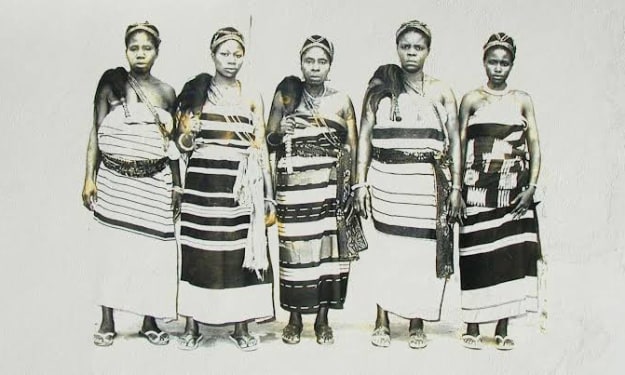
Aba Women's Riot
In the humid December of 1929, the dusty streets of southeastern Nigeria echoed, not with gunfire, but with the songs, chants, and defiant cries of thousands of women. They were not armed with weapons. They carried palm fronds, danced in circles, and raised their voices in a way the British colonial administration had never seen before. This was not a minor protest. It was one of the most powerful uprisings in West Africa’s colonial history. It was a movement led entirely by women—market women, mothers, widows, and daughters, who decided they had endured enough. History would remember it as the Aba Women’s Riot, or more rightly, the Aba Women’s War of 1929. By the late 1920s, the British had established their system of indirect rule in Nigeria. They appointed Warrant Chiefs, often ignoring traditional governance structures. These warrant chiefs were mostly men who had been hand-picked, and many were unpopular within their communities. At the same time, the colonial government introduced new forms of taxation. The men were already being taxed, but there were growing fears that women, who played a major role in the local economy through trade and agriculture, would soon be taxed as well. For Igbo and Ibibio women, this was more than economics. They had long held important roles in their communities, including running markets and using collective action to keep leadership in check. The colonial administration had sidelined them from decision-making, and this new tax policy became the final straw. The fire started in the small town of Oloko in the Bende Division. A census official named Mark Emereuwa, working for Warrant Chief Okugo, approached a widow named Nwanyeruwa and instructed her to “count her goats and people” for taxation. Nwanyeruwa was shocked. In Igbo society, women were not usually taxed. She challenged him, asking, "Was your mother counted?" The confrontation grew heated, and she refused to cooperate. This incident spread rapidly. Women in neighboring villages heard what had happened and recognized the danger. They mobilized through their age-old communication networks, spreading palm fronds as signals and passing messages through song and market gatherings. The response was swift and massive. Within days, over 10,000 women from different towns across the Igbo and Ibibio regions gathered in Oloko. These women were not disorganized. They drew on a traditional protest system known as “sitting on a man," a method where women surrounded a man’s house or office, dancing, singing, mocking, and chanting until he was held accountable. They targeted warrant chiefs, local courts, and colonial offices, demanding justice and the reversal of oppressive policies. Their protests spread across towns like Aba, Umuahia, Owerri, and beyond. British colonial authorities were stunned. They had underestimated the organizational power of these women, who moved in coordinated waves from village to village. As the protests grew, the colonial government responded with force. Troops were deployed. In some towns, they opened fire on the protesters. By the end of the uprising, over 50 women were killed and many more were injured. But the British had learned a lesson. The scale and determination of the women forced the colonial administration to abandon plans to tax women and to restructure the warrant chief system. Several unpopular chiefs were removed, and policies were re-examined. The Aba Women’s Riot was not just a tax protest. It was one of the first major anti-colonial uprisings in West Africa, and it was led by women. It challenged both colonial authority and patriarchal structures, showing that women’s voices could shake the pillars of power. These women did not have newspapers or microphones. They did not have social media. But through unity, courage, and cultural intelligence, they shook an empire. Nearly a century later, the Aba Women’s War remains a powerful reminder of how collective action can bring change. It is a story often overlooked in global history books, but its impact continues to echo in Nigeria’s struggle for independence and women’s rights movements today. Their legacy is not just in the changes they forced but in the message they left behind: When ordinary people rise together, history is forced to listen.
By Stories You Never Heardabout a year ago in History
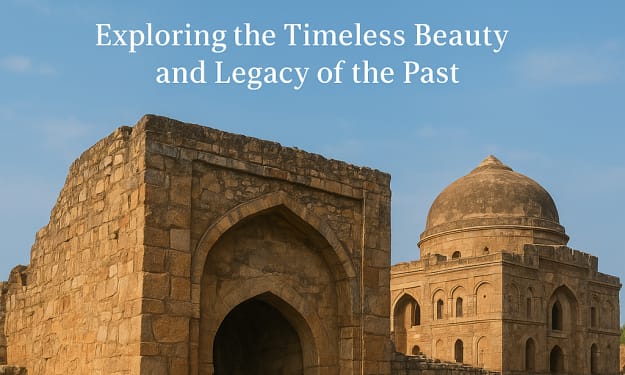
A Major Historical Place
Throughout human history, certain places have stood the test of time, carrying within their walls the echoes of generations long gone. These major historical places are not just bricks, stones, or ruins — they are living witnesses of human creativity, struggle, faith, and progress. They connect us with our ancestors, remind us of our roots, and reveal how civilizations evolved over centuries. Visiting or even learning about such a place allows us to travel through time without ever leaving the present.
By Nizam Archaeologistabout a year ago in History
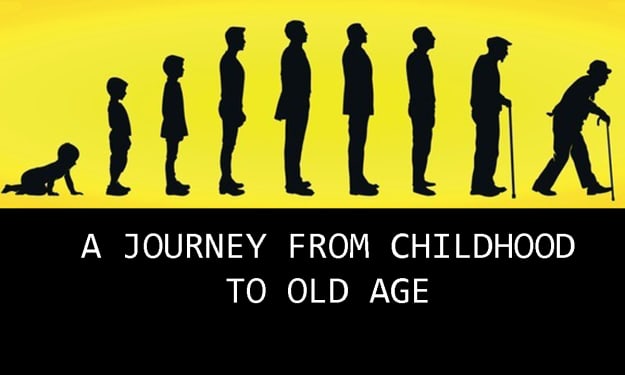
The Unfolding Self
Life is not a straight line but a rich, meandering path through distinct and beautiful landscapes. Each of us embarks on a remarkable voyage from the dawn of childhood to the twilight of old age a journey that shapes, refines, and ultimately reveals the essence of who we are. This passage, with all its joys and challenges, is the universal human story.
By Article Writing Masterabout a year ago in History
Potawatomi. AI-Generated.
Where the Earth Still Speaks and the Sky Still Listens The morning mist rolled softly across the edge of the forest, carrying with it the quiet songs of the river. The Potawatomi people called this land Bodewadmi, “the Keepers of the Fire,” for they believed that the flame of life and wisdom must never be allowed to die.
By shakir hamidabout a year ago in History
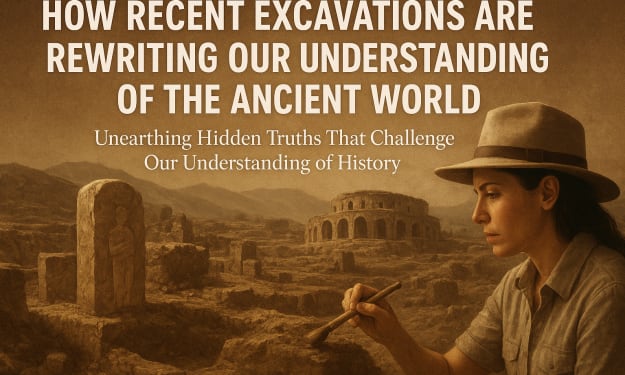
How Recent Excavations Are Rewriting Our Understanding of the Ancient World
Archaeology has always been a field that connects us with our forgotten past, revealing how ancient civilizations lived, worshipped, traded, and evolved. In recent years, however, new excavations and technological breakthroughs have completely transformed our understanding of the ancient world. These discoveries are not just adding details to known histories—they are rewriting them. From lost cities buried under layers of time to unexpected artifacts that challenge our beliefs about early human life, archaeologists are piecing together a story far more complex and fascinating than we ever imagined.
By Nizam Archaeologistabout a year ago in History
Ancient Paths: An Archaeologist’s Exploration
Introduction Across the vast landscapes of our planet—beneath deserts, forests, and forgotten ruins—lie the stories of those who came before us. Archaeology, the science of uncovering and interpreting the past, gives us a glimpse into the lives of ancient civilizations that shaped the world we know today. Following Ancient Paths: An Archaeologist’s Exploration is not just about digging in the dirt; it is about rediscovering the roots of humanity, piece by piece, and understanding how our ancestors lived, believed, built, and dreamed.
By Nizam Archaeologistabout a year ago in History
The Iron Fist of Karanja: Rise and Fall of General Nyota. AI-Generated.
In the dusty hills of Karanja, a small East African nation, Samuel Nyota was born in 1948 into a poor farming family. His father toiled in the fields, his mother raised him and his siblings under the unforgiving sun, and from an early age, Samuel learned that life rewarded the strong and punished the weak. Tall, imposing, and fiercely intelligent, he quickly realized that survival required more than hard work — it demanded cunning, strategy, and ruthlessness.
By shakir hamidabout a year ago in History
The Tyrant of Uganda: The Rise and Fall of Idi Amin. AI-Generated.
The story of Idi Amin Dada begins far from the marble halls of power — in a small village in northwestern Uganda, around 1925. Born into poverty among the Kakwa ethnic group, Amin’s early years were marked by hardship and survival. His father abandoned the family, and his mother, a herbalist, raised him in the shadow of colonial rule. He had little education, but he possessed an intimidating physical strength — tall, broad-shouldered, and fiercely ambitious.
By shakir hamidabout a year ago in History
Rumors, Roses, and a Quiet Promise: The Legend of DiMaggio and Monroe
Rumors, Roses, and a Quiet Promise: The Legend of DiMaggio and Monroe When a public romance shined as bright as Marilyn Monroe’s glow on a Hollywood stage, the afterglow can outlive the headlines. Over the years, stories about Joe DiMaggio and Marilyn Monroe have settled into the realm of myth and memory—the kind of legends that fans retell with a knowing smile, even when every detail isn’t verifiably true. Among those tales, one persists with stubborn tenderness: the idea that DiMaggio, devastated by Monroe’s death, sent red roses to her crypt three times a week for two decades, never remarried, and allegedly uttered his final words, “I’ll finally get to see Marilyn.”
By Story silver book about a year ago in History
Amman Citadel: Layers of History and Civilization in Jordan
The Amman Citadel, perched on Jabal al-Qal’a, offers a living chronicle of civilizations stacked across time. From the Ammonites of the 9th century BCE, whose inscriptions to Milkom survive, to Roman temples, Byzantine churches, and Umayyad palaces, the site reflects continual reconstitution. The Temple of Hercules, colossal ruins, Byzantine adaptations, and Umayyad architecture illustrate layers of cultural inheritance, interrupted by earthquakes and restored in modern times. The Archaeological Museum, once home to the Dead Sea Scrolls, deepens the story. Visiting reveals more than ruins—it is a lesson in how civilizations adapt, recycle, and endure, while raising questions about humanity’s future.
By Scott Douglas Jacobsenabout a year ago in History