Ancient
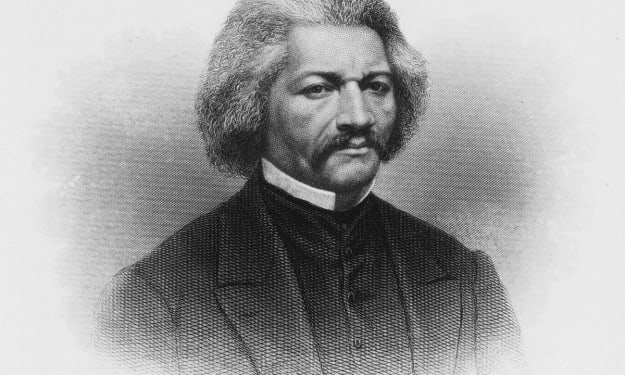
Frederick Douglass: From Slave to Abolitionist Leader
Frederick Douglass was born into slavery in Maryland in 1818, but escaped to freedom and became one of the most prominent anti-slavery activists and civil rights leaders in American history. His journey from slave to respected orator, author and statesman is an inspiring story of courage, perseverance and dedication to the cause of liberty and equality.
By KWAO LEARNER WINFRED3 years ago in History
"Whispers of Fate: The Fatal Train Accident"
Chapter 1: The Commute As the sun began its ascent over the sleepy town of Crestwood, commuters bustled around the local train station. Among them was Sarah, a young woman with dreams of becoming a successful artist. Today was a special day for her. She had just received news that her artwork was going to be featured in a prestigious gallery across the city.
By Ayinla Ridwanullah 3 years ago in History
The Cryptic Code
Have you ever wondered about the hidden meanings behind ancient symbols? How these enigmatic symbols have played a significant role in shaping the beliefs, cultures, and histories of ancient civilizations? Symbols are more than just mere drawings or patterns etched on stone or paper; they possess a language of their own. They have the power to communicate complex ideas and concepts that words often fail to express. In this article, we will embark on a journey to unravel the mysteries of ancient symbols, exploring their significance and the secrets they hold.
By Sera Publishing3 years ago in History
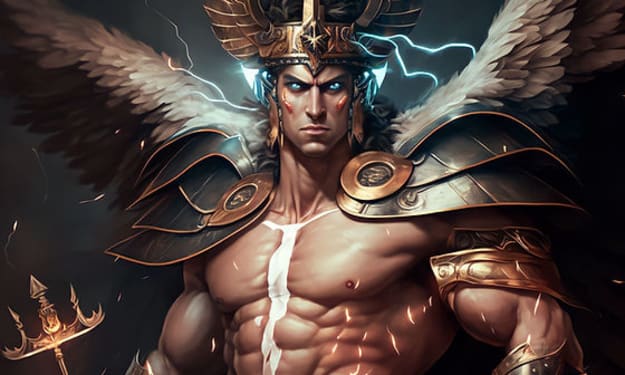
Hermes: The Divine Messenger and Guide
Hermes: The Divine Messenger and Guide Hermes, the multifaceted deity of Greek mythology, holds a unique place among the Olympian gods as the divine messenger, guide of souls, and patron of various domains. In this scripture writing, we will explore the multifaceted character of Hermes and the profound lessons and symbolism his myth imparts. Hermes, known as Mercury in Roman mythology, was the son of Zeus, the king of the gods, and Maia, a beautiful nymph. From his birth, Hermes displayed remarkable agility and quick-wittedness, foreshadowing his future role as the messenger of the gods. 1. **The Messenger's Role:** Hermes served as the divine intermediary, carrying messages and decrees between the gods and mortals. His swiftness, symbolized by his winged sandals and helmet, made him the perfect courier between the realms. 2. **Hermes and Mortals:** Beyond his divine duties, Hermes was also a protector and guide for mortals. He watched over travelers, aided those in need, and guided lost souls to the afterlife. 3. **The God of Boundaries:** Hermes was the guardian of boundaries, both physical and metaphorical. He presided over markers, known as herms, which were placed at crossroads and served as symbols of protection and guidance. Lessons from Hermes The myth of Hermes offers profound insights and life lessons that transcend the boundaries of ancient Greece. 1. **Adaptability:** Hermes's quick thinking and adaptability were central to his character. In our lives, we can learn to navigate challenges with creativity and resourcefulness, embracing change and transformation. 2. **Communication:** As the messenger of the gods, Hermes emphasizes the importance of effective communication. In our relationships and interactions, clear and honest communication is key to understanding and connection. 3. **Guidance and Protection:** Hermes's role as a guide and protector reminds us of the significance of helping others and providing support to those in need. Acts of kindness and guidance can make a significant impact on someone's life. 4. **Boundaries:** Just as Hermes watched over boundaries, setting healthy boundaries in our lives is essential for our well-being. Boundaries protect our physical and emotional spaces, fostering healthy relationships and self-care. The Psychopomp: Guide of Souls In addition to his role as a messenger and protector, Hermes played a crucial role as a psychopomp, guiding souls to the afterlife. This aspect of Hermes's mythology carries profound spiritual symbolism. 1. **Transition and Transformation:** The act of guiding souls from the earthly realm to the afterlife signifies the transition and transformation that occurs in the journey of life. It reminds us that death is not an end but a passage to another existence. 2. **Soul's Journey:** Hermes's role as a psychopomp highlights the idea of a soul's journey through various stages of existence. It encourages contemplation of our own spiritual journey and the growth of the soul. 3. **Reconciliation:** In guiding souls, Hermes reconciled the living and the dead, bridging the gap between two worlds. This symbolizes the potential for reconciliation and healing in our relationships and the world at large. Conclusion Hermes, the divine messenger, guide, and protector, offers a rich tapestry of symbolism and life lessons. His multifaceted character reminds us of the importance of adaptability, communication, guidance, and setting boundaries in our lives. Beyond his earthly attributes, Hermes's role as a psychopomp invites us to reflect on the profound mysteries of life, death, and the spiritual journey. Just as Hermes facilitated the transition of souls, we, too, navigate the ever-changing landscape of existence, seeking transformation, growth, and reconciliation. In Hermes, we find a timeless figure whose mythology continues to inspire and illuminate our understanding of the human experience. As we embrace the lessons and symbolism of Hermes, we embark on a journey of self-discovery and spiritual growth, guided by the wisdom of the divine messenger.
By Raymark Marcos3 years ago in History
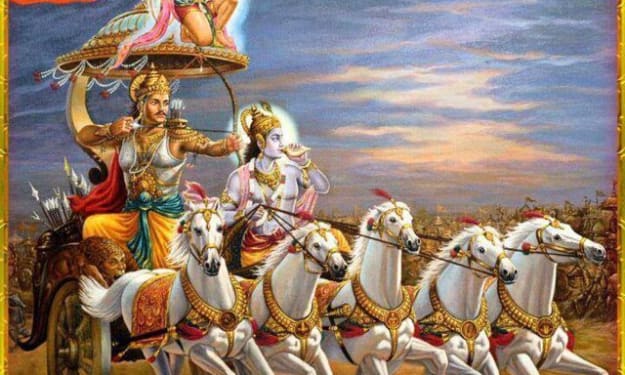
Strength is not enough ! You need great character to win !
In the epic Mahabharatha, Pandavas were sent to forest. Lord Krishna advised them on different activities to win the war. Bheemar was advised to pray Lord Anjaneyar. So, Bheemar went deep inside a mountain and started his penance towards Lord Hanuman.
By Sai Suhasini Ramalingam3 years ago in History
How Was Julius Caesar Able to Defy the Senate?
In the grand tapestry of history, the name Julius Caesar stands as a symbol of audacity and defiance. His ability to challenge the formidable Senate of ancient Rome is a tale etched in the annals of time. Journey with us as we unravel the intricate web of strategies, motives, and consequences that shaped this remarkable chapter in history.
By Exotic History3 years ago in History
Why Did Persia Want to Invade Greece? History Revealed!
The ancient world witnessed many remarkable events, and one of the most intriguing is the Persian invasion of Greece. This article delves deep into the question, "Why did Persia want to invade Greece?" We will explore the historical backdrop, motivations, and outcomes of this significant chapter in history.
By Exotic History3 years ago in History
Uranus "The God of the Heavens"
Uranus: The God of the Heavens and Cosmic Symbolism Uranus, both the seventh planet in our solar system and the god of the heavens in Greek mythology, serves as a captivating bridge between the realms of science and ancient legend. In this scripture writing, we will explore the dual nature of Uranus, delving into its scientific attributes as a celestial body while also uncovering its profound significance as a mythological deity. The Cosmic God: Uranus in Greek Mythology In Greek mythology, Uranus, also known as Ouranos or Οὐρανός in Greek, was the personification of the sky and heavens. As one of the primordial deities, Uranus emerged at the dawn of creation, born from Chaos, the formless void that predates the universe. He was both the father and the embodiment of the sky, while his counterpart, Gaea (Earth), represented the physical world. 1. **Parent of Titans:** Uranus and Gaea became the parents of the Titans, powerful and ancient beings who ruled the universe before the Olympian gods. Uranus's offspring included prominent figures like Cronus, Rhea, and Oceanus. 2. **Overthrown by Cronus:** Uranus's rule over the heavens was characterized by tyranny and cruelty. He imprisoned the Cyclopes and Hecatonchires, monstrous beings, within Gaea's womb. This injustice led to a rebellion by his son Cronus, who overthrew Uranus with a sickle provided by his mother. Uranus's overthrow marked a pivotal moment in Greek mythology and the emergence of a new cosmic order. The Celestial Body: Uranus in Our Solar System Uranus, the planet, was discovered in 1781 by Sir William Herschel, ushering in a new era of astronomical knowledge. As a celestial body, Uranus boasts distinctive features that set it apart from other planets in our solar system. 1. **Axial Tilt:** Uranus possesses an extreme axial tilt, with its rotation axis almost perpendicular to its orbital plane. This unique orientation results in seasons that last for approximately 21 Earth years, leading to prolonged periods of sunlight and darkness at its poles. 2. **Ring System:** Uranus has a system of 13 known rings, each named after characters from Shakespearean plays. While not as prominent as Saturn's rings, Uranus's ring system adds to its cosmic allure. 3. **Composition:** Uranus is classified as an "ice giant" due to its composition, which includes a substantial amount of water, ammonia, and methane ices. Its atmosphere primarily consists of hydrogen and helium, with traces of methane responsible for its blue-green color. Cosmic Symbolism and Reflection The dual nature of Uranus, as both a deity in Greek mythology and a distant celestial body, offers profound symbolism and reflection: 1. **Divine Transformation:** Uranus's overthrow by Cronus represents the cyclical nature of creation, where the old gives way to the new. It signifies the transformative power of time and the inevitability of change in both myth and the cosmos. 2. **Infinite Mysteries:** Uranus, the planet, reminds us of the boundless mysteries of the universe. Its eccentricities, such as its axial tilt and ring system, serve as a testament to the endless wonders waiting to be discovered among the stars. 3. **Unity of Science and Myth:** The study of Uranus bridges the realms of science and mythology, highlighting the interconnectedness of human understanding across different eras and cultures. It reminds us that our quest for knowledge encompasses both the tangible and the mythical. Conclusion Uranus, as the god of the heavens in Greek mythology and the celestial body in our solar system, invites us to explore the multifaceted nature of the cosmos. Its mythology reveals themes of transformation and cosmic order, while its scientific attributes underscore the vastness and complexity of the universe. As we contemplate Uranus, we are reminded of the enduring connection between human curiosity, mythological storytelling, and the ceaseless exploration of the celestial realm.
By Raymark Marcos3 years ago in History
The River of Jordan
The River Jordan, a renowned biblical waterway, holds profound significance in the religious and historical narratives of Judaism and Christianity. This sacred river, which flows through the heart of the Middle East, has witnessed countless pivotal moments in the lives of prophets, leaders, and believers. In this scripture writing, we will explore the spiritual and symbolic significance of the River Jordan in the context of these two faiths. The River Jordan in Jewish Tradition In Jewish tradition, the River Jordan is not merely a geographical feature but a symbol of transition and transformation. It is mentioned numerous times in the Hebrew Bible (Old Testament) and holds a special place in the history of the Jewish people. 1. **Crossing into the Promised Land:** Perhaps the most iconic moment associated with the River Jordan is the crossing into the Promised Land. After wandering in the wilderness for forty years, the Israelites, led by Joshua, stood on the banks of the Jordan River, ready to enter the land of Canaan. Miraculously, as the priests bearing the Ark of the Covenant stepped into the water, the river parted, allowing the Israelites to cross on dry ground. This event symbolizes the fulfillment of God's promise to His people and their transition from a life of wandering to one of abundance. 2. **Elijah's Ascension:** The River Jordan is also the location where the prophet Elijah ascended to heaven in a whirlwind, leaving his mantle to Elisha. This event underscores the river's spiritual significance as a place of spiritual transition and succession. 3. **Naaman's Healing:** In the book of 2 Kings, Naaman, a commander in the Syrian army, is miraculously healed of leprosy by bathing in the Jordan River at the prophet Elisha's command. This narrative emphasizes the river's healing and purifying properties. The River Jordan in Christian Tradition In Christianity, the River Jordan holds a central place in the life and ministry of Jesus Christ. It is not only the site of His baptism but also a symbol of spiritual cleansing and rebirth. 1. **The Baptism of Jesus:** The baptism of Jesus by John the Baptist in the River Jordan is a pivotal moment in Christian theology. As Jesus emerged from the water, the Holy Spirit descended upon Him in the form of a dove, and the voice of God proclaimed, "This is my beloved Son, with whom I am well pleased" (Matthew 3:17). This event marks the beginning of Jesus's public ministry and symbolizes His identification with humanity's need for repentance and spiritual renewal. 2. **Baptism and Spiritual Rebirth:** In Christian tradition, baptism in the River Jordan or other bodies of water is a sacrament signifying the believer's acceptance of Christ, forgiveness of sins, and new birth into the family of God. It is seen as a transition from a life of sin to a life of faith and righteousness. 3. **The Healing of Naaman:** Similar to the Jewish tradition, the story of Naaman's healing in the River Jordan also finds a place in Christian teaching. It serves as a reminder of God's healing power and the importance of faith and obedience. Conclusion The River Jordan, flowing through the heart of the Holy Land, serves as a powerful symbol of transition, purification, and spiritual transformation in both Jewish and Christian traditions. Its waters have borne witness to remarkable events and encounters with the divine, from the crossing into the Promised Land to the baptism of Jesus. The River Jordan continues to draw pilgrims and seekers from around the world who come to experience its spiritual significance and to seek renewal and rebirth in its sacred waters. Just as the river has been a source of hope and transformation for generations, it remains a profound reminder of God's faithfulness and grace for all who journey along its banks.
By Raymark Marcos3 years ago in History