Ancient
Unveiling the Enigma: Las Vegas' Mysterious Encounter with Otherworldly Beings. Content Warning.
In the realm of the unexplained, few events capture the imagination quite like sightings of unidentified objects and encounters with beings beyond our understanding. The recent events in Las Vegas, involving reports of mysterious objects falling from the sky and sightings of enigmatic creatures, have ignited a flurry of speculation and intrigue among both locals and enthusiasts of the unknown.
By Alexander Mensah2 years ago in History
Unveiling the Mysteries of Submerged Civilizations: From Atlantis to Lion City. Content Warning.
In the annals of history, tales of lost civilizations submerged beneath the waves have long captivated the human imagination. From the mythical Atlantis to the ancient Lion City of China, the allure of these sunken cities has fueled centuries of exploration and speculation. However, recent advancements in underwater technology have allowed scientists to delve deeper than ever before, shedding new light on these enigmatic underwater worlds.
By Alexander Mensah2 years ago in History
The Enigmatic Vanishings: Unraveling the Mysteries of National Park Disappearances. Content Warning.
Intro: National parks, those vast expanses of natural beauty and wonder, have long captivated the hearts and minds of adventurers and nature enthusiasts alike. Yet, beyond their breathtaking landscapes and awe-inspiring vistas, lurks a mystery as enigmatic as the wilderness itself. Every year, hundreds of millions of people flock to the United States' 62 protected national parks, seeking solace in nature's embrace. But amid the serene beauty lie tales of inexplicable disappearances, shrouded in mystery and intrigue.
By Alexander Mensah2 years ago in History
Unraveling the Enigma of the Amazon: From Ancient Mysteries to Modern Discoveries. Content Warning.
In the heart of the Amazon rainforest lies a realm of mystery, where secrets of the past intertwine with the challenges of the present. Spanning over 2.6 million square miles, this vast expanse of dense jungle has long captivated explorers, scientists, and adventurers alike. Yet, amidst its towering trees and winding waterways, lies a hidden world waiting to be uncovered.
By Alexander Mensah2 years ago in History
Unraveling the Mind-Blowing Theories of Our Universe. Content Warning.
In the vast expanse of our cosmos, where mysteries swirl and realities bend, scientists continue to push the boundaries of understanding. Each day brings new revelations, unveiling layers of complexity and wonder that challenge our very perceptions of existence. From the inception of the universe to the fabric of reality itself, here are five mind-blowing theories that promise to stretch the limits of your imagination.
By Alexander Mensah2 years ago in History
**Unveiling the Mystery of the Giant Congo Spider: Fact or Fiction?**
Deep within the impenetrable jungles of the Congo Basin, where the sun struggles to breach the thick canopy, a legend lurks in the shadows. It's a tale that has captivated the imaginations of locals for generations—the legend of the J'bar Fofi, the mythical giant spider said to roam the darkest corners of the jungle.
By Alexander Mensah2 years ago in History
Unraveling Maritime Mysteries: Tales of Vanished Voyages and Enigmatic Endings
In the vast expanse of the world's oceans, mysteries abound, from abandoned ships to vanished adventurers. These enigmatic tales captivate our imaginations, sparking curiosity and speculation about what truly happened on those fateful journeys. Among the most intriguing maritime mysteries are those of Mike deGruy, Tom and Eileen Lonigan, Walter Powell, and the ghost yacht C2. These stories of vanished voyages and unexplained disappearances offer glimpses into the unpredictable and often perilous nature of the sea, leaving behind a legacy of fascination and intrigue.
By Alexander Mensah2 years ago in History
"The Legends of Africa: Exploring the Mysteries of Ancient Folklore"
Africa, with its vast landscapes and rich cultural heritage, has long been a source of intrigue and fascination for explorers and scientists alike. Among the myriad tales and legends that weave through its history, some of the most captivating are those of mythical creatures that inhabit its deepest jungles, mysterious lakes, and remote valleys. These stories, passed down through generations, speak of colossal beings that defy conventional understanding, challenging our perceptions of the natural world. Let's embark on a journey through the heart of Africa, where the veil between myth and reality is tantalizingly thin.
By Alexander Mensah2 years ago in History
The Breaking Wheel: A Gruesome Instrument of Medieval Justice . Content Warning.
Throughout history, societies have devised various methods of punishment and execution, often designed to inflict maximum pain and public humiliation. Among these, the breaking wheel, also known as the execution wheel, the Wheel of Catherine, or simply the Wheel, stands out as one of the most brutal and effective means of public execution. Used primarily in Europe from antiquity through the Middle Ages and into the early modern period, the breaking wheel was a gruesome tool for meting out justice by breaking the bones of a criminal or bludgeoning them to death. This blog post explores the historical context, procedure, and cultural significance of the breaking wheel, shedding light on its role in European punitive practices. Historical Context and Origins The breaking wheel's origins can be traced back to antiquity, where variations of this execution method were employed by ancient civilizations, including the Greeks and Romans. However, it became particularly notorious in medieval Europe, where it was used extensively as a form of capital punishment. The breaking wheel was often reserved for severe crimes, such as murder, robbery, and treason, reflecting its function as a tool of extreme retribution and public spectacle. The practice reached its peak during the Middle Ages and continued into the early modern period. The breaking wheel's use was documented in various European countries, including France, Germany, and the Netherlands, each adapting the method to their legal and cultural contexts. The wheel was not merely a tool for execution; it was a symbol of state power and judicial authority, reinforcing societal norms and deterring criminal behavior through its sheer brutality. The Procedure of the Breaking Wheel The procedure of the breaking wheel varied across regions and periods, but the fundamental principles remained consistent. The execution began with the condemned criminal being publicly paraded to the execution site, often a central square or prominent location, to maximize the spectacle's visibility and impact. At the site, the criminal was typically tied to a large wooden wheel. This wheel could either be placed horizontally on a scaffold or vertically on a stand, depending on the local customs. The condemned was bound to the wheel with their limbs spread out, exposing their body to the executioner's blows. The executioner, wielding a heavy iron bar or hammer, would then proceed to methodically break the bones of the criminal. The limbs—arms and legs—were the primary targets, with the executioner delivering crushing blows designed to shatter the bones without causing immediate death. The intent was to inflict prolonged agony and disable the victim, making it impossible for them to move. In some variations, the breaking wheel involved a pre-mortem phase where the criminal was positioned under the wheel, which was then turned, crushing the limbs against a wooden frame beneath it. This method added an additional layer of torment and visual horror. After the limbs were broken, the executioner might deliver a final, fatal blow to the chest or head, or, in some cases, leave the criminal to die from their injuries over time. The broken body was often left on display, either still bound to the wheel or placed on a pole, as a grim reminder to the populace of the consequences of criminal behavior. Cultural and Symbolic Significance The breaking wheel was not merely an instrument of execution; it held significant cultural and symbolic meaning. It served as a powerful deterrent, reinforcing the authority of the state and the seriousness of the crimes it punished. The public nature of the executions was intended to instill fear and demonstrate the consequences of defying societal laws and norms. The breaking wheel also carried religious connotations. Saint Catherine of Alexandria, a Christian martyr, was famously associated with the wheel after reportedly being sentenced to be broken on it for her faith. According to legend, the wheel shattered upon her touch, leading to her execution by beheading instead. This association led to the wheel being known as the Wheel of Catherine, further embedding it in the cultural and religious consciousness of medieval Europe. The Decline of the Breaking Wheel As Europe transitioned into the modern era, the use of the breaking wheel began to decline. Enlightenment ideals and evolving legal philosophies brought about a shift in attitudes towards punishment and justice. The emphasis moved from public spectacle and physical torment to more humane and regulated forms of punishment. The breaking wheel, with its extreme brutality, became increasingly seen as barbaric and incompatible with emerging concepts of human rights and dignity. By the 18th and 19th centuries, the breaking wheel had largely fallen out of use, replaced by more standardized methods of execution such as hanging, beheading, and eventually the guillotine. The last known use of the breaking wheel occurred in the early 19th century, marking the end of its gruesome chapter in European punitive history. Reflections on Human Cruelty and Justice The breaking wheel serves as a stark reminder of the lengths to which societies have gone in the name of justice and deterrence. Its brutality highlights the darker aspects of human nature and the historical context in which such practices were deemed necessary or justified. Reflecting on the use of the breaking wheel allows us to appreciate the progress made in the fields of law and human rights, emphasizing the importance of continued efforts to ensure justice is administered with humanity and respect for individual dignity. Conclusion The breaking wheel stands out as one of history's most brutal methods of public execution, symbolizing the harsh realities of medieval justice. From its origins in antiquity to its decline in the modern era, the wheel's use highlights the evolving nature of societal attitudes towards punishment and the administration of justice. While it serves as a grim reminder of human cruelty, it also underscores the importance of humane and equitable treatment within legal systems. Understanding the history of the breaking wheel helps us appreciate the strides made in human rights and the ongoing need to balance justice with compassion.
By Deji Akomolafe2 years ago in History
The Horrors of Rat Torture: A Dark Chapter in Medieval Punishment. Content Warning.
Throughout history, the methods of torture devised by humans to inflict pain and punishment have often reached horrifying extremes. Among these, rat torture stands out as one of the most gruesome and psychologically terrifying techniques. Used primarily in medieval times, rat torture involved trapping a pot of hungry rats against a victim's stomach and heating the pot, causing the distressed and desperate rats to chew and claw through the victim in an attempt to escape. This blog post explores the historical context, methodology, psychological impact, and ethical considerations of rat torture, shedding light on a particularly dark chapter of human cruelty. Historical Context and Origins Rat torture is often associated with medieval Europe, a period known for its brutal and creative methods of punishment and execution. However, the exact origins of this method are difficult to pinpoint, as rats have been used as tools of torture in various cultures and epochs. The use of rats in torture capitalized on the natural behaviors and instincts of these rodents, turning them into instruments of agony. Medieval Europe, with its labyrinthine legal systems and penchant for public spectacles of punishment, provided a fertile ground for the development of such methods. Torture was not merely a means of extracting confessions or punishing criminals; it was also a tool for instilling fear and maintaining social order. The visceral and horrifying nature of rat torture made it particularly effective in these respects, as it combined physical pain with intense psychological terror. The Methodology of Rat Torture The process of rat torture was both simple and diabolically ingenious. The victim would be restrained, often on a table or against a wall, with their abdomen exposed. A metal cage or pot containing hungry rats would then be placed against the victim's stomach. The open end of the pot would be secured tightly to prevent the rats from escaping outward. Next, the pot would be gradually heated from the outside using hot coals or an open flame. As the temperature inside the pot rose, the rats, driven by panic and discomfort, would seek an escape route. Finding themselves trapped, their natural instinct would be to burrow through the only available direction—the victim's flesh. The rats would begin to chew and claw through the victim's stomach in a frenzied attempt to escape the heat. The victim would experience excruciating pain as the rats gnawed through their flesh, muscles, and internal organs. The sheer terror of being eaten alive from the inside would compound the physical agony, making rat torture one of the most psychologically devastating methods of execution or coercion. Psychological and Physical Impact Rat torture inflicted profound psychological and physical damage on its victims. The mere sight of the rats and the anticipation of what was to come would induce intense fear and anxiety. As the pot was heated and the rats began their frantic escape attempt, the victim would be subjected to unimaginable pain and horror. The physical damage caused by the rats was severe and often fatal. As the rats chewed through the victim's abdomen, they would cause extensive internal injuries, leading to severe bleeding, infection, and ultimately death. Even if the victim survived the initial torture, the resulting wounds and trauma would likely prove fatal without advanced medical intervention, which was rarely available in medieval times. The psychological impact of rat torture extended beyond the immediate victim. Public executions and displays of torture were intended to serve as stark warnings to others, reinforcing the power of the authorities and deterring potential transgressions. The horrifying spectacle of rat torture, with its blend of visceral and psychological torment, was particularly effective in this regard. Ethical Considerations and Human Rights The use of rat torture, like many other forms of medieval punishment, raises significant ethical and human rights concerns. This method of torture exemplifies the extremes of human cruelty and the willingness to inflict severe suffering for the sake of punishment or coercion. It underscores the importance of ethical standards and human rights protections in contemporary justice systems. Today, international human rights organizations and legal frameworks, such as the United Nations Convention Against Torture, work to prevent the use of torture and other cruel, inhuman, or degrading treatment. The history of methods like rat torture serves as a powerful reminder of the necessity of these protections and the need to uphold human dignity. Legacy and Reflection The legacy of rat torture, while grim, offers valuable lessons for modern society. It highlights the capacity for human cruelty and the potential for dehumanization in the pursuit of power and control. By reflecting on such dark chapters of history, we can better appreciate the progress made in the field of human rights and the ongoing efforts to prevent torture and ensure humane treatment for all individuals. The stories of medieval torture methods, including rat torture, also remind us of the importance of historical memory. By acknowledging and understanding the atrocities of the past, we can work to build a more just and compassionate future. It is through this understanding that we can strive to prevent the recurrence of such inhumane practices and ensure that justice systems are grounded in principles of fairness, dignity, and respect for human life. Conclusion Rat torture stands as one of the most horrific methods of punishment ever devised, utilizing the natural behaviors of rats to inflict extreme physical and psychological suffering. Its historical use underscores the brutal lengths to which societies have gone to maintain control and enforce punishment. Today, the memory of such practices serves as a stark reminder of the importance of human rights protections and the need to prevent torture in all its forms. By learning from the past, we can continue to strive towards a world where dignity and justice prevail over cruelty and inhumanity.
By Deji Akomolafe2 years ago in History
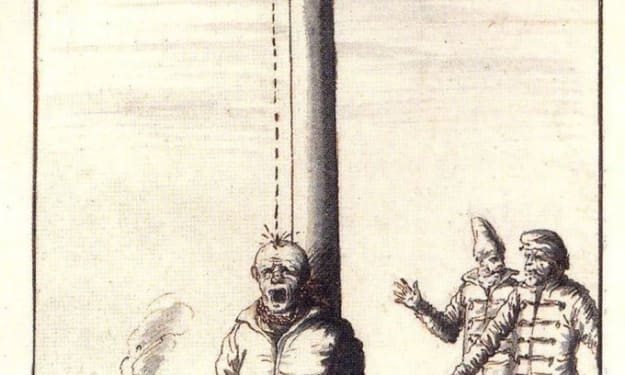
The Psychological Horror of Chinese Water Torture. Content Warning.
Throughout history, various methods of torture have been devised to inflict pain, fear, and psychological breakdowns in victims. Among these methods, Chinese water torture stands out due to its simplicity and the profound psychological torment it caused. Unlike many forms of physical torture that rely on overt violence, Chinese water torture utilized the slow, repetitive, and unpredictable dripping of cold water onto a victim’s forehead. This seemingly benign method was capable of driving victims to a psychotic break in less than twenty-four hours. This blog post explores the historical context, psychological impact, and broader implications of Chinese water torture. Historical Context and Origins The origins of Chinese water torture are somewhat murky, with the practice often attributed to the Chinese, although there is little solid evidence to support this specific geographical attribution. The method is more accurately a misnomer, as it was not exclusively Chinese and likely evolved independently in various cultures that understood the power of psychological manipulation. The term “Chinese water torture” gained popularity in the Western world largely due to its depiction in literature and media, often presented as an exotic and sinister form of punishment. The first documented mention of such a technique appeared in the writings of Hippolytus de Marsiliis, an Italian lawyer who lived during the 16th century. He described an experiment in which water droplets falling on a restrained victim's forehead eventually led to extreme mental distress and breakdown. The Methodology of Chinese Water Torture The procedure of Chinese water torture is deceptively simple but profoundly effective. The victim would be restrained in a chair or strapped down on a table, making any significant movement impossible. A container or drip apparatus would be positioned above the victim’s head, calibrated to release cold water droplets at irregular intervals. The irregularity of the drops is key to the method’s effectiveness, as it prevents the victim from becoming accustomed to a predictable pattern. As the cold water drips continuously onto the same spot on the victim’s forehead, it creates a unique form of sensory deprivation combined with rhythmic but unpredictable stimulation. Over time, the sensation becomes increasingly intolerable. The coldness of the water, combined with its unending impact on a single area, induces severe discomfort and can eventually lead to pain. Psychological Impact and Mechanism The psychological impact of Chinese water torture is rooted in the unpredictability and relentless nature of the dripping water. The human brain is wired to recognize and respond to patterns, and when faced with unpredictable stimuli, it experiences heightened stress and anxiety. In the context of torture, this irregularity becomes a form of psychological warfare. Victims subjected to Chinese water torture report an overwhelming sense of dread and anticipation, knowing that the next drop will come but never knowing exactly when. This uncertainty prevents the mind from adapting or preparing itself, leading to escalating fear and anxiety. The victim's inability to escape or control the situation exacerbates these feelings, creating a sense of helplessness and despair. Over time, this continuous psychological assault can lead to a breakdown. The repetitive nature of the stimulus can drive the brain into a state of hyper-awareness and panic. The pain and fear become all-consuming, often resulting in hallucinations, paranoia, and complete psychological collapse. Victims have been known to experience intense mental distress, and in some cases, the trauma inflicted by such torture could lead to long-term psychological damage. Broader Implications and Reflections Chinese water torture exemplifies the power of psychological torture and the ways in which mental anguish can be as devastating as physical pain. This method demonstrates how relatively simple techniques can produce profound psychological effects, underscoring the human mind's vulnerability to sustained and inescapable stress. The broader implications of such torture methods highlight the importance of understanding and preventing psychological torture in all forms. While physical torture is often more visible and immediately recognized, psychological torture can be equally destructive and more difficult to detect and address. The use of psychological torture techniques raises significant ethical and legal concerns, emphasizing the need for robust protections against all forms of inhumane treatment. Ethical Considerations and Human Rights The use of Chinese water torture, like other forms of torture, is unequivocally condemned by modern human rights standards. The United Nations Convention Against Torture and Other Cruel, Inhuman or Degrading Treatment or Punishment explicitly prohibits torture in all its forms, recognizing the profound and lasting harm it inflicts on victims. Understanding the history and impact of methods like Chinese water torture reinforces the importance of upholding human rights and ensuring that justice systems around the world reject any form of torture. The psychological torment inflicted by such methods serves as a powerful reminder of the need for vigilance and advocacy to protect individuals from cruel and inhumane treatment. Conclusion Chinese water torture, with its relentless and unpredictable dripping of cold water onto a victim’s forehead, represents a chilling example of psychological torture. Its ability to drive victims to a psychotic break within a short period highlights the profound impact that mental anguish can have on the human psyche. The historical context and enduring fascination with this method underscore the importance of understanding and preventing all forms of torture. As we reflect on the dark chapters of torture practices, it is crucial to advocate for human rights and ensure that such inhumane treatments are never tolerated in any society. By learning from the past, we can work towards a future where dignity and humanity are upheld for all.
By Deji Akomolafe2 years ago in History