Ancient
Richard III: The Rediscovery and Reburial of England’s Last Plantagenet King
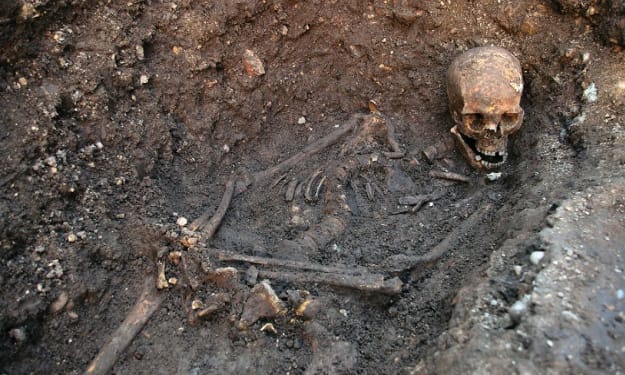
The story of Richard III, the last monarch of the Plantagenet dynasty, is one of historical intrigue, political machinations, and a dramatic rediscovery. Richard's death on August 22, 1485, at the Battle of Bosworth Field marked the end of the Wars of the Roses, a series of dynastic conflicts that shaped medieval England. His body was transported to Greyfriars, Leicester, and unceremoniously buried, eventually being lost to history. Remarkably, over five centuries later, in 2012, his grave was discovered beneath a parking lot in Leicester. This rediscovery, spearheaded by Philippa Langley and the Looking for Richard project, and the subsequent reburial of Richard III at Leicester Cathedral on March 26, 2015, captivated the world and provided a new chapter in the story of this enigmatic king. The Battle of Bosworth Field and Richard's Death The Battle of Bosworth Field was a pivotal moment in English history. Richard III, who had become king in 1483, faced the forces of Henry Tudor, later Henry VII. The battle, fought on August 22, 1485, resulted in a decisive victory for Henry Tudor. Richard's death in this battle marked the end of the Plantagenet dynasty and the beginning of the Tudor era. Accounts of Richard's death describe a chaotic and brutal end. Examination of his skeleton in 2012 revealed that he likely met his demise either from a massive blow to the back of the skull with a halberd or a sword thrust that penetrated through his brain. These injuries align with contemporary accounts of his death, suggesting he was killed in the thick of battle, possibly after being unhorsed and fighting valiantly to the end. The Historical Context and Richard’s Burial Following his death, Richard III's body was taken to Leicester. Historical records indicate that he was buried at the Church of the Greyfriars, a Franciscan friary in the city. However, over time, the exact location of his grave was forgotten, especially after the dissolution of the monasteries in the 16th century when many religious sites were destroyed or repurposed. The site of the friary was built over, and Richard's grave was lost to history. The mystery of Richard's final resting place lingered for centuries, becoming a subject of fascination for historians and enthusiasts of English history. Despite numerous theories, no concrete evidence of his burial site emerged until the early 21st century. The Search and Discovery The search for Richard III's remains began in earnest in August 2012, led by Philippa Langley and the Looking for Richard project. This endeavor was supported by the Richard III Society, an organization dedicated to the study of Richard's life and times. The archaeological excavation was spearheaded by the University of Leicester's Archaeological Services, bringing together a team of experts in various fields. The project began with a seemingly improbable hypothesis: that Richard's remains might lie beneath a modern-day parking lot in Leicester, the site of the former Greyfriars friary. Initial ground-penetrating radar surveys indicated the presence of structures consistent with the layout of the friary, prompting a full-scale excavation. On September 5, 2012, the team uncovered a skeleton with spinal abnormalities and significant battle injuries. These initial findings suggested the remains could indeed belong to Richard III. Further analysis, including comprehensive anthropological and genetic testing, confirmed the identity of the skeleton. DNA analysis matched the remains to known descendants of Richard’s sister, Anne of York, providing definitive proof. Anthropological and Genetic Analysis The examination of Richard III's remains provided a wealth of information about the king's life, death, and physical condition. The skeleton revealed that Richard suffered from scoliosis, a curvature of the spine that would have made one shoulder higher than the other. This physical condition might have contributed to the historical portrayal of Richard as a hunchbacked villain, although contemporary accounts and his own contemporaries likely exaggerated his deformities for political reasons. The battle injuries were extensive and gruesome. The most significant were two fatal injuries to the skull, consistent with a massive blow from a halberd and a penetrating sword wound. Additional injuries included cuts to the ribs and pelvis, indicating a violent and chaotic death. The analysis also showed that Richard had lived with these deformities for many years, suggesting a high tolerance for pain and discomfort. The Reburial at Leicester Cathedral Following the confirmation of the skeleton's identity, plans were made to give Richard III a burial befitting a king. On March 26, 2015, Richard III was reburied at Leicester Cathedral in a solemn and dignified ceremony. The reburial was attended by numerous dignitaries and descendants, including representatives of the British royal family. The ceremony was marked by a series of events celebrating Richard's life and legacy, including a procession through the streets of Leicester and services at various historical sites associated with his life and death. The reinterment site in Leicester Cathedral is now a place of pilgrimage and reflection, attracting visitors from around the world who come to pay their respects to England’s last Plantagenet king. The Legacy of Richard III The rediscovery and reburial of Richard III have sparked renewed interest in his life and reign. Traditionally portrayed as a ruthless and power-hungry villain, modern historians have re-evaluated Richard's legacy, suggesting he may have been a more complex and capable ruler than previously thought. The popular image of Richard III owes much to William Shakespeare's play, which depicted him as a malevolent hunchback responsible for numerous crimes, including the murder of his nephews, the Princes in the Tower. The scientific analysis of his remains and the historical reassessment have contributed to a more nuanced understanding of Richard III. While he remains a controversial figure, his rediscovery has provided a unique opportunity to explore the realities of his life and reign, separate from the myths and propaganda that have long surrounded him. Conclusion: A Remarkable Chapter in English History The rediscovery of Richard III’s remains is a story of historical intrigue, scientific discovery, and human resilience. From the bloody fields of Bosworth to a forgotten grave beneath a parking lot, and finally to a dignified reburial in Leicester Cathedral, Richard's journey is a testament to the enduring fascination with England’s tumultuous past. His story reminds us that history is not just about dates and events but also about the people who lived through them and the enduring legacy they leave behind.
By Deji Akomolafe2 years ago in History
Emily's Metamorphosis
There once was a young woman named Emily who lived in a tiny town. Emily has always battled with her weight, going through ups and downs with various fitness fads and diets. Before she made the decision to tackle weight loss in a more sustainable and balanced manner, her road toward a healthy lifestyle seemed to be an unending struggle.
By weight-loss2 years ago in History
Unveiling the Forgotten Past
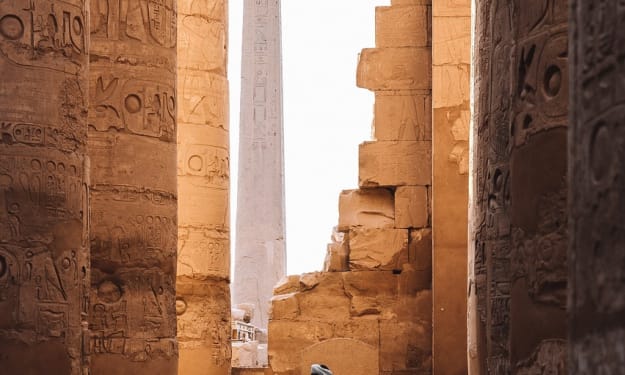
Introduction to the Buried Ancient Egyptian Port In the heart of Egypt's ancient landscape, a remarkable discovery has unearthed a hidden chapter of the past, shedding light on the intricate web of connections that once linked distant civilizations. Buried beneath the sands of time, an ancient Egyptian port has emerged, revealing a trove of artifacts and insights that challenge our understanding of the ancient world.
By Kevin MacELwee2 years ago in History
The Great Pyramid of Giza: Ancient Power Plant or Royal Tomb?
For centuries, the Great Pyramid of Giza has captivated the imagination of people around the world. Traditionally viewed as a tomb for the Pharaoh Khufu, recent theories suggest this ancient wonder may have served a far more advanced purpose. Could the Great Pyramid have actually been an enormous power plant, harnessing energy in ways we're only beginning to understand?
By KWAO LEARNER WINFRED2 years ago in History
Uncovering the Mystery of Alaska's Dark Pyramid
Deep in the heart of Alaska's wilderness, a story persists of a covert underground facility housing an ancient, enigmatic structure known as the "Dark Pyramid." This tale, blending elements of military secrecy, advanced technology, and potential extra-terrestrial involvement, has captivated conspiracy theorists and UFO enthusiasts for decades. But what evidence exists to support these claims, and how much of it is merely speculation?
By KWAO LEARNER WINFRED2 years ago in History
Ancient civilization
The world of art is a vast and fascinating one, with countless masterpieces that have captivated and inspired people throughout the ages. From the intricate sculptures of ancient civilizations to the vibrant paintings of the Renaissance, each era has left its mark on the artistic landscape. But have you ever wondered what the oldest known painting in the world is? What stories and secrets does it hold, and what can it tell us about the early days of human creativity?
By AKANJI ABDULAFEEZ2 years ago in History
A Freeze-In-Time Scene in Bodie, California
Presentation Roosted at a rise of 8,000 feet in the ruined Sierra Nevada piles of California, Bodie remains as an unpleasant demonstration of the transient idea of the Pursuit of happiness. When a clamoring dash for unheard of wealth town overflowing with life, it presently exists as a spooky specter, its structures frozen in time, a shocking gallery of the Wild West. A Dash for unheard of wealth Birth The narrative of Bodie starts during the 1800s when the California Dash for unheard of wealth was going full bore. In 1859, two miners, William S. Bodey and D. D. French, coincidentally found rich gold stores nearby. Expression of the revelation spread like quickly, and inside a couple of brief years, a makeshift camp had changed into a flourishing city. At its pinnacle, Bodie bragged a populace more than 10,000, with cantinas, houses of ill-repute, places of worship, and schools competing for spaceLife in Bodie Life in Bodie was however unforgiving as it seemed to be elating. The high-elevation environment, with its cold winters and searing summers, tried the perseverance of its occupants. The steady danger of fire, exacerbated by wooden structures and dry circumstances, was a consistent concern. However, notwithstanding these difficulties, the commitment of gold drew individuals from varying backgrounds. The town was a microcosm of society, with a mind boggling blend of reputable residents and criminals. Cantinas and betting corridors flourished, taking care of the diggers' hunger for fervor and fortune. Notwithstanding, there was likewise a feeling of local area, with occupants banding together to construct schools, holy places, and other fundamental institutions.Decline and Surrender As the gold veins dwindled, so too did Bodie's fortunes. By the 1920s, the populace had dwindled to a simple small bunch. A fire in 1932 managed a last blow, obliterating large numbers of the excess structures. With the town's monetary heart eliminated, occupants deserted their homes and organizations, abandoning a phantom town frozen in time. Safeguarding and The travel industry During the twentieth 100 years, Bodie was rediscovered and perceived for its verifiable importance. In 1962, it was assigned a California State Memorable Park, and endeavors were made to protect the town's extraordinary person. The "frozen in time" way to deal with conservation has been embraced, permitting guests to encounter Bodie as it seemed when it was deserted. Today, Bodie is a famous vacationer location, drawing countless guests every year. Guests can meander through the abandoned roads, investigating deserted homes, shops, and cantinas. The town's graveyard, with its endured gravestones, offers an impactful sign of the day to day routines once experienced inside its boundaries.The Tormenting Excellence of Bodie Bodie's charm lies in its capacity to ship guests to a past time. The rotting structures, embellished with layers of residue and spray painting, make an unpleasant air. The town's confinement, encompassed by the tremendous scope of the Sierra Nevada, adds to its persona. It is where the at various times impact, offering a remarkable and extraordinary experience.
By Mohamed sha2 years ago in History
THE RICHEST MAN IN HISTORY . AI-Generated.
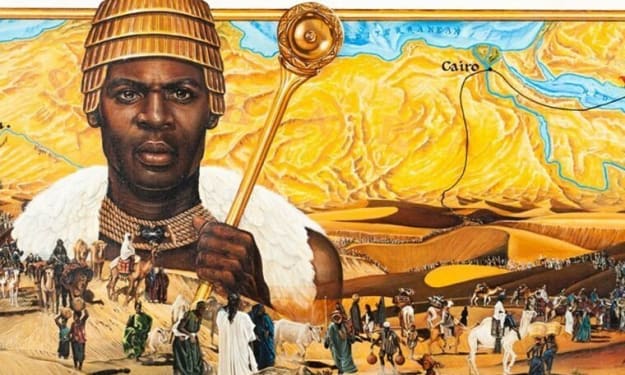
## The Richest Person in History: A Deep Dive into Wealth and Influence ### Introduction The concept of wealth has fascinated humanity throughout history. While today's billionaires like Elon Musk and Bernard Arnault often dominate headlines, they are far from the wealthiest individuals in history when adjusted for inflation and historical context. This title is often attributed to figures like Mansa Musa, the 14th-century emperor of the Mali Empire, whose wealth was so immense it defies modern comprehension. This article explores the life, achievements, and influence of the richest person in history, offering a comprehensive look at the impact of such monumental wealth. ### Mansa Musa: The Wealthiest of All Time #### Early Life and Ascension to Power Mansa Musa, also known as Musa I of Mali, was born around 1280 and came to power in 1312. He ascended to the throne following the abdication of his predecessor, Mansa Abu-Bakr II, who embarked on a voyage across the Atlantic Ocean. Musa inherited an empire that was already prosperous, but under his reign, it reached unprecedented levels of wealth and influence. #### The Mali Empire At its height, the Mali Empire encompassed a vast region of West Africa, including parts of modern-day Mali, Senegal, Gambia, Guinea, Niger, Nigeria, Chad, and Mauritania. The empire's wealth was primarily derived from its abundant natural resources, particularly gold and salt. Mali controlled nearly half of the Old World's gold supply, making it the leading economic power of its time. #### Pilgrimage to Mecca Mansa Musa's pilgrimage to Mecca in 1324 is one of the most legendary events in history. His caravan reportedly included 60,000 men, including 12,000 slaves who each carried four pounds of gold bars, and 80 camels carrying between 50 and 300 pounds of gold dust each. The sheer scale of this journey and the lavish distribution of gold along the way significantly impacted the economies of the regions he visited, particularly in Cairo, Medina, and Mecca. Musa's generosity caused gold to devalue in Cairo for over a decade. ### Wealth and Legacy #### Net Worth Estimating Mansa Musa's net worth in modern terms is challenging due to the differences in economies and currencies. However, some estimates place his wealth in the range of $400 billion to $500 billion in today's dollars, making him the richest person in history. #### Contributions to Education and Culture Mansa Musa's reign was marked by significant cultural and educational advancements. He transformed Timbuktu into a thriving center of learning and culture. The city became home to the University of Sankore, one of the earliest universities in the world, attracting scholars from across Africa and the Middle East. Musa's patronage of education and the arts helped cement the Mali Empire's legacy as a beacon of knowledge and culture. ### Influence and Impact #### Economic Influence Mansa Musa's wealth had a profound impact on the economies of the regions he interacted with. His distribution of gold during his pilgrimage caused temporary inflation but also stimulated economic activity. His investments in infrastructure, such as building mosques, libraries, and universities, fostered economic growth and cultural development in Mali and beyond. #### Political and Social Influence Mansa Musa's pilgrimage not only showcased his immense wealth but also established Mali as a significant power in the Islamic world. His interactions with other Muslim leaders and scholars strengthened diplomatic ties and facilitated cultural exchanges. The introduction of Islamic architecture and education in Mali under Musa's reign had long-lasting effects on the region's cultural and religious landscape. ### Comparisons to Other Historical Figures #### Augustus Caesar Another contender for the title of the richest person in history is Augustus Caesar, the first Roman emperor. Augustus' wealth was derived from his control over the vast resources of the Roman Empire. Some estimates place his net worth at around $4.6 trillion in today's dollars, though this figure is highly speculative and based on the valuation of the entire Roman Empire's assets. #### John D. Rockefeller In more recent history, John D. Rockefeller, the American industrialist and founder of Standard Oil, is often cited as one of the wealthiest individuals. At his peak, Rockefeller's fortune accounted for about 1.5% of the U.S. economy, translating to around $400 billion in today's dollars. His influence extended beyond his wealth, as he played a crucial role in shaping the modern petroleum industry and philanthropy. ### Challenges and Controversies #### Mansa Musa Mansa Musa's wealth and generosity were not without their challenges. The devaluation of gold in regions he visited highlighted the potential negative effects of sudden wealth influxes on local economies. Additionally, maintaining control over a vast and diverse empire posed significant administrative challenges, though Musa's effective governance largely mitigated these issues. #### Augustus Caesar Augustus faced numerous challenges, including political rivalries and maintaining control over a vast empire. His wealth and power were built on the back of military conquests and political maneuvering, which often led to social unrest and conflict. Despite these challenges, Augustus' reign marked the beginning of a long period of relative peace and prosperity known as the Pax Romana. #### John D. Rockefeller Rockefeller's business practices, particularly the monopolistic tactics of Standard Oil, were highly controversial. His company's dominance led to public outcry and legal battles, culminating in the 1911 Supreme Court decision to break up Standard Oil into smaller companies. Despite these controversies, Rockefeller's legacy as a philanthropist remains significant, with his foundations funding numerous educational and medical advancements. ### Conclusion The title of the richest person in history is not merely a measure of financial success but also a reflection of influence, vision, and legacy. Mansa Musa, with his unparalleled wealth and contributions to education and culture, stands out as a monumental figure in history. His reign illustrates the profound impact that immense wealth can have on societies and economies, both positively and negatively. Comparing Musa to other historical figures like Augustus Caesar and John D. Rockefeller provides a broader perspective on the nature of wealth and power across different eras. Each of these individuals leveraged their fortunes to shape their respective worlds, leaving legacies that continue to influence modern society. The stories of these extraordinary individuals remind us that true wealth extends beyond mere financial assets. It encompasses the ability to inspire, innovate, and create lasting change. As we continue to study and learn from their lives, we gain valuable insights into the dynamics of wealth, power, and human achievement throughout history.
By Mbeha maliwa 2 years ago in History
The Lost Continent of Sahul
Discovery and Ancient Geography Around 70,000 years ago, during the last Ice Age, a vast landmass known as Sahul existed in the southwestern Pacific Ocean. This supercontinent connected modern-day Australia, New Guinea, Tasmania, and the Aru Islands, creating a single, enormous landmass. Picture lush tropical rainforests surrounded by majestic mountains, with peaks in the New Guinea Highlands reaching over 13,000 feet. Sahul was a haven for unique wildlife, predominantly marsupials. Unlike today's koalas and kangaroos, Sahul hosted a diverse array of creatures, including the massive Diprotodon, the formidable Thylacoleo, and the giant Megalania, a lizard far larger than any in existence today. The rest of the world was dominated by placental mammals like wolves, elephants, and humans, while Sahul’s mammals were mainly bats and rodents. Different regions, such as the Torres Strait, Arafura, and Carpentaria, featured hot savannahs, dry forests, and temperate coastal forests, resembling modern Australia's varied landscapes.
By Purba Biswas2 years ago in History
England's famous prophet legend: Mother Shipton
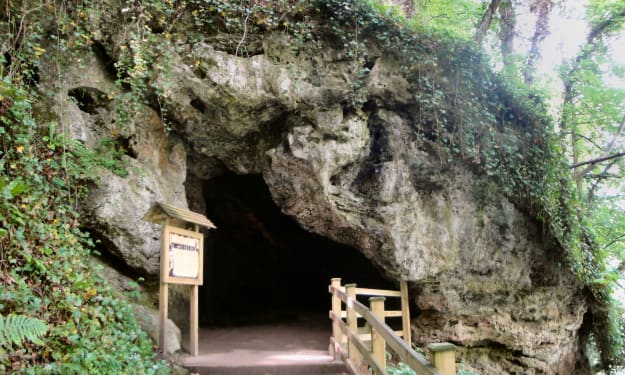
There is a myth of an ancient prophetess; some prophecies have come true, and others were only a prediction that, like many predictions throughout history, never came to fruition. However, later it came to tell that the prophet did not come true because another, not the true prophet, said it—a story.
By sara burdick2 years ago in History
Scientists Finally Explain How Pyramids Were Built
Consider the Great Pyramids to be one of the original Seven Wonders of the World and the only one that remains standing today. However, in ancient Egypt, it was believed that kings were chosen by the gods to act as their intermediaries in the afterlife, and that they would eventually become gods themselves. The pyramid complex was constructed to ensure that the king had everything they would require in the afterlife, and it included a pyramid, a palace, and temples. The king's tomb, which was located inside the pyramid, was filled with numerous items, including food, furniture, and gold vessels. some weren't finished though since the construction took a while and not every Pharaoh lived long enough to see the end of the construction and now let's talk about the construction itself the biggest of the Pyramids of Giza is as tall as a 40 story building so how on Earth did they manage to build a structure that massive 5,000 years ago long before machines and other equipment appeared well let's figure it out so pharoh k Fu ascended the throne around 2575 BCE and his Architects started the construction of the oldest and biggest of the Pyramids of Giza he figured that over 2 million Limestone blocks had to be used to build the Pyramid each weighing around 2 and 1/2 tons around the weight of a rhino the architect wanted to finish the construction in 20 years to make it possible a stone had to be carried and pushed into place every 4 minutes 24 hours a day 7 days a week and 365 days a year except leap year so obviously a lot of workers were needed to make it happen many believe that it was enslaved people who worked at the pyramids construction site but that's not true workers came from all over Egypt to contribute to the project all in all around 25,000 of them the Egyptians were doing all kinds of work starting with manual labor and crafting tools to administrative work they all worked around 10 hours a day they were housed and wellfed and they were overall living a more comfortable life than an average Egyptian could afford at that time supposedly the builders lived in a nearby temporary City and were a highly organized Community with a strong leader the pyramids seem to be designed to align with the points on a compass and their sides symbolized the Rays of the Sun but back at that time there were no compasses ancient Egyptians figured out out the directions themselves and with amazing Precision to align the pyramids they used two constellations the construction site was arranged on the West Bank of the Nile River this also had a symbolic meaning just like the sun sets in the West Life sets in the west as well the second Pyramid of Giza was for kufu son Pharaoh kafer it's a bit smaller but this one has the famous noseless statue of the Sphinx of course originally it had a nose I would tell you what happened to it but it's still a mystery and no one knows for sure sphinxes have the body of a lion and the head of a human they were considered guardians of important areas this famous Sphinx also pronounced Sphinx has the head of pharaoh Coffer and is guarding his pyramid facing the sunrise the Sphinx is one of the biggest and oldest statues in the world originally it not only had a nose but was also painted scientists have discovered traces of the red color of its face so most likely the Sphinx was painted red there are also remains of yellow and blue color on its body the statue definitely wasn't boring till around 1800 the Sphinx was buried up to its shoulders until an adventurer with a team of 160 men dug it out but let's get back to the construction the workers of course needed stone blocks there were two main places where people could get these Stones One source was near the building site, but the fossil-lined yellow stone was only fit for the inside of the pyramid; the limestone blocks for the outside had to be transported eight miles distant on 30-ton sleds, and it didn't seem too difficult to pull them. cutting off a block of limestone wasn't the biggest challenge when it was soft and could be split relatively easily, but after being exposed to the air, limestone hardens, so the most difficult part was shaping the blocks. This step was crucial because the slightest errors could cause the entire pyramid to collapse. The sand mixed with the appropriate amount of water was fairly slick, and ten people could move a sled even with a rock weighing so much.
By Oluwatosin Adebayo2 years ago in History