Ancient
Pyramid Power: Unveiling the Mysteries of Ancient Egypt's Monumental Marvels
The Great Pyramids of Giza stand as enduring monuments to human ingenuity and ambition, captivating our imagination for millennia. As the sole survivor of the original Seven Wonders of the Ancient World, these colossal structures continue to mystify and inspire. But the story of Egypt's pyramids is far richer and more complex than many realize.
By Daisy Kebaso2 years ago in History
Who is King James I?. Content Warning.
Knowledge is Stronger than Belief The first text presented here, written by King James I of England, is a wide-ranging discussion of witchcraft, necromancy, possession, demons, werewolves, fairies, and ghosts, in a Socratic dialogue. This book talks about how women were demons and witches, killing thousands, including his Mother. The second text is a sensational historical account of Scottish witch persecution and is one of the sources cited by Margaret Murray. Precious care was taken to transcribe these historical documents letter for letter, without any attempt at correcting or modernizing spelling. These documents exemplify the convoluted intellectual rationalizations used to justify the brutal witch hunts. Third, he was a slave trader, was bi-sexual, and had lots of lovers.
By Greg Jackson2 years ago in History
Gen. Douglas MacArthur fifty-centavo coin in the modern era?
Coin or crypto? How so. Just like cryptocurrencies, silver and gold coins value pricing demands movement high or low in the global market today. Both are given for good investment in future reference, good payment for tuition fees, meeting high-profile personalities, surprising discoveries on rare coins for its interesting designs, trading or swapping and a hobby to relieve.
By Shainah Limpiado2 years ago in History
Keto Diet Plan for Weight Loss
If you've been exploring weight loss options, you've likely stumbled upon the keto diet. But what exactly is it? The keto diet, short for ketogenic diet, is a high-fat, low-carbohydrate eating plan designed to shift your body's metabolism away from carbohydrates and towards fats. This shift helps your body enter a state known as ketosis, where it burns fat for fuel instead of glucose.
By Koka nssar2 years ago in History
Kibuuka Omumbaale
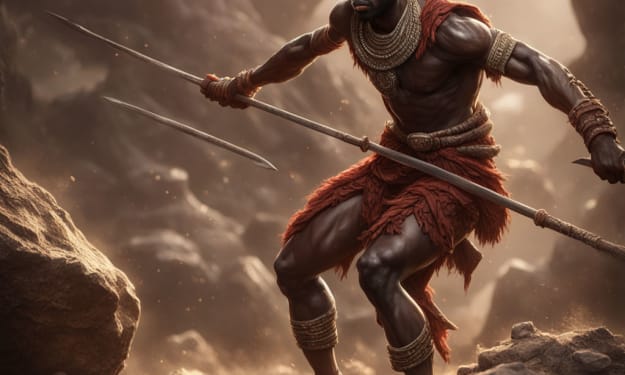
In the kingdom of Buganda, amidst its lush landscapes and rolling hills, Kibuka Omumbaale reigned as the revered Divine Warrior God. Known for his extraordinary ability to soar high above the clouds, Kibuka was not merely a protector but also a symbol of strength and resilience for his people in times of adversity. His legend unfolded against the backdrop of longstanding rivalries, particularly with the neighboring kingdom of Bunyoro, where political tensions often simmered beneath the surface. Buganda flourished under Kibuka's vigilant watch. From his celestial perch, he safeguarded his homeland with unwavering dedication and strategic acumen. His ability to fly endowed him with a unique advantage, allowing him to survey Buganda's borders and anticipate threats before they materialized. Buganda's warriors revered Kibuka Omumbaale not only for his divine powers but also for his wisdom in matters of defense and diplomacy. Amidst the tranquility of Buganda's verdant landscapes, a mysterious woman arrived. Her beauty was mesmerizing, and her presence seemed to cast a spell over Kibuka. Little did he know, she was an agent from Bunyoro, tasked with infiltrating Buganda's inner circle to gather intelligence and exploit any vulnerabilities she discovered. With cunning and charm, she insinuated herself into Kibuka's confidence, extracting information that would prove invaluable to Bunyoro's military strategists. As political tensions between Buganda and Bunyoro reached a boiling point, the stage was set for conflict. Kibuka, ever vigilant, ascended into the skies to assess Buganda's defenses and prepare for the impending storm. Unbeknownst to him, Bunyoro had been meticulously planning its moves, armed with the insights provided by the mysterious woman. When war finally erupted, Buganda found itself facing a foe that seemed to anticipate every move. Bunyoro's strategy was devastatingly effective. As Buganda's warriors braced themselves for battle, they were met with a barrage of attacks that seemed to come from all directions. Arrows flew with deadly accuracy, disrupting Buganda's formations and sowing confusion among its ranks. Despite Kibuka's valiant efforts to rally his forces and mount a defense, the kingdom found itself overwhelmed by an adversary that had exploited its vulnerabilities with ruthless precision. In the midst of the chaos, Kibuka realized the extent of the betrayal that had led to Buganda's downfall. His trust in the mysterious woman had been misplaced, and now his people paid the price. With a heavy heart, he fought bravely to stem the tide of defeat, but ultimately, Buganda suffered a bitter loss that would echo through its history for generations to come. The aftermath of the war brought introspection and mourning to Buganda. Kibuka Omumbaale m, once revered as the invincible protector of his people, now grappled with the consequences of his misplaced trust. His story became a cautionary tale, a stark reminder of the dangers of betrayal and the importance of vigilance in times of peace and war alike. Despite the bitter defeat, Kibuka's legacy endured. His courage and sacrifice remained a beacon of hope and resilience for the people of Buganda, inspiring future generations to uphold the values of loyalty, courage, and vigilance in the face of adversity. His tale, though marked by tragedy, served as a testament to the enduring spirit of a kingdom that rose from the ashes of defeat to forge a path toward a brighter future. Thus, the legend of Kibuka Omumbaale , the Divine Warrior of Buganda, became etched in the annals of history—a narrative of bravery, betrayal, and the enduring lessons of trust and resilience amidst the tumultuous currents of power and ambition in ancient Africa. His story continues to resonate, a testament to the indomitable spirit of a people who refused to be defined by defeantheK .
By Grayson crayonz 2 years ago in History
Unveiling the Ancient Marvel
Introduction to the ancient temple and theater discovery In a remarkable archaeological find, researchers have uncovered an ancient temple and theater complex in Peru that predates the iconic Machu Picchu by a staggering 3,500 years. This astonishing discovery has shed new light on the advanced civilizations that once thrived in the region, challenging our understanding of ancient Andean cultures.
By Kevin MacELwee2 years ago in History
Mysterious Event: The body of Xin zhui . Content Warning. AI-Generated.
SXin Zhui, also known as Lady Dai, is a famous figure from ancient China. Her body was discovered remarkably well-preserved in 1971 in a tomb at Mawangdui in Changsha, Hunan Province. She lived during the Western Han dynasty (206 BCE – 8 CE) and was the wife of a nobleman.
By DORCAS TALES 2 years ago in History
The Enigma of Napoleon's Death Mask: A Legacy Cast in Bronze
In the annals of history, few figures loom as large as Napoleon Bonaparte. His life, marked by extraordinary military prowess and political acumen, has been the subject of countless books, films, and scholarly studies. Yet, even in death, Napoleon continues to captivate the imagination. One of the most intriguing artifacts associated with his legacy is his death mask—a bronze cast that embodies the enigmatic aura of the fallen emperor. This mask, created just hours after his demise, encapsulates the blend of tradition, mystery, and controversy that surrounds its origins and subsequent history. The Tradition of Death Masks The practice of creating death masks dates back to ancient times, serving as a means to preserve the visage of the deceased. By the 19th century, it had become customary to cast the death masks of prominent leaders and notable figures. These masks were not merely memorials but also served as historical records, capturing the facial features of the deceased with a level of detail that no portrait or painting could achieve. For Napoleon, whose life was steeped in grandeur and historical significance, it was almost inevitable that a death mask would be created. Following his death on May 5, 1821, on the remote island of Saint Helena, a mixture of wax or plaster was applied to his face. This was done approximately 40 hours after his death, ensuring that the features were accurately preserved before decomposition could alter his appearance. The Creation of the Mask The process of making Napoleon’s death mask was intricate and required considerable skill. Initially, a layer of wax or plaster was carefully applied to his face. Once it solidified, it was gently removed, capturing an impression of his features. This impression, or mold, served as the template for subsequent casts. The original mold created from Napoleon’s face holds a particular mystique. It is from this mold that bronze casts, and other replicas were made, allowing for widespread distribution and enduring the legacy of the emperor’s likeness. However, the fate of this original mold is shrouded in mystery and controversy, adding an element of intrigue to the story. The Mystery of the Original Cast The origins and current location of the original mold used to create Napoleon's death mask are subjects of ongoing debate. Various accounts provide conflicting information about who made the original cast and what happened to it afterward. One prominent figure associated with the creation of the mask is Dr. Francis Burton, a British surgeon who attended to Napoleon during his final days. According to some sources, Dr. Burton was responsible for making the original mold. However, others argue that it was Dr. Antommarchi, Napoleon's personal physician, who took on this task. This discrepancy has fueled speculation and debate among historians and enthusiasts. Further complicating matters is the question of what became of the original mold after it was created. Some accounts suggest that it was taken to England, while others claim it remained in France. There are also stories of the mold being lost, stolen, or destroyed, each adding a layer of intrigue to the artifact's history. The Bronze Casts and Their Distribution Despite the uncertainty surrounding the original mold, it is known that several bronze casts of Napoleon's death mask were made. These casts have found their way into museums, private collections, and historical institutions around the world, each serving as a tangible link to the emperor's final moments. One of the most well-known bronze casts is housed in the Musée de l'Armée in Paris, where it is displayed alongside other artifacts from Napoleon’s life. This cast, like others, was made by pouring molten bronze into a mold created from the original impression. The result is a highly detailed and enduring representation of Napoleon's face, preserved for posterity. Other notable casts can be found in institutions such as the British Museum and the Smithsonian Institution, each contributing to the global fascination with Napoleon and his legacy. These casts, while originating from the same initial mold, have their own unique stories and paths of acquisition, further adding to the mystique surrounding the death mask. Controversies and Debates The controversy surrounding Napoleon’s death mask extends beyond the mystery of the original mold. Debates have arisen regarding the authenticity of certain casts, with some historians and collectors questioning whether specific masks are genuine or modern reproductions. These debates are fueled by the proliferation of replicas made over the years, some of which have been passed off as originals. Moreover, the significance of the death mask itself has been a topic of discussion. For some, the mask is a powerful symbol of Napoleon's enduring legacy, capturing his visage at the moment of his passing. For others, it is a morbid reminder of the emperor's mortality and the transient nature of power and glory. The Legacy of the Mask Despite the mysteries and controversies, Napoleon's death mask remains a poignant and powerful artifact. It serves as a bridge between the past and present, offering a direct and intimate connection to one of history's most iconic figures. The mask’s creation, shrouded in mystery and intrigue, mirrors the complexities of Napoleon's own life—a life marked by ambition, conquest, and an enduring legacy. As we gaze upon the bronze cast of Napoleon's face, we are reminded of the emperor's extraordinary journey and the indelible mark he left on history. The mask, with its finely detailed features, allows us to see Napoleon not as a distant historical figure, but as a man whose life and death continue to resonate through the ages.
By Deji Akomolafe2 years ago in History