Ancient
Mr. Nostradamus
Nostradamus was born in 1503 in the southern region of France to a family that may have had Jewish roots. His father, Jaume or Jacques de Nostredame, worked as a notary, while his mother, Reyniére, was a descendant of a well-known physician. The Nostredame family encountered pressure to convert to Christianity due to the persecution of Jewish individuals in France. Nostradamus was influenced by Kaballah, which had a strong presence in Jewish communities in Spain and southern France during the twelfth and thirteenth centuries. Scholars have observed the impact of Kaballah on Nostradamus's later writings. In his efforts to combat the plague, Michel used 'rose pills' and implemented sanitation practices. The 'rose pills' consisted of a mixture of rose petals, sawdust from green cypress trees, cloves, calamus, and lign-aloes. Additionally, he promoted sanitation measures such as the prompt removal and burial of bodies, maintaining clean surfaces, and ensuring adequate ventilation. Accused of heresy in France, Nostradamus traveled to Italy and established connections in the printing industry. He eventually settled in Salon-de-Provence, married a wealthy widow, and embarked on his writing career by releasing his first publication, an almanac featuring astrological forecasts.
By Isaac Ekow Anyidoho2 years ago in History
Here come the Jews
The name ISRAEL first appeared on the Merneptah Stele, which documented Pharaoh Merneptah's triumph over the Libyan invaders and a small campaign in Canaan. The inscription revealed Israel as a well-established neighbor and a threat to Egypt's power. It is a historical misconception that Hebrew slaves lived in Egypt; they resided in the northern Delta area. Prompted by Yahweh, Moses asked the pharaoh to release the Israelites, demonstrating his power through miracles. Moses destroyed the Golden Calf for breaking the Commandments. The origins of the Israelites can be traced back to ancestors Jacob and Esau, with encounters with extraterrestrial beings. The cult of Yahweh, originally a minor deity in Canaan, has a name shrouded in mystery, speculated to be of non-terrestrial origin. The cult evolved from being a minor deity to being revered as the Only God in the Canaanite pantheon. Early Jewish history shares similarities with other ancient myths and the establishment of social structure. The Babylonian creation myth is similar to Genesis 1, emphasizing creation from water, light, and divine order. The early Jews organized in tribes led by a patriarch, prioritizing family and tribe structure before settling in Canaan.
By Isaac Ekow Anyidoho2 years ago in History
Decoding An Ancient Relic
An Extraordinary Find Amidst Antiquity's Remnants Deep within the remnants of Alalah, an ancient Anatolian city that flourished during the Bronze Age, archaeologists have chanced upon a remarkable discovery – a diminutive clay tablet etched with cuneiform inscriptions. This unassuming artifact, measuring a mere 4.2 centimeters by 3.5 centimeters and weighing a scant 28 grams, has ignited a wave of excitement among scholars and historians alike, promising to unveil invaluable insights into the economic and administrative intricacies of a bygone era.
By Kevin MacELwee2 years ago in History
The Evolution of Chess
The scene is set: attacking infantry presses forward, their elephants having breached the defensive lines. The king, desperate to escape, finds himself cornered by enemy cavalry. Escape is impossible. Yet this isn’t a real battlefield– nor is it merely a game. This tableau reflects the timeless nature of chess, a game that has transcended centuries and cultures, embodying military strategy, human affairs, and intellectual prowess.
By Horace Wasmore2 years ago in History
Samurai Nobility
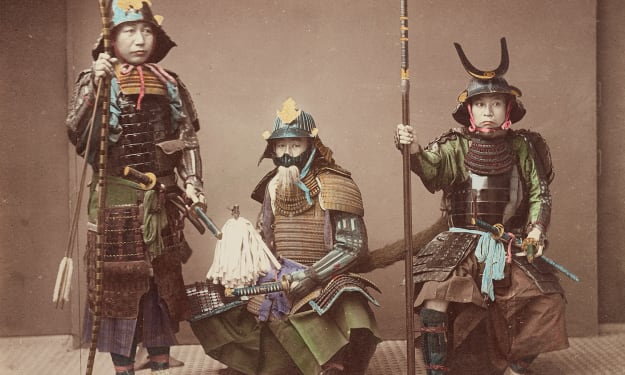
The samurai of feudal Japan have long intrigued and inspired people worldwide. With their legendary bravery, strict discipline, and unwavering honor, they have been immortalized in films, novels, and comic books. Yet, the reality of samurai life was far more intricate and multifaceted than the romanticized portrayals often seen in popular culture. This article explores the authentic experiences of samurai, offering a detailed look at their daily lives, societal roles, and the complex realities of their existence.
By Horace Wasmore2 years ago in History
The Samurai
When most people think of samurai, they envision stoic warriors epitomizing honor, integrity, and martial prowess. While this image is captivating, it oversimplifies the complex reality of the samurai’s role in Japanese society. To understand the samurai’s true legacy, we must explore their origins, rise to power, and evolution through different historical periods.
By Horace Wasmore2 years ago in History
The Black Samurai Yasuke
In the late 16th century, Japan was a land of intense conflict and political upheaval. Amidst this chaos, an extraordinary individual emerged—a mysterious black man named Yasuke, who would become the first foreigner to achieve the esteemed status of samurai. Yasuke's journey from obscurity to legend is a remarkable tale of courage, intrigue, and cultural fusion.
By Horace Wasmore2 years ago in History
The Mongol Invasions of the West (1240-1288)
The Mongols established the largest contiguous land Empire in the 13th century. Genghis Khan brought together seven Mongol tribes and deployed armies in various directions. Mongol forces advanced into Western Asia and Europe, encountering Latin Christendom and the Muslim World. Mongol coordination and raids in Poland were carried out by Baidar and Orda, who worked alongside Subotai and Batu for Mongol operations. Baidar and Orda divided their forces into smaller raiding parties to sow chaos and led the Vanguard to Krakov. The Mongols emerged victorious over the Polish and their allies at the Battle of Legnica. The intense fighting resulted in heavy losses for the Christian Knights, and the Mongols utilized their swift cavalry to target the disorganized Polish infantry, leading to a devastating defeat. The Mongols claimed trophies from the battle, such as cutting off the ears of the fallen and sending them to their leaders. The Mongols displayed no mercy, capturing and executing Duke Henry, and showcasing his head on a lance as a frightening demonstration of their power, which struck fear into the citizens of Legnica. The Polish forces suffered significant losses, including the Duke's headless body, which was only identifiable by the extra toe on his left foot. The Mongol invasion of Hungary and Poland resulted in the devastation and depopulation of Silesian and Moravian towns. Despite Mongol losses in Hungary and Poland, the enduring legend of the Battle of Legnica highlights the remarkable coordination and securing of the Southern flank by Mongol forces.
By Isaac Ekow Anyidoho2 years ago in History
The Esoteric tradition
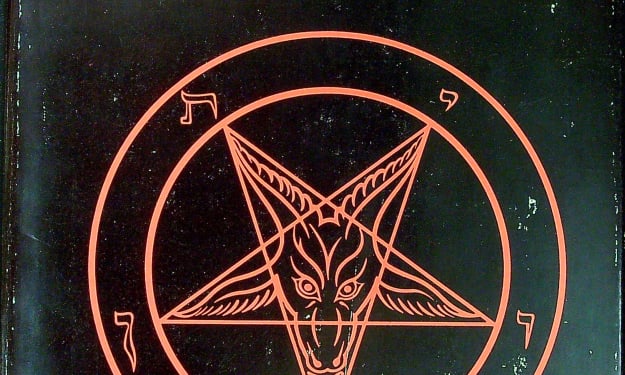
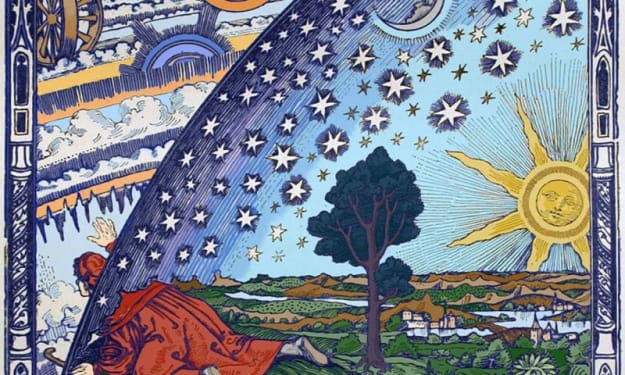
Unveiling Hidden Wisdom Esoteric traditions have drawn humanity's interest for centuries and are insightful about the mysteries behind life that are beyond ordinary reality. These traditions, shrouded in mystique, deal with internal knowledge and spiritual enlightenment. They encompass a myriad of diverse practices and concepts, all directed at an exploration of the hidden aspects of truth. Recently, these esoteric teachings have gained more interest because people have begun to seek an understanding of their potential effects on personal and collective well-being.
By Ann lisentra 2 years ago in History