Ancient
The Most Important Invention Of The Middle Ages
An investigation into the brilliance of the printing press. Constructing a medieval printing press to explore the historical and technological advancements of the 15th century. Grasping the effectiveness and significance of movable type in the printing mechanism. Gutenberg's invention of the printing press transformed both technology and culture. This innovation facilitated the mass production of books, disseminating new ideas throughout Europe. The Gutenberg Bible marked the dawn of a new information era in Europe. Mastering the use of a chisel for carving is essential; utilizing approximately one-third of the chisel enhances control. It is preferable to carve at a shallow depth rather than excessively deep; adjustments can be made manually for precision. The early life and physical characteristics of Johann Gutenberg remain largely unknown. It is estimated that he was born around 1400, a period that bridged the medieval and Renaissance eras. Limited information exists regarding Gutenberg's formative years, although it is probable that he attended a university and engaged with books. Printing technology transformed the production of accurate book copies and their distribution. While church authorities held a monopoly on education, they acknowledged the influence of a widely accepted Bible version. Gutenberg was an engineer, merchant, and scholar, responding to the increasing demand for books, which presented the opportunity for significant wealth. His printing press was developed from the wine presses utilized in the German wine industry.
By Isaac Ekow Anyidoho2 years ago in History
And the Sun Disappeared
A Catastrophic Climate Event transpired, characterized by a dimming sun, blood rain, dust storms, and a prolonged winter lasting two years, followed by drought, famine, disease, and widespread mortality. Research conducted by David Keys indicates that this event significantly influenced historical trajectories, drawing upon expert consultations and the examination of ancient records. Analysis of tree rings has provided insights into historical climatic conditions, revealing variations in width that correspond to periods of favorable and adverse weather. A specialized computer program has been employed to correlate tree ring patterns for accurate dating and analysis. The year 536 is noted for its exceptionally cold temperatures and diminished sunlight, which led to agricultural failures. The small and widely scattered vessels from that year suggest damage due to frost. Archaeological findings, along with the construction of crannogs in Ireland, corroborate the severe conditions resulting from this climatic upheaval. The sun experienced an unprecedented dimming during 535-536 AD, with various accounts indicating darkness that persisted for 18 months, causing widespread alarm among the populace. Historians have documented climatic disturbances, including cold springs, insufficient rainfall, and failing crops. A significant impact from a large comet or asteroid could have triggered such a climatic disaster, necessitating an object approximately four kilometers wide for an asteroid or six kilometers for a comet to induce substantial climatic changes. The aftermath of such an impact would have produced a brilliant fireball and a deafening sound; however, no contemporary civilization recorded any such occurrence. The investigation into the potential for a comet or asteroid impact in 536 AD remains ongoing.
By Isaac Ekow Anyidoho2 years ago in History
GREAT DISCOVERY IN EGYPT
A gruesome discovery took place in Egypt a few years ago, it must be heard. 16 human hands carefully buried in four strange pits, they did not look like many human hands at first, because they were abnormally large, but they were strange, only the right hands were there, the left hands were not visible, this resulted. to be shown the practice of an ancient dark ritual, ancient Egyptian art and lore spoke of a ceremony where warriors presented the right hand of their opponents as proof of victory and demanded gold in return. The Egyptians believed in the afterlife, so to cut off someone's hand meant to cut off their power forever guaranteeing this kind of defeat was interesting for the winning side here, the war was between the Egyptians against the Hyksos a once known as Canaan has always been at the center of some. discoveries that have changed history and some time ago this papyrus was found if you stretched it out, it would be a little taller than the height of a skyscraper, the smallest skyscraper in the world, I mean, which is in Witcha Falls, Texas. When people weren't writing in their Notes app, they were writing on this thing made from the heart of a papyrus plant. About 2,000 years ago, the ancient Egyptians wrote something reminiscent of a book that described most of their fairy traditions and visions of the afterlife. It is considered one of the most important texts of ancient Egypt and is still sold in bookstores to this day. This ancient manuscript was discovered in a room south of the Pyramid of Doer located in Saqqara. Oh yes, Doer is the oldest pyramid in Egypt and not the Pyramids of Giza as most people think. Recently, the site of Saqqara was buzzing with enthusiastic archaeologists who were able to find one of the oldest complete mummies in Egypt. I believe that this beautiful and well-preserved mummy was that of a rich man.
By Merylin Tisia2 years ago in History
The Aztec Blood Rituals
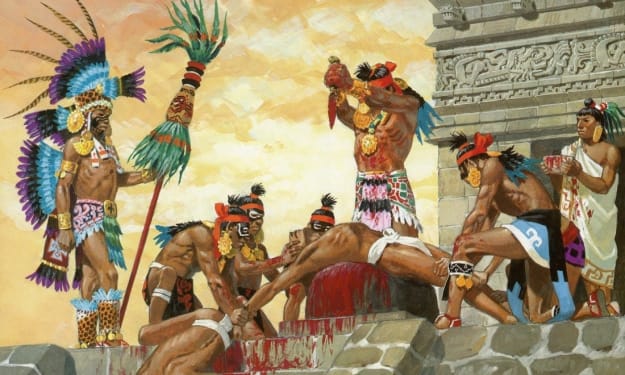
The Aztec Empire, a dominant force in pre-Columbian America, flourished in Central Mexico through a network of alliances and ruthless military conquests. Despite its brief existence of less than a century, the Aztec Empire left a profound mark on history with its massive stone temples, innovative farming techniques, and unique city planning. However, one of the most striking aspects of Aztec culture was their ritualistic practice of blood sacrifice. This post delves into the sacred significance of these rituals and what drove the Aztecs to center much of their religion and culture on the shedding of blood.
By Horace Wasmore2 years ago in History
Echoes of the Forgotten Past
In the heart of the bustling city of Aldenwood, a place where modernity clashed with the remnants of history, lay an abandoned mansion known as Holloway House. It stood as a silent sentinel, its grandeur faded but not forgotten, its once lively halls now echoing with the whispers of a forgotten past.
By Moh Aizaz khan2 years ago in History
Leonardo da Vinci: The Polymath Who Redefined Art and Science. AI-Generated.
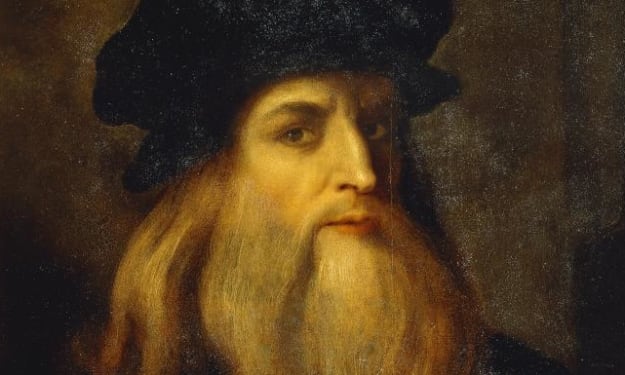
# Leonardo da Vinci: The Renaissance Man Who Changed the World Leonardo da Vinci is a name synonymous with genius. Born in 1452 in the small town of Vinci in Italy, Leonardo’s insatiable curiosity and inventive mind made him one of the most influential figures of the Renaissance. His contributions spanned a multitude of fields, including art, science, engineering, and anatomy. This article explores the life and legacy of Leonardo da Vinci, highlighting his remarkable achievements and enduring influence. ## Early Life and Education Leonardo was born on April 15, 1452, as the illegitimate son of a wealthy notary, Ser Piero, and a peasant woman, Caterina. Despite his illegitimacy, he received a basic education in reading, writing, and mathematics. His artistic talent was evident from a young age, and he was apprenticed to the renowned artist Andrea del Verrocchio in Florence around the age of 15. ### Apprenticeship with Verrocchio At Verrocchio’s workshop, Leonardo honed his skills in various artistic disciplines, including painting, sculpture, and metalworking. He also gained exposure to scientific and engineering concepts. This period was crucial in shaping Leonardo’s multifaceted approach to learning and creation. ## Artistic Masterpieces Leonardo da Vinci is perhaps best known for his contributions to art. His masterpieces, characterized by their detail, realism, and innovative techniques, have left an indelible mark on the history of art. ### The Last Supper Painted between 1495 and 1498, "The Last Supper" is one of Leonardo’s most famous works. This mural, located in the Convent of Santa Maria delle Grazie in Milan, depicts the moment Jesus announces that one of his disciples will betray him. Leonardo’s use of perspective, composition, and emotional expression revolutionized religious art. ### Mona Lisa The "Mona Lisa," painted between 1503 and 1506, is arguably the most famous painting in the world. Housed in the Louvre Museum in Paris, this portrait of Lisa Gherardini is celebrated for its enigmatic expression, masterful use of sfumato (a technique for blending colors and tones), and intricate details. The "Mona Lisa" exemplifies Leonardo’s ability to capture the complexity of human emotion and personality. ## Scientific and Engineering Innovations Leonardo’s contributions extend far beyond the realm of art. His scientific inquiries and engineering designs demonstrate his visionary thinking and profound understanding of the natural world. ### Anatomical Studies Leonardo’s fascination with the human body led him to conduct extensive anatomical studies. He dissected numerous corpses to understand the structure and function of muscles, bones, and organs. His detailed anatomical drawings, including the famous Vitruvian Man, provided unprecedented insights into human physiology and influenced medical science for centuries. ### Engineering and Invention Leonardo’s notebooks are filled with designs for various machines and devices, many of which were centuries ahead of their time. His sketches include concepts for helicopters, tanks, submarines, and mechanical looms. While many of these inventions were never built, they showcase Leonardo’s remarkable foresight and creativity. ### Scientific Observations Leonardo made significant contributions to fields such as optics, hydrodynamics, and geology. He studied the behavior of light and shadow, the movement of water, and the formation of fossils. His meticulous observations and recordings laid the groundwork for future scientific discoveries. ## The Renaissance Man Leonardo da Vinci embodies the ideal of the Renaissance man—a person whose expertise spans multiple disciplines. His ability to integrate art, science, and engineering into a cohesive body of work set him apart from his contemporaries and solidified his legacy as one of history’s greatest polymaths. ### Holistic Approach to Knowledge Leonardo’s holistic approach to knowledge allowed him to make connections between seemingly unrelated fields. He believed that understanding the natural world required both artistic sensitivity and scientific rigor. This interdisciplinary mindset enabled him to achieve breakthroughs that were not confined to any single domain. ### Influence on Future Generations Leonardo’s influence extends far beyond his lifetime. His works have inspired countless artists, scientists, and engineers. Figures such as Michelangelo, Galileo, and Isaac Newton built upon Leonardo’s ideas, pushing the boundaries of human knowledge and creativity. ## Personal Life and Legacy Despite his immense contributions, much about Leonardo’s personal life remains shrouded in mystery. He never married and had no known children, and his personal relationships are largely undocumented. However, his work and legacy speak volumes about his character and intellect. ### Later Years In the final years of his life, Leonardo worked for King Francis I of France, who provided him with a comfortable residence at the Château du Clos Lucé. There, he continued to work on his projects and studies until his death on May 2, 1519. ### Enduring Legacy Leonardo da Vinci’s legacy is one of boundless curiosity, relentless pursuit of knowledge, and extraordinary creativity. His contributions to art, science, and engineering continue to inspire and influence modern thought and innovation. As a true Renaissance man, Leonardo’s life exemplifies the power of interdisciplinary learning and the enduring impact of human ingenuity. ## Conclusion Leonardo da Vinci’s life and work remind us of the limitless potential of the human mind. His ability to merge art and science, his visionary inventions, and his profound understanding of the natural world have left an indelible mark on history. As we continue to explore new frontiers of knowledge and creativity, Leonardo’s legacy serves as a timeless inspiration to strive for excellence and to see the world through a lens of curiosity and wonder.
By Mbeha maliwa 2 years ago in History
Cleopatra: The Last Pharaoh and Her Enduring Legacy. AI-Generated.
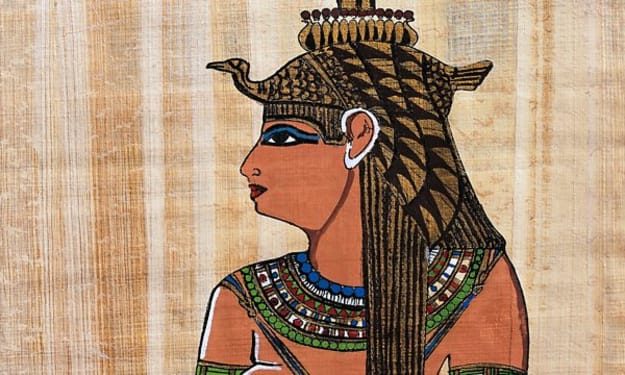
# The Enigmatic Cleopatra: Queen, Diplomat, and Icon Cleopatra VII Philopator, commonly known simply as Cleopatra, is one of the most renowned figures of ancient history. Her life, marked by power, romance, and tragedy, has captivated historians, writers, and filmmakers for centuries. As the last active ruler of the Ptolemaic Kingdom of Egypt, Cleopatra's legacy is a blend of myth and reality. This article delves into the life of Cleopatra, exploring her rise to power, her political acumen, her relationships with Julius Caesar and Mark Antony, and the enduring impact of her legacy. ## Early Life and Rise to Power Cleopatra was born in 69 BCE to the Ptolemaic dynasty, a Greek family that ruled Egypt after the death of Alexander the Great. The Ptolemies had adopted many Egyptian customs and traditions, but they remained culturally Greek. Cleopatra's full name, Cleopatra Thea Philopator, means "Cleopatra the Father-Loving Goddess." ### Education and Intelligence Cleopatra was exceptionally well-educated for her time. She spoke several languages, including Greek, Egyptian, Hebrew, and Latin, among others. Her linguistic skills and deep understanding of various cultures were crucial to her diplomatic endeavors and helped solidify her reputation as a shrewd and intelligent leader. ### Ascension to the Throne Cleopatra ascended to the throne in 51 BCE, following the death of her father, Ptolemy XII Auletes. Initially, she co-ruled with her younger brother, Ptolemy XIII, as was customary in the Ptolemaic tradition. However, tensions between the siblings quickly escalated, leading to a civil war. Cleopatra fled to Syria but soon returned with an army to reclaim her throne. ## The Alliance with Julius Caesar Cleopatra's quest for power took a dramatic turn when she allied herself with Julius Caesar, one of Rome's most powerful figures. Their relationship was both political and romantic, and it significantly influenced the course of Egyptian and Roman history. ### The Famous Encounter According to historical accounts, Cleopatra famously smuggled herself into Alexandria, wrapped in a rug or a linen sack, to meet Caesar. Her bold move impressed the Roman general, and they quickly formed a strategic alliance. Cleopatra's charm, intelligence, and political acumen won Caesar's support in her struggle against Ptolemy XIII. ### Restoration to Power With Caesar's military backing, Cleopatra was restored to the throne. Ptolemy XIII drowned in the Nile while trying to escape after a defeat. Cleopatra then co-ruled with her younger brother, Ptolemy XIV, whom she later married as per custom, though she effectively held the reins of power. ### Birth of Caesarion Cleopatra and Caesar's relationship bore a son, Ptolemy XV Philopator Philometor Caesar, commonly known as Caesarion. Cleopatra hoped that Caesarion would eventually be recognized as Caesar's legitimate heir, which would secure her dynasty's future. ## Cleopatra and Mark Antony After Caesar's assassination in 44 BCE, Cleopatra's political landscape shifted dramatically. She soon allied herself with another powerful Roman figure, Mark Antony, one of Caesar's loyal supporters and a member of the Second Triumvirate. ### The Alliance and Romance Cleopatra met Mark Antony in 41 BCE, and their meeting marked the beginning of both a political alliance and a legendary romance. Antony needed Cleopatra's financial support and military aid to secure his position in Rome, while Cleopatra sought to protect Egypt's sovereignty and her throne. ### The Donations of Alexandria In 34 BCE, Antony and Cleopatra celebrated a grand ceremony known as the Donations of Alexandria. During this event, Antony declared Cleopatra the "Queen of Kings" and granted various territories to her and their children. This act was controversial in Rome and fueled the animosity between Antony and Octavian, Caesar's adopted heir and future Emperor Augustus. ### The Final Conflict with Rome The rivalry between Antony and Octavian culminated in the Battle of Actium in 31 BCE. Cleopatra and Antony's combined forces were decisively defeated by Octavian's fleet. Following their defeat, Antony and Cleopatra retreated to Alexandria, where they made a final stand. ## The Death of Cleopatra Cleopatra's life ended in a dramatic and tragic manner, adding to her enduring legend. After Antony's defeat, he committed suicide, believing that Cleopatra had already done the same. Faced with the prospect of being paraded in a Roman triumph and losing her kingdom, Cleopatra chose to end her own life. ### The Method of Suicide The exact method of Cleopatra's suicide remains a topic of debate among historians. According to the most popular account, Cleopatra allowed an asp, a venomous snake, to bite her. Other theories suggest she may have used a poisonous ointment or a sharp implement. Regardless of the method, Cleopatra's death marked the end of the Ptolemaic dynasty and the beginning of Roman rule in Egypt. ## Cleopatra's Legacy Cleopatra's legacy is a complex blend of historical facts, romanticized stories, and cultural depictions. Her life and reign have inspired countless works of art, literature, and film, making her one of history's most iconic and enduring figures. ### A Powerful Female Ruler Cleopatra remains a symbol of female power and intelligence. She navigated the treacherous waters of politics and diplomacy with skill and determination, securing her place in history as one of the most formidable leaders of her time. ### Cultural Depictions Cleopatra's story has been retold and reimagined in various cultural forms. Shakespeare's play "Antony and Cleopatra," and the 1963 film starring Elizabeth Taylor, are just a few examples of how her life has captured the popular imagination. ### Modern Interpretations In recent years, scholars have sought to reexamine Cleopatra's life and legacy, moving beyond the stereotypes and misconceptions that have often overshadowed her true accomplishments. These modern interpretations highlight her political acumen, her efforts to protect Egypt's independence, and her role as a bridge between the ancient Egyptian and Greco-Roman worlds. ## Conclusion Cleopatra VII Philopator's life was marked by extraordinary achievements, dramatic events, and enduring mysteries. As the last Pharaoh of Egypt, she navigated a complex political landscape, forging alliances with some of Rome's most powerful figures. Her intelligence, charisma, and determination left an indelible mark on history. Today, Cleopatra remains an enigmatic and captivating figure, symbolizing the intricate interplay of power, politics, and personal ambition in the ancient world.
By Mbeha maliwa 2 years ago in History
Bangladesh
In the heart of the Indian subcontinent, nestled along the lush, fertile plains and the serpentine rivers of Bengal, lies a land of profound beauty and resilience—Bangladesh. The story of its birth is not just a tale of political struggle; it is a saga of a people's undying spirit, a nation's fight for its identity, and the sacrifices of countless souls who dreamed of freedom.
By Aminu Muhammad2 years ago in History
End Bad Government In Nigeria
The cry to end bad governance in Nigeria is not merely a political slogan; it is the heart-wrenching plea of millions yearning for dignity, justice, and a chance at a better life. It is the silent scream of a nation burdened by decades of corruption, inefficiency, and broken promises. It is the collective voice of a people who have endured too much for too long, standing at the precipice of despair yet holding on to the fragile hope of change.
By Aminu Muhammad2 years ago in History