Ancient
This Mountain Range Can't Be Found By Any Human: The Mystery of the Mountains of Kong
Imagine an entire mountain range, stretching across Africa, appearing on maps for nearly 100 years—only for it to turn out that the mountains never existed at all. Welcome to the curious case of the Mountains of Kong, one of history’s most puzzling geographic errors. From the late 18th century to the 20th century, explorers, cartographers, and even governments believed in the existence of this fabled mountain range. And if you think they were just a little off, think again. These mountains never existed in any form, but somehow, they became one of the most prominent features on maps of Africa for decades.
By Marveline Merab2 years ago in History
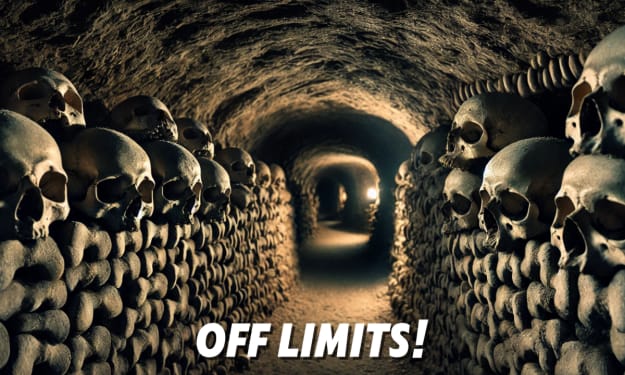
Why You're Not Allowed Inside the Catacombs Beneath Paris (And Why That’s Probably for the Best)
Paris, the City of Lights, is famous for many things: the Eiffel Tower, croissants, charming street cafes, and some of the world’s best art museums. But if you venture beneath the surface—literally—there’s a hidden world that’s both fascinating and a little terrifying: the Catacombs. Over 200 miles of twisting, bone-filled tunnels snake beneath the streets of Paris, holding the remains of more than six million people. That’s right, six million! But here’s the catch—you can’t just stroll into these eerie catacombs like it’s a fun, underground picnic. The vast majority of this shadowy labyrinth is strictly off-limits, and for good reason. Curious as to why? Well, let’s dive into the depths of Paris’ past (without actually getting lost in it) to explore why you’re not allowed inside the Catacombs—and why you should probably be grateful for that!
By Marveline Merab2 years ago in History
Halloween: What It Means, Its History, and Why It's Celebrated
Halloween: What It Means, Its History, and Why It's Celebrated Halloween is one of the most popular and intriguing occasions that blends fear, fun, and fantasy elements. Widely celebrated in Western countries, it has also gained recognition across the globe. But what does Halloween actually mean? Is it a holiday or just a social occasion? Why are strange costumes, dark decorations, and symbols of death so prominent, and why is there an abundance of candy and treats? This article explores the history of Halloween, its origins, and the meaning behind its unique customs.
By Ali Sadeek Ahmed2 years ago in History
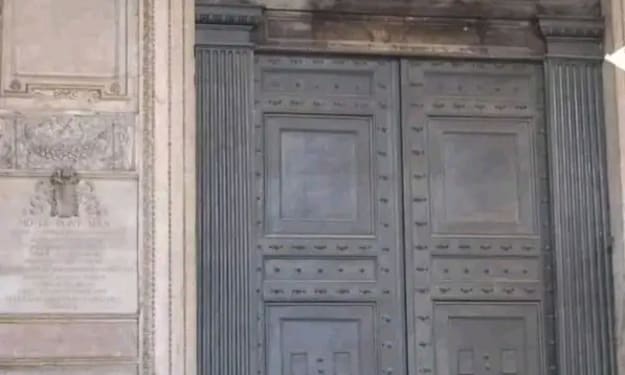
The Timeless Doors of the Pantheon: Rome’s Bronze Marvels. AI-Generated.
Rome, a city rich with history, is home to countless architectural wonders. Among them, the Pantheon stands tall as a testament to the grandeur of ancient Roman engineering and design. Known for its majestic dome and awe-inspiring rotunda, the Pantheon has been a subject of fascination for centuries. However, one of its lesser-discussed yet equally remarkable features is its ancient doors—massive bronze portals that have stood the test of time. These doors, dating back to 115 AD, are not only some of the oldest in the world but are still functional today, bearing a unique legacy from the reign of Emperor Hadrian. A Doorway to Ancient History The Pantheon, originally built by Marcus Agrippa in 27 BC, was rebuilt by Emperor Hadrian around 125 AD following a fire that destroyed the original structure. As part of this restoration, the iconic bronze doors were cast, and they have remained in place ever since, enduring the centuries while most other ancient doors have long since crumbled or been replaced. At a glance, these doors may seem like just another feature of Rome’s architectural grandeur, but their history is much more profound. Measuring an astounding twenty-five feet in height and seven and a half feet wide, each door is crafted entirely of bronze—a material that was expensive and difficult to work with in the ancient world. Yet, even after nearly two millennia, the doors retain their structural integrity and elegance, standing as a reminder of the remarkable craftsmanship of the Romans. Engineering Marvels of the Ancient World What makes the Pantheon doors particularly astonishing is not just their size or their material, but the way they function. Each door weighs several tons, yet they can be easily opened and closed by a single person. This feat of engineering is a testament to the ingenuity of Roman architects and builders, who designed the hinges and mechanisms with such precision that the doors remain perfectly balanced to this day. Their smooth operation stands in contrast to the cumbersome doors of other ancient structures, demonstrating the superior level of engineering prowess that characterized Roman construction. These doors also hold another rare distinction—they are one of only two doors in the world with a nearly 2,000-year-old lock that still works. While the exact mechanics of the lock remain something of a mystery, it is clear that the Romans had a deep understanding of metallurgy and mechanical design, enabling them to create mechanisms that could endure for millennia. Symbols of Rome’s Durability and Strength More than just functional elements of the Pantheon, these bronze doors symbolize the durability and strength of Rome itself. The Pantheon has survived countless invasions, regime changes, and natural disasters, yet its doors have never faltered. They have withstood the rise and fall of empires, seen the transformation of Rome from a pagan city to the heart of Christianity, and endured through periods of neglect and restoration. Through it all, the doors have remained a gateway to one of Rome’s most iconic structures. The symbolism of the doors is further enhanced by the fact that the Pantheon was consecrated as a Christian church in the 7th century, becoming the Basilica of St. Mary and the Martyrs. In this context, the doors represent the transition from the ancient pagan world to the Christian era, and their continued use today highlights the seamless continuity of Rome’s long history. The Mystery of the Bronze Doors Despite their fame, much about the Pantheon’s doors remains shrouded in mystery. For centuries, scholars have debated whether the doors we see today are the originals from Hadrian’s time or replacements from a later period. However, recent studies suggest that they are indeed the original doors, albeit with some modifications made over the centuries. For example, the door panels were once adorned with elaborate decorations, likely lost or melted down during the early medieval period when bronze was frequently recycled for other uses. One of the most intriguing aspects of the doors is the casting technique used to create them. Bronze casting on such a large scale was incredibly challenging, and it remains unclear exactly how the Romans managed to produce such massive structures with the limited technology of the time. Some theories suggest that the doors were cast in sections and then assembled, while others propose that they were made in one continuous piece. Whatever the method, it is clear that the Romans had mastered the art of metalworking in ways that continue to astound modern engineers. An Enduring Legacy Today, the bronze doors of the Pantheon continue to be a source of wonder for visitors from around the world. As one of the most well-preserved pieces of ancient Roman architecture, they offer a tangible connection to the past, inviting us to imagine the many generations of Romans who passed through them. Their timeless design and functionality serve as a reminder of the brilliance of ancient engineering, while their enduring presence stands as a symbol of Rome’s lasting influence on the world. In a city filled with iconic landmarks, the Pantheon’s bronze doors are a quieter but no less powerful testament to the skill, artistry, and ambition of the Roman Empire. As they continue to open and close each day—just as they have for nearly 2,000 years—they remind us that, while empires rise and fall, great works of art and engineering can stand the test of time.
By Deji Akomolafe2 years ago in History
Melchizedek’s Secret Legacy: The Untold Story
One of the most intriguing yet hidden figures in the Bible is Melchizedek, a mysterious character whose brief appearance leaves much to explore in terms of historical and theological significance. His story is found in Genesis 14:18-20, where he is described as the "king of Salem" and "priest of the Most High God." Despite the brevity of his mention, Melchizedek’s role has prompted deep reflection in Jewish, Christian, and historical contexts, making him a perfect example of a hidden figure with a complex historical story.
By umn ministry Chennai2 years ago in History
Varanasi Ayodhya Tour Package. Content Warning.
Varanasi Ayodhya Tour Package: A Sacred Journey Through India’s Spiritual Heartlands At Vrindavan Packages, we understand the deep spiritual connection travelers seek when they visit India’s holiest cities. Our thoughtfully designed Varanasi Ayodhya Tour Package is an immersive experience that takes you through two of India’s most revered religious destinations: Varanasi and Ayodhya. This journey is perfect for anyone yearning for a transformative pilgrimage, a peaceful retreat into spirituality, and an opportunity to witness centuries-old traditions come to life.
By Vrindavan Packages2 years ago in History
The Fascinating History of Chocolate:
If you can’t imagine life without chocolate, you’re fortunate to have been born after the 16th century. Before then, chocolate existed solely in Mesoamerica, and its form was vastly different from the sweet treats we enjoy today. As far back as 1900 BCE, the indigenous people of this region had mastered the art of preparing the beans from the native cacao tree. The earliest records indicate that these beans were ground and mixed with cornmeal and chili peppers to create a drink—far from the comforting hot cocoa we know today, this was a bitter, invigorating concoction that frothily bubbled with foam.
By DANIEL AKAM OKO2 years ago in History
A Brief History of Cheese:
Cheese is one of humanity's oldest and most beloved foods, with a rich history that predates empires, writing, and advanced tools. As far back as 8000 BCE, Neolithic farmers in the Fertile Crescent began crafting cheese, setting the stage for a culinary tradition that has endured for millennia. The advent of agriculture led to the domestication of sheep and goats, whose milk became a vital resource for these early societies.
By DANIEL AKAM OKO2 years ago in History
The Fascinating Journey of Humanity's Love for Coffee
The Discovery of Coffee The tale of coffee begins around 850 CE, with a goatherd named Kaldi who noticed his goats behaving unusually after nibbling on some berries. Intrigued, Kaldi tried the berries himself and soon found himself bursting with energy. This legendary anecdote marks humanity's intriguing first encounter with coffee, although the exact timeline of coffee consumption remains unclear. It is widely believed that before the 1400s, inhabitants of what is now Ethiopia began foraging for wild coffee plants in the forest undergrowth.
By DANIEL AKAM OKO2 years ago in History