Ancient
The Nijmegen Cavalry Helmet: A Testament to Roman Craftsmanship and Military Prowess
Among the remarkable artifacts unearthed from the Roman Empire, few captivate the imagination as much as the Nijmegen Cavalry Helmet. Discovered in 1915 near the Waal River in Nijmegen, The Netherlands, this ceremonial helmet is a stunning example of Roman artistry and ingenuity. Dating back to the late 1st century AD, it provides a unique glimpse into the lives of Rome's elite cavalry units, whose influence stretched across the vast empire. Now displayed at the Museum het Valkhof, the helmet continues to enthrall historians, archaeologists, and the public alike. A Discovery of Historical Significance The Nijmegen Cavalry Helmet was unearthed during routine work near the Waal River, a region once home to the Roman military presence in the Netherlands. Nijmegen, or Noviomagus, was an important Roman settlement and military stronghold on the empire's northern frontier. The helmet consists of two primary components: a highly detailed iron mask and a bronze headpiece, both adorned with intricate silver embellishments. Together, they form a ceremonial piece that highlights the craftsmanship and symbolism of Roman military culture. Design and Craftsmanship The craftsmanship of the Nijmegen Cavalry Helmet is extraordinary. The iron mask, designed to cover the wearer's face, features finely sculpted facial details, including a prominent nose and expressive eyes. This attention to detail suggests that the mask was not just functional but also a representation of idealized Roman features, emphasizing strength and discipline. The bronze helmet portion, which rests atop the head, is richly decorated with silver detailing. These embellishments include intricate patterns, depictions of mythical figures, and symbolic motifs that reflect the Roman Empire's artistic traditions and cultural beliefs. One particularly fascinating feature is the depiction of winged deities and griffins, symbols of protection and divine power, which often appeared on Roman military equipment. These decorations not only enhanced the helmet’s aesthetic appeal but also imbued it with a sense of authority and mysticism, reinforcing the wearer’s elite status. Purpose and Functionality The Nijmegen Cavalry Helmet was more than mere protective gear; it served a dual purpose. 1. Ceremonial Use: This helmet was primarily ceremonial, worn during hippika gymnasia, elaborate cavalry displays that showcased the skill and prowess of Roman horsemen. These events, held to entertain and inspire both soldiers and civilians, often featured intricate drills and mock battles. The helmet's ornate design would have highlighted the status of its wearer, making it a focal point of the spectacle. 2. Symbol of Status: The intricate artistry of the helmet reflects the social hierarchy within the Roman military. Elite cavalry units, known as the equites, were often composed of wealthier soldiers or individuals of higher social standing. Wearing such an elaborate helmet would have symbolized the soldier's rank, skill, and connection to Rome's imperial power. 3. Practical Function: While primarily ceremonial, the helmet also offered some level of protection. Its sturdy construction of iron and bronze would have safeguarded the wearer during parades or practice battles. However, it is unlikely to have been used in real combat due to its intricate design and the potential for damage. The Role of Cavalry in Roman Warfare The Roman cavalry played a vital role in the empire's military operations. Cavalry units were essential for reconnaissance, flanking maneuvers, and rapid response during battles. The presence of ceremonial helmets like the Nijmegen example highlights the importance Rome placed on morale, discipline, and the public image of its military forces. These helmets were not just practical tools but also a means of projecting Rome's strength and sophistication to allies and adversaries alike. Cultural and Historical Context The late 1st century AD marked a period of consolidation and expansion for the Roman Empire. The northern provinces, including the area around Nijmegen, were crucial for maintaining control over the empire’s frontiers. Artifacts like the Nijmegen Cavalry Helmet provide valuable insights into the interactions between Roman forces and the local populations. The helmet’s craftsmanship also underscores the exchange of cultural and artistic traditions within the empire. The use of materials like bronze, silver, and iron, along with the decorative motifs, reflects the blending of Roman and local artistic influences. Preservation and Legacy The Nijmegen Cavalry Helmet has been meticulously preserved and is now housed at the Museum het Valkhof in Nijmegen. Its display offers visitors an opportunity to explore the ingenuity and complexity of Roman military equipment. The helmet’s discovery and preservation have also contributed significantly to our understanding of Roman frontier life. It stands as a testament to the empire’s ability to combine utility with artistry, creating objects that were both functional and symbolic. A Timeless Artifact The Nijmegen Cavalry Helmet remains one of the most iconic artifacts from Roman-era Europe. Its intricate design and cultural significance make it a powerful reminder of the Roman Empire’s reach and influence. As visitors stand before this extraordinary piece at the Museum het Valkhof, they are transported back in time to an era when the Roman cavalry rode across the empire's vast territories, their ornate helmets gleaming in the sun. The Nijmegen Cavalry Helmet, with its blend of functionality, symbolism, and artistry, continues to inspire awe and admiration, bridging the gap between the ancient world and our own.
By Deji Akomolafe2 years ago in History
Elephant Man’s’ Grave Found in Notorious London Cemetery. Content Warning.
When Joseph Merrick kicked the bucket at age 27, his body didn’t go into the ground in one piece. Instep, the bones of the so-called “Elephant Man” were faded and put on show at Ruler Mary College of London’s restorative school, and a few of his tissue was spared for restorative ponder. However for over a century, no one knew where the rest of him was buried, or indeed if those remains were buried at all.
By Shams Says2 years ago in History
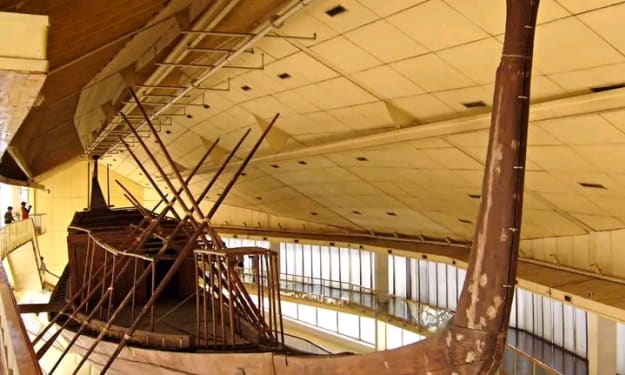
The Solar Boat of Khufu: A Masterpiece of Ancient Egyptian Craftsmanship
In 1954, a team of archaeologists working near the base of the Great Pyramid of Giza uncovered a discovery of monumental significance: a 4,600-year-old vessel hidden in a sealed pit beneath massive limestone blocks. Known today as the Solar Boat of Khufu, this artifact not only reflects the advanced craftsmanship of ancient Egypt but also offers a fascinating glimpse into the spiritual and practical life of the era. Reconstructing the boat took 13 years and revealed a masterpiece of ancient engineering and symbolism. Crafted from Lebanese cedar and held together by an innovative rope-lashing technique, the solar boat stands as one of the most extraordinary relics of Egypt's Old Kingdom, traditionally associated with transporting Pharaoh Khufu's soul to the afterlife. Discovery and Excavation The solar boat was unearthed at the southern edge of the Great Pyramid of Giza, which was built as a tomb for Pharaoh Khufu, the second ruler of the Fourth Dynasty (circa 2589–2566 BCE). During routine excavation work, archaeologists stumbled upon two sealed pits concealed beneath massive stone blocks. Breaking into one of the pits, they discovered over 1,200 wooden fragments carefully disassembled and arranged. The significance of this find was immediately apparent. These fragments, once reconstructed, would reveal a vessel unlike any other—a ceremonial boat built to serve the pharaoh in his journey to the afterlife. Reconstruction of the Boat The task of reconstructing the solar boat fell to Ahmed Youssef Moustafa, a skilled Egyptian restorer. The process was meticulous, requiring the careful study of ancient techniques and years of painstaking effort. With over 1,200 individual pieces of wood to examine and assemble, the work took 13 years to complete. The reconstructed boat measures 44 meters (144 feet) in length and 6 meters (20 feet) in width, making it one of the largest and most elaborate vessels from the ancient world. Crafted primarily from Lebanese cedar, a prized material in ancient Egypt, the boat showcases extraordinary craftsmanship. One of the most remarkable features of the solar boat is its construction method. Unlike modern vessels, the boat was built without nails. Instead, the planks of wood were meticulously shaped and then lashed together with ropes made from halfa grass. This technique ensured flexibility and durability, allowing the boat to withstand the stresses of water travel. Purpose and Symbolism The precise purpose of the solar boat remains a topic of scholarly debate, but its symbolic significance is universally acknowledged. Ancient Egyptians believed that the sun god Ra traveled across the sky in a solar boat during the day and through the underworld at night. The solar boat of Khufu is thought to have been a vessel designed for a similar journey, carrying the pharaoh's soul into the afterlife to join the gods. This interpretation aligns with the ancient Egyptian belief in the afterlife as a continuation of life on earth, where the pharaoh would need provisions, companions, and transportation to fulfill his divine duties. The solar boat’s placement near the Great Pyramid—a monumental structure symbolizing the pharaoh's ascent to the heavens—further supports this theory. Alternatively, some scholars propose that the boat may have served as a funerary barge, used to transport Khufu’s body across the Nile to his final resting place at Giza. Others suggest it could have been used during life for religious or ceremonial purposes. Craftsmanship and Innovation The solar boat exemplifies the advanced shipbuilding techniques of ancient Egypt. The use of rope-lashing to bind the planks together reflects a deep understanding of engineering principles. This method, though labor-intensive, allowed the boat to remain watertight and flexible, essential for navigating the Nile’s unpredictable waters. The choice of Lebanese cedar for the boat’s construction highlights the extensive trade networks of ancient Egypt. Cedar was imported from the Levant, a region that maintained strong cultural and economic ties with Egypt. Its durability and resistance to decay made it ideal for constructing a vessel intended to endure eternity. The boat also features a canopy to provide shade, a mast for a sail, and a cabin area, showcasing its dual functionality as both a practical and ceremonial craft. Its design is a testament to the ingenuity and artistry of the ancient Egyptians, who combined utility with profound symbolism. Preservation and Display Today, the solar boat is housed in the Grand Egyptian Museum, a state-of-the-art facility near the Giza Plateau. Its transfer to the museum from its original site in 2021 was a carefully orchestrated effort, reflecting the immense cultural and historical value of the artifact. The solar boat remains one of the most well-preserved wooden vessels from antiquity. Its display allows visitors to appreciate its intricate construction and understand its role in ancient Egyptian culture. Legacy of the Solar Boat The Solar Boat of Khufu is more than an archaeological treasure—it is a bridge to a civilization that thrived over 4,000 years ago. Its discovery and reconstruction offer profound insights into the beliefs, technologies, and daily life of ancient Egypt. The boat stands as a symbol of the ancient Egyptians’ quest for eternal life, their mastery of engineering, and their ability to transform practical objects into works of art imbued with spiritual meaning. As visitors gaze upon this magnificent relic, they are transported back in time to an era when the pharaohs ruled a land of unparalleled grandeur and innovation. Through its enduring legacy, the Solar Boat of Khufu continues to inspire awe and admiration, reminding us of the timeless human drive to leave a mark upon the world.
By Deji Akomolafe2 years ago in History
Mastering the Inca Empire: The Legacy of the Last Bridge Architect
The Inca Empire, one of the most advanced civilizations in pre-Columbian America, is renowned for its remarkable feats in engineering, agriculture, and governance. At its zenith in the 15th and early 16th centuries, the empire—known as Tawantinsuyu in Quechua—stretched across vast swathes of the Andean highlands, encompassing modern-day Peru, Ecuador, Bolivia, and parts of Colombia, Chile, and Argentina. Among its myriad achievements, the Inca’s road and bridge systems stand out as marvels of ingenuity and endurance. At the heart of this legacy lies the enigmatic figure of the "Last Bridge Architect," a master craftsman whose work symbolizes the pinnacle of Incan engineering and whose legacy continues to resonate in modern times.
By Muhammah Hanzalah2 years ago in History
Unusual Traditions from Around the World
The world is full of fascinating cultures and unique customs that reflect the diversity of human traditions. Some of these practices might seem unusual or surprising to outsiders, but they hold deep meaning for the communities that celebrate them. Here are some of the most intriguing traditions from around the globe that showcase humanity’s creativity and cultural richness.
By Plamena Peneva2 years ago in History
Allahabad-Varanasi Tour: A Spiritual and Cultural Journey Through India’s Sacred Cities
The Allahabad-Varanasi Tour takes you on an enriching journey through two of India's most revered cities, where ancient spiritual traditions, fascinating history, and breathtaking landscapes await. Both cities are deeply connected to Hindu mythology, and each offers a unique experience for travelers. This tour is ideal for those seeking a profound spiritual exploration, as well as an immersion into India's religious and cultural heritage.
By Namaste India2 years ago in History
Unearthing the Sedgeford Hoard: A Glimpse into Iron Age Britain
Archaeological excavations at Sedgeford, Norfolk, unearthed an extraordinary discovery: a hoard of gold coins from the 1st century BC. Known as the Sedgeford Hoard, this remarkable find consists of 39 Gallo-Belgic gold staters, coins linked to trade and cultural exchange between Britain and continental Europe during the Iron Age. Concealed within the distal end of a cow’s leg bone—a humerus—the hoard offers a fascinating glimpse into the ingenuity, economy, and social complexities of ancient Britain. The Discovery The Sedgeford Hoard was uncovered during routine archaeological excavations in Norfolk, a region rich in history and known for its significance during the Iron Age. The hoard was buried deep within the soil, hidden inside the hollow end of a cow’s leg bone. This unusual choice of container immediately captured the imagination of archaeologists, providing insights into the creativity and practicality of the people who lived over 2,000 years ago. Gallo-Belgic Gold Staters: A Snapshot of Iron Age Economy The gold coins in the hoard are known as Gallo-Belgic staters, a type of currency that originated in what is now modern-day France and Belgium. These coins were introduced to Britain during the late Iron Age, a period marked by increased trade and interaction between Britain and the European mainland. Gallo-Belgic staters were typically made of high-quality gold and featured intricate designs. The coins in the Sedgeford Hoard bear symbols and patterns that reflect both local craftsmanship and continental influences. These designs often included depictions of horses, geometric patterns, and other motifs that held cultural or religious significance. The presence of these coins in Britain highlights the dynamic trade networks that existed during this period. Goods, ideas, and cultural practices flowed freely between regions, facilitated by waterways and the evolving use of coinage. The hoard also underscores the importance of Norfolk as a hub for trade and interaction. Why Hide a Hoard? The concealment of the hoard inside a cow’s leg bone raises intriguing questions about its purpose. Why were these coins hidden in such an unusual manner, and what does this tell us about Iron Age society? One theory suggests that the hoard was a form of savings or wealth storage. Gold coins were not only valuable but also portable, making them an ideal way to preserve wealth. Hiding them inside a bone may have been a way to protect the treasure from theft or prying eyes. Another possibility is that the hoard was an offering to the gods. Ritual deposits of valuables were common during the Iron Age, reflecting the spiritual and religious beliefs of the time. The use of a cow’s leg bone—a symbol of sustenance and survival—may have added symbolic weight to the offering. A third theory is that the hoard represents the spoils of conflict or a diplomatic gift. The Iron Age was a time of shifting alliances and occasional warfare, and coins such as these could have been used to pay warriors or solidify alliances. Insights from the Cow’s Leg Bone The choice to use the distal end of a cow’s humerus as a container offers insights into the practical and symbolic aspects of Iron Age life. Bone was a readily available material, often repurposed for tools, weapons, and other everyday objects. The hollow interior of the bone made it an ideal hiding place for small, valuable items like coins. Its inconspicuous appearance also meant that it could be buried without drawing attention. This clever use of available resources highlights the ingenuity of Iron Age communities. From a symbolic perspective, the use of a cow’s bone may reflect the importance of livestock in Iron Age society. Cattle were a cornerstone of the economy, providing meat, milk, and labor. Incorporating a cow’s bone into the hoard may have imbued the deposit with additional cultural or spiritual significance. The Importance of the Sedgeford Hoard The Sedgeford Hoard is more than just a collection of coins; it is a tangible link to a vibrant and dynamic period of British history. The hoard sheds light on the complex social, economic, and spiritual lives of Iron Age communities, offering a nuanced picture of a society that was far more sophisticated than commonly imagined. The discovery also underscores the importance of Norfolk as a region of historical significance. The county’s fertile lands and proximity to the coast made it an ideal location for trade, settlement, and cultural exchange during the Iron Age and beyond. Preservation and Study The Sedgeford Hoard has been meticulously preserved and studied by archaeologists and historians. Each coin has been examined for its composition, design, and wear, providing insights into their origins, use, and circulation. The cow’s bone has also been analyzed, revealing details about its age and the methods used to hollow it out. These findings contribute to a growing body of knowledge about Iron Age Britain, enriching our understanding of this pivotal period in history. Conclusion The Sedgeford Hoard is a testament to the ingenuity and complexity of Iron Age society. Hidden within a cow’s leg bone and buried in the fertile lands of Norfolk, this collection of gold coins speaks to a world of trade, wealth, and spiritual belief. As archaeologists continue to study the hoard, it serves as a reminder of the enduring mysteries of our past. Each coin, each fragment of bone, tells a story of a time when Britain was a land of interconnected cultures, resourceful communities, and profound creativity. The Sedgeford Hoard invites us to look beyond the surface of history and uncover the rich tapestry of human ingenuity that lies beneath.
By Deji Akomolafe2 years ago in History
Unearthing the Past: Bone Needles and the Survival of the Clovis Culture
On November 27, 2024, archaeologists announced a groundbreaking discovery at the La Prele Mammoth site in Wyoming: 32 bone needle fragments dating back approximately 13,000 years. Unearthed nearly 15 feet underground in an area associated with the Clovis culture, these delicate tools provide an extraordinary window into the lives of some of the earliest inhabitants of North America. Known primarily for their distinctive stone tools and mammoth hunting, the Clovis people are now revealed as resourceful artisans who adapted to the harsh conditions of the last Ice Age with remarkable ingenuity. The La Prele Mammoth Site: A Treasure Trove of Prehistoric Life The La Prele Mammoth site has long been a focal point for archaeologists studying the Clovis culture. Situated in eastern Wyoming, the site has yielded an array of artifacts, including stone points, mammoth bones, and now, these bone needle fragments. The needles were found in close association with mammoth remains, suggesting a link between their creation and the processing of these massive Ice Age creatures. What makes the discovery particularly significant is the depth at which these artifacts were found—15 feet below the surface. This depth not only highlights the passage of time but also points to the exceptional preservation of the site, providing researchers with a rare glimpse into the lives of the Clovis people. The Role of Bone Needles in Clovis Survival The discovery of bone needles reshapes our understanding of the Clovis culture. While the Clovis are best known for their stone spear points, often associated with hunting mammoths and other megafauna, these needles highlight another essential aspect of their survival: clothing and shelter. Bone needles, crafted from the bones of animals such as mammoths, were likely used to sew garments and construct durable coverings for shelters. In the freezing conditions of the Ice Age, clothing was essential not only for protection but also for mobility. The ability to move across vast, frozen landscapes in search of game and resources would have been vital for survival. These tools also hint at the Clovis people’s skill in working with various materials. Creating a needle required precision and patience, as well as a deep understanding of the properties of bone. The small size and intricate design of these tools suggest that the Clovis people were adept at fine motor skills, challenging the stereotype of early humans as solely focused on hunting and survival. Innovation and Adaptation: Hallmarks of the Clovis Culture The Clovis culture, which flourished across North America around 13,000 years ago, is characterized by its adaptability and innovation. The discovery of these bone needles underscores the ingenuity of the Clovis people, who not only mastered the art of hunting large game but also developed sophisticated tools to meet their everyday needs. The needles’ presence at a mammoth site suggests they may have been used during butchering or hide processing, possibly to stitch hides into clothing or coverings. This connection between hunting and crafting reflects a holistic approach to resource use, where no part of an animal was wasted. Moreover, the discovery expands our understanding of Clovis technology. While their stone points are celebrated as some of the earliest examples of human craftsmanship in the Americas, the needles remind us that the Clovis toolkit was far more diverse. A Window Into Ice Age Society Beyond their functional purpose, the bone needles offer insights into the social and cultural aspects of Clovis life. The act of sewing and crafting likely played a role in community life, with knowledge passed down through generations. These tools may have been used not just for survival but also for creating items with symbolic or aesthetic value, such as decorated garments or ceremonial objects. The Clovis people were part of a larger network of early human populations that spread across the Americas during the late Pleistocene. The presence of bone needles suggests that these groups shared knowledge and adapted similar technologies to their environments. Challenges of Interpretation Despite the significance of the discovery, interpreting bone needles from the Ice Age poses challenges. The fragility of bone artifacts makes them rare finds, and much of their original context can be lost over time. Additionally, the exact use of these needles remains speculative, as the organic materials they once worked with—such as leather or sinew—have long since decayed. Nonetheless, the La Prele Mammoth site offers a remarkably well-preserved context that allows researchers to piece together the story of the Clovis people with increasing precision. The Broader Implications of the Discovery The discovery of the bone needles at La Prele enriches our understanding of the Clovis culture and the broader story of human migration and adaptation. These tools highlight the complexity of early American societies and challenge the notion of prehistoric people as merely subsisting. Instead, they were innovators who used every resource available to them to thrive in some of the most challenging environments imaginable. Conclusion The bone needles from the La Prele Mammoth site stand as silent witnesses to the ingenuity and resilience of the Clovis people. These delicate tools remind us that survival during the last Ice Age required more than brute force; it demanded creativity, adaptability, and a deep understanding of the natural world. As archaeologists continue to study the La Prele Mammoth site, these needles—and the stories they tell—promise to reshape our understanding of one of North America’s earliest cultures. By bridging the gap between ancient and modern humanity, they invite us to marvel at the resourcefulness that has always defined us as a species.
By Deji Akomolafe2 years ago in History
Augustus and the Transformation of Rome: From Bricks to Marble
When Augustus proclaimed, “I found Rome a city of bricks and left it a city of marble,” he was not merely indulging in poetic flourish. As Rome’s first emperor, Augustus (born Gaius Octavius) ushered in an era of unprecedented architectural and cultural transformation that solidified his legacy as one of history’s most visionary leaders. While his rise to power was marked by violence and political intrigue, his reign brought stability, prosperity, and a stunning physical transformation of the Eternal City. Among his many accomplishments, Augustus’s contributions to Roman architecture stand as one of his most enduring legacies. His building projects did more than beautify Rome—they symbolized the empire's power and stability while crafting a new identity for the burgeoning Roman Empire. The Visionary Emperor Augustus rose to power in the aftermath of Julius Caesar’s assassination in 44 BCE. After years of civil war, he emerged victorious, and in 27 BCE, the Roman Senate granted him the title "Augustus," meaning "the revered one." This marked the beginning of the Roman Empire and Augustus’s reign as its first emperor. Unlike many rulers who sought to expand their territories through constant warfare, Augustus focused on consolidating power and securing peace. The period of his reign, known as the Pax Romana (Roman Peace), was characterized by economic growth, cultural flourishing, and, crucially, an ambitious program of urban development. Rome’s Transformation: A City of Marble Augustus understood the power of architecture to communicate ideas. To him, the transformation of Rome into a city of marble was not just about aesthetics—it was a way to project the grandeur of the empire and the stability of his rule. He initiated a series of public works that reshaped the city’s skyline and set the standard for Roman architecture for centuries. Among his most notable projects was the construction of the Forum of Augustus, an ambitious complex that still stands as a testament to his architectural vision. The Forum of Augustus Built to commemorate Augustus’s victory at the Battle of Philippi in 42 BCE, the Forum of Augustus was designed as a grand public space that celebrated Rome’s military and cultural achievements. The forum featured a large open plaza surrounded by colonnades, with the imposing Temple of Mars Ultor (Mars the Avenger) as its centerpiece. This temple, dedicated to the god of war, symbolized Augustus’s role as the restorer of peace and avenger of Caesar’s assassination. The forum was constructed using Carrara marble, a dazzling white stone imported from northern Italy. The material became a hallmark of Augustus’s building projects, replacing the more utilitarian bricks that had previously dominated Roman architecture. The use of marble gave the forum a sense of grandeur and permanence, aligning with Augustus’s vision of a Rome that would endure for eternity. Today, the ruins of the Forum of Augustus remain one of the most impressive sights in Rome. Visitors can admire the towering marble columns and remnants of the temple, which continue to evoke the majesty of Augustus’s reign. Other Architectural Achievements The Forum of Augustus was just one of many projects that transformed Rome under Augustus’s leadership. Among his other notable contributions were: 1. The Ara Pacis (Altar of Peace): This monumental altar was dedicated to Pax, the Roman goddess of peace, and celebrated the stability brought by Augustus’s rule. Its intricate carvings depict scenes of Roman mythology and the emperor’s achievements. 2. The Mausoleum of Augustus: Augustus built this grand tomb for himself and his family, reflecting his desire to leave a lasting legacy. The mausoleum was one of the largest tombs of its time and a prominent feature of the Roman landscape. 3. The Aqua Virgo: Augustus oversaw the construction of this aqueduct, which supplied fresh water to the city. Its completion was a vital step in improving the quality of life for Rome’s residents. 4. Restoration of Existing Structures: In addition to his new projects, Augustus invested in restoring and improving many older buildings, including the Capitoline Temple and the Basilica Julia in the Roman Forum. The Symbolism of Marble The decision to use marble in many of his projects was symbolic. Marble was not only durable and visually striking but also rare and expensive. By commissioning buildings with marble, Augustus reinforced his image as a leader who brought wealth and stability to Rome. The gleaming white stone became a symbol of the empire’s strength and Augustus’s commitment to its future. This transformation also served a political purpose. By reshaping Rome’s urban landscape, Augustus reinforced his authority and aligned his reign with the city’s destiny as the capital of a vast empire. The new marble structures were more than architectural achievements—they were monuments to his power and vision. A Legacy Set in Stone Augustus’s architectural legacy can still be seen throughout Rome today. His building projects laid the groundwork for the city’s development during the imperial era and inspired subsequent emperors to embark on their own ambitious constructions. The ruins of the Forum of Augustus, the Ara Pacis, and other structures serve as reminders of his transformative reign. As visitors walk among the marble columns and remnants of ancient temples, they can glimpse the vision of an emperor who sought to reshape the city—and the empire—into something timeless. Augustus’s words, “I found Rome a city of bricks and left it a city of marble,” remain a fitting epitaph for a ruler whose vision and ambition left an indelible mark on history. His architectural achievements continue to inspire awe, offering a window into a golden age of Roman civilization.
By Deji Akomolafe2 years ago in History
London’s Ancient City Wall: A Living History at London Wall
London is a city steeped in history, with its streets, parks, and structures offering glimpses into its rich past. One of the most evocative remnants of this history is the section of the old city wall standing adjacent to the street known as London Wall. This ancient structure, blending Roman engineering with medieval additions, tells the story of the city’s transformation across centuries. From its origins as a Roman fortification to its role in medieval London, the wall has witnessed countless chapters of history. Today, it serves as both a historical monument and a tranquil retreat, with the charming Salters' Garden offering a quiet space to reflect on the legacy of this enduring symbol of the city’s past. The Roman Roots of London’s City Wall The story of the wall begins in the late 2nd century AD, during the Roman occupation of Britain. Known as Londinium, Roman London was a bustling port city strategically located along the River Thames. To protect this important settlement, Roman engineers constructed a formidable stone wall around the city’s perimeter. This wall, built with a combination of stone and rubble, stood approximately 6 meters high and 2.5 meters thick. It featured defensive towers and gateways, providing security against potential invaders and marking the boundaries of the city. Over time, the wall became one of the defining features of Roman Londinium, encapsulating its importance as a hub of commerce and governance within the Roman Empire. The Medieval Evolution of the Wall When the Roman Empire withdrew from Britain in the early 5th century, the city wall remained a prominent feature of the landscape. As medieval London grew, the wall was repurposed and extended to meet the needs of a changing city. During the Middle Ages, the lower sections of the wall—constructed by the Romans—were reinforced and built upon. These additions included battlements, walkways, and additional defensive features. The wall became an integral part of London’s identity, providing protection during periods of unrest and serving as a backdrop to everyday life in the medieval city. One of the most fascinating aspects of the wall’s medieval history is its association with the church of St. Alphege, which once stood against the other side of the wall. Named after the Archbishop of Canterbury who was martyred in 1012, St. Alphege’s Church was a place of worship and community for centuries before being demolished in the late 16th century. Its proximity to the wall highlights the intertwining of religious and civic life in medieval London. Salters’ Garden: A Tranquil Oasis Today, visitors to this section of the old city wall can also enjoy the serene beauty of Salters' Garden, a quiet green space nestled beside the ancient structure. Named after the Salters’ Company, one of London’s historic livery companies, the garden provides a peaceful escape from the hustle and bustle of the city. The garden’s design reflects its historical surroundings, with carefully maintained flower beds, benches, and pathways inviting visitors to pause and take in the atmosphere. As you sit in the shadow of the wall, it’s easy to imagine the lives of those who once walked these streets, from Roman soldiers patrolling the fortifications to medieval merchants conducting their trade. A Living Monument This surviving section of the old city wall is more than just a historical relic—it’s a living monument to London’s enduring resilience and adaptability. The combination of Roman and medieval masonry visible in the wall provides a tangible link to the city’s past, showcasing the craftsmanship and ingenuity of those who built and maintained it. For archaeologists and historians, the wall offers invaluable insights into the development of London over nearly two millennia. Its layers of construction reveal the changing needs and priorities of the city, from its Roman origins as a fortified settlement to its medieval role as a thriving hub of commerce and culture. Preserving the Legacy Efforts to preserve this section of the city wall underscore its importance as a cultural and historical treasure. Listed as a Scheduled Ancient Monument, the wall is protected by law to ensure its survival for future generations. Conservation work has focused on maintaining the integrity of the structure while allowing public access, enabling visitors to connect with London’s history in a meaningful way. In addition to its physical preservation, the wall is celebrated through interpretive signage and educational programs, helping to raise awareness of its significance. Whether you’re a history enthusiast or a casual passerby, the wall invites you to explore the stories of London’s past and consider the ways in which the city continues to evolve. Conclusion: A Journey Through Time The section of the old city wall standing beside London Wall is a remarkable testament to the city’s history and resilience. From its Roman foundations to its medieval enhancements, the wall has stood as a silent witness to centuries of change, conflict, and growth. In the shadow of the modern city, this ancient structure offers a moment of reflection, reminding us of the layers of history that define London. Paired with the tranquility of Salters’ Garden, it provides a unique space to connect with the past while appreciating the present. Whether you’re exploring its Roman roots, marveling at its medieval craftsmanship, or simply enjoying the peaceful surroundings of the garden, the old city wall is a must-see destination for anyone seeking to uncover the stories that lie beneath London’s streets. This enduring monument continues to inspire and educate, ensuring that the legacy of Londinium and medieval London remains alive for generations to come.
By Deji Akomolafe2 years ago in History
Gliding Through History: Viking Ice Skates of the 10th Century
The Vikings are best remembered as fierce warriors, skilled sailors, and intrepid explorers who left an indelible mark on history. Yet, beneath their reputation as raiders lies a culture defined by resourcefulness and ingenuity. Among the many artifacts that offer a glimpse into Viking life are their ice skates—crafted from leather and the resilient bones of horses. These remarkable objects, now preserved at the Swedish History Museum in Stockholm, stand as a testament to the Vikings’ ability to thrive in the harsh, frozen landscapes of Scandinavia. The Practical Necessity of Ice Skates For the Vikings, survival in the frigid north demanded more than brute strength; it required an intimate understanding of their environment and innovative tools to navigate it. Frozen rivers and lakes were not only natural obstacles but also vital pathways for travel and trade during the long Scandinavian winters. The ice skates crafted by the Vikings were more than recreational tools—they were practical devices that allowed people to glide across frozen surfaces with efficiency and ease. Whether used for hunting, communication, or simply moving goods, these skates offered a way to transform icy terrain from a barrier into a navigable roadway. Design and Craftsmanship The construction of these skates reveals the ingenuity and resourcefulness of the Viking people. The blades were made from the long, flat bones of horses, chosen for their durability and strength. These bones were carefully shaped and polished to provide a smooth gliding surface. Unlike modern skates with sharp metal blades designed to cut into the ice, Viking skates relied on the bone’s smooth surface to slide across it. Leather straps secured the skates to the feet, demonstrating the Vikings’ adeptness at working with this versatile material. These straps would have been adjustable, ensuring a snug fit and allowing the skates to be easily removed or exchanged. The simplicity of the design belied its effectiveness, offering a practical solution for traversing frozen landscapes. A Testament to Adaptation The creation of ice skates from available materials highlights the adaptability that was central to Viking life. Living in a world where resources were limited and winters were long and unforgiving, the Vikings mastered the art of making the most of what they had. Horse bones, readily available from animals that played an integral role in Viking society, became a resource for crafting tools that enhanced mobility and survival. This resourcefulness extended beyond skates. The Vikings’ ability to adapt their tools and technologies to suit their environment was a key factor in their success, whether it involved shipbuilding for open-sea navigation or weaponry for warfare. Cultural and Historical Significance The ice skates offer more than just a window into Viking ingenuity—they also reveal insights into the daily lives of a people often romanticized for their dramatic exploits. While sagas and chronicles tell tales of epic voyages and conquests, artifacts like these skates remind us of the quieter, practical aspects of Viking life. They also highlight the interconnectedness of Viking culture with the natural world. By utilizing horse bones and leather, the Vikings demonstrated a deep understanding of the materials at their disposal and their properties. This relationship with nature was not just one of conquest but also one of harmony and respect. Preservation and Legacy Today, the Viking ice skates are carefully preserved at the Swedish History Museum in Stockholm, where they draw visitors from around the world. These artifacts serve as a tangible link to the past, allowing us to connect with the Vikings on a human level. The skates remind us that the Vikings were not just warriors and explorers but also problem-solvers and craftsmen. Their ability to adapt and innovate ensured their survival and success in a challenging environment, leaving a legacy that continues to inspire admiration and curiosity. A Lesson for Modern Times The story of the Viking ice skates holds lessons that are as relevant today as they were a thousand years ago. In a world increasingly shaped by climate change and environmental challenges, the Vikings’ ability to live in harmony with their surroundings and utilize resources sustainably offers valuable insights. Moreover, these skates are a reminder of the power of human ingenuity and the importance of resilience. Faced with the adversities of their time, the Vikings did not merely endure—they thrived, creating tools and technologies that allowed them to turn challenges into opportunities. Conclusion The Viking ice skates, simple yet ingenious, embody the spirit of a culture that embraced the challenges of its environment with creativity and determination. As we marvel at these ancient artifacts in the Swedish History Museum, we are reminded of the enduring legacy of the Vikings—a legacy not just of conquest and exploration but of adaptability, resourcefulness, and ingenuity. Through these skates, the Vikings glide into our modern consciousness, inviting us to explore not only their history but also the universal human drive to innovate and survive.
By Deji Akomolafe2 years ago in History
The Marble Horse of Halicarnassus: A Glimpse Into the Glory of an Ancient Wonder
Few monuments from antiquity have captured the imagination quite like the Mausoleum of Halicarnassus. Constructed between 353 and 350 BCE in Halicarnassus (modern-day Bodrum, Turkey), this awe-inspiring tomb was built for Mausolus, the satrap of Caria, and his wife (and sister), Artemisia II. The structure was so magnificent that it earned its place among the Seven Wonders of the Ancient World. While the Mausoleum itself has long since succumbed to time and destruction, fragments of its splendor remain, offering a tantalizing glimpse into its grandeur. One such fragment, a marble statue of a horse, now resides in the British Museum. This sculpture, part of the colossal chariot group that once crowned the Mausoleum, stands as a testament to the artistic and architectural achievements of the ancient world. The Mausoleum of Halicarnassus: A Monument of Grandeur The Mausoleum of Halicarnassus was more than just a tomb; it was a symbol of power, wealth, and artistic innovation. Designed by Greek architects Satyros and Pythius, the Mausoleum blended elements of Greek, Egyptian, and Lycian architecture into a structure that was unparalleled in its time. The monument stood approximately 45 meters (148 feet) tall and was adorned with elaborate sculptures by some of the most renowned artists of the era, including Scopas, Bryaxis, Leochares, and Timotheus. At its pinnacle, a colossal chariot group, featuring statues of Mausolus and Artemisia riding in a chariot pulled by four horses, crowned the Mausoleum. This group symbolized their divine status and eternal journey. The Marble Horse: A Surviving Fragment of History The marble horse on display at the British Museum is one of the few surviving remnants of this magnificent chariot group. Carved with remarkable attention to detail, the statue captures the strength and elegance of the animal. Its musculature, posture, and lifelike expression convey a sense of vitality and power, reflecting the skill of the sculptors who contributed to the Mausoleum’s decoration. Although time has worn away some details, the horse remains an evocative piece, transporting viewers back to the splendor of the ancient world. Standing before this sculpture, one can imagine the full chariot group as it would have appeared atop the Mausoleum, gleaming in the sunlight and visible from miles away—a beacon of Mausolus and Artemisia’s enduring legacy. The Symbolism of the Chariot Group In ancient art and culture, the chariot often symbolized power, triumph, and divine authority. By placing a chariot group at the apex of the Mausoleum, Mausolus and Artemisia were not only asserting their dominance but also aligning themselves with the gods. The four horses pulling the chariot represented strength and unity, qualities that both rulers likely wished to project. The marble horse, therefore, was more than just a decorative element. It was part of a broader narrative that celebrated Mausolus’s rule, honored Artemisia’s devotion, and elevated their memory to the realm of the divine. Rediscovery and Preservation The Mausoleum of Halicarnassus stood for centuries before earthquakes and the passage of time reduced it to ruins. By the medieval period, much of the structure had been dismantled, with its stones repurposed for local building projects, including the construction of Bodrum Castle. In the 19th century, British archaeologists, led by Charles Newton, excavated the site of the Mausoleum. Their efforts unearthed numerous fragments of the monument, including parts of the chariot group. These artifacts were transported to the British Museum, where they became part of the museum’s collection of ancient wonders. The marble horse remains one of the most evocative pieces from the Mausoleum, offering insights into the craftsmanship and artistry of its creators. While some argue that such artifacts should be returned to their place of origin, their presence in museums like the British Museum has also ensured their preservation and accessibility to a global audience. Legacy of the Mausoleum and Its Art The Mausoleum of Halicarnassus, though largely lost to history, continues to inspire awe and curiosity. Its influence can be seen in later architectural endeavors, particularly in the design of monumental tombs and memorials. Even the word "mausoleum" derives from Mausolus’s name, a testament to the enduring legacy of this ancient wonder. The marble horse serves as a tangible connection to this legacy. It reminds us of the ingenuity and ambition of the ancient world and the ways in which art and architecture were used to convey power, prestige, and immortality. Conclusion The marble horse from the Mausoleum of Halicarnassus is more than just a fragment of a lost monument—it is a piece of history that speaks to the creativity and grandeur of the ancient world. Through its lifelike detail and symbolic significance, it allows us to glimpse the splendor of one of the Seven Wonders of the Ancient World and the people who created it. As it stands in the British Museum, this sculpture continues to captivate and inspire, bridging the gap between past and present. It invites us to reflect on the ways in which art and architecture shape our understanding of history, and it challenges us to preserve and honor the cultural treasures of humanity for generations to come. Start writing...
By Deji Akomolafe2 years ago in History