Ancient
THE LAST ARENA
The Last Arena Eirik remained at the edge of the precipice, the salt breeze pulling at his hair as the principal light of day break broke into the great beyond. Underneath him, the town of Eldfjall mixed to life. The crash of mallet on metal reverberated from the smithy, where metal forgers molded blades and safeguards for the champions getting ready for the fight to come. The air was thick with the scents of fire, steel, and ocean. It was a universe of solidarity, yet underneath that strength, Eirik felt something different—something weighty, a biting sense that the next few days would request a greater amount of him than he was prepared to give.
By Chronicle Canvas2 years ago in History
The Legacy of King Baldwin IV: The Leper King of Jerusalem
The Legacy of King Baldwin IV: The Leper King of Jerusalem Introduction King Baldwin IV of Jerusalem, known as the "Leper King," is one of the most enigmatic and inspirational figures of the Crusader period. Despite suffering from leprosy, a debilitating disease, Baldwin displayed extraordinary resilience, wisdom, and courage, ruling the Kingdom of Jerusalem during a tumultuous time. His short yet impactful reign has fascinated historians and storytellers alike, as it represents a tale of leadership, endurance, and the struggle to maintain peace and power in the Holy Land during the 12th century. Early Life and Diagnosis Baldwin IV was born in 1161 to King Amalric I of Jerusalem and Queen Agnes of Courtenay. From a young age, Baldwin exhibited unusual physical symptoms. It was his tutor, William of Tyre—a notable historian and archbishop—who first identified Baldwin's insensitivity to pain, particularly when the boy felt no discomfort after injuring his hand. This was a chilling early sign of leprosy, a disease then feared for its contagiousness, stigma, and lack of cure. Despite the grim prognosis, Baldwin was provided with a rigorous education. He learned Latin, theology, warfare, and diplomacy under the guidance of his tutors, who prepared him for leadership in a volatile political landscape. By the time of his father’s death in 1174, Baldwin, at just 13 years old, ascended to the throne as King Baldwin IV. The Kingdom of Jerusalem and Political Challenges The Kingdom of Jerusalem was a Crusader state established during the First Crusade, holding significant religious and strategic importance. Baldwin inherited the throne at a time of immense external and internal pressures. Internally, factional disputes among the nobles weakened the kingdom. Externally, the Muslim forces, led by the rising power of Saladin, threatened the Crusader states. Despite his youth and illness, Baldwin IV quickly demonstrated an aptitude for leadership. His regency under Raymond III of Tripoli ensured stability during the early years, but Baldwin took control of his kingdom as he matured. His leprosy did not weaken his resolve; instead, it seemed to embolden him to act with urgency and determination. Baldwin IV as a Warrior King One of Baldwin's most notable traits was his unwavering courage on the battlefield. Despite his deteriorating health, he led his army with remarkable skill and charisma. Baldwin’s most famous military success came in 1177 during the Battle of Montgisard. In this battle, Saladin, the powerful Sultan of Egypt and Syria, launched a large-scale invasion of the Kingdom of Jerusalem. Baldwin, though severely ill, led a significantly smaller Crusader army against Saladin's forces. Riding with his men and clad in armor, the young king inspired his troops to a stunning victory, routing Saladin’s forces and forcing the Sultan to retreat. The victory at Montgisard was celebrated as a miraculous triumph, solidifying Baldwin's reputation as a capable and fearless leader. He became a symbol of hope for the Crusader states, proving that even a king suffering from leprosy could defy the odds. Baldwin’s Diplomacy and Struggles Baldwin IV was not just a warrior but also a shrewd diplomat. He understood the necessity of forming alliances and maintaining a delicate balance of power. He sought to strengthen ties with the Byzantine Empire and encouraged the arrival of reinforcements from Europe. However, his reign was marred by internal discord. Factions within the nobility, such as those led by his mother’s family and other Crusader lords, often competed for influence. Baldwin had to navigate these rivalries while dealing with his declining health. To secure succession and protect the kingdom, Baldwin arranged the marriage of his sister, Sibylla, to Guy of Lusignan. However, Guy’s leadership proved controversial and divisive, further complicating the kingdom's political landscape. The Decline of Health and the End of Baldwin IV’s Reign Leprosy is a progressive disease, and as Baldwin grew older, its effects became more severe. His eyesight began to fail, and his body weakened, rendering him unable to ride or actively lead his forces. Yet Baldwin refused to abdicate his responsibilities. Even when physically incapacitated, he continued to govern from his sickbed, issuing orders and making strategic decisions. In 1183, Baldwin crowned his nephew, Baldwin V, as co-king to ensure a smooth succession. However, Baldwin IV’s health rapidly declined, and by 1185, he succumbed to the disease. He was only 24 years old at the time of his death, leaving behind a kingdom facing the brink of collapse. Legacy and Impact
By Say the truth 2 years ago in History
The Last Shot: A Story of Redemption
The roar of the crowd echoed through the packed arena, the atmosphere electric with anticipation. It was Game 7 of the NBA Finals, and the stakes couldn’t have been higher. The Los Angeles Hawks, a team no one had expected to make it this far, were up against the league's powerhouse, the New York Titans. For 32-year-old Darius “D-Money” Carter, the Hawks’ point guard, this was more than just a game—it was his shot at redemption.
By oluwatoba ayomikun2 years ago in History
The countries that have Love symbols
A love that transcends culture, time, and borders cannot be contained. Every country has its unique way of representing love through symbols, landmarks, and traditions celebrating affection and connection. Whether it’s a romantic monument or a cultural icon, these symbols carry deep significance for people worldwide. Let’s explore some countries where symbols of love are celebrated.
By Zinnat ara Begum2 years ago in History
"The Twilight of an Empire: The Fall of Rome."
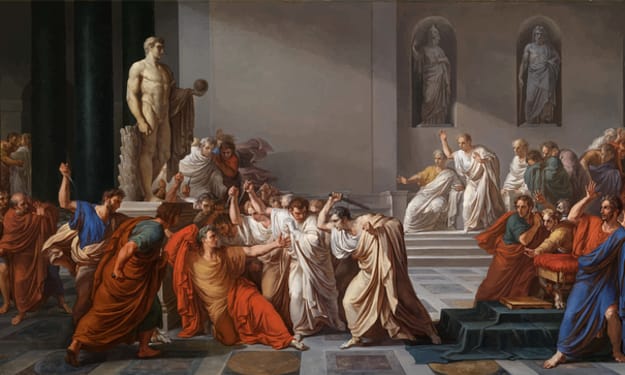
The collapse of the Roman Empire is one of history's most captivating and divisive events. It was a steady fall over centuries, marked by internal instability and external forces, rather than a catastrophic collapse. By the time Romulus Augustulus, the last Roman emperor, was ousted in 476 CE, the empire had long since lost its lustre as the strong institution that previously ruled over broad parts of Europe, the Middle East, and North Africa.
By rino ingenito2 years ago in History
Spiritual Versus Religion
The terms spirituality and religion are often used interchangeably but are considered quite different in most aspects. Both represent the way to understand higher explanations of life, such as who we are, why we are here, and what happens after this life. However, their approaches, practices, and meanings can differ significantly.
By Taviii🇨🇦♐️2 years ago in History
The Bronze Age Axe of Must Farm: A Glimpse into Ancient Britain’s Craftsmanship and Culture
In the heart of Cambridgeshire, a quiet corner of the English countryside, one of the most extraordinary archaeological discoveries of recent times was made. Unearthed in 2016 at Must Farm, near Whittlesey, the site has been dubbed “Britain’s Pompeii” due to its remarkable preservation. Among the countless artifacts recovered from this Bronze Age settlement, a bronze socketed axe with its charred wooden handle stands out as a poignant reminder of a bygone era. Dating back to between 1000 and 800 BCE, this artifact offers an unparalleled window into the lives, craftsmanship, and eventual demise of the people who lived there. A Settlement Frozen in Time The Must Farm site was a small riverside settlement built on wooden stilts above a shallow waterway. It was home to a Bronze Age community whose daily lives revolved around agriculture, tool-making, and trade. However, this vibrant settlement met a sudden and catastrophic end when a devastating fire consumed the structures. As the burning buildings collapsed into the river, they were quickly buried under layers of silt, preserving an astonishing array of objects, including pottery, textiles, tools, and even food remains. The preservation of organic materials, such as wood and plant fibers, is particularly rare in archaeological sites, making Must Farm a treasure trove for historians and archaeologists. The bronze axe with its charred handle is a standout artifact, combining the durability of metal with the fragility of wood—an almost miraculous survival over the millennia. The Bronze Axe: Craftsmanship and Utility The bronze socketed axe is a testament to the technological sophistication of Bronze Age societies. The socketed design, which allowed the handle to be securely fitted into the metal head, represented a significant advancement in tool-making. This innovation made the axe both more durable and versatile, ensuring it could withstand repeated use in tasks such as chopping wood, shaping timber, or even serving as a weapon. The handle, made of carefully selected wood, exhibits the craftsmanship of the time. Though charred by the fire that consumed the settlement, it still offers valuable insights into how tools were constructed and used. The fact that both the axe head and handle have survived together is exceedingly rare and provides a unique opportunity to study the complete artifact in its original context. A Glimpse into Daily Life The discovery of the axe, along with other tools and household items, paints a vivid picture of life at Must Farm. This was a community deeply connected to its environment, utilizing natural resources with remarkable efficiency. Bronze tools like this axe would have been highly prized possessions, indicating the owner's status and skill. Bronze itself was an important material in this period, created by alloying copper with tin. Its production required not only technical expertise but also extensive trade networks, as tin was not locally available in most parts of Britain. The presence of such tools at Must Farm suggests that its inhabitants were part of a broader web of economic and cultural exchange. The Fire and Preservation The tragedy that struck Must Farm also became its greatest preservation factor. As the settlement’s wooden structures burned and collapsed into the river, the lack of oxygen in the waterlogged environment slowed the decomposition of organic materials. The silt that settled over the remains acted as a protective blanket, sealing the site from the elements and the passage of time. This unique combination of circumstances has allowed archaeologists to recover artifacts in a condition rarely seen in sites of this age. The charred handle of the bronze axe, for instance, still bears the marks of craftsmanship, as well as the scars of the fire that ended its use. The Significance of the Find The Must Farm axe, now housed in the Cambridge Archaeological Unit, is more than just a tool—it is a tangible connection to the people of Bronze Age Britain. It tells a story of ingenuity, resilience, and the enduring human spirit. Through this artifact, we gain insight into the technological advancements of the time, the daily lives of the settlement's inhabitants, and their ability to adapt to the challenges of their environment. Furthermore, the axe serves as a symbol of the shared heritage that links us to our ancestors. It reminds us of the universality of human endeavor—the desire to create, innovate, and thrive, even in the face of adversity. A Legacy Preserved The ongoing study of the Must Farm site continues to shed light on the Bronze Age, providing valuable lessons about resourcefulness, community, and the impact of environmental and societal change. The bronze axe, with its dual legacy of craftsmanship and catastrophe, stands as a centerpiece of this remarkable discovery. For visitors and researchers alike, this artifact offers an intimate glimpse into a world long past, where the tools of survival and progress were forged in metal, shaped by human hands, and preserved by the forces of nature. As we marvel at its survival, we are reminded of the deep and enduring connection between humanity and the tools that define us.
By Deji Akomolafe2 years ago in History
Deciphering the Ancient Genius of the Plimpton 322 Tablet: The World’s Oldest Trigonometric Table
In the dusty archives of history, where myths and mysteries intermingle, the Plimpton 322 clay tablet has emerged as a shining testament to ancient ingenuity. Over 3,700 years old and originating from Babylon, this seemingly simple clay artifact has baffled and inspired researchers for decades. Thanks to the groundbreaking work of mathematicians from the University of New South Wales (UNSW) Sydney, the tablet’s true purpose has finally been decoded: it is the world’s oldest trigonometric table, predating Greek trigonometry by over a millennium. This extraordinary discovery not only rewrites the history of mathematics but also highlights the advanced understanding of geometry and engineering possessed by the Babylonians, centuries before such concepts were formally explored in the Western world. What is the Plimpton 322 Tablet? The Plimpton 322 tablet, currently housed at Columbia University in New York, is a clay artifact inscribed with a list of Pythagorean triples written in cuneiform script. The tablet was discovered in the early 20th century in the ancient city of Larsa, in what is now Iraq. Its content, written in a base-60 numeral system (similar to the system we use for measuring time), has puzzled scholars since its discovery. For decades, researchers speculated about the tablet’s purpose. Was it a teaching tool? A record of land measurements? A religious artifact? Now, thanks to modern mathematical analysis, it is understood to be an early trigonometric table, devised for practical applications such as architecture and engineering. How Did the Babylonians Use Trigonometry? Unlike the Greeks, who based their trigonometry on angles and circles, the Babylonians used a system of ratios. The UNSW team discovered that the tablet lists a series of Pythagorean triples—sets of three numbers (a, b, c) that satisfy the equation \(a^2 + b^2 = c^2\). These triples were likely used to calculate right-angled triangles, making the tablet an incredibly accurate tool for solving geometric problems. This innovative approach to trigonometry may have been applied to a variety of large-scale projects in Babylonian society, such as: - Building ziggurats: These stepped temples required precise calculations to ensure stability and symmetry. - Constructing canals: Engineering water systems across Mesopotamia’s flat landscape demanded meticulous geometric planning. - Designing cities: Babylonian urban planning often involved the creation of standardized rectangular layouts. Why is the Babylonian System Unique? The Babylonian method of trigonometry, based on ratios, is fundamentally different from the angle-and-circle-based system developed by the Greeks, such as that of Hipparchus or Ptolemy. This base-60 approach, combined with the use of exact Pythagorean triples, allowed the Babylonians to perform calculations with a level of accuracy that rivaled—and in some cases exceeded—modern methods. One of the key advantages of the Babylonian system is its avoidance of irrational numbers. In modern trigonometry, many calculations involve irrational square roots, which can introduce rounding errors. By using whole-number ratios, the Babylonians achieved precision without relying on approximations. A Thousand Years Before Pythagoras What makes this discovery even more remarkable is that it predates the work of Greek mathematicians like Pythagoras by over 1,000 years. While Pythagoras is often credited with the foundational theorem of right-angled triangles, the Babylonians were clearly using these principles long before his time. This raises intriguing questions about the flow of knowledge in the ancient world. Did the Greeks inherit some of their mathematical concepts from earlier civilizations? How much more advanced was Babylonian mathematics than we currently realize? Practical Applications in the Ancient World The discovery that the Plimpton 322 tablet served as a trigonometric table sheds light on the advanced problem-solving skills of the Babylonians. Their ability to conceptualize and utilize complex mathematics was not purely theoretical—it had real-world applications. For example: - Ziggurat construction would have required precise calculations to determine the height and angle of each step, ensuring that the structure remained stable over time. - Canal systems, vital for agriculture and trade, relied on geometric accuracy to distribute water efficiently across vast distances. - Surveying land for agriculture and urban development would have demanded tools for measuring distances and angles accurately. Modern Implications of an Ancient Method Interestingly, the Babylonian method of trigonometry may still hold value in modern times. According to UNSW researchers, the ratio-based system outlined on Plimpton 322 could be more efficient and accurate than contemporary trigonometry for certain types of calculations. For example, it could have applications in computer graphics, surveying, and engineering, where minimizing errors is crucial. This revelation underscores the timeless nature of mathematical principles and their potential to inspire new approaches, even in the 21st century. A Window into Ancient Genius The Plimpton 322 tablet is more than just a mathematical artifact; it is a testament to the ingenuity and intellectual curiosity of the ancient world. Its decipherment highlights the interconnectedness of human achievement across cultures and eras, reminding us that progress is often built on the foundations laid by those who came before us. As researchers continue to study this enigmatic tablet, it may yet reveal more secrets about Babylonian society and its unparalleled contributions to mathematics and engineering. For now, the Plimpton 322 stands as a remarkable example of how a small clay tablet can rewrite our understanding of history—and challenge us to look at the world in new and innovative ways. The Babylonians may be long gone, but their legacy endures, etched in clay and preserved through the ages as a reminder of humanity’s enduring quest for knowledge.
By Deji Akomolafe2 years ago in History
The Remarkable Wooden Roman Military Comb of Vindolanda: A Glimpse into Roman Life
In the rolling countryside of northern England lies the Roman Fort of Vindolanda, a treasure trove of archaeological finds that offers a glimpse into life on the Roman frontier. Among the numerous artifacts unearthed at this site is a rare and fascinating object: a wooden military comb, exquisitely decorated with an image of a Roman soldier. Though small and utilitarian, this artifact provides a unique window into the daily lives, hygiene practices, and artistic sensibilities of the Roman military nearly two millennia ago. The Discovery at Vindolanda Vindolanda, situated near Hadrian’s Wall, was a key Roman outpost during the Roman occupation of Britain. It was a bustling hub of military and civilian life, inhabited by soldiers, their families, and local tradespeople. Over decades of excavation, the site has yielded thousands of objects, from personal letters and footwear to weaponry and tools. The wooden comb, however, is a particularly rare find. While combs were common personal items in the Roman world, their survival in archaeological contexts is exceedingly rare, especially when crafted from organic materials like wood. This particular comb was found remarkably intact, an exceptional feat given the centuries it spent buried underground. A Comb with a Purpose This wooden comb is not merely a decorative artifact; it served a very practical purpose. The comb features narrow tines, which were specifically designed to remove lice from hair and clothing. Lice infestations were a common problem in the ancient world, particularly in densely populated and militarized environments like Vindolanda. Roman soldiers, known for their discipline and meticulous grooming, relied on combs like this to maintain personal hygiene. While lice removal may seem mundane, it was an essential part of maintaining morale and preventing the spread of disease within the ranks. Artistry and Symbolism What sets this comb apart is its decoration: an image of a Roman soldier, intricately carved into the wood. The depiction of the soldier, complete with detailed armor and weaponry, speaks to the pride and identity of the Roman military. It is possible that the comb belonged to a soldier or was a cherished gift, reflecting the strong sense of camaraderie and esprit de corps among the Roman legions. The artistic craftsmanship of the comb also highlights the skill of Roman artisans. Even utilitarian objects like a lice comb were imbued with a sense of beauty and purpose. This attention to detail underscores the Romans’ appreciation for functional yet aesthetically pleasing design, even in the most personal items. The Context of Vindolanda Vindolanda’s unique anaerobic soil conditions have preserved a wealth of organic materials, including wooden artifacts, leather goods, and even handwritten letters on thin wooden tablets. The survival of the comb is a testament to these conditions, which provide unparalleled insights into life at a Roman fort. The presence of personal grooming items like the comb reveals the daily routines of Roman soldiers and their attempts to maintain a semblance of normalcy while stationed far from home. It also illustrates the diversity of objects that were essential to life on the frontier, from weapons of war to tools for personal care. Roman Hygiene Practices Personal hygiene was an important aspect of Roman culture. Public baths, oils, and strigils (scrapers) were widely used across the empire, and grooming tools like combs were indispensable. The comb from Vindolanda reflects this cultural emphasis on cleanliness, even in the harsh and isolated environment of Roman Britain. While soldiers might have bathed in local streams or communal bathhouses within the fort, lice combs served as a portable solution to the ever-present issue of lice. The discovery of similar combs across other Roman sites indicates that such tools were standard equipment for soldiers and civilians alike. Preservation and Display Today, this rare artifact is displayed at the London Museum, where it continues to captivate visitors with its intricate design and historical significance. Its preservation offers a direct connection to the Roman past, allowing modern audiences to imagine the lives of the soldiers who once guarded the empire’s borders. The comb also serves as a reminder of the ingenuity and adaptability of the Romans. By combining functionality with artistry, they created tools that were both practical and meaningful. Why the Vindolanda Comb Matters The Vindolanda comb is more than just a tool; it is a tangible link to the personal lives of Roman soldiers. It speaks to their struggles, their pride, and their humanity. In an era dominated by grand monuments and military campaigns, such small, personal artifacts remind us that history is made not just by emperors and generals, but by the everyday people who lived, worked, and fought in their shadow. Conclusion The wooden Roman military comb from Vindolanda is a remarkable artifact that bridges the gap between ancient history and the present day. Its dual purpose as a practical grooming tool and a symbol of Roman military identity highlights the complexity of Roman life. As visitors admire the comb in its glass case, they are transported back to a distant time, where soldiers patrolled the windswept frontier of Roman Britain, using tools like this to navigate the challenges of their daily existence. In its simplicity and beauty, the Vindolanda comb tells a story of resilience, artistry, and the enduring human desire for connection and care.
By Deji Akomolafe2 years ago in History
Tles from ancient Egypt
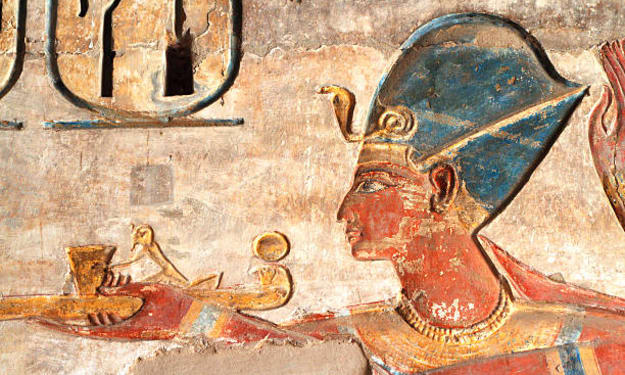
Let me introduce you to Ramses III. He had many enemies. He fought off invading armies from the Middle East to protect Egypt. But the real trouble came from within his own kingdom. His wife, Queen Tami, wanted their son to take the throne. So, she devised a plot to assassinate Ramses.
By myriamadam2 years ago in History