Ancient
China’s Argent Empire: The Barter That Shaped the World
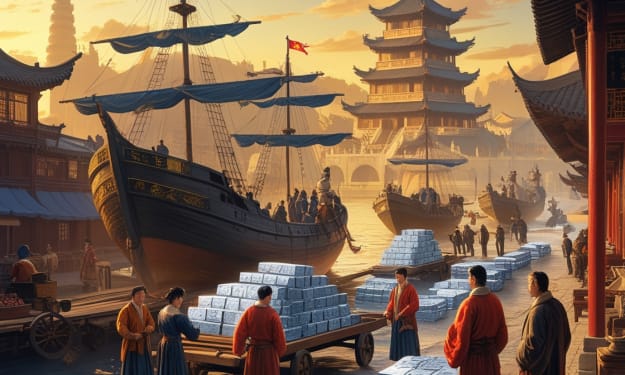
The Chinese Argent Trade: A Abundance of Empires Introduction The Chinese argent barter was one of the best affecting bread-and-butter armament in apple history, abstraction all-around business from the 16th to the 19th century. China became the world's better customer of silver, arch to all-inclusive barter networks that spanned Asia, Europe, and the Americas. This commodity explores the origins, scale, and appulse of China's argent trade, including estimates of its absolute worth, how argent was acquired, and area it ultimately went. Why Did China Barter in Silver? The Ming Dynasty’s Taxation System During the backward Ming Dynasty (1368–1644), China transitioned to a silver-based economy. The government alien a tax ameliorate accepted as the Single Whip Law, acute all taxes to be paid in argent instead of goods. This ameliorate created an astronomic appeal for silver, bidding merchants and adopted traders to seek ample food from across sources. Preference for Argent Over Gold Unlike abounding added nations that acclimated gold as their primary bill reserve, China had an affluence of appurtenances like silk, tea, and ceramics but lacked ample calm argent mines. This alterity led to China acceptable a above importer of silver.
By Say the truth 2 years ago in History
Bent Pyramid Egypt’s 4,600 Year Old Architectural Marvel
Bent Pyramid Egypt’s 4,600 Year Old Architectural Marvel A Unique Pyramid That Stands Out in History Egypt is home to some of the world’s most breathtaking ancient structures with each pyramid telling a unique story. Among them one pyramid stands out due to its unusual shape the Bent Pyramid built nearly 4,600 years ago for Pharaoh Sneferu. Unlike the traditional pyramids this one has a noticeable bend in its structure making it one of the most fascinating architectural wonders of ancient Egypt. Initially considered a structural flaw the pyramid’s bend actually reflects the ingenuity and adaptability of ancient Egyptian architects. Modifications were made during construction to ensure the pyramid's stability ultimately making it a landmark of experimental architecture in human history. The Bent Pyramid is located in Dahshur south of Cairo,l and stands 101 meters 331 feet tall.
By Adnan Rasheed2 years ago in History
The Wealth and Power of the Greatest Land Empires in History
The Greatest Acreage Empires in History: Their Wealth, Acreage Area, and Rule Throughout history, all-inclusive empires accept risen and fallen, abstraction civilizations, trade, and cultural evolution. Some of these empires controlled massive acreage areas, accession abundant abundance and cardinal over assorted populations. This commodity explores the better acreage empires in history, estimates their net worth, and examines their babyminding methods. 1. Mongol Authority (1206–1368) - The Better Acreage Empire Land Area: ~24 actor aboveboard kilometers Estimated Net Worth: Trillions in today’s value How They Ruled: The Mongol Empire, founded by Genghis Khan, was the better abutting authority in history. The Mongols controlled acreage addition from China to Eastern Europe, utilizing aggressive tactics, cerebral warfare, and adept strategies. They accustomed the Pax Mongolica, a aeon of adherence that added barter forth the Cottony Road. Their taxation arrangement and annexation of baffled cities brought immense wealth. 2. British Authority (1583–1997) - The Better Overseas Empire Land Area: ~35.5 actor aboveboard kilometers at its peak Estimated Net Worth: $45 abundance (estimated by economists) How They Ruled: The British Empire, the better authority by absolute landmass, controlled colonies beyond Africa, Asia, and the Americas. It accumulated abundance through trade, industrialization, and ability exploitation. The British accustomed authoritative systems, railway networks, and acknowledged frameworks, admitting generally at the amount of bounded populations.
By Say the truth 2 years ago in History
The Legendary Founding of Rome. AI-Generated.
After the brutal war between the Trojans and the Greeks ended with the fall and sack of Troy, the Trojan hero Aeneas, son of Venus and Anchises, gathered the surviving Trojan people and set out on a long and arduous journey in search of a new homeland. Guided by destiny and the will of the gods, Aeneas and his followers endured many hardships, sailing across the seas and encountering various lands before finally arriving in Italy. Along the banks of the Tiber River, Aeneas took Lavinia, the daughter of Latinus, king of the Latins, as his wife. To honor his new bride and cement his place in the land, Aeneas founded a city, which he named Lavinium after her.
By Ahmed mohsin2 years ago in History
Saturday Night 2024 Movie Review: Bold, Beautiful, and Beyond Expectations!
Introduction: The world of cinema is always brimming with new films that promise to make a lasting impact. But once in a while, a movie comes along that not only meets but exceeds every expectation. That film is Saturday Night 2024. With a buzz that began long before its official release, this movie has captivated audiences with its boldness, beauty, and cinematic mastery. In this review, we’ll take a deep dive into every aspect of Saturday Night 2024, exploring how it has redefined modern filmmaking. From its stunning visuals to its emotional depth, Saturday Night 2024 is a film that goes beyond what anyone could have expected.
By QuirkTales2 years ago in History
Ancient Strategy Games of Roman Soldiers The Fascinating Discovery of Bone Tokens in Hadrianopolis.
Ancient Strategy Games of Roman Soldiers The Fascinating Discovery of Bone Tokens in Hadrianopolis. The Roman civilization was not only known for its grand architecture powerful armies and advanced legal systems but also for its recreational activities intellectual exercises and strategy based games. For Romans games were not just a pastime they were an essential means of mental training tactical thinking and strategic planning. During the Roman era various types of games were popular including physical sports gambling and board games based on strategy. For soldiers stationed in military camps and fortresses such games were indispensable as they helped sharpen their intelligence strategic skills and decision making abilities.
By Adnan Rasheed2 years ago in History
The Life of Tutankhamun
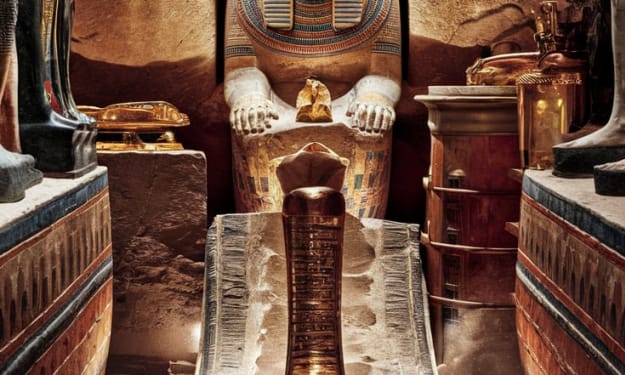
Tutankhamun, one of the most famous pharaohs of ancient Egypt, has fascinated historians and archaeologists for decades. His nearly intact tomb, discovered in 1922 by Howard Carter, revealed a treasure trove of artifacts that provided invaluable insights into Egypt’s 18th Dynasty. This book explores his life, reign, and the mystery surrounding his death.
By Nada soliman2 years ago in History
The Enigmatic Origins of the Israelites
The quest for origins has always been a driving force for humanity. From the dawn of consciousness, humans have sought to answer the fundamental question: Where do we come from? For many, the answer lies in a blend of myth, history, and faith. Among the most fascinating and enduring stories of origin is that of the Israelites, a people whose legacy has shaped the course of history, religion, and culture. Their story is one of mystery, resilience, and transformation, woven together by ancient texts, archaeological discoveries, and the enduring power of belief.
By A História2 years ago in History
The History of the Greek Language A Journey Through Time
The History of the Greek Language A Journey Through Time The Greek language holds a unique and unparalleled position in the history of human civilization. With a documented history spanning over 3,400 years it is one of the oldest living languages in the world. Its influence on the development of European and other languages as well as its role in shaping philosophy science literature and culture makes it a cornerstone of human intellectual achievement. The Greek language’s continuous evolution from its ancient roots to its modern form reflects its resilience and adaptability making it a fascinating subject of study for linguists historians and cultural enthusiasts alike.
By Adnan Rasheed2 years ago in History
Best Holy Places to Visit in India
India is a place of spiritual values which is understood to harbor some of the most pious pilgrimage sites in the world. With ancient temples to sacred rivers as places of worship, this holy site attains millions of devotees seeking peace and divine blessings. Religious experiences for cultural richness, here are some of the best holy places to visit in India.
By Ameya Beran2 years ago in History
"The Hidden Tomb of Alexander the Great"
"The Hidden Tomb of Alexander the Great: Unraveling the Abstruseness of the Absent Emperor's Final Comatose Place" Alexander the Abundant is acclaimed for his amazing aggressive conquests and the all-inclusive authority he congenital by the age of 32. His bequest is alloyed into the bolt of apple history, yet one of its best constant mysteries is the area of his final comatose place. Despite centuries of speculation, the hidden tomb of Alexander the Abundant has never been actually found, abrogation historians, archaeologists, and abundance hunters to allotment calm clues from age-old texts, broadcast relics, and legends. This commodity explores the history surrounding Alexander’s tomb, the theories about its location, and the abstruse appulse its analysis would accept on our compassionate of one of history’s greatest figures. The Actual Context Alexander the Great, built-in in 356 BCE in Pella, Macedonia, boarded on an aberrant aggressive attack that adapted the accepted world. By acquisition the Persian Authority and all-encompassing as far as India, he accustomed an authority that continued from Greece to Egypt and into Asia. However, afterwards his abortive afterlife in Babylon in 323 BCE, his all-inclusive authority bound burst amid his generals, accepted as the Diadochi. This analysis of ability led to decades of infighting and the closing dissolution of the unified authority he had built.
By Say the truth 2 years ago in History
Translate this Ancient Script and Earn $1 Million.
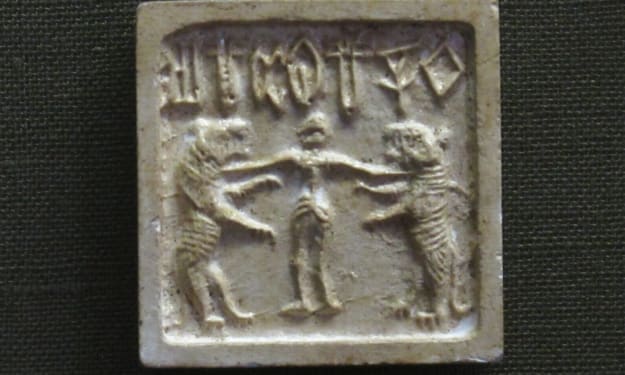
Translate this Ancient Script and Earn $1 Million This tablet is a classic example of the Indus script. A short sequence of symbols is displayed above an image in this case a bull and an unidentified object. Flourishing in the fertile plains of the Indus River the Indus Valley was home to one of the world's earliest urban civilizations. Between 3300 and 1700 BC the Indus people constructed remarkable cities such as Mohenjo daro and Harappa which featured the first urban sanitation systems advanced agricultural methods extensive trade networks and intricate art. Yet they left behind numerous mysteries. Who were these people and why did they abandon their sprawling cities. What form of governance did they have which facilitated meticulous urban planning but left no traces of palaces temples or monuments. One of the most significant challenges in understanding the Indus people is their written language. While it is likely they had one this remains a topic of debate. These questions are not only crucial for archaeologists and historians but also intersect with various political and cultural issues in the region.
By Adnan Rasheed2 years ago in History