Ancient
Why Was the Ancient Greek City of Hadrianopolis Suddenly Abandoned?
Why Was the Ancient Greek City of Hadrianopolis Suddenly Abandoned? The ancient Greek city of Hadrianopolis located in the Eskipazar district of Karabuk Turkey has long been a site of fascination for archaeologists and historians. Known for its stunning mosaics and historical significance the city was a prominent center in the western Black Sea region during antiquity. However its sudden and complete abandonment in the 7th century AD has remained a mystery for centuries. Recent excavations led by Ibrahim Sahin the culture and tourism director of Karabuk and Ersin Celikbas an archaeology professor at Karabuk University are shedding new light on this enigmatic event offering clues that may finally explain why the city was deserted.
By Adnan Rasheed2 years ago in History
Historic Kama Sutra Sculptures of Khajuraho Temple India UNESCO world Heritage Site Khajuraho India.
Historic Kama Sutra Sculptures of Khajuraho Temple India UNESCO world Heritage Site Khajuraho India. The Khajuraho Temple complex in India is a remarkable testament to the artistic and cultural achievements of ancient India. Recognized as a UNESCO World Heritage Site these temples are renowned for their intricate and exquisite sculptures particularly those depicting themes from the Kama Sutra. Located in the Chhatarpur district of Madhya Pradesh Khajuraho is a symbol of India's rich heritage and architectural brilliance. The temples built between 950 and 1050 CE during the Chandela dynasty were once part of a larger group of 85 temples of which only 25 survive today. These temples are divided into three groups Western Eastern and Southern and are dedicated to both Hindu and Jain traditions. The most striking feature of the Khajuraho temples is their elaborate and detailed sculptures which adorn the walls pillars and ceilings. Among these the sculptures inspired by the Kama Sutra are the most celebrated. The Kama Sutra an ancient Indian text attributed to Vatsyayana is a treatise on human relationships love and intimacy. While the text itself is often misunderstood as merely a manual on sexual positions it is, in fact, a comprehensive guide to the art of living encompassing ethics relationships and the pursuit of pleasure as one of the four goals of human life Purusharthas. The sculptures at Khajuraho beautifully capture the essence of this philosophy depicting various aspects of human life, including love romance and intimacy, in a highly artistic and sophisticated manner.
By Adnan Rasheed2 years ago in History
A Love Beyond Time
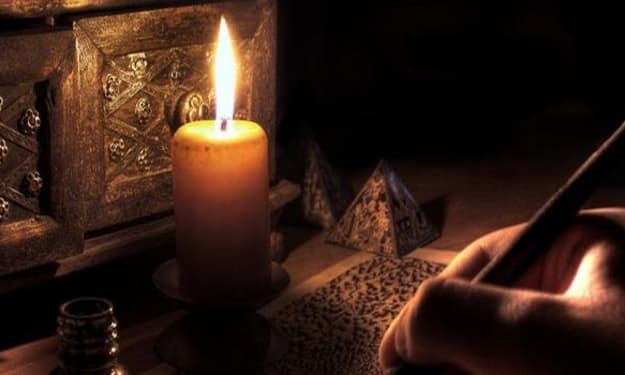
Paris, March 3, 1762 My Dearest Éléonore, As I sit here this evening, the flickering light of a solitary candle is my only companion. It casts long shadows on the walls, and it is in this quiet solitude that I take up my pen. My heart, full of yearning, compels me to write to you, my beloved, for your absence is a burden too heavy for me to bear in silence. Each pulse of my heart echoes with your name, each breath I take seems to call out for the warmth of your presence. How I long for the gentle touch of your hand upon mine, to hear the sweet melody of your voice that always soothes my troubled soul. Oh, how I ache for the softness of your embrace, a comfort I once knew so well.
By Alain SUPPINI2 years ago in History
Part 1 Hannibal’s Early Life
On the northern shore of modern-day Tunisia, less than four hundred miles from Rome sat the city of Carthage which was a substantial rival for the Roman republic. Nothing better encapsulated the severity of the threat of Carthage to Rome than that of Hannibal and his conquests of Italy. His decision to ally with previously thought Italian allies changed the fabric of the Roman Republic. No longer could Roman allies be seen as insignificant but rather vital to the sustainability of Rome. Hannibal's rise to power can be attributed to many things but the best quality that encapsulates him as a figure is his ability to adapt his father's tactics and learn from the mistakes of Carthage in the first Punic War. Hannibal Barca was born to a distinguished Carthaginian family around 247 BCE. Hamilcar Barca, his father, fought in the first Punic war taking control of the Carthaginian fleet around the same time Hannibal was born. After the war was over with the Romans, Carthage was in a state of turmoil because of its unpaid debts to mercenaries resulting in a revolution referred to as the Mercenary War. Hannibal was a young child while this was happening and witnessed his city being ravaged by revolution. Rome seized the opportunity to further weaken Carthage by conquering the islands of Sardinia and Corsica. As the story goes, this so enraged Hamilcar he made his young son swear to one day destroy Rome. While this story is untruthful and an attempt to further villainize Hannibal, one thing is undeniable. Hannibal from an early age was exposed to war, and his father was well distinguished in Carthage for his tactics. These two things made him ready to take on the Roman military. Not an oath, his father made him swear as a child. With these two factors, one can see how Hannibal grew up to become one of Ancient History's greatest generals. From then until his father died in his late teens Hannibal was instructed by his father in warfare and leadership. By his twenties, he was given command by his father’s successor in Spain and later took over control of the entire Spanish province by his mid-twenties. Hannibal’s journey starting in Spain and ending with his death in Bithynia around 182 BCE, helped shape Rome into the militaristic empire it became following the Punic wars.
By Nate James2 years ago in History
The Chrysanthemum and the Crane: A Diary & Correspondence, Japan, Edo Period (1703)
Part 1: Hana's Diary - Musings on a Changing World Date: Kagen 6, Month 2, Day 10 (March 17, 1703) The cherry blossoms are beginning to unfurl their delicate petals, a pale blush against the grey stone walls of the garden. It is a beautiful time, a time for poetry and contemplation. Yet, my heart feels none of that peace. Father has declared he intends to arrange a marriage for me.
By Israt Jahan 2 years ago in History
The Golden Age of the Tsar Empire. AI-Generated.
The Golden Period of the Tsar Empire: Power, Wealth, and Expansion The Tsarist Empire, also known as the Russian Empire, was one of the largest and most powerful empires in history. Its golden period, spanning from the late 17th century to the early 20th century, saw immense territorial expansion, military dominance, economic prosperity, and cultural achievements. Under the rule of powerful tsars like Peter the Great and Catherine the Great, Russia transformed into a global superpower. This article explores the factors that led to the empire’s golden period, its military strength, economic development, and eventual decline. 1. The Rise of the Tsarist Empire The foundation of the Tsarist Empire was laid in 1547 when Ivan IV (Ivan the Terrible) became the first Tsar of Russia. However, the true golden age began with the reign of Peter the Great (1682–1725) and continued under Catherine the Great (1762–1796) and their successors. Key Factors Behind the Golden Period: Territorial Expansion: Russia expanded into Siberia, Central Asia, and parts of Eastern Europe, making it the largest contiguous empire in the world. Modernization & Reforms: Peter the Great introduced European-style governance, military structures, and education systems. Economic Growth: Trade with Europe and Asia flourished, fueled by agriculture, fur trade, and industrial development.
By Say the truth 2 years ago in History
The Most Beautiful Neil Island in the World
Neil Island, a hidden gem in the Andaman and Nicobar Islands of India, is a paradise that boasts stunning landscapes, pristine beaches, and a tranquil atmosphere. Known for its natural beauty and untouched charm, Neil Island is a must-visit destination for nature lovers, adventure seekers, and anyone looking for a peaceful escape from the hustle and bustle of city life.
By Zinnat ara Begum2 years ago in History
Buckingham Palace
Buckingham Palace is one of the most famous buildings in the world. It is the official residence of the British monarch in London, England. The palace is a symbol of the British royal family and has been the center of many important events in British history. Millions of tourists visit Buckingham Palace every year to see its beautiful architecture and experience its rich history.
By Farhan Sayed2 years ago in History
Turkey Mysterious Family That walk On All Four:
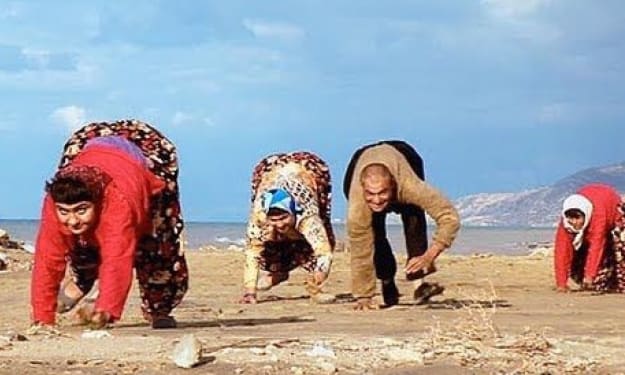
Turkey Mysterious Family That walk On All Four: In Turkey there is a family that has gained worldwide fame due to their unique way of life. This family possesses the extraordinary ability to walk on both their hands and feet a trait that sets them apart from most humans. This rare capability has not only intrigued scientists but has also sparked discussions about social and cultural perspectives. The family residing in a small village in Turkey has been walking on all fours since childhood. This form of locomotion typically seen in animals, is exceptionally rare in humans. Scientists believe this ability may stem from genetic mutations or a specific condition in the nervous system. However the exact cause remains a mystery.
By Adnan Rasheed2 years ago in History
The Awakening of Cthulhu
The Enlivening of Cthulhu The ocean was unnaturally still. Skipper Elias Mercer, a carefully prepared mariner with many years of involvement, remained on the deck of the Sea's Rage, looking into the fog covered skyline. His group murmured among themselves, discussing signs and old mariner's stories — of a sleeping loathsomeness underneath the waves.
By Masaddeque al Shishir2 years ago in History
The Hidden Treasures of Indian History
The Hidden Treasures of Indian History: A Bequest of Abundance and Mystery India, accepted for its all-inclusive cultural ancestry and immense wealth, has been a acreage of abundance for centuries. From the time of age-old kingdoms to colonial rule, India's treasures accept absorbed historians and abundance hunters alike. Some of these treasures abide hidden, active beneath palaces, temples, and forts, cat-and-mouse to be discovered. This commodity explores India's best acclaimed hidden treasures, their estimated net worth, and how they analyze with added actual abundance worldwide. India’s Best Acclaimed Hidden Treasures 1. The Abundance of the Padmanabhaswamy Temple (Kerala) One of the best acclaimed discoveries in Indian history, the hidden abundance of the Padmanabhaswamy Temple, abashed the world. In 2011, a abstruse basement (Vault B) was opened, absolute an estimated $22 billion account of gold, jewelry, and adored stones. However, addition basement charcoal unopened, believed to accommodate alike greater wealth. 2. The Nizam’s Abundance (Hyderabad) The aftermost Nizam of Hyderabad, Mir Osman Ali Khan, was already the richest man in the world. His treasure, including the Jacob Diamond (worth over $100 million), gold reserves, and attenuate artifacts, is estimated to be account over $50 billion. Some of it is housed in museums, while others abide hidden in underground vaults. 3. The Son Bhandar Caves (Bihar) These caves in Bihar are believed to adumbrate the absent abundance of King Bimbisara of the Magadha Empire. The walls of the cavern accept inscriptions in an age-old script, which some accept accommodate the abstruse to aperture the vault. The estimated bulk is alien but could be in the billions. 4. The Abundance of Raja Raja Chola (Tamil Nadu) The Chola absolutism was accepted for its immense wealth, abundant of which was stored in temples and underground vaults. Historians accept that a all-inclusive bulk of gold, silver, and jewels from the Chola era charcoal hidden, abnormally in temples beyond Tamil Nadu. 5. The Krishnadevaraya’s Gold (Vijayanagara Empire) The Vijayanagara Empire was one of the richest in Indian history, with its capital, Hampi, accepted as the "City of Gold." Abundant of its abundance was looted by the Deccan Sultanates in 1565, but abounding accept that hidden vaults still accommodate alien treasures. 6. The Abundance of the Nawabs of Awadh (Uttar Pradesh) The Nawabs of Awadh were accepted for their absurd affairs and immense riches. Some historians advance that their hidden wealth, active beneath the charcoal of palaces in Lucknow, could be account billions. Comparing Indian Abundance with Added Actual Riches India’s hidden treasures are amid the greatest in apple history, but how do they analyze with added actual treasures? Egypt’s Absent Treasures: The gold of Pharaoh Tutankhamun’s tomb, account an estimated $2 billion, is one of the richest distinct tomb discoveries. However, India’s Padmanabhaswamy Temple abandoned surpasses this amount. El Dorado (South America): The allegorical burghal of gold in South America charcoal a mystery, but if found, it could battling India’s wealth. The Absent Inca Gold: Estimated at over $10 billion, the Inca Empire’s absent gold is commensurable to the treasures of the Vijayanagara Empire. The Tsar’s Abundance (Russia): The absent gold of the Russian Tsars, account an estimated $50 billion, is one of the few that bout India's hidden wealth. Estimated Net Account of India’s Hidden Treasures The accumulated estimated bulk of India’s accepted and doubtable hidden treasures is about $100 to $150 billion, with the Padmanabhaswamy Temple abandoned accidental a ample portion. However, abounding accept that the absolute abundance could be far higher, abnormally if alien aristocratic and temple treasures are included. Where Are These Treasures Now? Many of these treasures are: Locked in vaults: Like the treasures of the Padmanabhaswamy Temple and the Nizam’s collection. Inaccessible or lost: Some, like the Son Bhandar treasure, abide hidden due to age-old cryptic codes. Looted by invaders: India’s abundance was plundered by British colonizers, Persian invaders like Nadir Shah (who took the Kohinoor Diamond), and added adopted rulers. Who Owned These Treasures? Ancient Kings and Dynasties: The Mauryas, Cholas, and Vijayanagara rulers accumulated abundant wealth. Temple Authorities: Hindu temples like Padmanabhaswamy and Thiruvananthapuram stored massive amounts of gold. Nawabs and Maharajas: Indian baronial states, including Hyderabad, Mysore, and Awadh, had immense abundance afore British rule. Conclusion India’s hidden treasures represent a bequest of immense wealth, history, and mystery. While some accept been discovered, abounding abide buried, cat-and-mouse to be unearthed. Whether hidden in temple vaults, alcazar ruins, or abysmal caves, these treasures acquaint the adventure of India’s august accomplished and its constant riches. If absolutely accounted for, India’s absent treasures could be amid the best admired in apple history.
By Say the truth 2 years ago in History
Scientists Discover Traces of Military Service on a 19th Century Soldier’s Teeth.
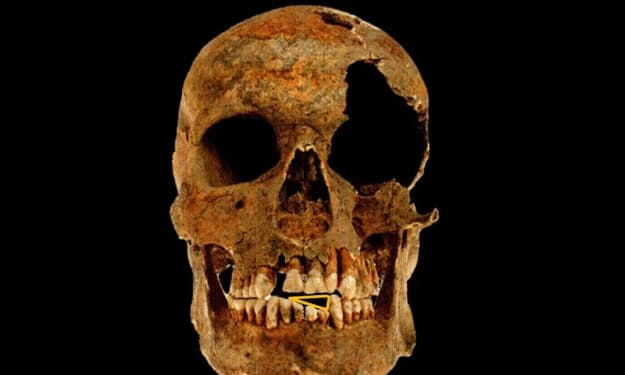
Scientists Discover Traces of Military Service on a 19th Century Soldier’s Teeth. A remarkable discovery by scientists at the Olomouc Archaeological Center in the Czech Republic has shed new light on the harsh realities of military life in the late 18th and early 19th centuries. The analysis of a soldier’s skeletal remains unearthed in the town of Majetín in the Olomouc region has revealed the first physical evidence of a long suspected military practice the use of teeth to open gunpowder cartridges. This finding not only confirms historical accounts but also provides a rare glimpse into the daily struggles and physical toll endured by soldiers of that era. The skeleton discovered in 2012 belonged to a man aged between 30 and 50 years standing approximately 174 cm tall. Anthropologist Lukáš Šín who led the study noted that the soldier’s lower incisors showed clear signs of repeated mechanical stress. The soldier’s teeth were weakened through repeated activity and this stress could have resulted in the crowns of the teeth breaking Šín explained. Historical records indicate that soldiers during this period loaded their firearms by biting into paper cartridges containing gunpowder and bullets. They would tear open the cartridges with their teeth separate the powder and pour it into the muzzle of their weapons. While this practice has been documented in military manuals direct physical evidence had been elusive until now.
By Adnan Rasheed2 years ago in History