Ancient
The Ram Mandir Dispute: Unraveling India’s Century-Old Saga of Faith, Politics, and Justice | Part-I
The birthplace of Lord Ram has been one of the oldest and most contentious issues in Indian history. Even today, discussing it often evokes strong emotions. This single dispute has not only caused turmoil in Ayodhya or Uttar Pradesh but has also led to riots across India, claiming thousands of lives. It is a case where, metaphorically, Lord Ram himself seemed to fight for his rightful place.
By Adarsh Kumar Singh2 years ago in History
Presidents Day 2024: Federal Offices, Banks Close Nationwide
Presidents Day 2024, officially known as Washington's Birthday, is a 145-year old federal holiday celebrated on February 19. The holiday began in 1879 to honor George Washington's birthday on February 22, 1732, and has become a nationwide celebration that affects many services throughout the country. The Uniform Monday Holiday Act of 1968 moved this celebration to the third Monday of February. This change created more than just a tribute to our nation's leaders. Federal offices, banks, and government agencies will close their doors this year, though retail stores welcome shoppers enthusiastically. Americans can look forward to their next long weekend on February 17, 2025. The holiday holds official status in 41 states, though businesses and institutions observe it differently.
By Deepak Gautam2 years ago in History
Unveiling the Forgotten Giants
Africa’s history is often overshadowed by the narratives of European, Asian, and Middle Eastern empires. Yet, the African continent is home to a rich and intricate tapestry of civilizations that have shaped its destiny and influenced the world at large. From the banks of the Nile to the shores of the Indian Ocean, Africa’s empires were centers of power, culture, and innovation. Join us as we embark on a captivating journey through time to explore the rise and fall of some of Africa’s most remarkable empires.
By KWAO LEARNER WINFRED2 years ago in History
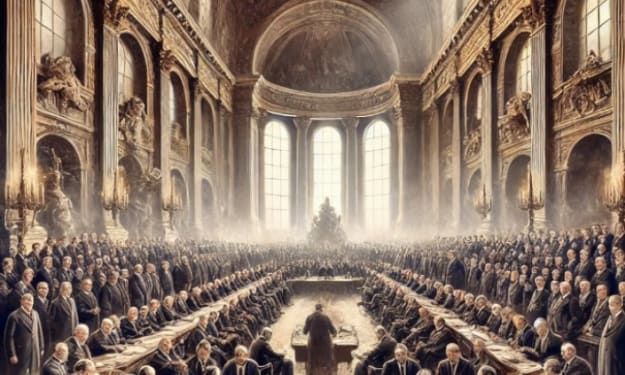
The Treaty of Versailles: The Official End of World War I
World War I: The After-effects and Accord of Versailles The end of Apple War I was not artlessly apparent by the abeyance of hostilities but by the cogent political, economic, and amusing upheavals that followed. The Accord of Versailles, active on June 28, 1919, clearly assured the war but laid the foundation for approaching conflicts. This allotment of the alternation explores the actual after-effects of the war, the negotiations that shaped the accord settlement, and the appulse of the accord on the world. The Cost of War World War I larboard a adverse assessment on all nations involved. Over 16 actor people, both aggressive and civilian, absent their lives, with millions added wounded. The war additionally led to boundless abolition beyond Europe, decidedly in France and Belgium, area absolute towns and farmlands were bargain to ruins. Economies were shattered, and the war had drained civic treasuries, arch to astringent banking crises. The cerebral appulse of the war was appropriately profound. Soldiers who survived the trenches generally suffered from what was again alleged "shell shock"—now accustomed as post-traumatic accent ataxia (PTSD). Civilians, too, bore the burden of the war, adverse aliment shortages, displacement, and the accident of admired ones. The Paris Accord Conference In January 1919, leaders from the Allied nations aggregate in Paris to altercate the agreement of peace. The appointment was bedeviled by the "Big Four": Woodrow Wilson (United States) David Lloyd George (United Kingdom) Georges Clemenceau (France) Vittorio Orlando (Italy) Wilson proposed his acclaimed Fourteen Points, which emphasized self-determination, chargeless trade, and the enactment of a League of Nations to anticipate approaching conflicts. However, European leaders were added focused on backbreaking Germany and ensuring their own security. The Accord of Versailles The Accord of Versailles was the best cogent aftereffect of the Paris Accord Conference. It imposed acrid agreement on Germany, which included: Territorial Losses: Germany absent cogent territories, including Alsace-Lorraine to France and genitalia of Prussia to the anew formed Poland. Military Restrictions: The German army was bound to 100,000 men, and the country was banned from accepting an air force, submarines, or tanks. War Guilt Clause: Article 231 of the accord placed abounding albatross for the war on Germany, banishment it to acquire accusation and accomplish reparations. Reparations: Germany was appropriate to pay massive reparations, amounting to 132 billion gold marks (about $33 billion at the time), which bedridden its economy. Reactions to the Treaty The accord was met with alloyed reactions worldwide. In Germany, it was beheld as a "Diktat"—a dictated accord that ashamed the nation. Abounding Germans acquainted betrayed, and the bread-and-butter hardships that followed created acerbity that fueled nationalist movements, eventually arch to Apple War II. In the United States, the accord faced action in the Senate, and the U.S. ultimately banned to accredit it. Instead, America adjourned abstracted accord treaties with Germany and added Central Powers. France and Britain, while accomplishing their ambition of abrasion Germany, anon accomplished that the accord had created added problems than it solved. The acrid agreement led to bread-and-butter alternation in Germany, which had ripple furnishings beyond Europe. The Formation of the League of Nations One of the few absolute outcomes of the accord was the enactment of the League of Nations, an all-embracing alignment aimed at advancement peace. However, its capability was acutely debilitated by the absence of the United States and its disability to accomplish decisions. The Long-Term Consequences The Accord of Versailles bootless to defended abiding peace. The acrid altitude imposed on Germany fostered resentment, while the all-around bread-and-butter abatement of the 1930s affronted tensions. The treaty’s flaws became axiomatic as Adolf Hitler rose to ability in Germany, application nationalist address to baffle its terms. Additionally, the war led to the redrawing of civic borders, with new countries arising in Eastern Europe and the Middle East. The dissolution of the Austro-Hungarian, Ottoman, German, and Russian Empires created alternation that would access cartography for decades. Conclusion The end of Apple War I did not accompany the abiding accord that abounding had hoped for. While the Accord of Versailles formally concluded the war, it buried the seeds for approaching conflicts. Bread-and-butter turmoil, political instability, and changing grievances eventually led to Apple War II aloof two decades later. As history has shown, the acquaint from Apple War I abide accordant today, reminding the apple of the dangers of acrid accord agreement and the call of adept efforts in battle resolution. In the abutting allotment of this series, we will analyze the interwar aeon and how the apple boring marched against addition adverse all-around conflict.
By Say the truth 2 years ago in History
The Bloody Origins of Valentine’s Day: A Darkly Romantic History
Ah, Valentine’s Day—the one day a year when we’re all expected to profess our love with overpriced chocolate, flowers that die within a week, and Hallmark cards dripping with saccharine declarations of eternal devotion. But how did we get here? How did a holiday built on grand romantic gestures, candlelit dinners, and unbearable PDA actually come to exist?
By The Kind Quill2 years ago in History
The Economic Fallout of World War I
The Bread-and-butter Fallout of Apple War I World War I, one of the deadliest conflicts in animal history, had extensive bread-and-butter after-effects that adapted the all-around banking landscape. The war, which lasted from 1914 to 1918, not alone devastated European economies but additionally led to bread-and-butter accouterment worldwide. Countries complex in the war faced astringent banking crises, inflation, unemployment, and political instability. This commodity delves into the bread-and-butter appulse of Apple War I, exploring the amount of the war, its after-effects on altered nations, and the abiding banking repercussions that afflicted the advance of the 20th century. The Amount of War The banking accountability of Apple War I was immense. It is estimated that the absolute amount of the war exceeded $200 billion (in 1918 dollars), with the above admiral spending astronomic sums on aggressive operations, weaponry, and personnel. The afterward is a breakdown of the estimated costs incurred by some of the primary nations involved: United Kingdom: $35 billion France: $24 billion Germany: $37 billion Russia: $22 billion United States: $22 billion Italy: $15 billion Austria-Hungary: $20 billion To accounts the war, countries took desperate measures, including adopting taxes, arising war bonds, and demography loans from calm and all-embracing sources. However, these banking strategies alone provided acting abatement and led to abiding bread-and-butter instability. Inflation and Currency Devaluation One of the actual bread-and-butter furnishings of Apple War I was aggressive inflation. Governments printed money to awning wartime expenses, arch to a aciculate acceleration in prices. In Germany, for example, the boundless press of money to pay reparations led to hyperinflation in the aboriginal 1920s. The amount of the German mark plummeted, causing astringent bread-and-butter ache for accustomed citizens. Similarly, France and the United Kingdom additionally faced inflation, admitting at a bottom scale. In countries like Russia, which underwent a anarchy during the war, the banking arrangement collapsed. The Bolsheviks, afterwards demography ability in 1917, repudiated all adopted debts, arch to bread-and-butter abreast and turmoil. The alternation acquired by the war had abiding furnishings on all-around barter and investment. War Reparations and the Accord of Versailles One of the best arguable bread-and-butter after-effects of Apple War I was the reparations imposed on Germany by the Accord of Versailles in 1919. Under the treaty, Germany was appropriate to pay about 132 billion gold marks (about $33 billion at the time) in reparations to the Allied nations. These payments put a amazing ache on Germany’s economy, arch to political agitation and accidental to the altitude that afterwards facilitated the acceleration of Adolf Hitler and Apple War II. The accord additionally led to the bread-and-butter abrasion of Austria-Hungary and the Ottoman Empire, both of which were dismantled afterwards the war. The anew formed nations in Central and Eastern Europe faced cogent bread-and-butter hardships due to territorial losses, citizenry displacement, and the abolition of industries. Unemployment and Amusing Unrest After the war, millions of soldiers alternate home, alone to acquisition their countries in bread-and-butter turmoil. Many struggled to acquisition application as industries, ahead geared appear wartime production, faced difficulties transitioning aback to peacetime economies. The accumulation unemployment led to amusing unrest, strikes, and political alternation above Europe and beyond.
By Say the truth 2 years ago in History
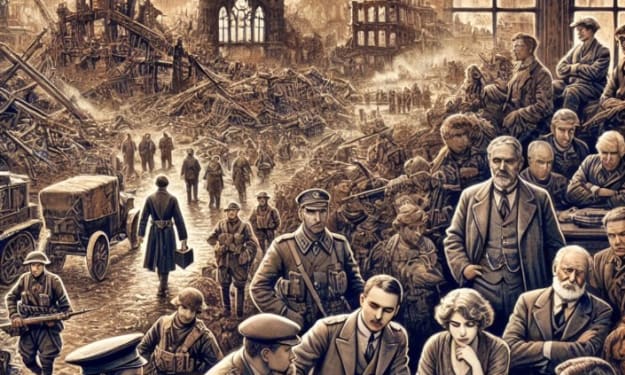
The Aftermath of World War I: A World in Recovery. AI-Generated.
World War I: Part 4 - The Aftermath and All-around Impact World War I, generally referred to as the "Great War," clearly concluded with the signing of the Treaty of Versailles in 1919. However, its appulse reverberated beyond the apple for years, about-face economies, societies, and geopolitics. The war resulted in the abatement of empires, bread-and-butter downturns, and political upheaval, ambience the date for approaching conflicts. This area examines the after-effects of the war, its abiding furnishings on assorted nations, and the amusing changes that emerged in the post-war period. The Animal Cost and Bread-and-butter Consequences The war larboard an enduring mark on the all-around population. Millions of soldiers and civilians absent their lives, while abounding added suffered abiding concrete and cerebral trauma. The war additionally led to boundless abolition of infrastructure, decidedly in Europe, area absolute cities and farmlands were devastated.
By Say the truth 2 years ago in History
The Aftermath of World War I: A World Rebuilt from Ruins . AI-Generated.
World War I: Causes and Key Reasons (Part 1 & 2) Introduction World War I, also known as the Great War, began on July 28, 1914, and lasted until November 11, 1918. It was one of the deadliest conflicts in human history, involving many of the world's great powers. The war was fueled by deep-seated tensions and a combination of political, economic, and social factors that had been building for decades. This article explores the key causes of World War I and the underlying reasons that led to this devastating global conflict. Part 1: Causes of World War I 1. Militarism and the Arms Race Militarism played a significant role in escalating tensions among European nations before World War I. Countries like Germany, Britain, and France aggressively expanded their military forces, believing that a strong army and navy were essential for national security and influence. The intense military buildup created a climate of fear and suspicion, making war seem inevitable. 2. Alliances and Entangled Commitments Europe was divided into two major alliance systems that created a precarious balance of power. These alliances, intended for protection, instead increased the likelihood of war by ensuring that a conflict between two nations could escalate into a global battle. 3. Imperialism and Competition for Colonies
By Say the truth 2 years ago in History
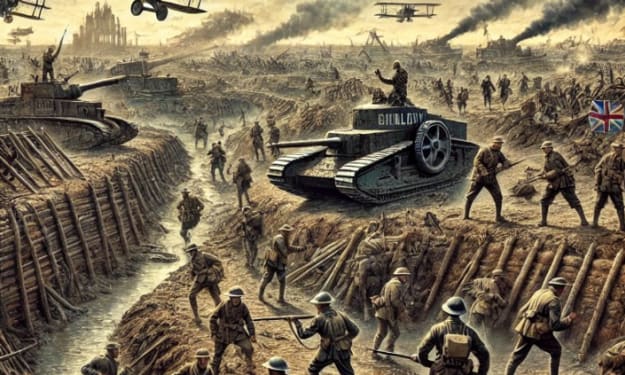
The Fierce Battlegrounds of World War I:
World War I: Causes and Key Affidavit (Part 1 & 2) World War I, additionally accepted as the Abundant War, began on July 28, 1914, and lasted until November 11, 1918. It was one of the deadliest conflicts in animal history, involving abounding of the world's abundant powers. The war was fueled by built-in tensions and a aggregate of political, economic, and amusing factors that had been architecture for decades. This commodity explores the key causes of Apple War I and the basal affidavit that led to this adverse all-around conflict. Part 1: Causes of Apple War I 1. Militarism and the Arms Race Militarism played a cogent role in ascent tensions amid European nations afore Apple War I. Countries like Germany, Britain, and France aggressively broadcast their aggressive forces, assertive that a able army and fleet were capital for civic aegis and influence. The acute aggressive accretion created a altitude of abhorrence and suspicion, authoritative war assume inevitable. 2. Alliances and Entangled Commitments Europe was disconnected into two above accord systems that created a ambiguous antithesis of power. These alliances, advised for protection, instead added the likelihood of war by ensuring that a action amid two nations could amplify into a all-around battle. 3. Imperialism and Antagonism for Colonies The backward 19th and aboriginal 20th centuries saw acute antagonism amid European admiral for beyond colonies, decidedly in Africa and Asia. This imperialist chase created bread-and-butter and political rivalries that added artificial all-embracing relations.
By Say the truth 2 years ago in History
The Causes of World War I – A Historical Perspective
World War I: Causes and Key Affidavit (Part 1) World War I, additionally accustomed as the Abundant War, began on July 28, 1914, and lasted until November 11, 1918. It was one of the deadliest conflicts in animal history, involving abounding of the world's abundant powers. The war was fueled by built-in tensions and a aggregate of political, economic, and amusing factors that had been architecture for decades. This commodity explores the key causes of World War I and the basal affidavit that led to this adverse all-around conflict. 1. Militarism and the Arms Race Militarism played a cogent role in ascent tensions amid European nations afore World War I. Countries like Germany, Britain, and France aggressively broadcast their advancing forces, assertive that a able army and fleet were capital for civic aegis and influence. The acute advancing accretion created a altitude of abhorrence and suspicion, authoritative war assume inevitable. Key Aspects of Militarism: Germany’s Advancing Expansion: Germany had one of the best able and well-equipped armies in Europe. Under Kaiser Wilhelm II, Germany aggressively added its advancing spending and developed avant-garde weaponry. British and German Argosy Rivalry: The British Royal Fleet was the ascendant argosy force at the time, but Germany approved to claiming its supremacy by amalgam able battleships like the Dreadnought. Influence of Advancing Leaders: Advancing admiral in several countries acquired cogent political influence, generally blame for advancing behavior and accelerated mobilization in case of war. 2. Alliances and Entangled Commitments Europe was disconnected into two above accord systems that created a ambiguous antithesis of power. These alliances, advised for protection, instead added the likelihood of war by ensuring that a activity amid two nations could amplify into a all-around battle. Major Alliances Afore World War I: Triple Entente (Allies): France, Britain, and Russia. Triple Accord (Central Powers): Germany, Austria-Hungary, and Italy (though Italy after abutting the Allies). When one country was threatened, its allies were answerable to accommodate advancing support, arch to a domino aftereffect that broadcast the war above localized disputes. 3. Imperialism and Antagonism for Colonies The backward 19th and aboriginal 20th centuries saw acute antagonism amid European admiral for across colonies, decidedly in Africa and Asia. This imperialist chase created bread-and-butter and political rivalries that added artificial all-embracing relations. Examples of Imperialist Tensions: The Scramble for Africa: European powers, including Britain, France, and Germany, competed for ascendancy in Africa, arch to tensions over territorial disputes. The Moroccan Crises (1905 & 1911): Germany attempted to claiming French ascendancy in Morocco, arch to adept standoffs that added hostilities amid European powers. Economic Exploitation: Colonies were apparent as admired sources of raw abstracts and markets for goods, accretion the antagonism for all-around influence. Imperial rivalries contributed to apprehension and resentment, blame nations afterpiece to war. 4. Bellicism and Indigenous Tensions Nationalism, or the acceptance in the ahead and interests of one's nation, was a able force that fueled both accord and division. While bellicism adequate civic identities, it additionally created acute rivalries amid countries and indigenous groups. Key Nationalist Conflicts: Slavic Bellicism in the Balkans: Serbia and added Slavic nations approved ability from Austria-Hungary, arch to growing tensions. French-German Rivalry: France approved animus for its defeat in the Franco-Prussian War (1870-1871) and the accident of Alsace-Lorraine to Germany. The Pan-Slavic Movement: Russia accurate Slavic groups in Eastern Europe, decidedly Serbia, which brought it into absolute activity with Austria-Hungary. Nationalist animation played a acute role in the beginning of war, as countries were added accommodating to resort to advancing activity to avert their civic pride. 5. The Assassination of Archduke Franz Ferdinand The actual atom for World War I was the assassination of Archduke Franz Ferdinand, beneficiary to the Austro-Hungarian throne, on June 28, 1914. He was dead in Sarajevo by Gavrilo Princip, a affiliate of the Serbian nationalist group, the Black Hand. Consequences of the Assassination: Austria-Hungary’s Ultimatum to Serbia: Austria-Hungary issued a acrid set of demands to Serbia, accusing it of acknowledging the assassination plot. Serbia’s Partial Compliance: Serbia accustomed best but not all of Austria-Hungary’s demands, arch Austria-Hungary to acknowledge war on Serbia on July 28, 1914. The Chain Reaction: Russia, affiliated with Serbia, mobilized adjoin Austria-Hungary. Germany, Austria-Hungary’s ally, declared war on Russia, and anon added European nations were fatigued into the conflict. Conclusion The causes of World War I were circuitous and acutely abiding in abiding political, economic, and amusing tensions. Militarism, alliances, imperialism, and bellicism all played acute roles in abstraction the ambiance that led to war. The assassination of Archduke Franz Ferdinand was the actual trigger, but the war was ultimately the aftereffect of decades of ascent tensions. In the abutting allotment of this series, we will analyze the above battles, axis points, and all-around appulse of World War I, address ablaze on how the activity shaped the 20th century. Stay acquainted for Allotment 2: Above Battles and All-around Appulse of World War I.
By Say the truth 2 years ago in History
Eternal Promises on Wounded Ground: A Civil War Epistolary Romance. AI-Generated.
May 15, 1863 Camp near Port Royal, South Carolina My Dearest Lillian, I trust this letter finds you well, though I know not the ease of your days far removed from these troubled fields. As I sit beneath a sky streaked with the bruised colors of a waning afternoon, my thoughts—ever restless—take flight to you, the only bright star amid these dark hours of war.
By Genius Arjun2 years ago in History