Ancient
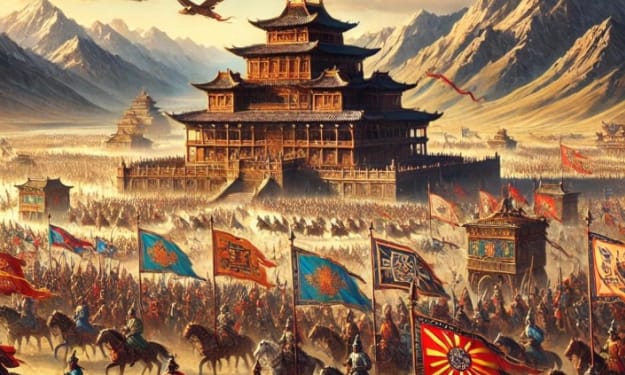
Rise from Qin: The First Step to Chinese Unification. AI-Generated.
Rise from Qin: The First Step to Chinese Unification In the annals of world history, few figures loom as large as Qin Shi Huang, the first Emperor of a unified China. Before he wore the yellow robes of the Son of Heaven, he was known as Ying Zheng, a young king from the western frontier state of Qin. His rise marked the beginning of one of the most transformative periods in Chinese history. This first part of the series explores the early life of Ying Zheng and how the Kingdom of Qin, once considered a barbaric backwater by its eastern rivals, rose to dominate the Warring States. The Warring States: A Nation Divided Before unification, China was a fractured landscape of seven dominant states: Qi, Chu, Yan, Han, Zhao, Wei, and Qin. This period, known as the Warring States (475–221 BCE), was characterized by constant warfare, shifting alliances, and the rise and fall of powerful warlords. Philosophical schools like Confucianism, Daoism, and Legalism flourished amid this chaos, each offering solutions to disorder. Qin, situated in the far west near what is now Shaanxi Province, was long regarded as culturally inferior by the eastern states. However, it had key advantages: fertile lands, access to the Wei River, and a robust military tradition. Its rulers had adopted Legalism, a philosophy emphasizing strict laws, centralized authority, and merit-based governance, thanks to the reforms of Shang Yang in the 4th century BCE. These reforms turned Qin into a powerhouse. The Birth of Ying Zheng Ying Zheng was born in 259 BCE during a time of both internal and external tension. His father, Yiren, was a Qin prince held hostage in the rival state of Zhao. According to some accounts, Ying Zheng’s mother was a concubine of merchant background, further complicating his legitimacy. Eventually, Yiren was released and returned to Qin, where he was enthroned as King Zhuangxiang, thanks to the political maneuvering of the powerful minister Lü Buwei. When Zhuangxiang died in 247 BCE, Ying Zheng ascended to the throne at the age of 13. Due to his youth, the administration was handled by Lü Buwei, who acted as regent. Some historians believe Lü Buwei may have been Ying Zheng’s true father, though this remains speculative. What is clear is that Ying Zheng was raised amidst palace intrigue and political maneuvering, which likely influenced his later obsession with control and loyalty. Seizing Power: The End of the Regency By 238 BCE, Ying Zheng had reached maturity and staged a coup at the age of 21 to remove Lü Buwei from power. In doing so, he asserted his authority over the Qin court and began consolidating power. His early years as king were marked by purges of rival factions, the appointment of capable generals, and the centralization of authority. One of his most important allies during this period was Li Si, a brilliant Legalist scholar who helped Ying Zheng refine Qin’s administrative system and prepare for large-scale warfare. Together, they laid the groundwork for national conquest, focusing on tax reform, military logistics, and infrastructure projects such as road construction and canal systems that would allow armies to move swiftly across territories. The Qin Army: Forged for Conquest Qin's military success was not solely due to Ying Zheng's ambition; it was also the result of institutional strength. The army was highly organized and disciplined, drawing from the Legalist ideals of meritocracy and loyalty. Officers were promoted based on battlefield performance, not noble birth, a revolutionary idea at the time. Additionally, the state invested in advanced weaponry and siege technologies. Crossbows, iron weapons, and formidable cavalry units made the Qin army one of the most fearsome in the ancient world. The Great Wall, or at least early forms of it, was already being constructed in the north to ward off nomadic invasions, showcasing Qin’s commitment to defense and long-term strategy. Diplomatic Manipulation
By Say the truth 2 years ago in History
The Emergence of the First Emperor
He proclaimed himself "Qin Shi Huang," translating to "First Emperor of Qin," and enacted extensive modifications to centralize authoritystandardizing currencies, weights, measures, laws, and even the written language. He initiated monumental infrastructure initiatives such as the initial iteration of the Great Wall and an extensive national road network. However, his most extravagant undertaking was his tomb, safeguarded by the Terracotta Army, a site that would remain undiscovered for over 2,000 years. Yet, despite all his achievements, Qin Shi Huang was profoundly preoccupied with an aspect he could not master: mortality. The Emperor's Fascination with Immortality Qin Shi Huang’s dread of death was intense. As he advanced in age, he became increasingly engulfed by the notion of eternal existence. He dispatched envoys and alchemists throughout China and beyond in search of the fabled Elixir of Immortality. It is said that he even commanded expeditions to the Eastern Sea in pursuit of Penglai, a mythical isle where immortals resided. Among his trusted sages was an alchemist named Xu Fu, who professed to possess knowledge of life-extending potions. Ironically, some of these mixtures were thought to contain mercurya hazardous substance that may have expedited the emperor’s demise rather than averting it. An Untimely Death Away from Home In 210 BCE, while on a significant inspection expedition of eastern China, Qin Shi Huang abruptly fell ill and passed away in Shaqiu, distant from the capital of Xianyang. He was merely 49 years of age. His death was hidden for several weeks by Prime Minister Li Si and Chief Eunuch Zhao Gao, who feared disorder and possible insurrection. They conveyed his remains back to the capital in a chariot filled with decomposing fish to obscure the odor of decay. His younger son, Huhai, was installed as emperor through forged edicts, while the legitimate heir, Fusu, was compelled to take his own life. This clandestine and tumultuous transition established the foundation for the rapid collapse of the Qin Dynasty. Hypotheses Regarding His Demise Historians persist in deliberating the true cause of Qin Shi Huang’s death. Various hypotheses prevail: Mercury Poisoning: Many contend that he succumbed to unintentional mercury poisoning, originating from the elixirs of immortality prescribed by his court alchemists. Ironically, the very potions intended to confer eternal life may have culminated in his end. Natural Causes or Stroke: Ancient accounts, particularly those from historian Sima Qian, indicate he suffered a severe illness, potentially from overexertion, stress, or a stroke induced by hypertension. Assassination or Internal Conspiracy: In light of the significant power struggle that arose following his demise, some theorize that he may have been poisoned by individuals within his own court, such as Zhao Gao, who subsequently engineered the deaths of numerous royal family members. Mythical Curse: According to folklore, after failing to locate the elixir of life during a distant expedition, Xu Fu may have placed a curse on the emperor. While legendary, this narrative contributed to the lore surrounding his death. Legacy of an Immortal Vision Notwithstanding his early death, Qin Shi Huang bequeathed an extraordinary legacy. His Terracotta Army, unearthed in 1974 adjacent to his vast, yet unopened mausoleum, astonished the world. Thousands of life-sized warriors, each possessing unique characteristics, safeguard his tomb, potentially defending him in the afterworld.
By Say the truth 2 years ago in History
The Burial Mask of Pop Culture. AI-Generated.
A mummy is generally understood as any corpse that has been remarkably preserved, and its story stretches across nearly every corner of the globe. But when it comes to monsters, it’s nearly impossible not to picture that iconic, linen-wrapped, upright figure.
By ADIR SEGAL2 years ago in History
Dawn on an Empty Beach
When Liang set foot on the sand, the horizon was a soft brushstroke of purple and gold. The only marks were his dark footprints, which gradually vanished into the flow of breathing. The world had not yet recalled to be noisy, and the sea mist chill the air.
By MD SHAMIM RANA2 years ago in History
NASA Curiosity Rover Finds Largest Organic Molecules on Mars Major Breakthrough in Search for Life.
NASA Curiosity Rover Finds Largest Organic Molecules on Mars Major Breakthrough in Search for Life. In a groundbreaking discovery that reignites the question of life beyond Earth NASA's Curiosity rover has detected the largest organic molecules ever found on Mars. These complex carbon based compounds considered essential building blocks of life were discovered in rock samples analyzed by Curiosity’s onboard instruments in the Gale Crater an area long suspected to have once hosted liquid water.
By Adnan Rasheed2 years ago in History
"The Vanished Wealth of the Soviet Empire". AI-Generated.
The Disappeared Fortune of the Soviet Empire: Discovering the Soviet Union’s Concealed Treasures From gold bullion lost amidst the Russian Revolution to invaluable artworks concealed in bunkers throughout Eurasia, the history of the Soviet Union is filled with narratives of vanished wealth, state treasures, and clandestine caches. This article examines the legends, realities, and persistent enigmas regarding the extensive yet elusive riches of the Soviet Empire. The Disappeared Fortune of the Soviet Empire: Discovering the Soviet Union’s Concealed Treasures The Soviet Union was not only one of the most extensive empires in contemporary history by area and military strength, but also a repository of significant wealthboth acknowledged and speculated. Throughout the 20th century, during conflicts, revolutions, and the eventual disintegration of the USSR in 1991, immense quantities of state treasures, cultural artifacts, and individual fortunes essentially vanished. Currently, treasure seekers, historians, and authorities continue to pursue the forgotten fortunes of the Soviet Empire. The Tsar’s Gold – A Revolutionary Enigma The narrative of lost Soviet treasures commences even prior to the establishment of the USSR, during the downfall of the Russian Empire in 1917. As the Bolsheviks toppled the Tsarist government, the imperial family’s private assetsestimated at over $45 billion in present-day valuedisappeared. Tsar Nicholas II’s gold reserves, diamond-studded regalia, Fabergé eggs, and priceless artworks were either concealed, plundered, or clandestinely transported. One of the most enduring myths is that of the “Lost Gold of Kolchak. ” Admiral Alexander Kolchak, a leader of the White Army, assumed control of the Imperial Gold Reserves during the Russian Civil War. Following the defeat of his forces in Siberia in 1920, more than 500 tons of gold bullion remained unaccounted for. Some accounts suggest it sank into Lake Baikal, while others assert it was buried along the Trans-Siberian Railway. Despite decades of investigation, no definitive treasure has ever been located. Stalin’s Covert Bunkers and Art Collections Under Joseph Stalin, the Soviet Union undertook extensive secret initiatives to collect and conceal cultural treasures, many of which had been confiscated from Nazi Germany following World War II. Referred to as “Trophy Art,” this included over 2. 5 million art piecespaintings, sculptures, and rare manuscriptsthat were stored in hidden bunkers and museums under state confidentiality. Some of this artwork was returned post-war, yet a substantial portion remains unaccounted for or stored in undisclosed sites. Speculation endures that Stalin also possessed bunkers filled with gold reserves, foreign currency, and expropriated treasures from occupied regions and adversaries of the state. The Soviet Gold Reserves and Cold War Dispersals During the peak of the Cold War, the Soviet Union maintained one of the largest gold reserves globally. According to some estimates, it possessed over 2,000 metric tons of gold, safeguarded in vaults beneath the Kremlin and within secret facilities across the USSR. As the empire declined in the late 1980s, there were indications that senior officials started relocating gold and assets out of the nation, either for safeguarding purposes or personal advantage. When the USSR disintegrated in 1991, investigators uncovered significant discrepancies in the country’s gold records. Billions in foreign currency reserves had also disappeared. Some speculate that portions of this wealth ended up in offshore accounts, Swiss vaults, or even concealed caches throughout Eastern Europe and Central Asia. The Curse of the Amber Room: A Treasure Still Missing One of the most renowned artistic treasures linked to Soviet losses is the Amber Rooma chamber constructed entirely of amber panels, gold leaf, and mirrors, initially developed in Prussia and presented to Peter the Great in 1716. The room was plundered by the Nazis during World War II and subsequently vanished. The Soviets spent decades in pursuit of it, convinced it had been concealed in a German bunker or a sunken transport vessel. Despite numerous expeditions and even reconstructions, the original Amber Room has never been located. Its current estimated value surpasses $500 million. The Collapse and the Disappearing Billions When the Soviet Union collapsed in 1991, the situation descended into turmoil. State assets were privatized rapidly, oligarchs emerged, and state-operated industries changed ownership. The Soviet National Bank was reportedly drained of over $60 billion in tangible assets, including gold, platinum, and rare earth metals. Multiple investigations disclosed that high-ranking Soviet officials and KGB members executed a systematic transfer of wealth into private ownership or foreign banks. To this day, international audits and legal actions persist in an effort to trace this lost treasure.
By Say the truth 2 years ago in History
The Sleepers of the Cave. AI-Generated.
The Sleepers of the Cave The Miraculous Story of Ashab-e-Kahf A long time ago, in a land ruled by a powerful and unjust king, there lived a group of young men who believed in one true God. This was a time when the people of the land were forced to worship idols and obey the king without question. The king claimed divine authority, and anyone who refused to worship him or the idols was punished severely.
By Zeeshan Ali2 years ago in History
Houston Stuns Duke in Final Four Comeback to Reach NCAA Championship
SAN ANTONIO — In a thrilling Final Four showdown, Houston pulled off an incredible comeback to defeat Duke 70-67, overcoming a 14-point deficit in the final eight minutes. With this stunning victory, the Cougars are now set to face Florida in the NCAA Championship game on Monday night.
By Muhammad Hayat2 years ago in History
Harlow's End: Echoes of the Nameless Stranger
The Nameless Stranger The stranger came into town just after the rain. He didn't say a word as he passed the broken town sign that read "Welcome to Harlow's End." His boots were wet, his coat was covered in road dust, and there was silence. Population: crossed out in black spray paint. He came to a stop at the diner because the neon sign was flickering, as if it was trying to decide if it was still going to glow. Inside, the usual suspects—farmers, wanderers, and a disheveled waitress with too many secrets—shut down. Not because he looked dangerous, but because he looked like he didn’t belong anywhere. Tall. Pale. Eyes the color of river stone. No bags. No ID. No name. He sat at the counter and ordered coffee. Black. When the waitress asked his name for the tab, he just said, “No need.” And smiled like it was the saddest joke in the world. That night, strange things started happening. The dogs howled without a reason. Power flickered. The old church bell rang once—though the rope had snapped years ago. By morning, the mayor’s son was missing. They remembered the stranger, of course. How could they forget him? But when they checked the booth he’d sat in, the seat was bone-dry—untouched. The coffee cup was still full. Still warm.
By Al Amin Islam 2 years ago in History
“The Fortune That Escaped the Empire: British Colonialism’s Greatest Missed Treasures”
The Lost Riches: The Biggest Treasure Missed by the British Empire Throughout the era of colonial expansion, the British Empire plundered immense wealth from its colonies across Asia, Africa, and the Americas. From India's diamonds and spices to Africa’s gold and minerals, Britain amassed unprecedented fortunes. However, history also holds fascinating accounts of enormous treasures that evaded British grasp—treasures buried, lost, or hidden in plain sight, never to be seized by the crown. Among these, one of the most legendary missed fortunes lies in India: the hidden treasures of the Maratha Empire and Tipu Sultan’s lost wealth.
By Say the truth 2 years ago in History
The history of pyramids
In 1993, Rudolph Gatenbrink, a German engineer, explored a shaft in the Great Pyramid of Giza's Queen's Chamber. Unlike the King's Chamber shafts, these didn't lead outside. Instead, they went about 10 feet into the wall, reaching a dead end. Their purpose remained a mystery. Rudolph built a small robot with a camera and light. It was small enough to fit in the 8-inch square shaft. What happened next changed his life. The robot reached the expected end but kept going. It climbed at a 40-degree angle into a longer, unknown section. The camera showed it traveled another 90 yards. It stopped at a small limestone door. Two copper handles were on the door. This baffled Rudolph's team. Metal had never been found inside the Great Pyramid. It was supposedly all limestone. The door had small gaps around the edges. This suggested something was behind it. Was it placed there later? Or was it meant to protect something? Rudolph wanted to know what was behind the door. He asked Zahi Hawass, the Egyptian Minister of Antiquities, for permission to investigate. But instead of permission, Zahi and Egyptian authorities shut down Rudolph's team. They were banned from further research. Zahi has a history of suppressing evidence that conflicts with mainstream Egyptology. Most mainstream Egyptology is based on speculation. This is especially true for the Great Pyramid. What you learned about it may not be facts. It may be unproven ideas based on limited evidence. Mainstream scientists believe the Great Pyramid was built around 4,500 years ago. Pharaoh Khufu supposedly built it as his tomb. They say it took only 20 years to finish. The pyramid once looked different. It was covered in smooth, white limestone. A solid gold capstone sat on top. Around the 1200s, an earthquake hit Egypt. It caused buildings in Cairo to collapse. Some limestone broke off the pyramid. Egyptians then removed the remaining limestone and the capstone. They used them to rebuild the city. This left the pyramid with its current blocky look. A sarcophagus sits in the King's Chamber. Mainstream Egyptologists say this proves it was Khufu's tomb. But no mummy, including Khufu's, has ever been found in the Great Pyramid. No mummies have been found in any pyramid. Khufu's name appears in the pyramid, adding to the idea that it was his tomb.Red paint inscriptions were found inside the Great Pyramid. Unlike carved hieroglyphs, this was graffiti painted on the walls. Someone may have added it long after construction. Tagging a building doesn't mean you built it. No hieroglyphs were carved inside the Great Pyramid. The builders didn't seem to need them. Also, no hieroglyphs mention who built the pyramids or how. Only a small statue, possibly of Khufu, has been found. It was not near the Great Pyramid. Mainstream theories about the pyramid seem weak. The monument's size makes you question ancient history.
By Mostafa Al Aklouk2 years ago in History
# "The Fed Chair warns that Trump's tariffs could cause inflation to rise and growth to slow," .. AI-Generated.
Federal Reserve Chair Jerome Powell has issued a stark warning: former President Donald Trump’s proposed tariff policies could lead to **higher inflation** and **slower economic growth** in the U.S. If Trump wins the election in 2024, he has promised to slap tariffs on Chinese goods of at least 60%, which could disrupt global trade and hurt American consumers. **What Are Tariffs and How Are They Implemented? ** Imported goods are subject to tariffs, which aim to shield domestic industries from foreign competition. While they may be beneficial to local manufacturers, they frequently result in "higher prices for consumers" and "trade wars." During his first term, which ran from 2017 to 2021, Trump slapped China and other trading partners with a lot of tariffs. There were some U.S. industries that benefited, but many consumers and businesses faced higher costs. Now, Trump wants even more severe tariffs, which economists, including Fed Chair Powell, say could cause the economy to become unstable. ## **The Concerns of Fed Chair Powell** Jerome Powell has expressed concern that "higher tariffs could fuel inflation," which has already been a significant obstacle for the U.S. economy. Inflation reached a 40-year high in 2022 and 2023, prompting the Federal Reserve to aggressively raise interest rates. The Federal Reserve's fight against inflation could become even more difficult if tariffs raise import costs. Additionally, Powell cautioned, "protectionist trade policies could slow economic growth." U.S. exports may suffer if other nations retaliate with their own tariffs, putting American manufacturers and farmers at risk. ### The Key Dangers of Trump's Tariff Plan 1. **Higher Consumer Prices** – Tariffs on Chinese goods (like electronics, clothing, and machinery) would increase costs for U.S. businesses, which would likely pass those costs onto consumers. 2. **Supply Chain Disruptions**: Many American businesses import from China. Supply chain shifts that are costly and necessitated by sudden tariffs could cause shortages and delays. 3. **Retaliatory Measures**: China may retaliate by imposing tariffs on U.S. exports—such as aircraft, semiconductors, and soybeans—harming American businesses. 4. **Inflationary Pressure**: The Federal Reserve has been attempting to control inflation, but tariffs could halt progress by raising the cost of goods. 5. **Slower GDP Growth** – Reduced trade and higher prices could dampen consumer spending and business investment, leading to weaker economic growth. ## Historical Lessons from Trump's Tariffs in the First Year Studies demonstrated the following when Trump imposed tariffs in 2018 and 2019 on Chinese goods worth $350 billion: - The cost was borne by American businesses and consumers, not by China. - Rising input costs hampered the manufacturing sector in the United States. - As imports simply moved to other nations like Vietnam and Mexico, the **trade deficit with China barely shrank**. Economists fear that **even steeper tariffs now could backfire**, worsening inflation without significantly boosting U.S. production. **Would the Fed be able to respond with additional rate hikes? ** The Federal Reserve may be forced to "keep interest rates elevated for longer"—or even raise rates once more—if tariffs raise inflation. This may lead to: - Increase the cost of borrowing money for business investments, car loans, and mortgages. - **Slow hiring and wage growth**, raising unemployment risks. - "Weaken" stock markets as investors worry about the economy for a long time. ## Consequences for the global economy Not only would Trump's tariffs affect the United States, but they could also "destabilize global trade." A new wave of tariffs could lead to legal battles and further fragmentation of international trade, as the World Trade Organization (WTO) has previously ruled against the United States' tariffs. ### **Possible Outcomes:** Price increases on imported goods (automobiles, electronics, and apparel) in the short term **Medium-term:** Businesses may shift supply chains, but it will be expensive. ✔ **Long-term:** Reduced trade could shrink global GDP growth. ## **Conclusion: A Risky Economic Gamble** Economists, including the Fed chair, warn that "aggressive tariffs could do more harm than good," despite Trump's assertion that tariffs safeguard American jobs. The U.S. recovery could be undermined by higher inflation, slower growth, and potential trade wars. Voters and policymakers must weigh the "trade-offs between protectionism and economic stability" as the 2024 election nears. One thing is certain: if Trump's plans for tariffs are implemented, the Fed may have to fight an even harder battle against inflation, and American consumers may have to pay the price.Start writing...
By Mihad Hasan Antor2 years ago in History