Ancient
Palestinian American Teen Shot Dead by Israeli Soldiers in West Bank, Official Says
# Israeli Soldiers Killed Palestinian American Teen in West Bank, Official Says ** WEST BANK ** — A Palestinian American teenager was fatally shot by Israeli forces in the occupied West Bank, according to Palestinian officials, sparking outrage and drawing attention to the escalating violence in the region.
By Zuhar sani2 years ago in History
Did Dire Wolves Really Return from Extinction? Shocking DNA Discovery Revealed.
Did Dire Wolves Really Return from Extinction? Shocking DNA Discovery Revealed. The dire wolf, a name that sends chills down the spine of any fan of prehistoric predators or “Game of Thrones” enthusiasts is one of the most iconic extinct creatures of the last Ice Age. These massive powerful canines once roamed North and South America hunting large prey and dominating the landscape. But after disappearing around 10,000 years ago they were considered lost to history until recently. Rumors and viral social media posts have stirred up a controversial question Did dire wolves just come back from extinction.
By Adnan Rasheed2 years ago in History
The Solar System
The Sun, eight planets and their moons, as well as a variety of smaller celestial objects like asteroids, comets, and dwarf planets, make up the vast and fascinating solar system. Although it is a small region of the Milky Way galaxy, it is our home—a beautiful and intricate system that has captivated humanity for centuries. At the heart of the solar system lies the Sun, a massive star composed primarily of hydrogen and helium. It accounts for more than 99% of the solar system’s total mass and provides the light and heat that make life possible on Earth. The delicate balance that governs our cosmic neighborhood is maintained by keeping all other celestial bodies in orbit around the Sun because of its gravity. The planets of the solar system are divided into two main categories: terrestrial (rocky) planets and gas giants. Mars, Mercury, Venus, and the four inner planets are all terrestrial planets. They are mostly made of rock and metal and have solid surfaces. Mercury, the closest to the Sun, is a small, cratered planet with extreme temperatures. Venus is the hottest planet in the solar system due to its thick, toxic atmosphere and similar size to Earth. Earth, our homeworld, is the only known planet with liquid water, a protective atmosphere, and moderate temperatures that support life. Mars, also known as the "Red Planet," is a chilly desert planet that has piqued the interest of researchers due to evidence of ancient rivers and possibly living organisms. Beyond Mars lies the asteroid belt, a region filled with rocky debris and minor planets. The largest object in this region is the dwarf planet Ceres. The asteroid belt serves as a boundary between the inner, rocky planets and the outer, gas giant planets. The outer solar system is made up of the gas giants Jupiter and Saturn and the ice giants Uranus and Neptune. Jupiter is the largest planet, with a powerful magnetic field and dozens of moons, including Ganymede, the largest moon in the solar system. The well-known Great Red Spot, a massive storm that has raged for centuries, can be seen in its atmosphere. Saturn is known for its stunning ring system, made of ice and rock particles. Additionally, it has a large system of moons, one of which is Titan, which has lakes of liquid methane. Uranus and Neptune, often called ice giants due to their icy compositions, are far colder and more mysterious. Uranus has a unique tilt, rotating almost on its side, and a faint ring system. Neptune, the farthest known planet, is a deep blue world with strong winds and storms, including the Great Dark Spot, similar to Jupiter's storm systems. Beyond Neptune lies the Kuiper Belt, a region populated by icy bodies and dwarf planets such as Pluto, Haumea, and Makemake. Pluto, once considered the ninth planet, was reclassified as a dwarf planet in 2006 by the International Astronomical Union. The belt extends into the scattered disc and eventually gives way to the Oort Cloud — a theoretical shell of icy objects that may mark the boundary of the Sun’s gravitational influence. The solar system is constantly in motion, with planets orbiting the Sun at different speeds and distances. For instance, one orbit of Earth takes approximately 365.25 days, whereas Neptune takes more than 165 Earth years. Even smaller objects, such as asteroids and comets, follow distinct paths influenced by gravitational forces as they orbit their planets. Telescopes, spacecraft, and robotic missions continue to be used by scientists to investigate the solar system. Extending beyond the outer planets, probes like Voyager 1 and 2 have returned valuable data. Rovers on Mars, orbiters around Jupiter and Saturn, and future missions to moons and asteroids help us understand more about the formation, evolution, and possibilities of life beyond Earth. In conclusion, the solar system is a dynamic and diverse system, rich in history and mystery. It invites us to explore the vast universe beyond, telling the story of our origins from the blazing Sun to the icy Oort Cloud fringes.
By Mahamudul Hasan2 years ago in History
Dhul-Qarnayn: The Righteous Ruler in the Holy Quran. AI-Generated.
The Story of Dhul-Qarnayn (Zulqarnain) in Light of the Qur’an and Hadith The story of Dhul-Qarnayn (Zulqarnain) is one of the most intriguing narratives in the Qur’an, mentioned in Surah Al-Kahf (18:83–101). Though his exact historical identity is not confirmed in the Qur’an or Hadith, his exploits, leadership, and righteousness serve as timeless lessons for believers.
By Zeeshan Ali2 years ago in History
Rise from Qin: The Dawn of an Emperor
Rise from Qin: The Initial Step towards Chinese Unification In the extensive narrative of Chinese history, few individuals are as prominentor as divisiveas Ying Zheng, subsequently recognized as Qin Shi Huang, the First Emperor of a consolidated China. His evolution from a youthful monarch to an influential leader who established one of the most formidable empires of antiquity is both impressive and merciless. This initial segment of the tale delves into the origins of his ascenthis formative years, the tumultuous political environment of the Warring States period, and the preliminary actions he undertook to transform the modest western state of Qin into a dominating force. The Warring States Era: A Realm in Turmoil The period into which Ying Zheng was born was one of the most brutal and disjointed epochs in Chinese history. The once-cohesive Zhou Dynasty had disintegrated, leaving behind a mosaic of competing states, each governed by warlords contending for supremacy. These were the Seven Warring States: Qi, Chu, Yan, Han, Zhao, Wei, and Qin. Each of these realms was profoundly imbued with its own regional identity, military tactics, and political coalitions. Diplomacy was a game of deceit, and treachery was as ubiquitous as warfare itself. Qin, situated on the western frontier, was formerly deemed a “barbarian” state by the eastern powers. However, that perception was on the verge of transformation. A Tumultuous Beginning Ying Zheng was born in 259 BCE in Handan, the capital of the Zhao state, under intricate circumstances. His father, Yiren (later King Zhuangxiang of Qin), was a political hostage in Zhao. Through the shrewdness and connections of Lü Buweia prosperous merchant who became his father’s patronYiren was ultimately returned to Qin and ascended the throne. This would position Ying Zheng, his offspring, as the heir to the Qin dynasty. There exist legends that cast doubt on the true lineage of Ying Zheng, insinuating he may have been Lü Buwei’s own child. Although speculative, this controversy contributed to the enigmatic allure surrounding the youth who would evolve into a formidable emperor. Ying Zheng ascended to the kingship of Qin at the age of 13 following his father’s demise. At such a tender age, the genuine authority of the kingdom resided with his regent, Lü Buwei. Yet, even then, glimpses of ambition sparked within the young sovereign. The Qin Edge In contrast to the other states, Qin had initiated significant reforms a century earlier under the Legalist thinker Shang Yang. These reforms centralized authority, dismantled nobles’ hereditary rights, and established a stringent legal framework that prioritized compliance and efficacy. Under Shang Yang’s reforms, Qin developed a meritocratic bureaucratic and military structure. Soldiers and officials advanced through the ranks based on accomplishment rather than lineage. Land was redistributed to promote individual farming, thus enhancing agricultural productivity. Infrastructure, including roads, was constructed to facilitate commerce and troop mobilization. These reforms transformed Qin into an economic and military titan by the time Ying Zheng took the throne. Seizing Control Despite being a child, Ying Zheng was not satisfied with being a mere pawn. By the age of 21, he had taken absolute command of the state, exiling Lü Buwei and eliminating power contenders. He demonstrated a ruthless realism and a readiness to act with resolvecharacteristics that would characterize his reign. One of his initial priorities was to broaden Qin's influence. The state’s disciplined military, armed with iron weaponry and seasoned by years of border conflicts, commenced well-orchestrated offensives against its rival states. Ying Zheng surrounded himself with exceptional generals and strategists. Among them was the notorious General Wang Jian, who played an essential role in forthcoming campaigns. The king’s administration utilized espionage, bribery, and diplomacy with meticulous precision to undermine enemy coalitions prior to the commencement of battles. Establishing an Empire: The Invasion Commences Ying Zheng’s primary major target was the state of Han, the weakest of the seven. In 230 BCE, following years of preparation, Qin forces invaded Han. The campaign was rapid and effective. Han was annexed, signifying the onset of an ambitious planto conquer all of the Warring States. The collapse of Han sent tremors throughout the remaining kingdoms. Qin, once perceived as a peripheral nation, had now evolved into a formidable predator with a king who would not relent until the map of China was redrawn under his dominion.
By Say the truth 2 years ago in History
The Adventure of a Fox in the Morning Forest
The forest in the morning was a moving picture. Silver dew adhered to the tips of emerald leaves, refracting the gold of the morning sun into a changing light mosaic. As birds called the world awake from its sleep, ferns bowed beneath the weight of the final gift from the night. Every movement and sound was a part of a concert of branches, breezes, and breath that predated time.
By MD SHAMIM RANA2 years ago in History
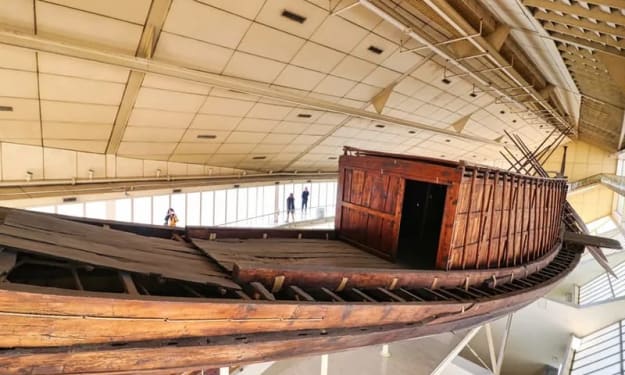
Why Did Pharaoh Khufu Bury Two Giant Solar Boats Next to the Great Pyramid? The Mystery Explained.
Why Did Pharaoh Khufu Bury Two Giant Solar Boats Next to the Great Pyramid? The Mystery Explained. The Egyptian pyramids have long fascinated the world standing as colossal reminders of a civilization that blended incredible architectural achievements with deep spiritual beliefs. Among the most iconic of these monuments is the Great Pyramid of Giza, built during the reign of Pharaoh Khufu (also known as Cheops) around 2600 BCE. While the pyramid itself continues to attract global attention one of the most intriguing archaeological finds associated with Khufu is not the structure but what was buried beside it: two massive solar boats. These wooden vessels found disassembled in pits near the pyramid have puzzled historians and archaeologists for decades. Why were they built? What was their purpose And why did Khufu the mighty pyramid builder want them buried with him?
By Adnan Rasheed2 years ago in History
European stocks tank 4% as global tariff rout deepens; Rheinmetall drops 5%
• Global Tariff Rout: The escalating fears of a global trade war appear to be the primary cause of this market turmoil. This comes in response to the United States' recent announcement of extensive reciprocal tariffs under President Donald Trump's administration.
By Imran Imran2 years ago in History
The Forgotten Queen and the Flowers of Truth
There was a king. He had seven queens. The six elder queens were very arrogant the younger queen was very quiet. That is why the king liked the younger queen more than anyone else. But the king had no sons or daughters. Who would enjoy such a big kingdom? The king was so sad. Days passed like this. After a long time, the younger queen would have a child. The king was very happy and the king called his servants and announced to the kingdom The king has opened the royal treasury come and take as much sweets sweets and jewels as you can. The six elder queens were burning with jealousy and began to die. The king tied a gold chain around the waist of the younger queen and said, When you have a son, shake this chain I will come and see the son Saying this the king went to the royal court. The younger queen will have a son who will go to the palace? The elder queen said Ah if the younger queen has a son why should I give it to someone else? We will go. The elder queens went to the palace and shook the chains. Immediately the royal court broke up played drums and played drums and the king came with jewels and jewels. He saw nothing The king went back. As soon as the king sat down in the court the chains shook again. The king ran away again. He went and saw that nothing happened this time either. The king got angry and said If you shake the chains again because you dont have a son I will cut off all the queens. Saying this the king left. One by one the little queen had seven sons and one daughter. Ah the children were like moon dolls flower buds. She waved her hands and feet in a frenzy and the palace became bright. The little queen said softly What a boy Bubu why didnt you show me once The elder queens made gestures near the little queens face waved their hands and shook their noses saying No boy its an elephant she will have another son How many rats and how many crabs have there been? Hearing this the little queen fell unconscious. The cruel old queens quietly brought pots and pans put the children in them and buried them in the nearby ditch. Then they pulled them by the chains. The king came running again playing the drums and drums bringing with him jewels. The old queens wiped their hands and faces and quickly brought out a number of baby frogs and baby mice. Seeing this the king got angry and threw the little queen out of the palace. The old queens could no longer smile and the sound of their feet could not stop. The thorn in their hearts was removed and the old queens began to cry in happiness. The little queen became a maid and started wandering around the streets. In this way the days passed. There is no happiness in the kings mind there is no happiness in the kings kingdom the palace is empty and no fruit blooms in the kings garden. One day the gardener came and said Your Majesty I cant find flowers to decorate the house but today seven chappas on the parul tree seven chappas and one parul are blooming. The king said Then bring those flowers I will decorate the house. The gardener went to get the flowers. Seeing the owner, the parul flower on the parul tree called out to the chapaphuul and said, Sat Bhai Champa, wake up Just then, the seven chappas stood up and responded, Why are you calling me sister Parul Parul said The king s gardener has come. Will you give me flowers or not The seven chappas hurriedly climbed up and shook their heads and said I will not give you flowers I will not give you flowers. Let the king come a hundred miles away but I will give you flowers The gardener was surprised to see it. He threw down the flower arrangement and ran to inform the king. The king and all the royal court came there in surprise. The king came and went to pick the flowers and Amni Parulphul called the Chapaphuls and said Seven brothers wake up The Chapaphuls replied Why is Sister Parul calling? Parul said The king has come will you give me flowers or not? The Chapaphuls said- I will not give you flowers I will climb a hundred miles, let the king s eldest queen come first then I will give you flowers. Saying this the Chapaphuls rose even higher. The king called the Bararanis. The Bararani came and went to pick the flowers. The Chapaphuls said I will not give you flowers I will climb a hundred miles let the king s eldest queen come first then I will give you flowers. Then the queen came the queen came the queen came the queen came but none of them got the flowers. The flowers went and remained blooming like stars in the sky. The king sat down on the ground with his hand on his cheek. Finally the queen came, and the flower girls said I will not give you flowers I will go a hundred miles away if the king s maidservant comes I will give you flowers. Then many people went out to look for the maidservant. The king sent Chaudola, and the pike and the pawns went to the field with Chaudola and found the maidservant Chotorani. The maidservant was wearing dung on her hands and feet and was wearing torn clothes so she went to pick flowers. The birds came down from the sky with a tickling sound the Parul flower went and mingled with them from among the flowers seven princes one princess beautiful like the moon called out Maa Maa and jumped into the arms of the maidservant the little queen. Seeing such a scene everyone was surprised Tears flowed from the king s eyes. The big queens started trembling with fear. The king immediately ordered the big queens to be cut down and buried. The king went to Rajpuri with the seven princes one princess and the little queen. The music of joy grew in Rajpuri. The king s ministers also started playing drums. Ended
By Story Maker2 years ago in History
10 Scientific Facts Found in Ancient Indian Texts Centuries Before Modern Discovery
10 Scientific Facts Found in Ancient Indian Texts Centuries Before Modern Discovery Long before Newton dropped his apple and Einstein bent space-time, the ancient sages of India were penning down ideas that today’s scientists are only beginning to understand. Hidden in the verses of texts like the Rigveda, Sushruta Samhita, and Bhagavata Purana are shockingly accurate descriptions of scientific phenomena—ranging from gravity and atomic theory to surgical procedures and time dilation. While often dismissed as mythology or philosophy, these texts are treasure troves of forgotten knowledge. Here are 10 extraordinary scientific concepts that appear in ancient Indian scriptures long before they were "discovered" by modern science. You probably haven’t heard of half of them. --- 1. Speed of Light – Accurately Described in Rigveda Commentary. A 14th-century commentary by Sayana on the Rigveda states that light travels 2,202 yojanas in half a nimesha. Converted to modern units, this results in approximately 186,000 miles per second—the exact speed of light. This was centuries before science could even attempt to measure it. 2. Atomic Theory – Proposed by Sage Kanada. The Vaisheshika Sutras describe "anu" (atoms) as the smallest indivisible units that make up all matter. Sage Kanada even wrote about how these atoms combine and interact—long before Dalton’s atomic theory in the 19th century. 3. Water Cycle – Clearly Outlined in the Vedas. Texts like the Rigveda and Manusmriti mention the Sun evaporating water, which forms clouds and returns as rain—an accurate outline of the water cycle, described in spiritual texts long before science formalized the concept. 4. Gravity – Mentioned in Surya Siddhanta. The ancient astronomical text Surya Siddhanta, composed over 1,200 years before Newton, mentions that Earth has a gravitational force that pulls objects toward itself. It even attempts to explain planetary motion. 5. Time Dilation – Implied in Mahabharata. In a story from the Mahabharata, King Kakudmi and his daughter Revati visit Brahma’s realm for a few minutes. When they return, thousands of years have passed on Earth—a tale eerily similar to Einstein’s theory of time dilation. 6. Multiverse – Described in Bhagavata Purana. This text speaks of multiple universes, each governed by a different Brahma. The idea that many universes coexist independently aligns with the multiverse theory explored in quantum physics today. 7. Surgery and Anesthesia – Detailed in Sushruta Samhita. This ancient surgical manual from 600 BCE describes over 300 surgeries and 120 instruments. It also mentions the use of wine as an anesthetic—centuries before the invention of modern anesthesia. 8. Flying Machines – Outlined in Vaimanika Shastra. Describes “Vimanas” powered by mercury engines and anti-gravity technology. Though controversial, the level of detail (materials, aerodynamics) in these texts has intrigued even aerospace researchers. 9. Evolution – Reflected in Dashavatara (Ten Incarnations) The sequence of Vishnu’s avatars—fish, amphibian, boar, half-man, dwarf, and so on—uncannily matches the stages of Darwinian evolution, from aquatic life to complex human forms. 10. Cyclic Universe – Described in Vishnu Purana. The universe is said to undergo endless cycles of creation and destruction, mirroring current cosmological theories like the cyclic or oscillating universe model being explored in modern physics. Conclusion: While many of these ancient ideas were cloaked in metaphors or symbolic language, their core concepts align remarkably with modern scientific understanding. These aren’t just coincidental similarities—they challenge our assumptions about the origins of science itself. Maybe it’s time we stop calling these texts mere “mythology” and recognize them as early scientific thought wrapped in the poetic language of spirituality. Start writing...
By Riya mandal2 years ago in History
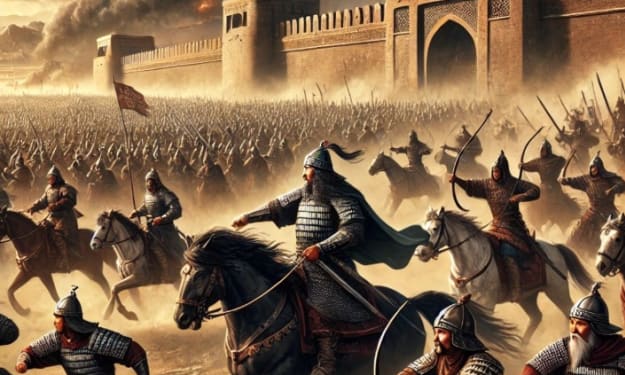
“The Emperor’s Sword: Conquest of Chu”. AI-Generated.
the fall of Han, the Qin army’s appetite for conquest only grew stronger. Their next and most formidable adversary lay in the south—the powerful State of Chu. Unlike the relatively smaller and politically fractured states Qin had defeated earlier, Chu was a colossus. Spanning vast fertile lands, steeped in rich cultural traditions, and renowned for its seasoned warriors, Chu had long been a thorn in the side of Qin's ambitions. For King Zheng of Qin, the future First Emperor, subjugating Chu would not only be a strategic necessity but a personal crusade to establish unquestionable supremacy over all the Warring States. The war with Chu was more than just a clash of swords—it was a battle of minds, tactics, and political maneuvering. Chu, under the command of General Xiang Yan, was not to be underestimated. Xiang Yan was a skilled commander and strategist, a man capable of rallying massive forces and striking fear into even the most disciplined Qin formations. Prelude to Invasion Qin’s chancellor, Li Si, and the legendary general Wang Jian urged caution. They understood that rushing into Chu’s expansive territory without proper planning could end in disaster. Qin had seen such a failure before—when a rash invasion years earlier ended in heavy losses. This time, Wang Jian proposed a different plan: a slow, calculated invasion with overwhelming force. King Zheng entrusted the campaign to Wang Jian but kept another rising star, General Meng Tian, in reserve. Wang Jian, a seasoned warrior known more for his patience than aggression, demanded an enormous army—reportedly over 600,000 men. At first, Zheng thought this excessive and was tempted to replace him. But eventually, he agreed, understanding that the risk of underestimating Chu was too great. The Art of Delay Rather than launching an immediate offensive, Wang Jian built forts along the borders, slowly inching his army forward while giving the appearance of passivity. The Chu generals, misled by this slow advance, relaxed their defenses, thinking Qin had grown fearful or indecisive. In reality, Wang Jian was waiting for the perfect moment to strike—a moment when Chu was least prepared. That moment came after months of stillness. In a sudden wave of attacks, Qin armies surged into Chu territory, overwhelming border forts and driving deep into the countryside. Clash of Titans General Xiang Yan responded fiercely, assembling Chu’s finest warriors for a counterattack. What followed was one of the most ferocious battles in Chinese history. Tens of thousands fell on both sides. The rivers ran red with blood, and the fields were trampled into mud by the weight of armored infantry. But Wang Jian had anticipated this. He feigned retreat, luring Xiang Yan into a false sense of victory. As the Chu army advanced, Wang Jian’s reserves—kept hidden behind forested hills—launched a surprise flanking attack, surrounding the Chu forces in a deadly pincer movement. Xiang Yan fell in battle, and with him, the spirit of Chu began to crumble. City after city surrendered. Qin soldiers, disciplined and ruthless, stormed the strongholds of Chu, executing commanders who resisted and integrating local forces who pledged allegiance. The End of Chu With the death of its greatest general and the fall of its capital, the State of Chu officially ceased to exist. What had once been one of the richest and most formidable kingdoms in ancient China now lay under the control of Qin. Qin’s conquest of Chu was more than a military victory—it was a turning point in Chinese history. The subjugation of Chu sent a message to the remaining states: resistance was futile. King Zheng’s vision of a unified China was now closer than ever.
By Say the truth 2 years ago in History