Ancient
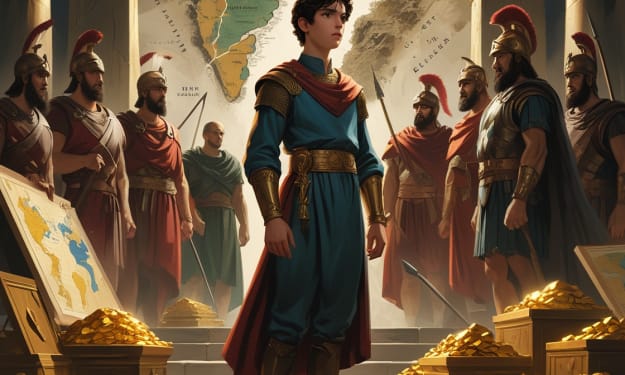
The Overlooked Wealth: Revealing the Riches of the Greek Empire. AI-Generated.
The Overlooked Wealth: Revealing the Riches of the Greek Empire The Greek Empireextending from the sun-drenched islands of the Aegean to the frontiers of India under Alexander the Greatis frequently commemorated for its scholarly accomplishments, mythology, and renowned military feats. Yet concealed beneath this celebrated heritage lies another breathtaking narrative: that of the extensive wealth accumulated by the ancient Greeks. This fortune encompassed not only gold and silver but also sacred artifacts, tributes from allies, war plunder, and invaluable art. At its pinnacle, the empire’s treasury ranked among the most precious in the ancient realm. 1. The Genesis of Affluence The origins of Greek wealth can be traced to city-states such as Athens, Corinth, and Sparta. Among these, Athens distinguished itself as a financial center. During the 5th century BCE, it spearheaded the Delian Leaguea military consortium established to confront the Persian menace. The league’s treasury was initially secured on the island of Delos, situated within a sacred sanctuary. However, Athens subsequently relocated the treasury to the Parthenon, effectively asserting control over the league’s assets. Each league member provided a tributeeither in vessels or fundswhich enriched the Athenian coffers with silver, gold, and exotic goods from throughout the Mediterranean. This revenue supported not only Athens’ navy and military endeavors but also its construction initiatives, including the Parthenon itself. 2. The Laurion Mines Athens’ affluence was not solely reliant on tributes. A significant silver-mining operation in Laurion, located just southeast of Athens, constituted a major economic pillar. Thousands of enslaved workers toiled under harsh conditions to extract silver, which was utilized to mint the renowned Athenian tetradrachma coin widely accepted across the ancient world. It is estimated that Laurion yielded hundreds of tons of silver, much of which financed the Athenian war apparatus and cultural proliferation. 3. Alexander the Great: Conqueror and Custodian No other figure in Greek history may have impacted its wealth as significantly as Alexander the Great. As he advanced eastward during his campaigns (334–323 BCE), he plundered and integrated vast royal treasuries from the Persian Empire, including the fabled city of Persepolis. Historical records indicate that Alexander appropriated over 180,000 talents of silver and goldequivalent to roughly 4,000 metric tons. In present-day value, this would exceed $250 billion. He employed part of this treasure to finance his expeditions, reward his troops, and invigorate economies in subjugated territories by re-minting coins and constructing infrastructure. Alexander's pillaging campaign not only redistributed riches throughout his expansive empire but also facilitated the creation of a novel Hellenistic economic framework, merging Greek and Eastern components. 4. Religious and Cultural Appreciations The Greeks held the belief that wealth ought to be dedicated to the deities, and numerous sanctuariessuch as those located in Delphi, Olympia, and Delosserved as repositories for offerings. These included gilded statues, intricately carved ivory, and exquisitely crafted vessels. For example, Delphi’s Temple of Apollo contained gifts from rulers and military leaders, comprising golden tripods, shields, and bronze bulls. These sacred repositories were occasionally looted during conflicts. The Roman general Sulla, for instance, ransacked the Oracle of Delphi during his expedition in Greece in 86 BCE. Nevertheless, a significant number of treasures endured for centuries, concealed or buried to evade theft. 5. Diminution and Dispersal The decline of the Greek realm commenced with the ascent of Rome. By the 2nd century BCE, the majority of Greek regions had either been annexed or heavily influenced by Roman authority. Consequently, a substantial portion of Greece’s wealthboth monetary and artisticwas transferred to Rome. Emperors such as Nero and Augustus plundered Greek temples and transported statues, manuscripts, and gold back to Italy. Subsequent invasions, ranging from the Visigoths to the Ottomans, perpetuated this pattern of exploitation. However, a considerable number of treasures also vanished from history entirelylost to the passage of time, buried under collapsed temples, sunken ships, or concealed within forgotten tombs. 6. The Treasure Today: Worth and Heritage While precise figures remain conjectural, historians estimate that the total wealth of the Greek Empire during its zenithincluding Athens, Macedon, and Hellenistic kingdomsmight easily exceed $500 billion in contemporary terms. This encompasses: Silver and gold from mines and tributes Loot from Persian treasures Religious donations and temple caches Artistic and cultural creations (many regarded as priceless today) Only a small portion of this wealth persists, safeguarded in institutions like the Acropolis Museum, the British Museum, or lost within archaeological sites awaiting rediscovery. Conclusion: A Wealth Beyond Gold The treasure of the Greek Empire represented more than mere material richesit also encompassed intellectual, cultural, and spiritual value. Although much of its physical wealth has been dispersed or lost, the legacy of this empire continues to enrich humanity. From coins that once financed philosophers to statues that inspired Renaissance artists, the true wealth of ancient Greece resides in its lasting influence.
By Say the truth about a year ago in History
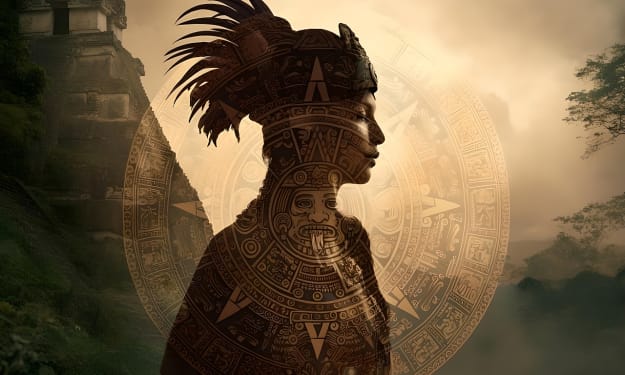
The Pyramids of Peru and the Portals of the Gods: Where Are All Their Architectural and Historical Documents?
High in the forgotten deserts of southern Peru, under skies that flicker with starlight and silence, there are ruins few speak of, and fewer understand. Pyramids, buried beneath centuries of dust, stand in defiance of time, their purpose unclear, their builders unnamed. Nearby, a doorway carved into the rock waits in eternal stillness. They call it the Puerta de Hayu Marca, the Gate of the Gods. Yet, amid such ancient wonder, one question echoes across the sand and stone:
By The Secret History Of The Worldabout a year ago in History
Finance & Investing in America: A Pillar of Economic Strength
The United States of America is one of the most powerful and influential financial markets in the world. With a mature economic infrastructure, a robust regulatory framework, and a culture of entrepreneurship, America has become a global hub for finance and investing. From Wall Street to Silicon Valley, financial innovation and investment opportunities continue to shape the national and global economy.
By Afran Noorabout a year ago in History
Tiny Courage, Mighty Heart. Content Warning.
In the heart of the great emerald jungle, where sunlight danced through the leaves and birds sang their endless songs, there lived a lion named Rohan. He was the mightiest creature in all the land, known far and wide for his thunderous roar and golden mane that glowed like fire in the sun. All the animals bowed when he passed, for he was king, and his strength was unmatched.
By Muhammad Huzaifaabout a year ago in History
The Billion-Dollar Backbone: Hidden Elements and Wealth of the Himalayan Mountains. AI-Generated.
The Concealed Affluence of the Himalayas: Elements, Minerals, and Projected Monetary Value The Himalayas, renowned worldwide for their grand summits and spiritual importance, also hide an extensive and frequently undervalued reservoir of natural resources beneath their ancient formations. From rare earth elements to precious minerals such as gold, uranium, and lithium, the Himalayan region represents a geological treasure trove. This article examines the principal elements found in the area, their industrial relevance, the geopolitical consequences of their discovery, and provides an estimated monetary value of this concealed Himalayan affluence. The Concealed Affluence of the Himalayas: Elements, Minerals, and Projected Monetary Value The Himalayas are broadly acknowledged as one of the most breathtaking natural phenomena globally, spanning five nationsIndia, Nepal, Bhutan, China, and Pakistan. While the towering summits have been venerated for centuries for their beauty and spirituality, what resides beneath them may be even more precious: an extensive and varied array of elements and minerals that could reshape global resource dynamics. 1. Geological Synopsis The Himalayan range was formed over 50 million years ago due to the collision of the Indian and Eurasian tectonic plates. This continuous geological activity has established fault lines, mineral-rich locales, and a complex topography ideal for the genesis and accumulation of a diverse selection of elements. The area is particularly abundant in granitic rocks, schists, and metamorphic formationssettings conducive to the formation of valuable minerals and ores. 2. Principal Elements and Minerals Available a. Gold and Silver: In areas like Ladakh and parts of Nepal, traces of gold have been located in riverbeds and mountainous rocks. The placer gold deposits in Himalayan rivers may be modest in scale yet significant in overall volume when assessed across the region. b. Uranium: Uranium deposits have been identified in the northeastern Himalayan belt, especially in Arunachal Pradesh and segments of Himachal Pradesh. This radioactive element is essential for nuclear energy and military uses. c. Lithium: Lithium, one of the most coveted elements for battery manufacturing and electric vehicles, has been detected in trace quantities in Ladakh. As global demand for lithium escalates, exploration within the Himalayan region is intensifying. d. Rare Earth Elements (REEs): Scandium, yttrium, lanthanum, and various other REEs are believed to be present in the northern Himalayan districts. These elements are pivotal for electronics, renewable energy technologies, and defense systems. e. Copper and Zinc: The mountainous landscape is rich in copper ore, particularly in regions like the Kumaon Himalayas of Uttarakhand. Zinc deposits are also distributed throughout northern Himachal and parts of Nepal. f. Beryl and Mica: Utilized in the electronics and defense industries, both beryl and mica are found plentifully in eastern Himalayan belts, particularly in areas adjacent to Assam and Arunachal Pradesh. g. Coal and Petroleum: Although not as significant as other elements, coal reserves and petroleum deposits exist in foothill regions, such as in Assam’s Digboi and Arunachal’s Pasighat. 3. Projected Monetary Value of Himalayan Mineral Wealth It is challenging to assess the precise net worth of all the components present due to the absence of thorough mining and geopolitical tensions. Nevertheless, based on geological assessments and prevailing market valuations, a rough approximation includes: Gold: Estimated 500–1000 metric tons – valued at $30–60 billion USD. Uranium: Several thousand tons – potential worth exceeding $100 billion USD. Lithium: In preliminary exploratory phases – estimated at $20–50 billion USD. Rare Earth Elements: May surpass $200 billion USD based on international prices. Copper and Zinc: Cumulative worth exceeding $30 billion USD. Other Minerals (Mica, Beryl, etc. ): Additional $10–20 billion USD. Estimated Total Net Worth: $400–500 billion USD. 4. Environmental and Political Challenges Although the potential is substantial, extracting these resources entails a significant environmental toll. The delicate ecosystem of the Himalayas is vulnerable to landslides, glacial melting, and biodiversity decline. Furthermore, cross-border tensions between India and China have obstructed collaborative exploration or sustainable extraction of resources in disputed areas like Aksai Chin and Arunachal Pradesh. 5. Future Prospects India has commenced substantial investments in mineral exploration within the Himalayan region through organizations such as the Geological Survey of India and the Atomic Minerals Directorate. Nepal and Bhutan are also gradually permitting regulated mining activities. With the global shift towards green energy, the demand for Himalayan lithium and rare earth elements is anticipated to increase significantly. Conclusion The Himalayas represent more than merely an awe-inspiring mountain range; they constitute a vast storehouse of unexploited natural resources that could transform the economic and strategic landscape of Asia. While environmental and political challenges persist, responsible and cooperative mining initiatives could herald a new era of prosperity for the nations that share this formidable range.
By Say the truth about a year ago in History
Raja Raja Chola: The Sea King and Warrior Emperor of Southern India
"Raja Raja Chola: The Maritime Sovereign and Warrior Emperor of Southern India" Raja Raja Chola I, the renowned sovereign of the Chola Dynasty, governed from 985 to 1014 CE and transformed military tactics in South India by establishing one of the most sophisticated and coordinated military and naval forces in ancient Asian history. His legacy is characterized by his prowess in terrestrial combat, strategic military campaigns, and the formation of a formidable navy that extended Chola influence far beyond the seasfrom the Maldives to Southeast Asia. This article examines the military genius, naval supremacy, and enduring accomplishments of a monarch who was not merely a ruler but a warrior-statesman who redefined the concept of empire. Raja Raja Chola: The Maritime Sovereign and Warrior Emperor of Southern India Within the illustrious chronicles of Indian history, the name Raja Raja Chola I stands out as one of the most remarkable kings to emerge from the Tamil regions. Referred to as “Raja Raja the Great,” he presided over the Chola Empire during an era of military evolution and significant territorial expansion. More than just a king, Raja Raja was an innovative military strategist who unified extensive territories through the strength of his army and the power of his navybecoming the first South Indian emperor to effectively project authority beyond the Indian subcontinent. Ascendancy to the Throne and Military Reforms Upon Raja Raja Chola’s rise to power in 985 CE, the Chola Empire was in a state of recovery from internal discord and regional disintegration. Acknowledging the necessity for a disciplined, professional army, he reorganized the military into structured regiments such as the Velaikkara and Uttama Chola Terinda Kaikola. These specialized units received training in infantry, cavalry, and elephant combat, with each regiment assigned specific responsibilities during military operations. Raja Raja reformed military administration by inscribing detailed records on temple walls that listed soldiers’ names, remuneration, and land endowmentsrendering the Chola military one of the earliest to be administered with bureaucratic accuracy. The Expanding Chola Military The size of the Chola military during Raja Raja’s rule is estimated to have surpassed 150,000 soldiers, reinforced by numerous war elephants and cavalry units. Chola war elephants, adorned in armor and bells, frequently led assaults that breached enemy formations. Raja Raja also dedicated resources to fortifying key cities and border regions, establishing strategic garrisons. His military endeavors included triumphs over the Pandyas, Cheras, and Gangas, as well as the annexation of the northern territories of Sri Lanka. Each military campaign exhibited exceptional strategy, swift mobilization, and the proficient integration of forces. Establishment of the Chola Navy Perhaps Raja Raja’s most revolutionary contribution to warfare was the establishment of the Chola Navythe first comprehensive naval force in Indian history. Prior to this, Indian empires were predominantly land-oriented. Raja Raja recognized the strategic significance of naval superiority in securing trade routes, protecting coastal areas, and extending influence throughout the Indian Ocean. He built colossal warships utilizing teak and iron-reinforced hulls, manned by archers and boarding crews. Ports such as Nagapattinam and Kaveripattinam evolved into naval headquarters. His fleet, estimated to comprise 300 to 500 vessels, facilitated long-range operations that competed with the naval forces of contemporary China and Arabia. Southeast Asian Campaigns and Naval Accomplishments In one of the most remarkable achievements in early Indian military history, Raja Raja initiated naval expeditions across the Bay of Bengal and seized territories in the Maldives, Sri Lanka, while also impacting coastal regions of present-day Malaysia, Indonesia, and Thailand. These campaigns not only yielded wealth and tribute but also propagated Tamil culture, commerce, and religion throughout Southeast Asia. The Chola navy secured merchant vessels, safeguarded temple riches, and upheld imperial authority on foreign shores. Through such endeavors, Raja Raja established a maritime empirean ambition centuries ahead of its era. Wealth, Resources, and Military Sustainability The expense of sustaining Raja Raja’s military apparatus was substantial. The empire’s economy was bolstered by fertile agrarian territories, regulated commerce, and tribute from subjugated regions. Temples served as financial centers, financing regiments and naval contingents. The annual defense budget, in contemporary terms, could be approximated at several billion dollars, accounting for ship construction, soldier compensation, armor, elephant enclosures, and logistical support. In spite of this, Raja Raja succeeded in maintaining the empire’s financial equilibrium, employing meticulous records and regional administrative divisions (nadus) for effective taxation and resource allocation.
By Say the truth about a year ago in History
So It Goes.
Elijah Marris was born on a Wednesday and died on a Thursday, but he lived most of his life somewhere in between. He was not particularly brave. Not particularly cruel. But history has a way of dragging the unremarkable into remarkable places. And so, at nineteen, Elijah found himself in the middle of a desert war, holding a rifle that weighed more than his conscience.
By Bahram shahabout a year ago in History
10 Unsolved Mysteries from Ancient Egypt
Ancient Egypt continues to be one of the most fascinating civilizations in history. Known for its monumental architecture, advanced knowledge of astronomy, and intricate religious beliefs, Egypt has left behind countless mysteries that continue to perplex archaeologists and historians. After decades of investigation, many questions remain.
By Himadri Niloyabout a year ago in History
White House still calling for confirmation of controversial US attorney nominee despite diminishing odds
Washington, D.C. — The Biden administration is continuing its push to confirm a controversial U.S. attorney nominee, even as support in the Senate appears to be eroding. The White House has reiterated its support for the candidate despite growing opposition from Republicans and some Democrats. This indicates that it will not withdraw the choice despite the ever-increasing likelihood that it will be successful. A Divisive Nomination
By Juwel Ranaabout a year ago in History
Letters from the Underground Railroad
Letter 1 – May 5, 1852 To my dearest Mama, The day has come, and I am leaving. It is hard to write this without tears staining the paper, but I must be strong. Tonight, I will leave behind the plantation, the only life I have ever known, to seek the promise of freedom. The conductor, a kind man I’ve never met before, told me the route would be long and dangerous, but the risk is worth it. I overheard Mr. Turner, the overseer, say that there is talk of selling me to the South. They want to send me to a place where no one ever comes back. I won’t let that happen.
By Haseeb Mujaddidiabout a year ago in History
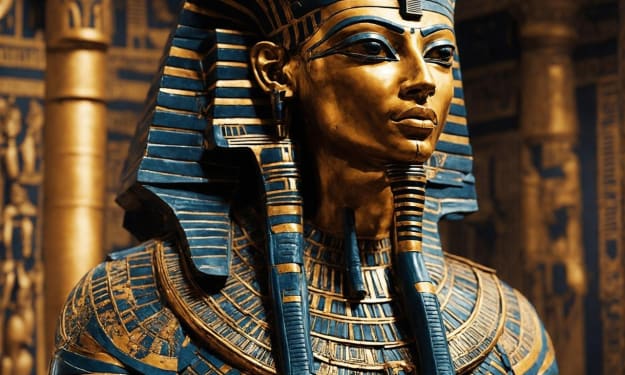
Akhenaten: Was He an Alien Pharaoh of Ancient Egypt?
The Mysterious Pharaoh In the heart of Egypt’s ancient history, one name stands out as an enigma: Akhenaten, the heretic king, the ruler who shattered the traditional religious order, and the architect of a radical transformation. He wasn’t just another Pharaoh; his reign brought forth a monotheistic vision centered on the sun god Aten, a stark departure from the traditional polytheistic worship of Egypt’s powerful pantheon of gods.
By The Secret History Of The Worldabout a year ago in History
Nefertiti: The First Woman to Rewrite Royal Power.
Nefertiti, whose name means “the beautiful one has come,” is one of history’s most captivating mysteries: a queen who led her nation to the heights of power, only to disappear without a trace at the height of her influence.
By Neli Ivanovaabout a year ago in History