Ancient
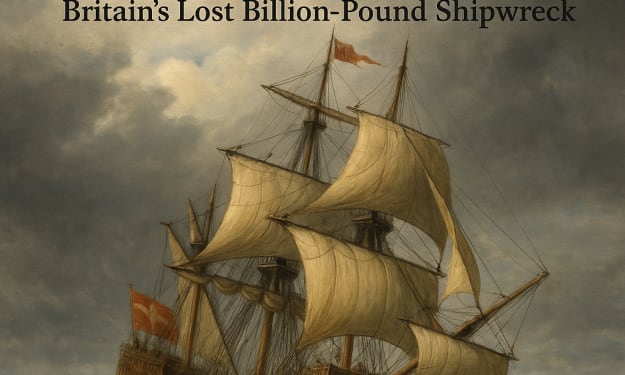
The Tragedy of the Merchant Royal: Britain’s Lost Billion-Pound Shipwreck. AI-Generated.
. A Galleon of Fortune The Merchant Royal was a substantial English galleon constructed around 1627 and owned by English traders. Under the command of Captain John Limbrey, she was a trade ship that navigated between Europe and the Spanish territories in the Americas. For years, she returned with merchandise and silver from the New World. Unlike warships or privateers, the Merchant Royal primarily operated as a peaceful trading vessel. However, what it lacked in armament, it compensated for with the immense worth of the cargo it transported. In 1641, the Merchant Royal was docked in the Spanish-controlled port of Cadiz. At the time, Spain faced financial difficulties and needed to remunerate its troops in the Netherlands. Due to political strains and a deficit of Spanish vessels, a substantial consignment of Mexican gold and silver, designated to pay the Spanish armies, was entrusted to English merchants specifically, the crew of the Merchant Royal. According to contemporary reports, the ship was laden with: 100,000 pounds of gold 400 bars of Mexican silver Over 500,000 pieces of eight (silver coins) Even in 1641, this fortune was appraised to be worth over £300,000, which would correspond to more than $1. 5 billion in today’s economy, adjusting for both inflation and the value of gold and silver. The Sinking of a Legend On September 23, 1641, the Merchant Royal commenced her voyage to England with her staggering bounty onboard. Calamity ensued just days later. Somewhere off the coast of Land’s End in Cornwall, the vessel encountered a violent storm. With her hull already deteriorated from extensive journeys and her pumps failing, the Merchant Royal began to take on water. Despite the crew’s utmost endeavors, the ship was fated. In the turmoil of the storm, the cargo comprising gold, silver, and valuable items was lost to the depths. Only 40 of the ship’s 80 crew members survived, rescued by a nearby vessel named the Dover Merchant. Captain Limbrey was among the survivors, and his account helped enshrine the loss. The precise coordinates of the wreck were never accurately documented, and in the centuries that followed, the Merchant Royal has become a contemporary Atlantis for treasure hunters. The Hunt for the Treasure The enigma of the Merchant Royal has captivated divers, historians, and treasure seekers for generations. Colloquially referred to as the “El Dorado of the Seas,” the ship has inspired numerous expeditions. Yet, despite modern sonar technology and deep-sea submersibles, the precise location of the vessel remains elusive. The most crucial moment in contemporary history occurred in 2007, when the American recovery firm Odyssey Marine Exploration declared that it had retrieved over 500,000 silver coins from a shipwreck in the Atlantic, valued at approximately $500 million. Initially, many speculated this might be the Merchant Royal. However, further investigations indicated it was actually the Nuestra Señora de las Mercedes, a Spanish galleon that sank in 1804. In that same year, British officials cautioned that anyone who discovered the Merchant Royal and neglected to report it would face legal repercussions under the legislation safeguarding historical shipwrecks. Despite all endeavors, the vessel remains missing. Some theorists propose that the wreck might be entombed beneath layers of sediment, while others contend it could have drifted into deeper waters far from its purported sinking site. The Significance of the Merchant Royal Beyond the evident appeal of its gold and silver, the narrative of the Merchant Royal encapsulates the perils and benefits of the Age of Exploration. It was an era when fortunes were created and lost at sea, when wooden ships transported the riches of empires and ventured into the unknown. The wreck also provokes inquiries regarding the ethics of treasure hunting, the ownership of cultural artifacts, and our valuation of maritime heritage. Should a salvaged treasure be repatriated to its nation of origin? Does it belong to the descendants of those who navigated the ship? Or should it remain undisturbed as a marine cemetery and time capsule? Conclusion The Merchant Royal persists as one of the most renowned and valuable shipwrecks never retrieved. Its narrative is a compelling amalgamation of ambition, misfortune, and enigma. Whether it is eventually discovered or remains eternally concealed beneath the ocean's surface it continues to captivate the imagination of those who aspire to find sunken treasures. Somewhere off the coast of England lies a billion-dollar treasure, shrouded in darkness by salt and time. And until it is located, the legend of the Merchant Royal endures.
By Say the truth about a year ago in History
Sunken Gold: The Greatest Treasure Ever Lost in the Ocean
The Ocean’s Greatest Secret: The Myth of the Lost Treasure Fleet Beneath the extensive azure expanse of the planet's oceans reside innumerable enigmas, yet none as enigmatic and precious as the lost treasure fleets that disappeared amidst storms, warfare, or piracy. This article explores one of the most legendary submerged fortunesthe Spanish Treasure Fleet of 1715alongside other celebrated maritime losses, estimating the untold billions in gold, silver, and jewels consigned to the depths. It narrates a tale of aspiration, avarice, hazardous navigation, and persistent mystery. The Ocean’s Greatest Secret: The Myth of the Lost Treasure Fleet The ocean has perpetually possessed a mysterious charm, yet it also conceals some of humanity’s most significant losses. Among these are the numerous vessels that succumbed while transporting unimaginable wealthcargoes of gold, silver, gemstones, and precious artifacts lost to the abyss eternally. These shipwrecks have intrigued explorers, divers, and treasure seekers for centuries. Among the most renowned and valuable of these nautical calamities is the Spanish Treasure Fleet of 1715, frequently regarded as the greatest singular loss of wealth at sea. The Splendor and Avarice of the Spanish Empire During the 16th and 17th centuries, the Spanish Empire reigned over the seas. Following the conquest of extensive territories in the Americas, the Spanish commenced transporting back vast richespredominantly silver from the mines of Potosí in contemporary Bolivia and Zacatecas in Mexico, as well as gold from Colombia and Peru. This wealth was conveyed by heavily secured treasure fleets, or flotas, which embarked on protracted and perilous passages from the New World to Spain. Each fleet comprised several galleons and auxiliary vessels, frequently bearing treasures valued at millions of pesos. These ships were typically well-armed and accompanied by naval escorts to safeguard against pirates and rival nations. Nevertheless, despite their defenses, they were not imperviousparticularly against the forces of nature. The Catastrophe of 1715: Florida’s Submerged Cemetery On July 24, 1715, a fleet of 11 Spanish vessels burdened with immense treasure departed Havana, Cuba, en route to Spain. This treasure encompassed an estimated 14 million pesos in gold, silver, emeralds, pearls, and other valuable itemsan equivalent value of billions of dollars today. However, as they traversed the Florida coast, calamity ensued. A formidable hurricane swept through the fleet near modern-day Vero Beach, Florida. Ten of the eleven ships sank during the storm. Thousands of sailors perished, and the riches of the Spanish crown scattered along the ocean floor. While some of the treasure was salvaged in the immediate aftermath, much remained entombed beneath sand and coral, concealed by time and tide. For over two centuries, the precise locations of the wrecks were shrouded in mysteryuntil contemporary treasure hunters commenced their quest in the mid-20th century. Contemporary Rediscoveries and the Billion-Dollar Bounty The reestablishment of the 1715 Treasure Fleet represents one of the most thrilling narratives in subaqueous archaeology. In 1985, treasure seeker Mel Fisher garnered significant attention when his crew discovered a portion of the wreck of the Nuestra Señora de Atocha, another abandoned Spanish treasure vessel from 1622, situated off the coast of the Florida Keys. This ship alone transported in excess of $450 million in gold, silver, and emeralds. Comparable success was achieved with the 1715 fleet, where numerous gold coins, jewelry, and even complete chests of silver were unearthed. Some valuations suggest that the total worth of what remains unrecovered exceeds $1 billion. In 2015, a collective of divers uncovered over 300 gold coinsincluding rare specimens minted for King Philip Vvalued at more than $4. 5 million. Nevertheless, experts opine that the majority of the treasure still lies concealed beneath the ocean bed, awaiting rediscovery. Other Lost Treasures Beneath the Waves While the 1715 Fleet ranks among the most renowned, it is far from the sole sunken bounty: The Merchant Royal (1641): A British vessel frequently referred to as the “El Dorado of the Sea,” it was transporting over 100,000 pounds of gold and silver when it sank off Cornwall. Its estimated worth surpasses $1. 5 billion. The Flor de la Mar (1511): This Portuguese ship sank off the coast of Sumatra while carrying treasure from the conquest of Malacca. The estimated value exceeds $2 billion and has yet to be recovered.
By Say the truth about a year ago in History
Black Forest
The Enchanting Black Forest of Germany A Journey into Nature, Myth, and Culture Nestled in the southwest corner of Germany, the Black Forest (Schwarzwald in German) is a region of dense woodlands, rolling hills, deep valleys, and timeless charm. Renowned for its fairy-tale landscapes, cuckoo clocks, and traditional villages, this mountainous region in the state of Baden-Württemberg has captured the imagination of travelers, writers, and artists for centuries.
By Minhaj Ul Hasanabout a year ago in History
Imran Khan: Silence Behind Bars
The room is bare—its cold cement floor echoing with silence. The faded blue-and-white walls carry the scent of years of confinement, perhaps even defiance. A modest bed stands in the corner, neatly made, its thin mattress betraying any hope for comfort. A pedestal fan hums lazily in the background, struggling against the summer heat. On the wall hangs a television, its black screen a lifeless rectangle above the sink and tap. Clothes hang on the side, dry and plain. A desk bears the weight of a few essentials—bottled water, toiletries, and scattered papers. But in the middle of this stark simplicity sits a man, dressed in black, engrossed in a book larger than life.
By Muhammad Jawadabout a year ago in History
"A Contemporary Overview of European Nations"
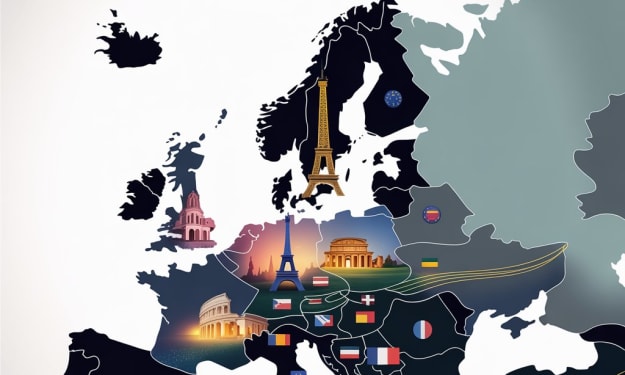
A Contemporary Overview of European Nations Political Structures, Economic Trends, and Cultural Diversity Across the Continent Europe, often described as the cradle of Western civilization, continues to play a significant role in shaping global affairs through its dynamic political structures, robust economies, and rich cultural traditions. In the 21st century, the continent is both unified and diverse—a mosaic of sovereign nations working together while preserving their unique identities. The European Union (EU), established to foster economic and political integration after centuries of conflict, remains a central force in the region. With 27 member states, the EU exemplifies cooperation through institutions such as the European Commission, the European Parliament, and the European Court of Justice. The Schengen Agreement and the euro currency have enhanced mobility and trade across borders, illustrating a commitment to unity without erasing national sovereignty. However, Europe is not limited to the EU. Countries like Switzerland, Norway, and the United Kingdom—following Brexit—maintain strong economic and diplomatic ties with the bloc while pursuing independent policies. This balance between integration and autonomy is one of Europe's defining characteristics, allowing for varied approaches to governance while maintaining shared values of democracy, human rights, and rule of law. Economically, Europe remains one of the most prosperous regions in the world. Germany, the continent's largest economy, leads in industrial innovation and exports, while France and Italy contribute significantly through technology, fashion, and agriculture. The Nordic countries showcase models of social welfare and high living standards, often topping global happiness and education rankings. Meanwhile, Eastern European countries like Poland, Romania, and the Czech Republic have seen remarkable growth over the past two decades, transforming from post-Soviet economies into emerging market success stories. Despite this progress, challenges persist. Economic disparities between Western and Eastern Europe, as well as North and South, create tensions within the EU. Countries such as Greece, Spain, and Portugal have faced sovereign debt crises, leading to austerity measures and political unrest. Moreover, the continent must navigate the impacts of climate change, aging populations, and energy security—especially in light of geopolitical tensions near its eastern borders. Culturally, Europe is a beacon of diversity. With over 200 languages spoken and countless ethnic traditions, it remains a center for art, literature, and philosophy. UNESCO World Heritage Sites are scattered throughout, preserving centuries of human achievement—from the Roman ruins of Italy to the medieval towns of Central Europe and the fjords of Scandinavia. The free movement of people has led to vibrant multicultural cities like Berlin, Amsterdam, and Barcelona, where global influences merge with local customs. In recent years, migration has tested Europe’s commitment to humanitarian principles and social cohesion. The influx of refugees from conflict zones, especially in the Middle East and Africa, has spurred debates about identity, security, and integration. While some nations have welcomed newcomers with open arms, others have implemented strict border controls and nationalist rhetoric. These tensions reflect broader global trends but also highlight Europe's struggle to balance compassion with stability. Looking ahead, Europe's future will likely be shaped by digital transformation, environmental policy, and its geopolitical stance between global powers. With the Green Deal and a push toward carbon neutrality by 2050, the EU aims to lead in sustainability. At the same time, efforts to enhance defense cooperation and technological innovation are underway to maintain competitiveness on the world stage. In essence, Europe is a continent of contrasts and cohesion. It is where ancient traditions meet modern governance, where multiple languages echo across a shared political framework, and where historical wounds have given rise to enduring alliances. As it continues to evolve, Europe remains not only a subject of study but a living example of how diversity and unity can coexist in a rapidly changing world.
By Shahab Ali awanabout a year ago in History