Ancient
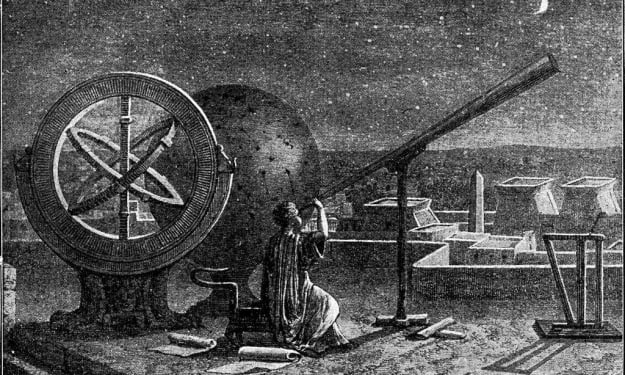
The Invention of the Telescope
Each month as part of this new series from the Historical Astronomy Division of the AAS, an important discovery or memorable event in the history of astronomy will be highlighted. This month, we look at the discovery of Neptune
By jahidul Islam Sifatabout a year ago in History
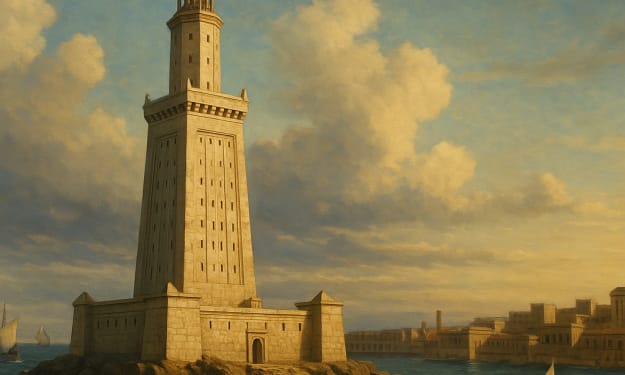
The Lighthouse of Alexandria: An Ancient Greek Engineering Marvel. AI-Generated.
The Lighthouse of Alexandria: An Ancient Greek Engineering Marvel The Lighthouse of Alexandria, also known as the Pharos of Alexandria, was one of the greatest architectural and engineering achievements of the ancient world. Built on the small island of Pharos, just off the coast of the city of Alexandria in Egypt, this magnificent structure guided sailors safely to port for centuries. It was so iconic and important that it earned its place among the Seven Wonders of the Ancient World.
By Adnan Rasheedabout a year ago in History
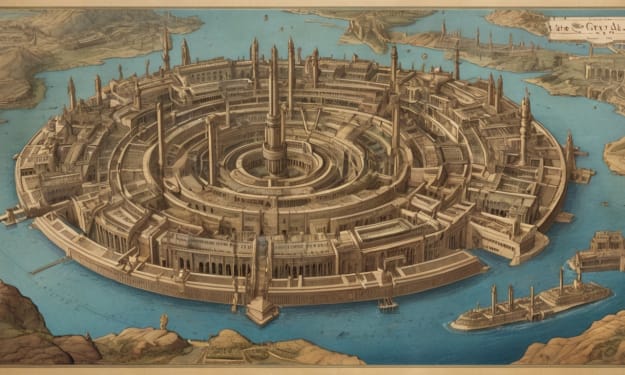
The Lost City of Atlantis
A civilization that lies deep in the seas... A legendary city that rules the world with its advanced technology, but was buried in the waters overnight by incurring the wrath of the gods: Atlantis! So is this story real, or is it a metaphor thousands of years old? Today, we are putting all the details on the table, from Plato's writings to modern conspiracy theories, even NASA's explanations!
By Remzi Kazdalabout a year ago in History
12,000-Year-Old Rock Carvings Baffle Researchers: Echoes of a Lost Civilization
Stones That Speak Across Time In the shifting sands of time, some stories are not told in books. They are carved in stone, hidden beneath the soil, and waiting. Beneath layers of earth and centuries of silence, a forgotten voice has emerged, etched into massive stones over 12,000 years ago. These rock carvings, now brought to light, are not only ancient, they are impossible.
By The Secret History Of The Worldabout a year ago in History
Buddha is Smiling: The Secret Message of India's Nuclear Triumph
India's First Nuclear Test and the Broken Jeep: When the Bomb’s Creator Fell Face-First to the Ground Due to the Tremor Exactly 51 years ago today (on May 18, 1974), India announced its first nuclear test. The following account is being republished to mark the occasion. On the morning of May 18, 1974, All India Radio’s Delhi station was broadcasting the popular song from the film Bobby, “Hum Tum Ek Kamre Mein Band Hon, Aur Chaabi Kho Jaye” (“If you and I were locked in a room and the key got lost”). At exactly 9 AM, the song was cut off and an announcement was made: “Please stand by for an important announcement.” A few seconds later, the announcer’s voice came on: “At 8:05 this morning, India conducted an underground nuclear test for peaceful purposes at an undisclosed location in western India.” One Day Earlier in London… A day earlier in London, Indian Prime Minister Indira Gandhi’s Principal Secretary, P.N. Haksar, kept asking Indian High Commissioner B.K. Nehru, “Any news from Delhi?” As soon as the news of the nuclear test arrived, Nehru could see the visible relief on Haksar’s face. He understood why Haksar had been so anxious. Who Would Be Beheaded? Five days before the test, on May 13, under the supervision of Homi Sethna, Chairman of the Atomic Energy Commission, Indian nuclear scientists began assembling the bomb. On the night of May 14, the device was taken to an L-shaped underground shaft. The next day, Sethna traveled to Delhi for a pre-scheduled meeting with Indira Gandhi. Sethna told her, “We have placed the device in the shaft. Now please don’t ask us to remove it, because it’s no longer possible. You can’t stop us now.” Indira Gandhi replied, “Go ahead. Are you afraid?” Sethna said, “Not at all. I just wanted to say, there’s no turning back from here.” After getting Gandhi’s approval the next day, Sethna returned to Pokhran. He gathered the team and asked, “If the test fails, whose head will roll?” Bomb designer Rajagopal Chidambaram promptly responded, “Mine.” Deputy leader P.K. Iyengar added, “No heads need to roll. If it fails, it means the laws of physics are wrong.” The Jeep That Failed On the morning of May 18, the desert heat in Pokhran was intense. A makeshift observation post had been set up five kilometers from the blast site. Present were Homi Sethna, Raja Ramanna, Indian Army Chief General Bewoor, DRDO Chairman B.D. Nag Chaudhry, Deputy Leader P.K. Iyengar, and Lt. Col. P.P. Subharwal. Nag Chaudhry had a camera around his neck and was continuously taking photos. Chidambaram and fellow designer Satinder Kumar Sikka were on another hill near the control room. The electronic detonation team, led by Srinivasan and Pranab Dastidar, was inside the control room. The blast was scheduled for 8:00 AM. But an hour earlier, scientist Virendra Singh Sethi’s jeep refused to start on the way to the test site for the final check. Time was running out. Sethi abandoned the jeep and walked 2 kilometers to the control room. Sethna asked General Bewoor what to do about the broken-down jeep so close to the test site. Bewoor replied, “Oh, you can blow the damn thing up.” Fortunately, Indian Army troops soon arrived with another jeep and moved the faulty one to a safe distance. Still, the test was delayed by five minutes. “We Will Proceed” Finally, a countdown began over the loudspeaker near the observation post. Sethna and Ramanna gave Pranab Dastidar the honor of pressing the trigger. At the count of five, Dastidar switched on the high-voltage switch. Seeing the electric meter, Dastidar was shaken — it showed that only 10% of the required voltage was reaching the device. He panicked: “Shall we stop? Shall we stop?” The countdown halted. But Dastidar suspected the reading was wrong due to moisture inside the shaft. He shouted, “No! We will proceed!” According to George Perkovich in his book India’s Nuclear Bomb, Dastidar pressed the red button at exactly 8:05 AM. “Krishna Lifted the Mountain with His Finger” At the observation post, when Sethna and Ramanna heard the countdown stop, they thought the test had failed. Ramanna wrote in his memoir Years of Pilgrimage that his colleague Venkatashan, who had been chanting the Vishnu Sahasranama, stopped mid-prayer. Everyone feared all their hard work had gone to waste. Suddenly, a huge sand column shot up from the earth and stayed suspended for nearly a minute. P.K. Iyengar later wrote, “It was a breathtaking sight. The legends of Krishna lifting a mountain with his finger started to seem real.” Jitendra Soni, head of the system integration team, felt like a sand minaret had risen in front of him. Fell Face-First to the Ground At that moment, it felt like a massive earthquake struck. Sethna felt the earth shaking violently. But he was puzzled — why wasn’t there a blast sound? Or could he simply not hear it? A second later, a faint explosion sound was heard. Chidambaram, Sikka, and their team began hugging each other. Chidambaram later said, “It was the greatest moment of my life.” Overcome with excitement, Sikka jumped off the observation post, spraining his ankle. In the control room, Srinivasan felt like he was on a small boat in a stormy sea. Ramanna later wrote in his memoir, “I saw the sand mountain rise as if Hanuman (a Hindu deity) had lifted it.” But he forgot in his excitement that the earth would soon shake. As he descended from the observation post, the ground trembled. Ramanna lost his balance and fell flat on his face. Ironically, the architects of India’s nuclear bomb ended up face-first in the hot sands of Pokhran on the very day of their monumental success.
By Ikram Ullahabout a year ago in History
10 Mysterious Historical Disappearances That Still Puzzle Experts Today
Introduction: Throughout history, countless people, places, and even entire communities have mysteriously vanished without a trace. These disappearances have baffled historians, scientists, and conspiracy theorists alike. From ancient civilizations to modern-day figures, the sudden and unexplained nature of these cases continues to ignite public fascination. Despite advancements in technology and investigative methods, some historical mysteries remain unsolved, keeping experts and curious minds searching for answers. Here are ten of the most mysterious historical disappearances that still puzzle experts today.
By Moqadas Kliwalabout a year ago in History
The Vanished Fortune of Emperor Montezuma: The Lost Gold of the Aztecs. AI-Generated.
The Golden Empire of Montezuma The Aztec Empire, at its height in the early 1500s, dominated central Mexico through fearsome military might and sophisticated administration. The empire’s wealth flowed in the form of tribute—extracted from conquered regions and paid in cacao, textiles, jade, and above all, gold. Montezuma II, who ruled from 1502 to 1520, presided over a city unlike any in Europe at the time. Tenochtitlán was built on a lake, crisscrossed with canals, and filled with gleaming temples, vibrant markets, and palaces adorned with precious stones and gold leaf. Aztec gold wasn't just wealth—it held spiritual and political power. Objects were cast in exquisite designs: feathered serpents, golden masks, discs representing the sun, and ritual knives. Gold represented divine favor from the gods, particularly Huitzilopochtli, the god of the sun and war. The Arrival of the Conquistadors In 1519, Hernán Cortés and around 600 Spanish soldiers landed on the Gulf Coast of Mexico. Marching inland, they were stunned by the wealth and grandeur of Tenochtitlán. Montezuma, believing Cortés might be a god-king foretold in prophecy, welcomed the Spanish into the city with gifts of gold and silver. These gestures, meant to awe and pacify, only whetted the conquistadors’ greed. Cortés wrote to the Spanish king, describing streets lined with gold, stores filled with treasures, and temples adorned with golden shields and masks. But beneath the surface, tensions simmered. The Fall of Tenochtitlán and the Disappearance of the Treasure In 1520, after months of uneasy occupation, the situation exploded. Cortés left the city to fight rival Spaniards, leaving a garrison under Pedro de Alvarado. During a religious festival, the Spanish massacred hundreds of Aztec nobles, inciting a massive rebellion. Montezuma, now seen as a Spanish puppet, was either killed by his own people or died from wounds inflicted during the uprising. As the Aztecs besieged the Spaniards inside their compound, Cortés returned. Facing annihilation, he planned a nighttime escape—La Noche Triste, or “The Night of Sorrows.” La Noche Triste: The Treasure Lost On the night of June 30, 1520, Cortés and his men fled the city across narrow causeways over Lake Texcoco. They carried with them wagons and crates filled with Aztec gold—jewelry, coins, religious relics, and artifacts. But the plan turned to disaster. Aztec warriors ambushed the Spaniards on the causeways. Many were killed, and countless treasure-laden horses and porters drowned in the lake. Some soldiers, too greedy to part with their loot, sank under its weight. Cortés survived and eventually returned with reinforcements to capture the city in 1521—but the treasure carried out on La Noche Triste was never recovered. What Happened to Montezuma’s Treasure? There are several theories: Lost in Lake Texcoco: The simplest explanation is that the gold was lost in the lake during the retreat. Though parts of the lake have since dried up and Mexico City now stands atop it, underwater excavations and digs over the centuries have revealed only small fragments—never the vast hoard Cortés described. Hidden by Aztecs: Before the Spanish siege, some Aztec priests and nobles may have hidden sacred treasures in underground chambers, temple ruins, or remote mountain caves to prevent desecration. Stolen by Survivors: Surviving Spanish deserters or indigenous allies might have taken and buried parts of the treasure while fleeing. Melted Down: Some treasure may have eventually reached Spain, melted into bars and ingots. However, much of the iconic, artistic goldwork described by conquistadors was never seen again. Modern Searches for the Lost Aztec Gold The tale of Montezuma’s lost treasure has captured imaginations for centuries. From early colonial treasure hunters to modern archaeologists, the legend continues to inspire expeditions and studies. In 1981, a construction crew in Mexico City unearthed a golden disc beneath a street, sparking renewed interest. In 2020, archaeologists discovered a massive Aztec altar and remnants of a temple beneath the city—confirming more layers of history remain buried. In the mountains of northern Mexico and New Mexico, local legends speak of a hidden Aztec hoard, transported out of the city and concealed in remote caves. Dozens of adventurers have perished or vanished searching for it. Even today, rumors persist among metal detectorists and amateur historians of a cache of Aztec gold still lying undiscovered beneath modern Mexico City or in the Sierra Madre. Montezuma’s Curse? Some treasure hunters and folklorists speak of the “Curse of Montezuma”—a supposed curse that afflicts those who seek or steal the emperor’s treasure. This idea, while rooted in legend rather than evidence, adds another layer of mystery to the saga. Conclusion: A Legacy Beyond Gold Whether or not Montezuma’s treasure is ever found, the story holds a deeper truth: it represents the collision of civilizations, the tragedy of cultural destruction, and the insatiable drive for wealth that helped shape the modern world. In museums around the world, you’ll find traces of Aztec artistry—fragments of a once-golden empire. But the heart of Montezuma’s treasure, the one that dazzled the conquistadors and vanished into legend, remains one of the great unsolved mysteries of the Americas.
By Say the truth about a year ago in History
The Concealed Wealth of King Croesus: The Riches that Created a Legend. AI-Generated.
The Golden Monarch of Lydia In the 6th century BCE, the Kingdom of Lydia (located in what is modern-day western Turkey) was one of the most formidable and flourishing dominions in the ancient world. Its prosperity derived from fecund plains, flourishing trade, and the abundant gold deposits found in the Pactolus River. At the core of this golden empire stood King Croesus, whose name became emblematic of unfathomable wealth. Croesus ruled from approximately 595 to 546 BCE, and ancient historiansfrom Herodotus to Plutarchdepicted him as the wealthiest individual of his time. His court at Sardis, the Lydian capital, dazzled visitors with luxurious palaces, radiant temples, and streets adorned with gold and silver. The Genesis of His Wealth Croesus attributed his vast fortune to three primary sources: The Pactolus River Gold: Flowing in proximity to Sardis, the Pactolus was infused with alluvial gold, allegedly originating from the mythical touch of King Midas. Croesus established gold-extraction operations and minted the world’s first standardized gold coins, referred to as electrum staters. Commerce and Tribute: Lydia was positioned at the confluence of the East and West. Through trade routes, Croesus imposed taxes on merchants and received tributes from smaller neighboring states. His influence permeated deeply into Asia Minor and the Aegean. Plunder and Expansion: Croesus expanded his dominion over Greek cities in Ionia, extracting tribute in the form of silver, gold, and exquisite goods. Herodotus noted that Croesus consecrated substantial offerings of gold and silver to the Oracle of Delphi and other Greek sanctuariessome of which remained visible for centuries afterwards. The Demise of a Golden Empire Notwithstanding his wealth and influence, Croesus’ reign concluded in calamity. Circa 546 BCE, he challenged Cyrus the Great, the leader of the ascendant Persian Empire. Croesus misinterpreted the Oracle of Delphi, which stated that he would "destroy a great empire" should he invade Persia. He didhis own. Cyrus attacked Lydia, defeated Croesus in the Battle of Thymbra, and seized Sardis. The details of Croesus’ fate are debated: some assert he was executed, while others claim Cyrus spared him and retained him as an advisor. Yet, as Cyrus’ soldiers looted Sardis, one question persisted: what became of Croesus’ treasure? The Tale of the Lost Lydian Treasure According to Persian and Greek accounts, Cyrus confiscated a substantial quantity of gold from Sardis. Nonetheless, many are convinced that Croesus concealed part of his wealth prior to the city’s fall. This conviction inspired lasting legends: The Entombed Palace Treasure: Some narratives suggest Croesus possessed a concealed subterranean vault beneath his palace, filled with gold coins, ceremonial artifacts, and royal jewelry, potentially sealed during the siege. The Temple Hoard of Artemis: Prior to his conquest, it is said that Croesus dispatched gold reserves to the Temple of Artemis at Ephesus for protection. Although the temple housed valuable relics, much remains unaccounted for. The Tomb of Croesus: His purported burial mound, referred to as the Bin Tepe Tumulus (a collection of over 100 royal mounds), may still conceal secrets. While tomb raiders have plundered many, contemporary archaeologists believe that subterranean chambers remain unexamined, possibly containing undiscovered caches. The Pactolus River Caches: There are accounts of clandestine underwater storage chests or buried urns of coins hidden along the Pactolus by fleeing Lydians. Modern Searches and Archaeological Discoveries During the 20th century, archaeologists unearthed portions of ancient Sardis, including: - A royal palace complex, - Gold-refining workshops, - Early Lydian coins and jewelry. However, no significant treasure has ever been officially retrieved. Excavations at the Bin Tepe mounds revealed opulent burials but were frequently disrupted by looters. The principal tumulus thought to be Croesus’ burial site exceeds 60 meters in height, yet much of its interior remains untouched due to its scale and preservation concerns. Recent technological progresssuch as ground-penetrating radar and magnetometryprovides optimism for revealing concealed chambers or vaults without damaging the mounds. Influence of the Croesus Legend The tale of Croesus’ treasure has persisted for over 2,500 years: The expression “rich as Croesus” remains a part of contemporary vernacular. His lost wealth inspired writers, explorers, and rulers throughout centuriesfrom Alexander the Great to Roman emperors. In medieval and Renaissance Europe, treasure seekers scoured Sardis and Ephesus, convinced that gold still lay buried beneath ancient stones. Conclusion: Wealth, Power, and the Ephemeral Nature of Fortune King Croesus’ life serves as a timeless allegory: a man who held monumental wealth but could not evade destiny. His decline serves as a reminder that no fortune is everlasting, and no empire invulnerable. Yet the enigma of his lost treasure continues to allure. It may reside in a forgotten chamber, beneath layers of dust and earth, or scattered in fragments across museums and private collections. Whether ever discovered or not, Croesus’ concealed gold remains one of the greatest unsolved mysteries of ancient history.
By Say the truth about a year ago in History
The Misplaced Wealth of Alexander the Great: Legend, Enigma, and the World's Greatest Trove
The Golden Path of a Conqueror Alexander III of Macedon, more commonly known as Alexander the Great, was not merely a conquerorhe was an accumulator of the ancient world’s most significant affluence. Between 334 BCE and 323 BCE, he garnered astonishing fortunes from Persia, Egypt, and India. Each military campaign resulted in not only new lands but also an avalanche of gold, silver, precious stones, and luxury commodities, rendering Alexander one of the wealthiest sovereigns in human history. But what transpired with this wealth? Following Alexander’s abrupt death in Babylon in 323 BCE, a substantial portion of his fortune vanished under enigmatic circumstanceslost to time, concealed by generals, or buried in the sands of history. The Persian Booty: Treasures Beyond Comprehension The pivotal moment in Alexander's acquisition of wealth occurred after his conquest of the Achaemenid Persian Empire. The Persians were renowned for their vast treasuries, amassed over centuries by monarchs like Darius and Xerxes. Upon capturing Susa and Persepolis, he inherited: Over 180,000 talents of silver (equivalent to more than 5,000 tons), Numerous gold and silver vessels, Exquisite gems, royal attire, and luxury objects from throughout Asia. The incineration of Persepolis was emblematic, yet Alexander ensured that the treasure was secured and transported across his empire. The magnitude of this wealth is so extraordinary that, in today’s valuation, it would easily surpass $200 billion. The Logistics of Imperial Wealth Transporting such colossal riches was a formidable task. Ancient documents reference: 10,000 camels and 5,000 mules employed in Susa alone, Armored convoys comprising Persian and Macedonian troops, Storage in fortified cities such as Ecbatana, Babylon, and even Alexandria. Alexander’s financial system, overseen by officials like Harpalus, was intricate. He utilized wealth to finance armies, construct cities, and reward his soldiers. However, he also maintained concealed reserves, some speculate for future conflictsincluding his intended invasion of Arabia before his demise. The Unexpected Demise and the Disappearing Wealth In 323 BCE, Alexander unexpectedly passed away in Babylon at the age of 32. His death created a power vacuum, igniting the Wars of the Diadochibattles among his generals over territory, authority, and, most prominently, his riches. Herein lies the deepening mystery: Harpalus, the treasurer, fled Babylon with a segment of the fortunereportedly 5,000 talents. He disappeared in Athens, his fate remaining uncertain. Ptolemy intercepted Alexander’s remains en route to Macedon and transported them to Egypt. Some contend he also appropriated a significant portion of Alexander’s treasure, concealing it in the early foundations of Alexandria. Cassander, Antigonus, and Seleucus, all erstwhile commanders, engaged in fierce campaignsand each was alleged to have pilfered or concealed portions of Alexander’s wealth. Theories and Myths of the Lost Fortune Throughout the ages, accounts of Alexander’s absent fortune acquired legendary status: The Babylonian Vault Hypothesis: Certain scholars contend that an undisclosed vault beneath the metropolis of Babylon still holds a fraction of Alexander’s royal treasure. Excavations in the 20th century suggested the existence of extensive subterranean chambers. The Desert Convoy Hypothesis: Ancient narratives depict a lost convoy transporting wealth through the Gedrosian Desert (present-day Iran/Pakistan), vanishing into the sands during a dust storm. The Egyptian Interment Hypothesis: Per early Roman historians, Ptolemy interred both Alexander’s remains and some of his most prized riches in a concealed sepulcher beneath Alexandria. Despite centuries of questing, neither the tomb nor the treasure has been discovered. The Indian Tribute Hypothesis: Upon Alexander's return from India, numerous local monarchs paid him tribute in gold and elephants. Some theorize that the return journey across the Makran Desert resulted in the loss of countless wagons of treasure, either swept away by natural forces or buried at Alexander’s command. The Impact of the Fortune Throughout History Although much of Alexander’s wealth seemingly disappeared, portions of it undoubtedly emerged in the foundations of ensuing empires: The Seleucid Empire minted currency from his reserves. Ptolemaic Egypt thrived for centuries, likely utilizing Alexander’s amassed gold. Roman emperors, enthralled by his legend, sought his tomb and perhaps the treasure. Medieval explorers and even Napoleon believed that decoding the mysteries of Alexander’s lost riches could transform global dominance. Contemporary Searches and Persistent Intrigue Even in the 21st century, archaeologists and adventurers pursue the trail of Alexander’s wealth. Excavations in Iraq, Iran, and Egypt are frequently inspired by writings from Arrian, Plutarch, and Straboancient historians who documented clues, whether factual or legendary. Satellite imagery, ground-penetrating radar, and desert expeditions persist in the hope of revealing: A concealed treasure convoy, The lost sepulcher of Alexander, Or hidden vaults beneath Babylon and Alexandria. However, to date, no conclusive discovery has been made. Conclusion: A Treasure of Legend, An Enduring Legacy The treasure of Alexander the Great remains one of history’s most significant unresolved enigmas. Was it plundered by his own generals? Concealed beneath ancient dunes? Or still resting in an overlooked vault beneath a derelict city? Regardless of the reality, the narrative of Alexander’s lost wealth continues to enthrall the worlda representation of glory, ambition, and the ephemeral nature of authority. His fortune may be obscured, but his legacy, akin to his empire, persists across continents and ages. A magnificent digital illustration of Alexander the Great’s golden riches concealed deep within a dimly illuminated ancient vault beneath Babylon. Heaps of gold coins, jeweled tiaras, and elaborate Persian relics occupy the chamber. Torches affixed to stone walls emit a gentle radiance, and a statue of Alexander stands at the heart of the scene, sword elevated. Dust lingers in the atmosphere, indicating that the treasure has remained undisturbed for thousands of years.
By Say the truth about a year ago in History
A Brief History of the Wheel: The Turning Point in Civilization
The wheel is one of the most important inventions in human history. It is a simple object, yet its impact on the development of civilization is profound. The invention of the wheel helped humans move from a primitive lifestyle to a more advanced society. It played a crucial role in transportation, agriculture, industry, and technology, allowing people to achieve things that were once impossible.
By MD BILLAL HOSSAINabout a year ago in History