Ancient
Visit a Voodoo Village in Ghana
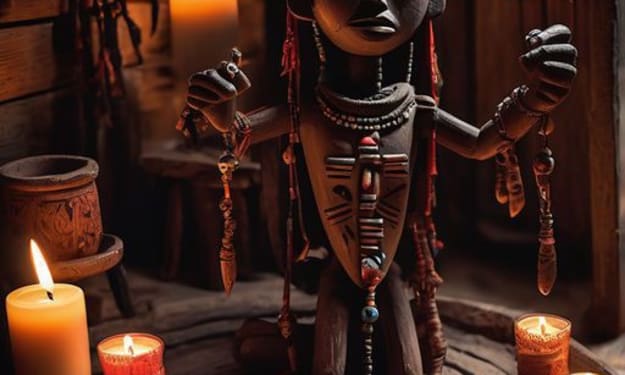
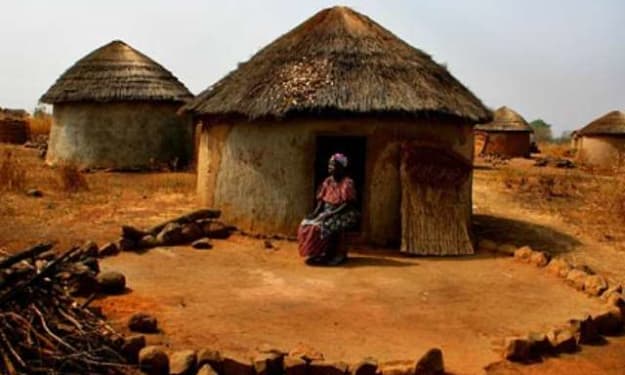
Speaking of voodoo, the images that come to mind are probably voodoo frogs and scary witchcraft. But is voodoo really as scary as we imagine? I was lucky enough to visit the voodoo wizard in the photo when I was traveling in Ghana, introduced by a friend.
By Uchenna Cosmas Nwokafor about a year ago in History
Adventure in Gambaga Witch Village in Ghana
Let’s first talk about what “witch” is! The people of the tribe believe that if the village encounters disease or misfortune, it must be the work of a witch. Even if the husband of an old lady dies, the witch may be accused of killing her husband with witchcraft. At this time, they will name a woman who may be a witch, and then use some traditional methods to determine whether she is a real witch. The most common method is herbal medicine. The chief will let the woman who is accused of being a witch eat special herbs. Only after eating the herbs will the woman answer honestly whether she is a witch. The villagers will expel the witch and warn that if she dares to return to the village to continue to cast spells, she will be killed.
By Uchenna Cosmas Nwokafor about a year ago in History
The Giants of Peru: Conquistadors' Eyewitness Accounts and the Mystery of Ancient Skeletons
The Giants of Peru When the Spanish conquistadors arrived in South America in the 16th century, they anticipated discovering gold, spices, and strange civilizations. However, they did not expect to encounter legends of giants, and even more surprisingly, reports of actual giant skeletons unearthed by the native people that they claimed to have seen with their own eyes.
By The Secret History Of The Worldabout a year ago in History
"A Map of Invisible Things"
It was folded between the pages of an old ledger in his attic, tucked beneath a pile of newspapers from the 1960s. The paper was brittle at the edges, yellowed by time, but the ink was clear — delicate black lines looping and spiraling like constellations. At first glance, it looked like a child’s drawing, chaotic and nonsensical. But something about it felt… deliberate.
By junaid aliabout a year ago in History
🗻 Trapped in the Snow – How a Rugby Team Survived 72 Days in the Andes
✦ The Flight and the Crash ✦ On October 13, 1972, Uruguayan Air Force Flight 571 carried 45 people—mostly a rugby team and their friends—over the Andes mountains to Santiago, Chile. Soon after takeoff, bad weather and navigational errors led the plane into heavy snow and clouds. The aircraft hit a mountain slope and broke apart. Many died on impact. The survivors found themselves high in the Andes, amid snow and ice, with no easy way out. ✦ Alone on a Frozen Peak ✦ About 16 people survived the crash and reached a makeshift shelter among the wreckage. Temperatures dropped far below freezing. With no shelter except parts of the plane scattered on the slope, they faced bone-chilling cold each night. Clothing was torn or buried under snow. They huddled together for warmth but knew that without better protection, hypothermia could kill them quickly. They had almost no food. A few snacks and sweets from the plane’s supplies were gone within days. Water came only from melting snow using body heat or small fires, but fuel was limited. Each hour felt like a test: the cold stung, and hunger grew.
By Echoes by Imadabout a year ago in History
The Eight Kings Who Ruled Before the Flood: Unveiling the Sumerian King
A Forgotten Record of Impossible Reigns: Unraveling the Enigma of the Sumerian King List In the cradle of civilization, where the first written words were penned, and society took its earliest steps, ancient scribes inscribed a remarkable document into clay tablets: the Sumerian King List. This cuneiform text, over 4,000 years old, lists the names of kings who reigned in ancient Mesopotamia.
By The Secret History Of The Worldabout a year ago in History
The history of human settlement in North America is altered by footprints.
At White Sands, New Mexico, researchers found human footprints preserved in prehistoric mud. These footprints seem to be from the Last Glacial Maximum (LGM), which occurred around 23,000 years ago during the last Ice Age, when glaciers were at their greatest.
By Francis Damiabout a year ago in History