Ancient
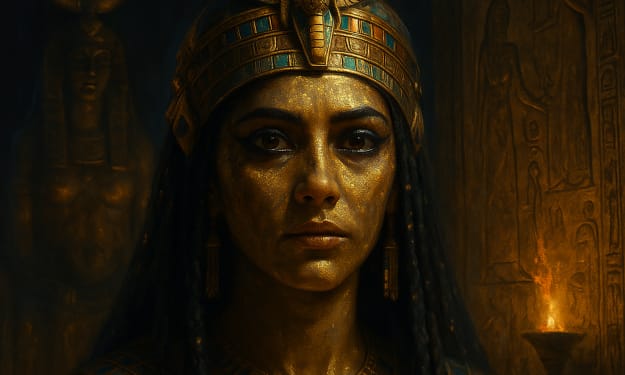
Golden Sleep: The Discovery of King Tut
The year was 1922. The sun blazed mercilessly over the scorched sands of Egypt’s Valley of the Kings, where tombs of ancient pharaohs lay hidden beneath centuries of dust. Most believed all the great tombs had already been found—plundered or lost to time. But one man refused to give up.
By Raza Ullahabout a year ago in History
Foundations of an Empire. AI-Generated.
In the mist-shrouded hills of central Italy, where the Tiber River wound through wild forests and marshlands, a legend was born—a tale of two brothers raised by a she-wolf, destined to shape the future of the world. Rome’s story did not begin with marble palaces or legions marching across continents. It began with survival, struggle, and an unshakable will to endure.
By Raza Ullahabout a year ago in History
Cyrus the Great: The Benevolent Conqueror of the Ancient World
Long before Alexander the Great crossed into Asia or Rome rose from its hills, there lived a king whose vision and leadership laid the foundation for one of the greatest empires the ancient world had ever seen. Cyrus the Great, born around 600 BCE, was the founder of the Achaemenid Empire, which eventually spanned three continents. But what truly set Cyrus apart from other conquerors was not just the size of his empire, but the wisdom, justice, and tolerance with which he ruled. He was not merely a conqueror, but a statesman, and his legacy continues to echo in history as a model of enlightened leadership.
By Anwar Jamilabout a year ago in History
Spartacus: Born in Chains, Died a Legend
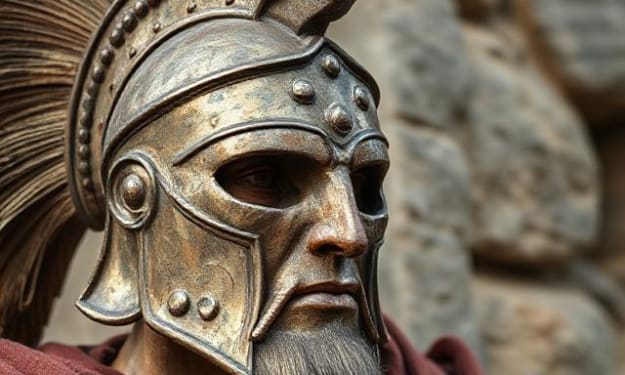
Spartacus: The Slave Who Defied an Empire In the heart of ancient Rome, where emperors ruled and gladiators bled for applause, there rose a man who would shake the foundations of the Republic. His name was Spartacus, and though he was born a slave, he died a symbol—of defiance, freedom, and the unyielding will of the oppressed. The Making of a Gladiator Spartacus was not born a Roman, nor was he destined for greatness by blood. He hailed from Thrace, a rugged region in the Balkans where fierce tribes resisted Rome’s expansion. Originally a soldier—perhaps even a Roman auxiliary—Spartacus was eventually captured and sold into slavery, a common fate for prisoners of war. Deemed strong and capable, he was sent to a gladiatorial training school in Capua, a brutal institution where men were forged into entertainers of death. Under the watchful eyes of Roman lanistae (trainers), Spartacus learned to fight not for honor, but for survival—and for the amusement of the Roman elite. Armed with nothing but short swords and the hope of living another day, he was forced to battle in the arena, where blood was currency and mercy a myth. But Spartacus's spirit remained unbroken. Within the confines of the arena, he forged not only strength, but unity—connecting with other enslaved gladiators who, like him, dreamed of freedom. The Great Escape In 73 BCE, that dream ignited into action. Spartacus, along with about 70 fellow gladiators, staged a daring escape. Armed with kitchen knives and seized weapons, they broke free from the gladiator school and fled to Mount Vesuvius, a dormant volcano that would become their fortress. From this unlikely stronghold, the fugitives launched raids on surrounding Roman towns, freeing slaves and gathering supplies. Their numbers swelled as word of rebellion spread like wildfire. Farmers, slaves, deserters—tens of thousands joined the cause. What began as a desperate bid for freedom became a full-scale insurrection. The War Begins Rome was stunned. A group of escaped slaves had defied the Republic—and won battles. The Senate, humiliated, sent hastily assembled forces to crush the revolt. Spartacus, however, proved more than just a brawler—he was a tactician. Using clever ambushes and superior knowledge of the terrain, he outmaneuvered several Roman commanders. He defeated army after army, seizing weapons, horses, and the confidence of his growing force. His army grew to possibly 100,000 men, a mix of gladiators, former slaves, and others who sought to overturn the existing order. Despite his success, Spartacus never claimed to be king. He refused a crown, speaking instead of liberty, of returning home. His aim, some say, was not to conquer Rome, but to escape Italy altogether, to lead his people north across the Alps to freedom. But freedom was not easily won in a world ruled by legions. The Empire Strikes Back The Senate, alarmed by the rebellion’s success, turned to Marcus Licinius Crassus, the wealthiest man in Rome. Crassus was ruthless and ambitious. He took command with full authority and imposed brutal discipline on his troops, even reviving the ancient punishment of decimation—killing every tenth soldier in cowardly units. Crassus pushed Spartacus south, hoping to trap him in Calabria. Spartacus sought a way out, perhaps hoping to cross the sea to Sicily, but was betrayed by pirates who had promised him ships. Trapped and outnumbered, his army fractured. Some broke away, others lost hope. Spartacus, though, never surrendered. In 71 BCE, the final battle came. On the plains of Lucania, Spartacus led his remaining forces—perhaps 30,000 men—against the might of Rome. It was a fight for their lives, for dignity, and for a future free of chains. The Death of a Legend Spartacus died as he lived: sword in hand, refusing to bow. Ancient sources say he fought fiercely, cutting his way toward Crassus himself, before being overwhelmed. His body was never found—perhaps consumed by the chaos of battle, or perhaps hidden by his loyal followers. In the aftermath, Rome made a brutal example. 6,000 captured rebels were crucified along the Appian Way, the road from Capua to Rome. For miles, crosses lined the path—grim reminders of Rome’s wrath. But the message backfired. Instead of erasing Spartacus from memory, the crucifixions immortalized him. Though Rome won the war, it could not kill the idea he had inspired. The Legacy of Spartacus To Rome, Spartacus was a rebel and a threat. To history, he is much more: a symbol of resistance, of rising against impossible odds, of fighting for the right to be free. His name echoes through centuries—in revolutions, in literature, in film. Karl Marx saw him as a proto-revolutionary. The American abolitionists honored him. Modern storytellers turned him into a tragic hero. And his story, though drenched in blood, remains a beacon: proof that even in the darkest systems, someone will rise. Spartacus may have been a slave, but he died freer than most men of his time. And in that death, he carved his name into the eternal stone of history—not as a Roman citizen, but as a rebel who defied Rome itself.
By Soul Draftsabout a year ago in History
The Pharaoh Who Worshipped the Sun Alone
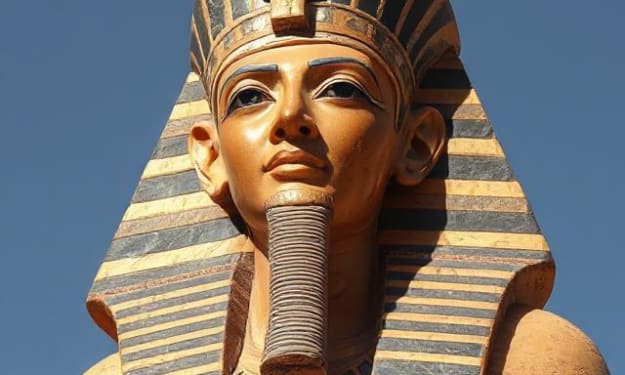
In the heart of ancient Egypt, where gods walked among mortals and temples pierced the desert sky, there rose a pharaoh unlike any other—Akhenaten, the heretic king, the visionary, the outcast. He was born Amenhotep IV, son of the mighty Amenhotep III and Queen Tiye. He inherited an empire of gold, art, and gods—a pantheon of deities that filled every corner of Egyptian life. But within the young prince burned a strange fire, a light not from Osiris or Amun, but from Aten, the sun itself. When Amenhotep IV ascended the throne around 1353 BCE, he appeared to follow tradition. But within five years, everything changed. He cast aside the old gods, rejected the powerful priesthood of Amun, and declared that only Aten, the radiant disk of the sun, was divine. He changed his name to Akhenaten, meaning “Effective for Aten.” He declared that Aten was not just another god—it was the one true god, the giver of life to all creation. In a land where religion was woven into every brick and scroll, this was revolution. Then came the most dramatic move of all: Akhenaten abandoned Thebes, the sacred city of Amun, and built a new capital in the desert. He called it Akhetaten—“Horizon of the Aten.” It rose from the sand like a dream: open courtyards, sunlit altars, and palaces designed to welcome the light. Unlike the dark temples of the past, Akhenaten's city had no roofs, for the sun must always see. He ruled beside Nefertiti, his queen of great beauty and power. Together, they were depicted not as distant gods, but as a loving family—holding their daughters, kissing them, basking in the sun's rays. Their faces, strangely elongated and androgynous, were carved into stone with unprecedented intimacy. But while Akhenaten worshipped light, his land began to fade into darkness. Outside his sun-washed city, Egypt trembled. Vassal states rebelled. The Hittites rose in the north. The priesthood of Amun, once the soul of Thebes, was enraged by its erasure. Grain was scarce, and the people grew weary of a god they could not touch. Akhenaten remained aloof, consumed by devotion. In his world, the only truth was the sun. He wrote hymns to Aten, describing the light as father, mother, breath, and food: > “You rise, and all eyes see you. You set, and all hearts ache. Life is through your rays alone.” Some saw genius in his vision. Others saw madness. When he died—sometime around 1336 BCE—his sun began to set. His successors tried to hold the center, but the world he built was already crumbling. His son, the young Tutankhaten, was pressured to abandon Akhetaten, return to Thebes, and restore the old gods. The boy obeyed, changing his name to Tutankhamun—“Living Image of Amun.” Akhenaten's memory was condemned. His name was chiseled off monuments, his city abandoned to the sand, his religion erased. For centuries, Akhenaten vanished from history. Even his mummy was lost. But he was not truly gone. In the 19th century, archaeologists uncovered the ruins of Akhetaten—modern-day Amarna. They found letters to foreign kings, hymn fragments, and sun-drenched art that broke all the rules of Egyptian formality. They found a king who spoke as a man, not a god, and who dared to ask: What if there is only one truth? Today, scholars still debate Akhenaten. Was he a proto-monotheist, a religious fanatic, or an artist-philosopher centuries ahead of his time? What’s clear is this: he changed Egypt forever. In a civilization that worshipped eternity, Akhenaten chose revolution. While others built pyramids to last for ages, he built a city that lasted less than two decades. Yet in that brief blaze of sun, he altered the course of history. He remains a mystery, a heretic to some, a prophet to others. But above all, Akhenaten is a reminder that even in the most ancient of worlds, one voice can question everything, and one sunlit dream can challenge the darkness.
By Soul Draftsabout a year ago in History
"Anne Frank: The Girl Who Wrote Through the War"
🌸 The Secret Diary: The True Story of Anne Frank (Emotional Storytelling Version) 🌸 Have you ever been so silent that you could hear your own heartbeat? So hidden, that even a creaking floorboard could cost you your life? This was the reality of a young girl named Anne Frank. The year was 1942. While Amsterdam’s streets buzzed with bicycles, trams, and chatter, a dark shadow was falling over the city. Nazi flags hung from buildings, soldiers marched through neighborhoods, and chilling signs appeared in shop windows: “No Jews Allowed.” Thirteen-year-old Anne, full of dreams and laughter, suddenly found her entire world changing overnight — just because she was Jewish. Her father, Otto Frank, saw what was coming. Jewish families were being arrested and sent away to unknown places — places from where no one returned. So one day, with a few belongings and heavy hearts, the Frank family vanished from the outside world. But they didn’t leave the country. Instead, they walked silently through the streets and slipped behind a hidden bookshelf inside Otto Frank’s office building. Behind that shelf was a secret annex — dark, cramped, and silent. It would become their home for the next two years. Imagine living in a place where you couldn’t flush the toilet during the day. Where laughter had to be swallowed, and running water was forbidden. Where children couldn’t play, and any sound could mean death. Eight people lived there — Anne, her sister Margot, her parents, and four others. Every creak of the wooden floor could be their last. Yet somehow, Anne found a way to stay alive on the inside. She began to write. In a small red-checkered diary she named “Kitty,” Anne poured out her deepest thoughts. She wrote about everything — her dreams of becoming a writer, her frustrations with life in hiding, her thoughts on love, her longing for freedom. The pages became her safe space, her therapy, her voice in a world that wanted to silence her. > “I can shake off everything as I write; my sorrows disappear, my courage is reborn,” she once wrote. In the midst of fear and war, Anne still believed in beauty. She still believed in hope. She still believed in people. > “In spite of everything, I still believe that people are really good at heart.” But her diary was not destined to end in peace. In August 1944, someone betrayed them. The Nazis stormed the annex, dragging everyone out. Anne was sent to Auschwitz, and then to Bergen-Belsen — a brutal concentration camp. There, in the cold, with barely any food, no medicine, and surrounded by death, Anne and her sister Margot caught typhus. Both died. Anne was just 15 years old. The war ended months later. The Nazis were defeated. But only Otto Frank returned. He was the sole survivor from the annex. And when he came back to Amsterdam, one of their helpers — Miep Gies — handed him a small object. It was Anne’s diary. Otto read it slowly, painfully — every word, every line. It was his daughter’s voice, speaking from the grave, filled with innocence, heartbreak, and courage. He knew he had to share it with the world. And so, “The Diary of a Young Girl” was published — Anne’s wish of becoming a writer had come true.
By Khan Afzalabout a year ago in History
Bacha Khan: A Forgotten Beacon of Nonviolence and Nationhood"
Those who choose to work for humanity on the level of nation, society, and homeland live in a different world. The question arises—how do such thoughts arise in their hearts? While it’s difficult to provide a definitive answer, one can say that there is something in their personality, temperament, and sensitivity that is not satisfied by nurturing just the “self.” Their hearts and minds beat not just for the well-being of their own household, but for a greater collective humanity.
By Hamza khanabout a year ago in History
The Middle East: A Tinderbox of Empires, Wars, and Unending Conflict. AI-Generated.
The Middle East: A Tinderbox of Empires, Wars, and Unending Conflict The Middle East has always been more than just a geographical region—it’s a crucible of civilizations, a battleground of empires, and a vortex of geopolitical rivalries that have shaped world history. From the ancient wars of Mesopotamia to the modern-day clashes between Israel and Iran, this land has rarely known lasting peace. Today, as tensions escalate once again, the Middle East stands at the brink of another catastrophic conflict, threatening not just regional stability but global security.
By Muhammad Salman Akbarabout a year ago in History
The Queen Who Burned Her City
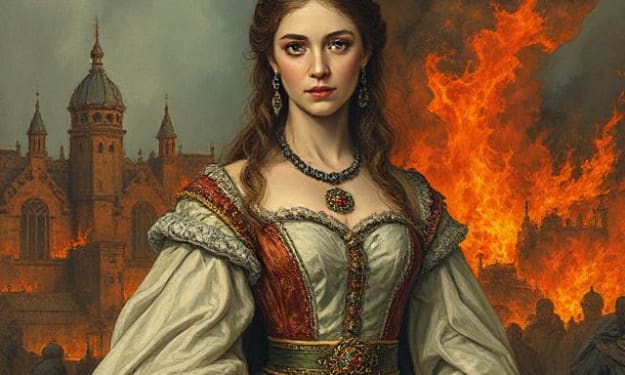
I. The Fire Beneath the Crown She was not born with fire in her hands—but when the time came, she wielded it like a sword. Boudica, Queen of the Iceni tribe, had long lived in uneasy peace with the mighty Roman Empire. Her husband, King Prasutagus, ruled as a Roman ally in what is now eastern England. The arrangement was simple: they kept their thrones, the Romans got their taxes, and the people of Britannia bent the knee—if not in body, then in silence. But when Prasutagus died, he left behind only daughters, and a will begging Rome to protect his family. Rome answered with iron. --- II. The Breaking of a Queen When Roman officials came to claim the kingdom, they did not take it peacefully. They seized Iceni lands, enslaved nobles, and—by some accounts—publicly flogged Boudica and assaulted her daughters. This was not just conquest. It was humiliation. It was betrayal. And it was war. What the Romans failed to realize was that Boudica was not a queen content to mourn in silence. She was a leader with the voice of a goddess and the rage of a storm. She would not plead. She would burn. --- III. The Gathering Storm Boudica called upon the other British tribes, long weary of Roman taxes, forced labor, and brutality. They came—not for politics, but for vengeance. Under Boudica’s leadership, a massive force rose. Some estimates say as many as 100,000 warriors rallied to her side. She was described as tall, fierce-eyed, and wild-haired. She rode a chariot, her daughters beside her, and carried not just weapons—but the memory of every insult Rome had ever carved into British skin. Their first target: Camulodunum—modern-day Colchester, the Roman capital of Britain. --- IV. Cities in Ashes The assault was swift. The Roman inhabitants of Camulodunum barely had time to flee before Boudica’s forces destroyed the city. Temples, homes, and soldiers fell to the fire and blade. Survivors were few. Then came Londinium—modern-day London. Knowing he could not defend it, the Roman governor Gaius Suetonius Paulinus abandoned the city. Boudica’s army entered and razed it. The same fate came to Verulamium (modern St Albans). The death toll across the three cities is estimated at over 70,000. Roman records speak of horrific slaughter—but one must remember: this was not senseless violence. This was rebellion, long suppressed and now unleashed. Boudica’s war was not just against Rome. It was against an empire built on injustice. --- V. The Final Stand But Rome did not build its empire by folding under pressure. Suetonius regrouped with his legion—about 10,000 well-trained soldiers. Boudica’s force, by then swollen with new recruits and tribes, still outnumbered them at least 10 to 1. They met in an unknown location—possibly Watling Street, in the English Midlands. Despite being outnumbered, the Romans used strategy and terrain to their advantage. In a narrow valley flanked by forests, they could not be surrounded. Roman discipline won over chaos. The Britons were crushed. Tens of thousands died. And Boudica? Some say she drank poison. Others say she disappeared into the forest, never to be seen again. But her legend had already been born. --- VI. Aftermath and Legacy Rome regained control—but never again underestimated the ferocity of Britain’s tribes. The revolt led to changes in Roman policy: fewer taxes, more tolerance, and a cautious respect for the people they ruled. Boudica’s name faded for centuries, buried under Roman records and forgotten kingdoms. But in the Victorian era, she was reborn as a national symbol of resistance. A statue of her now stands near the Houses of Parliament in London—a reminder that even in defeat, the human spirit can rise to challenge empires. She lost the battle. But she won immortality. --- VII. The Lesson in Fire Boudica’s story is not one of simple revenge or nationalism. It’s a story of how trauma becomes revolution, how grief becomes resistance. It's about how the oppressed can rise, even if only briefly, and remind the powerful that they rule not by right, but by fear—and that fear has limits. She was a woman against an empire. A mother turned warrior. And though the flames she lit were eventually extinguished, the smoke of her story still lingers, carried by the wind, whispered through time. She was not the first to rise against tyranny—and she will not be the last
By Soul Draftsabout a year ago in History