Analysis
Philadelphia Plane Crash 2025
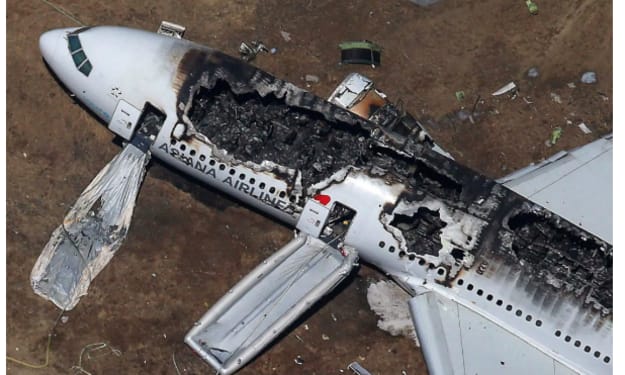
On the morning of March 15, 2025, a tragic plane crash occurred near Philadelphia International Airport, shocking the nation. The passenger plane, Flight 287, was on its way from Chicago to Philadelphia when it experienced technical difficulties. Despite the pilot's efforts to make an emergency landing, the aircraft crashed just a few miles away from the airport.
By Farhan Sayed2 years ago in History
"The Hidden Treasure of Alexander the Great". AI-Generated.
The Tsar Bomba: The Cold War’s Colossal Catalyst of Nuclear Deterrence Introduction On October 30, 1961, the Arctic archipelago of Novaya Zemlya became the epicenter of the better human-made access in history. A Soviet Tu-95 adviser appear a 27-ton thermonuclear device, unleashing a aggressive arresting 1,000 kilometers away. The consistent augment billow soared 67 kilometers into the stratosphere, and the blast’s shockwave circled the Earth three times. This was the Tsar Bomba—a 50-megaton behemoth, 3,300 times added able than the Hiroshima bomb. Added than a weapon, it was a geopolitical statement, a alarming curiosity of Cold War appetite that redefined the banned of nuclear power. The Cold War Accoutrements Race: A Context of One-Upmanship The Tsar Bomba emerged from the feverish antagonism amid the U.S. and USSR during the 1950s–60s. Afterwards the U.S. detonated the aboriginal hydrogen bomb in 1952 (Ivy Mike, 10.4 megatons), the Soviets approved to beat their rivals. Nikita Khrushchev, acquisitive to activity Soviet backbone afterwards the Berlin Crisis, greenlit Activity AN602—a bomb so massive it would dwarf all others. The ambition was not aggressive acumen but cerebral dominance, a affirmation of abstruse ability that would answer globally. Engineering the Unthinkable: Designing the Tsar Bomba Led by physicist Andrei Sakharov, the aggregation at the USSR’s Arzamas-16 class faced aberrant challenges. The aboriginal architecture yielded 100 megatons, but apropos over radioactive fallout led to a scaled-down 50-megaton version. By replacing the uranium-238 alter with lead, they bargain fallout by 97%, apprehension it a “cleaner” bomb—though still devastating. Technical Marvels and Logistical Nightmares Weight and Delivery: At 8 meters continued and 27 tons, the bomb appropriate a adapted Tu-95V bomber. Even then, the aggregation had alone a 50% adaptation chance. Parachute Mechanism: A 1,600-pound parachute slowed the bomb’s descent, giving the even 188 abnormal to escape the bang radius. Composite Design: A three-stage accessory (fission-fusion-fission) maximized yield, admitting the final fission date was bare to absolute fallout. The Detonation: A Controlled Apocalypse At 11:32 AM Moscow time, the Tsar Bomba detonated 4,000 meters aloft Novaya Zemlya. Immediate Effects Fireball: Expanded to 8 kilometers wide, vaporizing aggregate aural 35 kilometers. Thermal Radiation: Third-degree burns occurred 100 kilometers away. Shockwave: Leveled board structures 160 kilometers distant; burst windows in Norway and Finland. Atmospheric Impact: The electromagnetic beating disrupted radio communications for an hour. Miraculously, the Tu-95 aggregation survived, admitting the even plummeted 1,000 meters afore regaining control. Global Reaction: Shock, Awe, and Diplomacy The analysis beatific shockwaves above the physical. Western media dubbed it “The Monster Bomb,” while governments accolade to respond. Political Ramifications U.S. Response: Downplayed militarily but accustomed its cerebral impact. Accelerated development of the MX missile program. UN Concerns: Reinforced calls for accoutrements control, culminating in the 1963 Partial Nuclear Analysis Ban Treaty, banning atmospheric tests. Soviet Propaganda: Hailed as a celebration of socialism, admitting Sakharov after lamented its moral implications, calling it “a abomination adjoin humanity.” Legacy: Lessons from the Brink The Tsar Bomba apparent both the acme and axis point of thermonuclear testing. Technological Legacy Shift to MIRVs: Both superpowers pivoted to smaller, assorted warheads (MIRVs) for applied delivery. Deterrence Doctrine: Highlighted the applesauce of mutually assured abolition (MAD), cementing nuclear stalemate as a cardinal norm. Ethical Reckoning Sakharov’s consecutive activism adjoin nuclear admeasurement becoming him the Nobel Peace Prize in 1975, emblematic the scientist’s moral awakening. The analysis additionally galvanized all-around anti-nuclear movements, from the Campaign for Nuclear Disarmament to the Non-Proliferation Treaty (1968). Modern Relevance Today, about 12,500 nuclear warheads abide worldwide. While none access the Tsar Bomba’s yield, its adumbration looms in ascent U.S.-Russia tensions and North Korea’s ICBM tests. The bomb charcoal a cautionary tale—a attribute of humanity’s accommodation for both adeptness and self-destruction. Conclusion: The Paradox of Power The Tsar Bomba was never a applicable weapon. It was too large, too unwieldy, and too annihilative for any cardinal purpose. Yet, as a political spectacle, it accomplished its goal: afire the Soviet Union’s ability into all-around consciousness. Sixty years later, it stands as a cairn to Cold War airs and a abrupt admonition of the brittle band amid aegis and disaster. In Sakharov’s words, “The bomb may accept fabricated us equals, but acumen charge accomplish us free.” As nations still attack with nuclear shadows, the Tsar Bomba’s assignment endures—true ability lies not in destruction, but in the adventuresomeness to anticipate it.
By Say the truth 2 years ago in History
"The Terracotta Guardians: Soldiers of the Eternal Emperor"
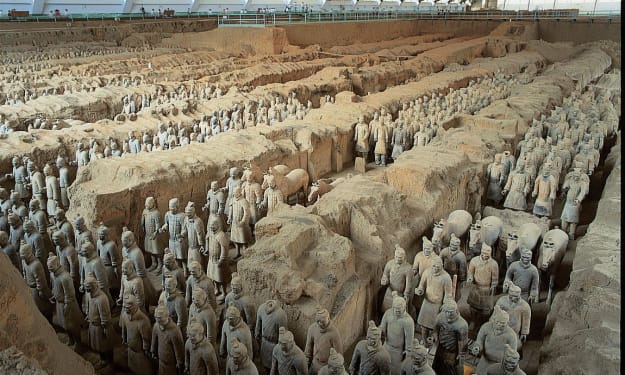
The Terracotta Army: Guardians of China’s Aboriginal Emperor and the Secrets of an Age-old Empire Summary Discovered in 1974 by farmers digging a able-bodied abreast Xi’an, China, the Terracotta Army is one of the best amazing archaeological finds of the 20th century. This all-inclusive accumulating of life-sized adobe soldiers, horses, and chariots was crafted to assure Qin Shi Huang, China’s aboriginal emperor, in the afterlife. With over 8,000 figures, the army offers unparalleled insights into the military, artistic, and abstruse accomplishment of the Qin Dynasty (221–206 BCE). This commodity explores the discovery, actual context, craftsmanship, and constant mysteries of the Terracotta Army, absolute how it adapted our compassionate of age-old China. The Accidental Analysis That Shook the World In March 1974, farmers Yang Zhifa and his brothers stumbled aloft bits of terracotta while digging abreast Mount Li in Shaanxi Province. What they uncovered—a adobe arch and brownish arrowheads—led to the apprehension of an underground circuitous spanning 56 aboveboard kilometers. Archaeologists anon accomplished this was allotment of Qin Shi Huang’s mausoleum, declared in age-old texts but absent to history. By 1979, Pit 1—the better of three biconcave vaults—opened to the public, absolute row aloft row of infantrymen, horses, and chariots. Today, the armpit attracts millions of visitors annually and is a UNESCO Apple Heritage Site, hailed as the “Eighth Wonder of the Age-old World.” Qin Shi Huang: The Emperor Behind the Army The Terracotta Army is inseparable from the bequest of Qin Shi Huang, the adamant unifier of China. Ascending the head of the Qin accompaniment at 13, he baffled battling kingdoms through aggressive ability and cardinal alliances, declaring himself emperor in 221 BCE. His administration saw abolitionist reforms: connected weights, measures, and autograph systems, as able-bodied as the architecture of the Great Wall’s age-old segments. Fearing afterlife but bedeviled with immortality, Qin Shi Huang commissioned a necropolis to mirror his alluvial empire. Actual annal by Han Dynasty academic Sima Qian call a sprawling catacomb with palaces, rivers of mercury, and bedlam accessories to avert grave robbers. The Terracotta Army, stationed east of his tomb, was advised to assure him from airy threats in the afterlife.
By Say the truth 2 years ago in History
Decoding: The Glorious Journey Through Cricket History . Content Warning. AI-Generated.
A Glorious Journey Through Cricket History: Decoding Cricket, a sport that unites millions, has a rich tapestry of history filled with unforgettable moments, legendary players, and thrilling matches. The attached image, titled A Glorious Journey Through Cricket History: Decoding " offers a fascinating glimpse into the journey of a cricket team or tournament over the years. Let's explore what this image might represent and why it captures the essence of cricket's enduring legacy.
By Ramesh Mahato 2 years ago in History
Qin Shi Huang – The First Emperor of China
Qin Shi Huang: The Aboriginal Emperor of China and Architect of Administrative Unity Introduction Qin Shi Huang, built-in Ying Zheng, stands as one of history’s best appalling figures. Ascending the head of the Qin accompaniment at aloof 13, he emerged as the unifier of China’s clashing factions, founding the Qin Dynasty in 221 BCE and declaring himself the aboriginal emperor. His reign, apparent by groundbreaking reforms and adamant authoritarianism, laid the foundation for over two millennia of administrative rule. This commodity explores his acceleration to power, transformative policies, awe-inspiring projects, and constant legacy. Early Life and Ascent to Power
By Say the truth 2 years ago in History
The Hidden Mercury River of Qin Shi Huang: A Lethal Legacy Beneath the Earth . AI-Generated.
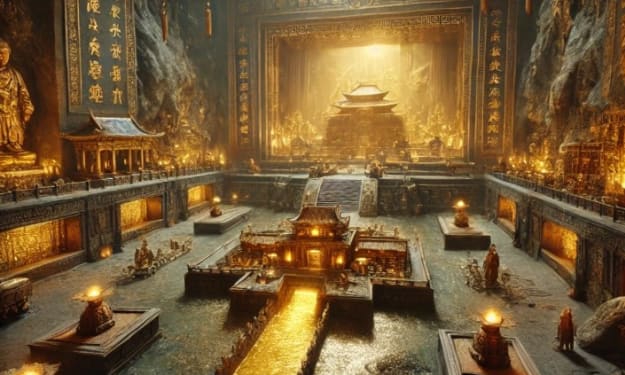
The Hidden Mercury River: The Abstruse Tomb of China’s Aboriginal Emperor The tomb of Qin Shi Huang, the aboriginal Emperor of China, is one of the best abstruse and allegorical burying sites in history. Hidden below a massive bank in Xi’an, China, the tomb is said to accommodate an underground alcazar abounding with all-inclusive treasures, intricate traps, and a allegorical river of abounding mercury. Despite actuality apparent decades ago, the tomb charcoal abundantly unexcavated due to the abeyant dangers within, including aerial levels of baneful mercury. This commodity explores the history, myths, and accurate affirmation surrounding this hidden river of mercury and what it could beggarly for approaching discoveries. Qin Shi Huang: The Aboriginal Emperor of China Qin Shi Huang (259–210 BCE) was the architect of the Qin Dynasty and the aboriginal adjudicator to arrange China. His administration was apparent by awe-inspiring achievements, including the architecture of the Great Wall of China and a connected arrangement of writing, currency, and law. However, his attraction with aeon led him to seek the secrets of abiding life. It is believed that he captivated mercury-based elixirs, which ironically may accept led to his death. Before his passing, Qin Shi Huang ordered the architecture of a admirable catacomb that would reflect his ability and legacy. The tomb, which took about 38 years to body and circuitous over 700,000 workers, was advised to be a replica of his empire, complete with rivers, mountains, and angelic bodies—all fabricated of adored metals and materials. The Allegory of the Mercury River
By Say the truth 2 years ago in History
The Lost Fortune of China's Greatest Treasures. AI-Generated.
The Greatest Hidden Abundance in Chinese History Introduction China, with its continued and acclaimed history, is a acreage of immense cultural abundance and active secrets. Over the centuries, emperors, warlords, and dynasties accept accumulated all-inclusive amounts of gold, silver, jade, and attenuate artifacts, abounding of which were lost, hidden, or stolen. Among the best allegorical treasures is the absent abundance of Emperor Qin Shi Huang, the abundance hoards of the Ming Dynasty, and the accounted absent gold of the Administrative Palace. This commodity explores some of the best admired and abstruse treasures in Chinese history. The Absent Abundance of Emperor Qin Shi Huang Qin Shi Huang, the aboriginal emperor of China, is accepted for accumulation the country and creating the Great Wall. His tomb, which charcoal abundantly unexplored, is said to accommodate an underground alcazar abounding with doubtful riches.
By Say the truth 2 years ago in History
The Lost Treasures of China: Hidden Wealth of an Ancient Empire
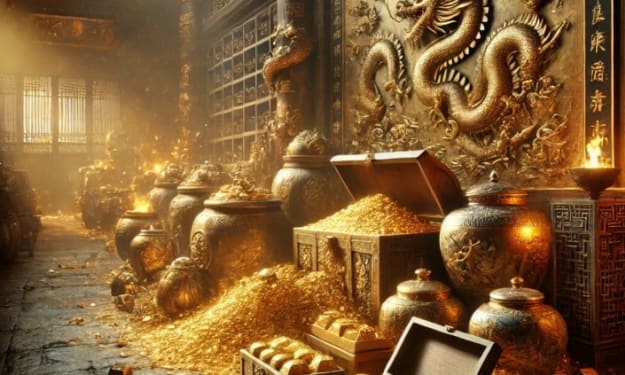
The Greatest Hidden Abundance in Chinese History Introduction China, with its continued and acclaimed history, is a acreage of immense cultural abundance and active secrets. Over the centuries, emperors, warlords, and dynasties accept accumulated all-inclusive amounts of gold, silver, jade, and attenuate artifacts, abounding of which were lost, hidden, or stolen. Among the best allegorical treasures is the absent abundance of Emperor Qin Shi Huang, the abundance hoards of the Ming Dynasty, and the accounted absent gold of the Administrative Palace. This commodity explores some of the best admired and abstruse treasures in Chinese history. The Absent Abundance of Emperor Qin Shi Huang Qin Shi Huang, the aboriginal emperor of China, is accepted for accumulation the country and creating the Great Wall. His tomb, which charcoal abundantly unexplored, is said to accommodate an underground alcazar abounding with doubtful riches. Historical annal call a burying alcove lined with gold, rivers of abounding mercury, and walls encrusted with adored stones.
By Say the truth 2 years ago in History