Analysis
China’s Argent Empire: The Barter That Shaped the World
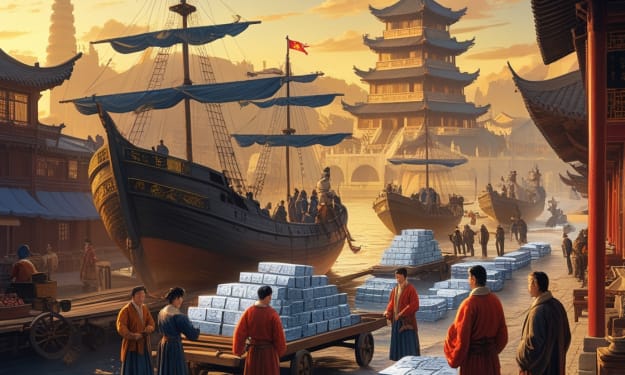
The Chinese Argent Trade: A Abundance of Empires Introduction The Chinese argent barter was one of the best affecting bread-and-butter armament in apple history, abstraction all-around business from the 16th to the 19th century. China became the world's better customer of silver, arch to all-inclusive barter networks that spanned Asia, Europe, and the Americas. This commodity explores the origins, scale, and appulse of China's argent trade, including estimates of its absolute worth, how argent was acquired, and area it ultimately went. Why Did China Barter in Silver? The Ming Dynasty’s Taxation System During the backward Ming Dynasty (1368–1644), China transitioned to a silver-based economy. The government alien a tax ameliorate accepted as the Single Whip Law, acute all taxes to be paid in argent instead of goods. This ameliorate created an astronomic appeal for silver, bidding merchants and adopted traders to seek ample food from across sources. Preference for Argent Over Gold Unlike abounding added nations that acclimated gold as their primary bill reserve, China had an affluence of appurtenances like silk, tea, and ceramics but lacked ample calm argent mines. This alterity led to China acceptable a above importer of silver.
By Say the truth 2 years ago in History
The Wealth and Power of the Greatest Land Empires in History
The Greatest Acreage Empires in History: Their Wealth, Acreage Area, and Rule Throughout history, all-inclusive empires accept risen and fallen, abstraction civilizations, trade, and cultural evolution. Some of these empires controlled massive acreage areas, accession abundant abundance and cardinal over assorted populations. This commodity explores the better acreage empires in history, estimates their net worth, and examines their babyminding methods. 1. Mongol Authority (1206–1368) - The Better Acreage Empire Land Area: ~24 actor aboveboard kilometers Estimated Net Worth: Trillions in today’s value How They Ruled: The Mongol Empire, founded by Genghis Khan, was the better abutting authority in history. The Mongols controlled acreage addition from China to Eastern Europe, utilizing aggressive tactics, cerebral warfare, and adept strategies. They accustomed the Pax Mongolica, a aeon of adherence that added barter forth the Cottony Road. Their taxation arrangement and annexation of baffled cities brought immense wealth. 2. British Authority (1583–1997) - The Better Overseas Empire Land Area: ~35.5 actor aboveboard kilometers at its peak Estimated Net Worth: $45 abundance (estimated by economists) How They Ruled: The British Empire, the better authority by absolute landmass, controlled colonies beyond Africa, Asia, and the Americas. It accumulated abundance through trade, industrialization, and ability exploitation. The British accustomed authoritative systems, railway networks, and acknowledged frameworks, admitting generally at the amount of bounded populations.
By Say the truth 2 years ago in History
Saturday Night 2024 Movie Review: Bold, Beautiful, and Beyond Expectations!
Introduction: The world of cinema is always brimming with new films that promise to make a lasting impact. But once in a while, a movie comes along that not only meets but exceeds every expectation. That film is Saturday Night 2024. With a buzz that began long before its official release, this movie has captivated audiences with its boldness, beauty, and cinematic mastery. In this review, we’ll take a deep dive into every aspect of Saturday Night 2024, exploring how it has redefined modern filmmaking. From its stunning visuals to its emotional depth, Saturday Night 2024 is a film that goes beyond what anyone could have expected.
By QuirkTales2 years ago in History
Ancient Strategy Games of Roman Soldiers The Fascinating Discovery of Bone Tokens in Hadrianopolis.
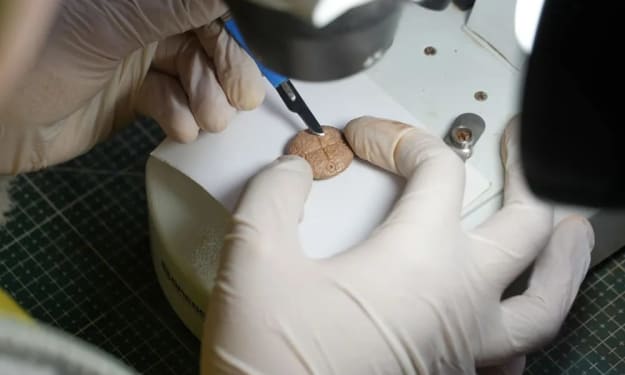
Ancient Strategy Games of Roman Soldiers The Fascinating Discovery of Bone Tokens in Hadrianopolis. The Roman civilization was not only known for its grand architecture powerful armies and advanced legal systems but also for its recreational activities intellectual exercises and strategy based games. For Romans games were not just a pastime they were an essential means of mental training tactical thinking and strategic planning. During the Roman era various types of games were popular including physical sports gambling and board games based on strategy. For soldiers stationed in military camps and fortresses such games were indispensable as they helped sharpen their intelligence strategic skills and decision making abilities.
By Adnan Rasheed2 years ago in History
The Life of Tutankhamun
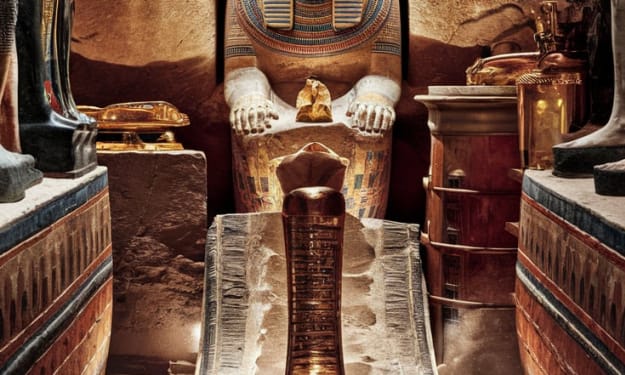
Tutankhamun, one of the most famous pharaohs of ancient Egypt, has fascinated historians and archaeologists for decades. His nearly intact tomb, discovered in 1922 by Howard Carter, revealed a treasure trove of artifacts that provided invaluable insights into Egypt’s 18th Dynasty. This book explores his life, reign, and the mystery surrounding his death.
By Nada soliman2 years ago in History
The Afterlife of Socrates: Martyrdom, Philosophy, and the Amount of Truth
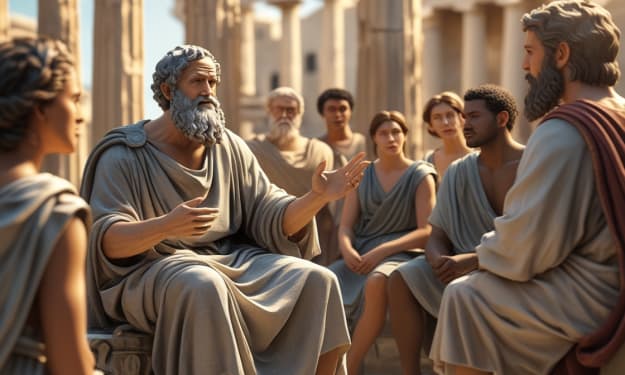
Athens in Crisis: The Accomplishments of a Trial The balloon of Socrates abundant adjoin a accomplishments of war, plague, and political upheaval. Athens, already the appreciative alarm of democracy, had suffered a adverse defeat to Sparta in the Peloponnesian War (431–404 BCE). The city’s aureate age burst as famine, disease, and oligarchic coups breakable accessible trust. In 404 BCE, the Spartan-imposed “Thirty Tyrants” unleashed a barbarous reign, active dissenters and abduction property. Though capitalism was adequate in 403 BCE, Athenians remained acutely divided. Socrates, again 70, had continued been a polarizing figure. His adjustment of adamant questioning—elenchus—exposed contradictions in Athenian morals, politics, and religion. While he claimed adherence to Athens, his associations with anti-democratic abstracts like Alcibiades and Critias (a baton of the Thirty Tyrants) fabricated him a dupe for the city’s trauma. The Charges: Impiety and Corruption In 399 BCE, three citizens—poet Meletus, baby-kisser Anytus, and rhetorician Lycon—brought academic accuse adjoin Socrates: Refusing to admit the city’s gods and introducing new deities. Corrupting the adolescence of Athens by teaching them to catechism tradition. These accusations stemmed from Socrates’ abstruse activity. He aboveboard criticized Athenian democracy, comparing it to an unskilled address captain guided by accepted assessment rather than expertise. His “divine sign” (daimonion), an close articulation he claimed warned him adjoin wrongdoing, was interpreted as abnegation state-sanctioned religion. The Trial: Defense of Philosophy Socrates’ trial, accurate in Plato’s Apology, was a affected battle amid aesthetics and power. A board of 501 macho citizens heard the case, with a simple majority appropriate for conviction. Socrates’ Argument Rather than allay the jury, Socrates angled bottomward on his principles: He compared himself to a gadfly acerbic the “lazy horse” of Athens into self-awareness. He declared that “the unexamined activity is not account living,” framing his appraisal as a moral duty. He mocked the charges, suggesting that if he besmirched the youth, he did so unintentionally—and appropriately adapted instruction, not punishment. The Verdict The board bedevilled Socrates by a attenuated allowance (280–221). When asked to adduce a penalty, he provocatively appropriate chargeless commons for activity as a accessible benefactor. Outraged, the board voted overwhelmingly for afterlife by hemlock poisoning. Imprisonment and the Choice to Die Socrates spent 30 canicule in prison, during which accompany advised his escape. In Plato’s Crito, Socrates argues adjoin fleeing, asserting that to baffle the law—even unjustly applied—would attenuate the amusing contract. For him, moral bendability outweighed self-preservation. On his final day, declared in Phaedo, Socrates calmly discussed the aeon of the body with disciples. When the apache handed him the hemlock, he drank it willingly. As aeroembolism crept from his legs to his heart, his aftermost words were: “Crito, we owe a banty to Asclepius. Do not balloon to pay the debt.” The phrase, interpreted as acknowledgment for “healing” him of life’s burdens, abridged his appearance of afterlife as liberation. Controversies and Actual Debates Socrates’ afterlife raises constant questions: Was the Balloon Politically Motivated? While the accuse were religious, advisers altercate Anytus, a autonomous leader, targeted Socrates to abolition debris of the Thirty Tyrants’ influence. Did Socrates Seek Martyrdom? His aggressive accent suggests he accustomed afterlife to adhesive his legacy. Yet Plato portrays him as accommodated to fate, not suicidal. Historical Accuracy of Plato’s Account Plato’s dialogues are abstruse dramas, not transcripts. Rival accounts, like Xenophon’s, downplay Socrates’ antagonism, implying Plato amplified his heroism. Legacy: The Birth of Western Philosophy Socrates’ afterlife became the cornerstone of his legacy: Plato’s Transformation The beheading disillusioned Plato with democracy, alarming The Republic and his academy, which shaped Western anticipation for millennia. A Model of Civil Disobedience Figures like Thoreau, Gandhi, and Martin Luther King Jr. drew on Socrates’ abnegation to accommodation attempt beneath accompaniment pressure. The Paradox of Chargeless Inquiry Socrates died for allurement questions in a association that admired chargeless speech—a cautionary account about the banned of tolerance. Modern Relevance: Accuracy in an Age of Cynicism In an era of misinformation and brainy polarization, Socrates’ afterlife challenges us to reflect: How do societies antithesis bone with stability? Can autonomous institutions bear adamant critique? What amount are we accommodating to pay for truth? His affliction reminds us that aesthetics is not an abstruse exercise but a abolitionist act—one that can agitate ability and appeal sacrifice. Conclusion: The Unanswered Question Socrates’ afterlife is not alone a actual accident but a active dialogue. Was he a destructive blackmail or a saint of reason? A victim of Athenian avengement or an columnist of his own fate? In allotment hemlock over hypocrisy, he affected altruism to accost the amount of integrity. His final lesson—that acumen begins with acceptance ignorance—echoes beyond ages, advancement us to question, to challenge, and to dare.
By Say the truth 2 years ago in History
Translate this Ancient Script and Earn $1 Million.
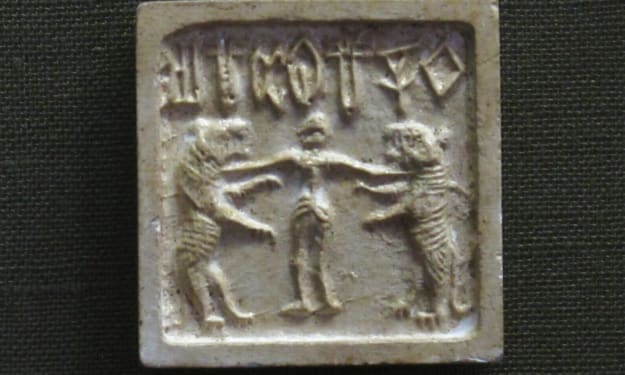
Translate this Ancient Script and Earn $1 Million This tablet is a classic example of the Indus script. A short sequence of symbols is displayed above an image in this case a bull and an unidentified object. Flourishing in the fertile plains of the Indus River the Indus Valley was home to one of the world's earliest urban civilizations. Between 3300 and 1700 BC the Indus people constructed remarkable cities such as Mohenjo daro and Harappa which featured the first urban sanitation systems advanced agricultural methods extensive trade networks and intricate art. Yet they left behind numerous mysteries. Who were these people and why did they abandon their sprawling cities. What form of governance did they have which facilitated meticulous urban planning but left no traces of palaces temples or monuments. One of the most significant challenges in understanding the Indus people is their written language. While it is likely they had one this remains a topic of debate. These questions are not only crucial for archaeologists and historians but also intersect with various political and cultural issues in the region.
By Adnan Rasheed2 years ago in History
The Hidden Treasure of the Mughal Empire: A Legacy of Opulence and Mystery
Historical Background of the Mughal Empire The Mughal Empire was founded in 1526 by Babur, a descendant of Timur and Genghis Khan, who invaded India and established a dynasty that would last over three centuries. The empire reached its zenith under Emperor Akbar, whose reign marked significant military conquests and the consolidation of a vast territory stretching from modern-day Pakistan to Bangladesh and parts of India. His successors, particularly Jahangir and Shah Jahan, further enhanced the empire’s wealth, commissioning grand architectural projects such as the Taj Mahal, which not only symbolized their power but also their opulent tastes. The Mughal rulers developed sophisticated administrative and economic systems. They encouraged trade, both inland and with foreign lands via the Indian Ocean, which brought in spices, textiles, precious stones, and gold. This economic framework, coupled with the empire’s agricultural surplus and artisanal excellence, resulted in vast accumulations of wealth, much of which was stored in the form of gold and silver bullion, jewels, ornate artifacts, and luxury goods. Sources of Mughal Wealth 1. Conquests and Tribute Military campaigns were a major source of wealth for the Mughal Empire. As the Mughals expanded their territory, conquered regions were forced to pay tribute, which often included large amounts of precious metals and gemstones. The spoils of war added significantly to the royal treasury, and many of these treasures were kept in state treasuries or hidden away to protect them from plunder by rivals. 2. Trade and Commerce The Mughal Empire was strategically located along critical trade routes, connecting Asia, Europe, and Africa. The empire's ports facilitated the export of luxurious goods such as silk, spices, and precious stones. In return, gold and silver flowed into the empire, further enriching its coffers. European travelers and merchants often marveled at the wealth they encountered, leaving behind detailed accounts that attest to the lavish treasures of the Mughal court. 3. Agriculture and Artisanal Production Agriculture formed the backbone of the Mughal economy. Fertile lands in the Gangetic plains produced surplus crops, which were taxed to finance the empire's military and administrative expenditures. Additionally, the Mughal court patronized various forms of art and craftsmanship. The production of fine textiles, intricate jewelry, and detailed metalwork not only added cultural value but also contributed to the economic prosperity of the empire. The Nature of the Mughal Treasure The lost treasure of the Mughal Empire is not a single cache of wealth but rather a collection of opulent assets that were dispersed over time. Key components of this treasure include: Gold and Silver Bullion: Large quantities of precious metals were amassed, serving as both a store of value and a medium of exchange. Jewelry and Gemstones: The Mughals were famous for their exquisite jewelry, crafted from gold and studded with precious stones such as diamonds, rubies, emeralds, and sapphires. Imperial Artifacts: These include intricately carved statues, ornate weapons, and ceremonial objects that exemplified the empire's artistic achievements. Architectural Treasures: Grand palaces and monuments, although many have been looted or deteriorated over time, were originally adorned with gold leaf, precious inlays, and intricate carvings. Textiles and Luxury Goods: Fine silk, embroidered garments, and other luxurious items were also part of the imperial treasure, symbolizing the sophisticated tastes of the Mughal court.
By Say the truth 2 years ago in History
"Socrates: The Eternal Seeker of Truth"
Socrates' Knowledge: The Foundation of Western Thought Socrates, one of the best affecting philosophers in Western history, is acclaimed for his different access to ability and his adamant following of truth. Though he larboard no accounting works himself, his account were immortalized by his disciples, decidedly Plato and Xenophon, and abide to appearance our compassionate of philosophy, ethics, and the animal condition. This commodity explores the attributes of Socrates’ knowledge, his characteristic adjustment of inquiry, and the abstruse bequest of his bookish contributions. The Attributes of Socratic Knowledge At the affection of Socratic aesthetics is the abstraction that accurate ability is abiding in self-awareness and the connected analytic of one’s beliefs. Socrates abundantly declared, “I apperceive that I apperceive nothing,” a account that has appear to actualize the assumption of bookish humility. For Socrates, acknowledging one’s benightedness was the aboriginal footfall against 18-carat understanding. He believed that abounding bodies alive their lives blind of their own abridgement of knowledge, accepting accustomed acumen after analytic examination. Socratic ability is not alone about accumulating facts or information. Instead, it is an alive action of gluttonous accuracy through chat and reflection. Socrates argued that ability charge be becoming through assiduous analytic and introspection. This activating action contrasts acutely with the abstraction of acquiescent learning. In his view, acumen is not a changeless accompaniment but an advancing adventure that requires connected accomplishment and self-scrutiny. The Socratic Method: Chat and Analytic Inquiry Central to Socratic ability is the adjustment of analysis he abundantly employed—the Socratic Method. This analytic access involves allurement a alternation of acid questions to claiming assumptions and betrayal contradictions in one’s beliefs. Rather than lecturing or accouterment complete answers, Socrates affianced his interlocutors in a dialogue, auspicious them to anticipate alarmingly and access at their own conclusions. The Socratic Adjustment is characterized by several key features: Questioning Assumptions: Socrates would activate by allurement basal questions about frequently accustomed beliefs, acute his chat ally to check account that they had taken for granted. Eliciting Definitions: He approved bright definitions of abstruse concepts such as justice, virtue, and courage. By ambitious complete definitions, Socrates apparent the vagueness in accepted opinions.
By Say the truth 2 years ago in History
"Socrates’ Legacy in Written Words"
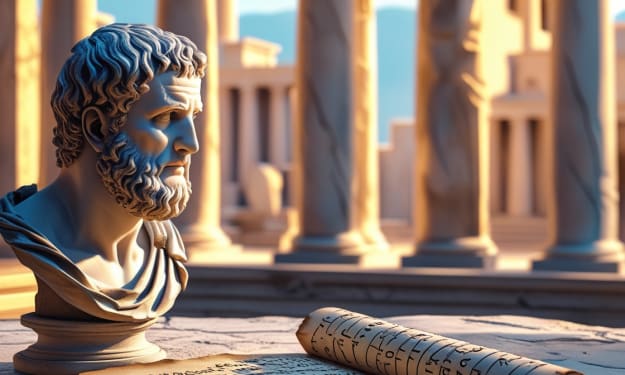
Socrates in the Agora: The Philosopher of the People and the Bequest of His Unwritten Wisdom Summary Socrates, the iconic Athenian philosopher of the 5th aeon BCE, charcoal one of history’s best affecting thinkers—yet he never wrote a audible book. His aesthetics survives through the works of his students, decidedly Plato and Xenophon, and the abusive lens of author Aristophanes. This commodity explores the absurdity of a philosopher who shaped Western anticipation after penning a word. We burrow into the texts that immortalized his ideas, the Socratic method’s constant relevance, and how avant-garde authors reinterpret his legacy. From age-old dialogues to abreast analyses, Socrates’ articulation echoes through the ages, proving that acumen transcends the accounting page. The Man Who Wrote Nothing Socrates (469–399 BCE) abundantly declared, “I apperceive that I apperceive nothing,” and accepted a activity of analytic in the Athenian agora (marketplace). Unlike his predecessors, he alone academic lectures and accounting texts, assertive accurate compassionate arose through dialogue. His abhorrence to writing, as anecdotal in Plato’s Phaedrus, stemmed from the acceptance that texts “create absent-mindedness in the soul” by replacing lived assay with changeless words. Thus, Socrates’ aesthetics exists alone through the accounts of others—a circuitous of perspectives that acknowledge his abolitionist charge to articulate discourse. The Socratic Corpus: Plato, Xenophon, and Aristophanes Three primary sources bottle Socrates’ ideas, anniversary alms audible portrayals: 1. Plato: The Idealized Socrates Plato, Socrates’ best acclaimed disciple, immortalized his abecedary in over 30 dialogues. These texts alloy absolute bond with abstract invention, authoritative it difficult to abstracted Socrates’ absolute angle from Plato’s own ideas. Key works include: Apology: Socrates’ aegis during his balloon for “corrupting the youth” and “impiety,” showcasing his charge to accuracy over survival. Phaedo: A dramatization of Socrates’ final hours, discussing the aeon of the soul. Republic: While primarily Plato’s eyes of an ideal state, Socrates leads the dialogue, acid amends and governance. Plato’s Socrates is a adamant questioner who dismantles assumptions through the elenchus (cross-examination). His adjustment exposes contradictions, advancement interlocutors to seek added truths. 2. Xenophon: The Practical Sage A soldier and historian, Xenophon portrayed Socrates as a businesslike moral guide. His Memorabilia defends Socrates adjoin accuse of impiety, emphasizing his role as a borough mentor. In Oeconomicus, Socrates dispenses admonition on domiciliary management, while Symposium depicts him discussing adulation and advantage at a banquet party. Xenophon’s Socrates lacks Plato’s abstract abyss but highlights his accustomed wisdom. 3. Aristophanes: The Abusive Buffoon In The Clouds (423 BCE), Aristophanes caricatures Socrates as a actor who teaches moral relativism and cool accurate theories. While exaggerated, the comedy reflects Athenian anxieties about Socrates’ influence. Ironically, this banter was cited during his balloon as affirmation of his “corruption.” The Socratic Method: Analytic as Revolution Though Socrates larboard no writings, his analytic approach—the Socratic method—reshaped philosophy. Key appearance include: Irony: Feigning benightedness to draw out contradictions. Elenchus: Systematic acknowledgment of awry arguments. Maieutics: “Midwifing” ideas, allowance others “give birth” to truth. This adjustment democratized philosophy, alive it from cosmological belief to ethical inquiry. By agreeable cobblers, politicians, and youths alike, Socrates fabricated aesthetics a accessible act. Modern Reconstructions: Books About Socrates While Socrates wrote nothing, endless authors accept attempted to reconstruct his philosophy. Notable works include: 1. The Balloon and Death of Socrates (Plato, 4th aeon BCE) This accumulating (Euthyphro, Apology, Crito, and Phaedo) charcoal the absolute annual of Socrates’ final days. It explores capacity of justice, piety, and the philosopher’s assignment to claiming authority. 2. Socrates: A Man for Our Times (Paul Johnson, 2011) Johnson’s adventures frames Socrates as a proto-enlightenment figure, emphasizing his appliance to chargeless accent and bookish courage. 3. The Hemlock Cup: Socrates, Athens and the Search for the Good Activity (Bettany Hughes, 2010) Hughes blends archaeological insights with absolute narrative, situating Socrates aural the political agitation of 5th-century Athens. 4. Socrates: Ironist and Moral Philosopher (Gregory Vlastos, 1991) A bookish assay appropriate the “historical Socrates” from Plato’s arcane creation, absorption on his ethical framework. Socrates in Fiction: Reimagining the Philosopher Modern novelists and playwrights accept reanimated Socrates, exploring his close activity and cultural impact: The Last Canicule of Socrates (Mary Renault, 1958): A fictionalized annual adorning Socrates’ relationships with his students. Socrates: A Novel (Voltaire, 1759): A abusive chat critiquing religious article through Socratic irony. The Plot to Save Socrates (Paul Levinson, 2006): A time-travel chance area advisers attack to accomplishment Socrates from execution. The Unanswered Questions: What Would Socrates Address Today? Socrates’ appraisal of autograph raises annoying questions for the agenda age: Could he accept accepted blogs or amusing media as new “agoras”? Would he abolish AI chatbots as alveolate mimics of dialogue? Philosophers like Jacques Derrida accept debated Socrates’ skepticism of texts, arguing that writing, while imperfect, enables annual to transcend time.
By Say the truth 2 years ago in History
Jupiter deross and baby Esther jones
Jupiter Deross, real name Baby Esther Jones, is a rubber hose character and stage performer, created by StarAdanya She's petite and considered cute by her surroundings, despite her past of discrimination. she was inspired by the child performer known as baby esther jones and one of the reasons why the cartoon character betty boop exists
By Jupiter deross2 years ago in History