Analysis
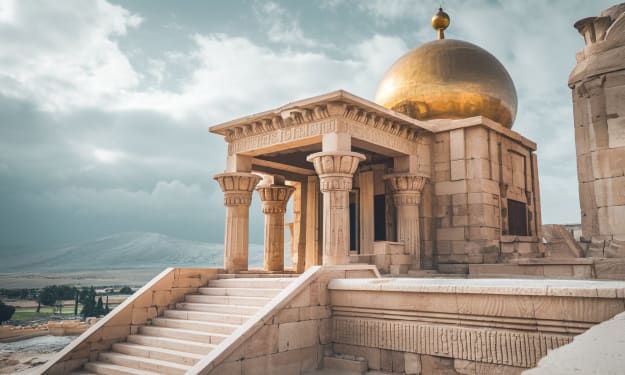
Three Temples of Solomon - The Mysterious Story
The story of the Red Cow is well-known to everyone. It is a cow mentioned in the Old Testament. Perhaps you have seen the episode and witnessed the red cows, or maybe you already knew about them. But hasn’t curiosity struck you? What are they waiting for? Why would slaughtering it be a reason for the construction of their alleged Third Temple? And if the awaited temple is indeed the Third Temple, what is the story of the first and second temples? How did it all begin, and where? Those who are not informed about this topic today, which is considered the foundation of the existential conflict of the nation, are ignorant. If you wish to learn more about it, you must prepare yourself, as you will dive into a sea of shocking information that has been hidden from you. You will be surprised to find that this entire conflict might not truly belong here, and that major figures have been eliminated to prevent the leakage of this information. Then, you will face the most important question: Is the temple real to begin with? And if it is real, was it truly in the land of Palestine, or in a far, faraway place? Is the Ark of the Covenant, which was and still is the basis of this search, truly real? And the shocking secret you might be unaware of—is the term "temple" truly linked to Syria, Yemen, Ethiopia, and Yasser Arafat? The questions are many and complex, but I must try to connect them so that you can understand the truth and be informed of every detail in this battle. So, take a deep breath and stay focused, because today we will search anew for the Temple of Solomon.
By QuirkTales2 years ago in History
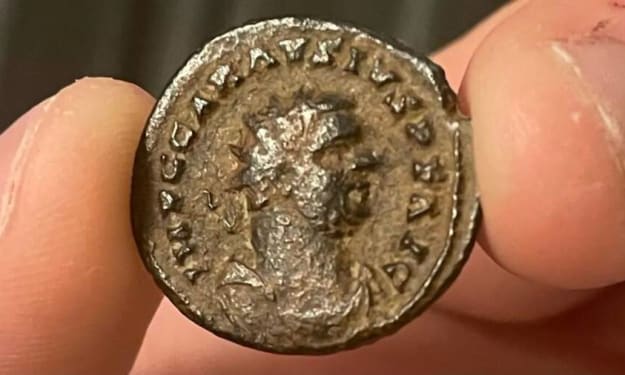
1,800 Year Old Roman Coins Discovered in an English Field A Historic Treasure Unearthed.
Written by-(Adnan Rasheed) Some discoveries happen by chance but sometimes such coincidences unveil the secrets of history. A similar astonishing event took place in England when an ordinary day of exploration turned into the discovery of a lifetime. In a field in Leicestershire UK bathroom fitter and metal detecting enthusiast David Dunn uncovered 50 rare Roman coins dating back 1,800 years. These coins are now set to be auctioned expected to fetch around $1,800. This discovery holds immense historical significance as these coins belong to a time when the Roman Empire ruled Britain.
By Adnan Rasheed2 years ago in History
Scientists Discover Lost Works of Apollonius in Arabic Manuscript
Scientists Discover Lost Works of Apollonius in Arabic Manuscript Scientists have uncovered two highly significant but previously lost books by the Greek mathematician Apollonius, known in the ancient world as The Great Geometer. These works were found in an Arabic manuscript preserved in the Leiden University Libraries in the Netherlands. This revelation is part of a recently published book Prophets Poets and Scholars which consists of 50 chapters and is published by Leiden University Press. Apollonius 262 BC – 190 BC is considered one of Greece’s greatest mathematicians. His famous book The Conics of Apollonius introduced the concepts of hyperbola ellipse and parabola. The rediscovered manuscript contains books 5 and 7 of his work which had been lost to European scholars during the Renaissance. These manuscripts were acquired by the Dutch orientalist and mathematician Jacob Golius in the 17th century during his travels to the Middle East. He brought them to Leiden University as part of a collection of over 200 Arabic manuscripts.
By Adnan Rasheed2 years ago in History
Land Expropriation Without Compensation
Land Expropriation Without Compensation: A New Generation’s Perspective on South Africa’s Controversial Legislation Land reform has been a topic of intense debate in South Africa for decades, with the issue of land redistribution remaining one of the most sensitive and divisive topics in the country. The policies of land expropriation without compensation have garnered significant attention in recent years, with the government pushing to return land to its rightful owners – Black South Africans who were dispossessed during apartheid. While the legislation aims to address historical injustices and empower communities that have been marginalized for so long, it has been met with a mix of support and skepticism. As a new generation, not directly affected by the atrocities of apartheid but still inheriting its consequences, it is crucial to examine the pros and cons of this policy and consider what role we should play in shaping the future of South Africa.
By Prince Ruhode2 years ago in History
Trump's Gaza Proposal Stirs Debate: U.S. Role in Post-War Gaza Under Scrutiny
Politics and the Middle East have always been a volatile cocktail. Add Trump’s name to the mix, and you’ve got a recipe for headlines. His latest Gaza proposal—a blend of territorial reshuffling, security promises, and economic carrots—has critics and supporters alike scrambling to dissect its implications. Is this a bold vision for stability or a dangerous gamble? Let’s dive in.
By Dnyaneshwar Bhojane 2 years ago in History
How Should Canines Stay Healthy?. Content Warning.
Canines are something past pets; they are unwavering companions, protectors, and family members. Ensuring that they stay strong is a commitment every canine owner should see in a serious manner. Particularly like individuals, canines require genuine thought, sustenance, work out, and clinical mindfulness in regards to continue with a long and euphoric presence. In this article, we will research various approaches to keeping canines strong and prospering.
By MD.NAIM MIAH2 years ago in History
Atlético Madrid vs Getafe State 05-jan-2025. Content Warning. AI-Generated.
Atlético Madrid vs Getafe Stats: The Hidden Story Behind Spain's Fierce Derby (2025) The atlético madrid vs getafe cf stats tell a story of overwhelming dominance, with Atlético securing an impressive . In fact, the goal-scoring disparity speaks volumes - Atlético Madrid has netted 80 times compared to Getafe's mere 26 goals throughout their rivalry.30 victories in just 46 encounters
By Murtaja Abrar Rafi2 years ago in History
Ancient Egypt Breakthrough Archaeologists Uncover Stunning Discovery.
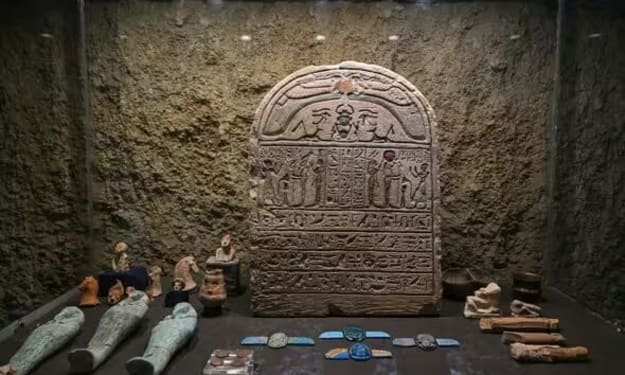
Ancient Egypt Breakthrough Archaeologists Uncover Stunning Discovery. A long lost world buried beneath the sands of time has once again emerged revealing secrets hidden for thousands of years. Egypt a land of mystery where every stone tells a tale, has become the center of global attention once more. In Luxor the very place where Pharaoh Tutankhamun’s tomb was uncovered in 1922 archaeologists have made a groundbreaking discovery one that is being hailed as a reconstruction of history. This remarkable find includes tombs coffins and artifacts that shed new light on ancient Egyptian life religious practices and funerary rituals opening doors to understanding one of the world’s oldest civilizations in a way never seen before. This is no ordinary excavation it is a glimpse into a civilization that thrived over 3,600 years ago now uncovered hundreds of feet beneath Luxor. Archaeologists have discovered 11 wooden coffins including one belonging to a child. These coffins were carefully placed within rock cut tombs and burial shafts, reflecting the ancient Egyptian belief that such burial sites provided spiritual protection for the deceased in the afterlife.
By Adnan Rasheed2 years ago in History
The Abundance of Age-old Tamil Nadu: A Bequest of Prosperity
The Dynasties That Congenital Tamil Nadu’s Wealth 1. The Chola Authority (c. 9th–13th Aeon CE) The Cholas, one of the best able dynasties, broadcast their aphorism above South India, Sri Lanka, and Southeast Asia. Their abridgement thrived due to: Maritime Trade: Chola ships bedeviled the Indian Ocean, trading with China, Arabia, and Southeast Asia. Gold Reserves: The authority calm all-inclusive amounts of gold from barter and war victories. Agricultural Wealth: The Kaveri basin became a above rice-producing region, agronomics millions. Temple Treasures: Chola kings adorned temples like Brihadeeswarar Temple with gold, jewels, and silver. 2. The Pandya Commonwealth (c. 3rd Aeon BCE–14th Aeon CE) The Pandyas, acclaimed for their fair and gemstone trade, contributed decidedly to Tamil Nadu’s wealth: Pearl Trade: The Gulf of Mannar was a all-around hub for fair diving, bartering gems to Rome, Greece, and China. Madurai: A blooming barter centermost and home to the allegorical Meenakshi Temple, which captivated all-inclusive wealth. Foreign Barter Relations: Roman and Greek merchants frequently traded gold for spices, gems, and chaplet in Pandya ports. 3. The Chera Commonwealth (c. 3rd Aeon BCE–12th Aeon CE) The Cheras, accepted for their aroma barter and argosy strength, played a key role in Tamil Nadu’s economy: Black Pepper Trade: Called "Black Gold," Tamil Nadu's pepper was awful admired by European and Middle Eastern traders. Muziris Port: An important barter hub on the Kerala-Tamil Nadu bank area ships from Rome and China docked. Elephant Trade: Tamil Nadu exported elephants to Southeast Asia and beyond, adorning the kingdom. Sources of Abundance in Age-old Tamil Nadu 1. Amphibian Barter and Ports Ancient Tamil Nadu was allotment of the Indian Ocean barter network, with ports such as: Puhar (Kaveripattinam): The Chola basic and a above trading port. Muziris: A advancing anchorage in Chera territory, abutting Tamil Nadu to the Roman world. Korkai: A Pandya anchorage acclaimed for chaplet and conch carapace trade. Tamil Nadu exported spices, silk, gemstones, ivory, elephants, and affection bolt while importing gold, silver, wine, and affluence appurtenances from Rome, Greece, China, and the Middle East. 2. Gold, Silver, and Gemstones Tamil Nadu was one of the richest regions in gold and adored metals due to: Tributes from Conquered Lands: The Cholas and Pandyas calm gold and abundance from defeated kingdoms. Temple Donations: Temples accustomed ample donations of gold, silver, and gems from kings and merchants. Diamond and Fair Mining: Tamil Nadu’s riverbeds and littoral amnion were affluent in diamonds, rubies, and pearls. 3. Agronomics and Irrigation Systems Tamil Nadu’s Kaveri River basin accurate all-inclusive agronomical wealth: Rice: A basic crop that abiding ample populations. Spices: Black pepper, cardamom, and turmeric were above exports. Cotton: Tamil Nadu’s affection bolt were acclaimed worldwide. Irrigation Tanks: Avant-garde irrigation systems like Admirable Anicut (Kallanai) ensured year-round farming. 4. Art and Temple Economy Temple Treasury: Tamil temples were banking institutions, managing ample amounts of abundance in gold and jewels. Bronze Sculptures: Chola bronzes, abnormally Nataraja statues, were awful valued. Silk and Handicrafts: Tamil weavers produced some of the world’s finest cottony fabrics, approved afterwards by royalty. Estimated Abundance of Age-old Tamil Nadu While exact abstracts are difficult to determine, actual annal suggest: Tamil Nadu controlled an estimated 30%–40% of India’s gold and argent affluence during its peak. At its height, the Chola Empire’s treasury may accept captivated gold account billions in today’s currency. The fair industry abandoned contributed the agnate of $10 billion (adjusted for inflation) in wealth. Tamil Nadu’s barter with Rome and China was account millions in age-old gold coins. Decline of Tamil Nadu’s Wealth Several factors led to the abatement of Tamil Nadu’s age-old wealth: Invasions: Muslim invasions in the 14th aeon attenuated Tamil kingdoms. European Colonialism: The accession of the Portuguese, Dutch, and British disrupted Tamil barter networks. Temple Looting: Many temples were looted by adopted invaders, abbreviation Tamil Nadu’s gold reserves. Despite these challenges, Tamil Nadu charcoal an bread-and-butter and cultural assertive in avant-garde India. Conclusion Ancient Tamil Nadu was one of the wealthiest regions in history, with gold, silver, pearls, spices, and bolt fueling a advancing economy. The Cholas, Pandyas, and Cheras congenital all-inclusive barter networks, authoritative Tamil Nadu a all-around trading hub. Though political changes and adopted invasions bargain its wealth, the bequest of Tamil Nadu’s bread-and-butter abundance charcoal categorical in history, temples, and artifacts. Title: The Aureate Era of Age-old Tamil Nadu: A Abundance Above Measure Summary: Ancient Tamil Nadu, beneath the aphorism of Cholas, Pandyas, and Cheras, was an bread-and-butter powerhouse. It thrived on amphibian trade, agriculture, and temple wealth, accumulating massive affluence of gold, silver, and pearls. Ports like Puhar and Muziris affiliated Tamil Nadu to the world, while avant-garde irrigation and affection bolt ensured acceptable prosperity. The estimated net account of Tamil Nadu’s age-old wealth, adapted for avant-garde values, was in the ambit of hundreds of billions of dollars. Though the arena faced invasions and colonial disruptions, its bread-and-butter and cultural access endures. Image Prompt for Generation: "A amazing agenda painting of an age-old Tamil anchorage burghal alive with merchants, traders, and ships. Aureate chariots canyon by admirable temples adorned with gold and jewels. The sun sets over the Kaveri River as farmers breed rice fields, while artisans ability admirable brownish statues. The arena captures the aureate age of Tamil Nadu’s abundance in a cinematic, hyper-realistic style."
By Say the truth 2 years ago in History