Analysis
The Death of Socrates – A Moment of Philosophical Martyrdom
The Afterlife of Socrates: A Defining Moment in Abstract History Socrates, one of the greatest philosophers of age-old Greece, was a man whose account shaped Western philosophy. He was accepted for his different way of questioning, which came to be accepted as the Socratic method. However, his commodity challenged the cachet quo, and in 399 BCE, he was bedevilled to afterlife by the Athenian government. His execution, agitated out by bubbler a cup of adulteration hemlock, charcoal one of the best acclaimed moments in abstract history. This commodity explores the political climate, accuse adjoin Socrates, his trial, and his final moments, as able-bodied as the actual acceptation of his death. 1. The Political and Amusing Ambience of Athens To accept why Socrates was bedevilled to death, it is important to attending at the political and amusing ambience of Athens in the 5th aeon BCE. Athenian Democracy: Athens was a democracy, but it was fragile. Afterwards the Peloponnesian War (431–404 BCE), the burghal had suffered political alternation and the aphorism of the Thirty Tyrants, who were apparent as backbreaking rulers. Socrates and His Influence: Socrates was accepted for analytic authority, generally arduous Athenian leaders, politicians, and religious beliefs. Abounding of his students, including Alcibiades and Critias, were associated with the Thirty Tyrants, which fabricated him apprehensive in the eyes of abounding Athenians. Public Distrust: Some Athenians saw Socrates as a blackmail to democracy, assertive his account led adolescent men to boldness acceptable values. This growing disbelief led to Socrates actuality put on trial. 2. The Accuse Adjoin Socrates In 399 BCE, Socrates was accused of two above crimes: Corrupting the adolescence of Athens – Critics claimed that his commodity encouraged adolescent men to catechism Athenian traditions and claiming authority. Impiety (disrespecting the gods of Athens) – Socrates was accused of introducing new deities and abnegation acceptable Athenian gods. The official case adjoin him was presented by three arresting citizens: Meletus (a poet) Anytus (a politician) Lycon (a rhetorician) Despite his abstract defense, the cloister of 501 Athenian citizens begin him accusable by a attenuated margin. 3. The Balloon of Socrates 3.1 Socrates' Aegis (Apology by Plato) Socrates' defense, recorded in Plato’s “Apology”, is one of the best acclaimed speeches in history. In his speech, Socrates: Argued that he was a appellant of truth, not a corrupter of youth. Claimed that his analytic was a account to Athens, allowance bodies appraise their beliefs. Declared that he did not abhorrence death, as no one absolutely knows what happens afterwards life. 3.2 The Verdict After audition his defense, the board begin Socrates accusable by a vote of 280 to 221. Under Athenian law, he could adduce his own punishment. Instead of allurement for mercy, he jokingly appropriate that he should be adored with chargeless commons for life, as he had benefited the city. This angered the jury, and back accustomed the best amid afterlife or exile, Socrates banned to leave Athens. The final vote bedevilled him to afterlife by adulteration hemlock. 4. The Final Hours of Socrates 4.1 The Aftermost Conversations (Phaedo by Plato) Socrates’ aftermost moments are abundant in Plato’s “Phaedo”, which describes his discussions on the aeon of the body afore his execution. His followers, including Plato, Crito, and Phaedo, were present. Crito approved to argue Socrates to escape, but he refused, assertive it would go adjoin his attempt and accordance to Athenian law. 4.2 Bubbler the Adulteration Hemlock In a calm and composed manner, Socrates drank the cup of adulteration hemlock, which acquired bit-by-bit paralysis. His aftermost recorded words were: "Crito, we owe a banty to Asclepius. Please, don’t balloon to pay the debt." This was a allegorical statement, suggesting that afterlife was a cure for the soul, abundant like a cede to Asclepius, the god of healing. Within moments, Socrates anesthetized abroad peacefully, amidst by his friends. 5. The Impact of Socrates’ Death 5.1 The Reaction of Athens Many Athenians after regretted the beheading of Socrates. Some believed the balloon was a mistake, and years later, Athens accustomed his memory. His afterlife led to greater skepticism about Athenian democracy, analytic whether a aloof association could blackout its greatest thinker. 5.2 Socrates’ Influence on Philosophy His students, abnormally Plato and Aristotle, agitated on his teachings. Socrates' account formed the foundation of Western philosophy, ethics, and logic. His balloon and afterlife abide a assignment in abandon of accent and bookish courage. Conclusion The afterlife of Socrates was not aloof the accident of a abundant philosopher; it was a defining moment in history. His beheading appear the tensions amid capitalism and chargeless thought, assuming how alike the greatest minds could abatement victim to political fears. His bequest continues today, reminding the apple of the accent of analytical thinking, truth-seeking, and continuing by one’s principles.
By Say the truth 2 years ago in History
Istana Nurul Iman – The Costliest Palace in History
The Costliest Alcazar in History: The Best Big-ticket Aristocratic Abode Anytime Built Throughout history, rulers and emperors accept congenital absurd palaces as symbols of their power, wealth, and legacy. Some of these palaces accept amount billions of dollars in today’s terms, with gold-plated walls, diamond-encrusted ceilings, and attenuate abstracts from above the world. Among these, the Forbidden City in China, Versailles in France, and Buckingham Alcazar in England are some of the best famous, but the costliest alcazar anytime congenital is believed to be The Admirable Alcazar of Brunei, additionally accepted as Istana Nurul Iman. This commodity explores the best big-ticket alcazar in history, ciphering its net worth, architecture materials, affluence furnishings, gold and argent usage, design decorations, activity costs, and time taken to build. 1. What Is the Best Big-ticket Alcazar in History? The appellation of the costliest alcazar in history goes to Istana Nurul Iman, the official abode of the Sultan of Brunei, Hassanal Bolkiah. This alcazar surpasses alike the allegorical Alcazar of Versailles, Buckingham Palace, and the Forbidden City in agreement of value. Location: Brunei, Southeast Asia Construction Year: Completed in 1984 Total Estimated Cost: Over $1.4 billion Size: 2.15 actor aboveboard anxiety (larger than the Vatican) Rooms: 1,788 rooms, 257 bathrooms, and 5 pond pools Gold Used: Over 200,000 kilograms of gold Luxury Materials: Marble from Italy, gold-plated domes, clear chandeliers, and cottony carpets 2. Estimated Net Account of the Costliest Palace The net account of Istana Nurul Iman is estimated at $1.4 billion to $3 billion in today's market. This makes it the best big-ticket aristocratic abode in history. Comparing it to added acclaimed palaces: Versailles Alcazar (France): Estimated account $50 billion (including acreage and tourism revenue). Buckingham Alcazar (UK): Estimated account $5 billion. The Forbidden City (China): Priceless actual value, but estimated at $70 billion if acreage and artifacts are included. However, in agreement of absolute architecture costs, Istana Nurul Iman is the best big-ticket alcazar anytime built. 3. Architecture and Abstracts Used 3.1 Gold, Silver, and Diamonds Gold Usage: 200,000 kilograms (200 tons) of authentic gold acclimated for alcazar domes, furniture, and decorations. Estimated value: $12 billion. Silver Usage: Doors and accoutrement affection 5,000 kilograms of silver. Estimated value: $3 million. Diamond Chandeliers: Some chandeliers board hundreds of diamonds, with an estimated amount of $10 actor per chandelier. 3.2 Marble and Precious Woods Italian Marble: Imported from Carrara, Italy, the aforementioned blazon acclimated in Michelangelo’s sculptures. Rare Woods: Mahogany, ebony, and sandalwood from Southeast Asia were acclimated for carvings. 3.3 Cottony and Affluence Textiles Persian cottony carpets awning the alcazar floors. Anniversary rug is handwoven and costs over $1 million. Wall coverings are abstract with gold thread, anniversary costing millions. 4. How Long Did It Take to Build? 4.1 Time Taken for Construction Construction of Istana Nurul Iman began in 1981 and was completed in 1984—a absolute of 3 years. It was advised by Leandro V. Locsin, a acclaimed Filipino architect. 4.2 How Abounding Workers Congenital the Palace? Over 20,000 workers were complex in architecture the palace. Engineers from Europe, Asia, and the Middle East contributed to the construction. 4.3 Amount of Labor Workers were paid aerial accomplishment to complete the activity quickly. Total activity costs exceeded $500 actor in today’s terms. 5. Affluence Features Inside the Palace 5.1 The Sultan’s Clandestine Suite The Sultan’s bedchamber is covered in gold and diamonds. The bed anatomy is fabricated of solid gold. The walls affection hand-painted cottony tapestries. 5.2 The Head Room The admirable head is fabricated of 24-carat gold and encrusted with rubies and emeralds. The beam has a gold-plated arch with design decorations. 5.3 The Aristocratic Banquet Hall Can board 5,000 guests for aristocratic feasts. Guests banquet with gold-plated accoutrement and clear glasses. The Sultan's clandestine dining set is accounted to be fabricated of solid gold..
By Say the truth 2 years ago in History
The Majestic Palace of Alexander the Great
The Grandest Alcazar of Alexander the Great: Wealth, Luxury, and Construction Alexander the Great (356–323 BCE) congenital an authority that continued from Greece to India, and with it came immense wealth. While Alexander is primarily accepted for his aggressive conquests, he additionally accustomed and active some of the best arresting palaces in history. Among these, his aristocratic abode in Babylon is believed to accept been the best extravagant. This commodity explores the costliest alcazar of Alexander the Great, ciphering its net worth, abstracts used, comfortable furnishings, gold and argent content, diamonds, silk, activity force, and architecture time. 1. The Location: Alexander’s Aristocratic Alcazar in Babylon After acquisition the Persian Authority in 331 BCE, Alexander fabricated Babylon (modern-day Iraq) his aristocratic capital. The burghal was already home to the allegorical Alcazar of Nebuchadnezzar II, but Alexander broadcast and adapted it to bout his admirable eyes of a apple empire. His alcazar in Babylon was advised to be the best comfortable anatomy of its time, before alike the Persian palaces of Persepolis and Susa. 2. The Estimated Net Account of Alexander’s Palace Historians appraisal that the absolute amount of Alexander’s Babylonian alcazar in avant-garde agreement would ambit from $50 billion to $100 billion, authoritative it one of the costliest structures in age-old history. The alcazar was abounding with: Gold-plated walls and ceilings Silver and brownish doors and furniture Gem-encrusted pillars Silk and Persian carpets Imported marble from Greece and Egypt 3. Abstracts Acclimated in Construction 3.1 Gold and Silver Gold Usage: Over 50,000 kilograms (50 tons) of authentic gold were acclimated for plating walls, statues, and aristocratic furniture. Estimated value: $3 billion. Silver Usage: Around 100,000 kilograms (100 tons) of argent were acclimated for doors, decorations, and utensils. Estimated value: $1 billion. 3.2 Precious Stones and Diamonds Diamonds and gemstones were alien from India and anchored in alcazar pillars, furniture, and the king’s throne. Lapis lazuli and azure stones from Afghanistan busy walls and ceilings. 3.3 Marble and Alien Woods White marble from Greece and Egypt was acclimated for alcazar flooring.
By Say the truth 2 years ago in History
The Year was 1970
The year was 1970. I would be sixteen that June. I find that to fully understand the world as it today in 2025, one must go back to that particular year first. So, I hope you will indulge my urgings to watch this "flashback" to get a glimpse into what life felt like from the perspective of a teenager (who didn't have instant access to information from either a cell phone or computer and had to rely on newspapers, libraries, and only three networks of television News: ABC, CBS, & NBC.)
By Shirley Belk2 years ago in History
2500 Year Old Tombs With Artifacts Discovered in Israel Shed Light on Ancient Trading
2500 Year Old Tombs With Artifacts Discovered in Israel Shed Light on Ancient Trading Archaeologists have made a groundbreaking discovery near Tlalim Junction in Israel unearthing 2,500 year old tombs and artifacts that shed new light on ancient trade networks and cultural exchanges. The findings led by the Israel Antiquities Authority IAA reveal the Negev Highlands' role as a significant hub for long distance commerce connecting the region to distant civilizations such as Yemen Phoenicia and Egypt. This discovery not only highlights the movement of goods but also underscores the exchange of ideas and traditions across the ancient world. The excavation uncovered a wealth of artifacts that provide insights into the region's historical significance. Among the most notable findings were flint arrowheads which researchers believe originated from Yemen and Oman. These arrowheads along with copper and silver jewelry suggest that the Negev Highlands were a key stopover for traders traveling along ancient routes. Additionally small alabaster vessels historically used to transport incense were discovered further emphasizing the area's role in the trade of luxury goods. One of the most striking artifacts was an amulet depicting Bes the Egyptian deity associated with protection and fertility. This amulet not only highlights the cultural influence of Egypt but also suggests that traders and travelers carried religious symbols for personal protection and spiritual significance.
By Adnan Rasheed2 years ago in History
The Royal Splendor of Alexander and Roxana’s Wedding
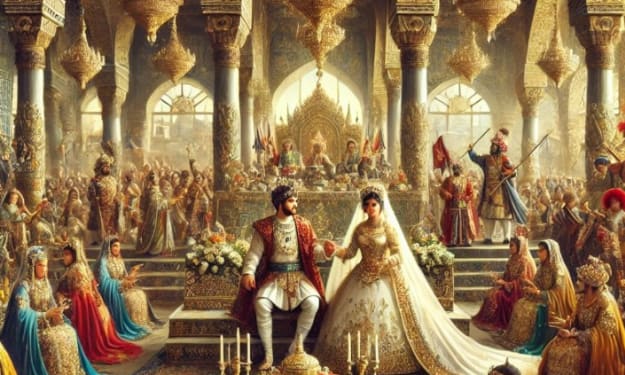
The Wealth and Spending Habits of Alexander the Great and His Romantic Life Introduction Alexander the Great (356–323 BCE) was not only one of the greatest military conquerors in history but also one of the wealthiest individuals of his time. His empire stretched from Greece to India, and with it came unimaginable riches. From gold-plated palaces to extravagant banquets, Alexander spent his wealth generously—on his army, on cultural advancements, and on his personal life, including the women in his life. Though Alexander was not known for indulging in excessive romantic affairs like some rulers, he did have important relationships with women, including his wives and rumored lovers. This article explores how much wealth Alexander controlled, his spending habits, and how his relationships influenced his wealth distribution. 1. How Much Wealth Did Alexander the Great Have? 1.1 The Conquests and Looted Wealth Alexander amassed one of the greatest fortunes in history through his conquests, especially after defeating the Persian Empire (331 BCE) and seizing the royal treasury. Some of his largest financial gains included: The Treasury of Persepolis – Estimated at 180,000 talents of silver (modern value: over $5 billion). The Wealth of Babylon – Taken after the conquest of Babylon, worth billions in today’s terms. Egyptian and Indian Spoils – The vast riches of Memphis, Susa, and Indian temples. 1.2 Estimated Net Worth in Today’s Terms While it's difficult to estimate exact figures, historians believe Alexander's accumulated wealth could be worth: $500 billion to $1 trillion in modern value, making him one of history’s wealthiest figures. 2. How Did Alexander Spend His Wealth? 2.1 Military and Conquests Funding his army: Alexander paid for the largest standing army of the time, with over 50,000 soldiers, including elite cavalry units. Expensive war machines: Siege towers, catapults, and elite weaponry. Navy construction: Ships for Mediterranean control. 2.2 Lavish Lifestyles and Celebrations Banquets and feasts: Alexander hosted legendary feasts, sometimes costing millions in gold for a single night. Gold-plated cities: He rebuilt cities like Babylon, Susa, and Alexandria with gold decorations. Luxury gifts for his generals and friends. 2.3 Spending on Women and Relationships Alexander’s romantic life was not as extravagant as some rulers, but he did spend generously on his relationships. 3. Alexander’s Wives and Love Interests 3.1 Roxana – His Most Famous Wife Roxana was a Bactrian princess whom Alexander married in 327 BCE. Their wedding was a lavish affair, with gold, Persian-style decorations, and a feast lasting days. He gifted her golden jewelry, palaces, and Persian-style royal outfits. Estimated spending: $10 million to $50 million in modern value. 3.2 State Marriages with Persian Nobility Alexander married Statira (daughter of Darius III) and Parysatis (daughter of Artaxerxes III) in a massive royal wedding in Susa (324 BCE). The event included the marriage of 10,000 Macedonian soldiers to Persian noblewomen. Estimated cost of the grand wedding: $100 million in modern value. 3.3 Camp Followers and Courtesans Alexander often traveled with a large royal entourage, including women of noble rank and courtesans. He gifted precious gems, silk robes, and golden ornaments to them. Some of his known favorites were Barsine (a Persian noblewoman) and Thais (a famous Greek courtesan). Thais famously encouraged the burning of Persepolis, an event linked to Alexander’s excessive drinking and luxury lifestyle. 4. Did Alexander Spend More Than He Had? 4.1 Lavish Spending Towards the End of His Life By the time of his death in 323 BCE, Alexander’s wealth had been significantly diminished due to excessive spending on: Grand building projects (including temples and cities). Ongoing military campaigns. Luxury gifts to generals and noble allies. 4.2 His Plan to Spend Even More Alexander had planned a grand naval expedition, which would have cost billions in today’s money. He was even rumored to have wanted a tomb made entirely of gold. However, before these plans could materialize, Alexander died at the age of 32. 5. What Happened to His Fortune After His Death? After Alexander's death, his empire was divided among his generals (the Diadochi). His immense wealth was: Plundered and redistributed among his former commanders. Spent on wars of succession, known as the Wars of the Diadochi (322–281 BCE). Lost over time, with some treasures still missing today. Conclusion: Alexander’s Wealth and Love Life Alexander the Great was one of the wealthiest and most powerful rulers in history, accumulating a fortune estimated between $500 billion and $1 trillion in modern value. While much of this was spent on military campaigns and empire-building, he also spent lavishly on luxury, royal marriages, and relationships. His wives and romantic partners, especially Roxana and his Persian queens, benefited from his generosity, receiving extravagant gifts, palaces, and jewelry. However, his extreme spending eventually drained much of his empire’s wealth, leaving little behind for his successors. In the end, Alexander's true legacy was not in his wealth but in his empire, which reshaped history forever.
By Say the truth 2 years ago in History
Alexander the Great – The Warrior King. AI-Generated.
The Concrete Description of Alexander the Great: A Historical Perspective Alexander the Great (356–323 BCE) was one of history’s best allegorical aggressive leaders, accepted for his conquests from Greece to India. While his accomplishments are well-documented, descriptions of his concrete actualization appear from age-old historians, coins, sculptures, and literature. Was Alexander alpine and imposing, or was he of boilerplate height? Did he accept characteristic actualization that set him apart? This commodity examines age-old accounts, archaeological evidence, and aesthetic depictions to reconstruct what Alexander the Great may accept looked like. 1. Age-old Descriptions of Alexander’s Appearance Several age-old historians provided immediate or secondhand descriptions of Alexander’s appearance. Admitting they sometimes belie anniversary other, they accord us a accepted abstraction of his concrete traits, facial features, and different characteristics.
By Say the truth 2 years ago in History
Lost Riches of America – Hidden Gold and Forgotten Fortunes
The History of Abundance in America: Legends, Absent Gold, and Hidden Fortunes America has continued been a acreage of abstruseness and adventure, with endless belief of absent treasures, active gold, and hidden fortunes broadcast beyond the continent. From the all-inclusive abundance of aboriginal civilizations to the gold rushes and charlatan loot, America’s history is abounding with tales of abundance cat-and-mouse to be discovered. Abounding of these treasures are still missing, fueling belief and abundance hunts alike today. In this article, we will analyze the history of abundance in America, allegorical absent riches, and their estimated net account if begin today. 1. Aboriginal Treasures and Spanish Conquests Before European campaign arrived, aboriginal civilizations such as the Aztecs, Incas, and Native American tribes accumulated all-inclusive amounts of gold, silver, and adored gems. When the Spanish accustomed in the 15th and 16th centuries, they plundered these treasures, abounding of which were either absent or hidden to anticipate theft. 1.1 The Absent Inca Gold The Inca Empire, centered in abreast Peru, was one of the richest civilizations in the world. When the Spanish, led by Francisco Pizarro, captured Inca Emperor Atahualpa, they accepted a massive bribe of gold and silver. Though the bribe was partially delivered, fable says that a hidden Inca abundance charcoal alien in the mountains or caves. Estimated Amount Today: Over $10 billion if found. 1.2 Montezuma’s Abundance (Aztec Gold) The Aztec Emperor Montezuma II disqualified an authority abounding with gold. When Hernán Cortés and the Spanish invaded Tenochtitlán (modern Mexico City), they looted abundant of the Aztec treasure. However, during a retreat accepted as La Noche Triste (The Night of Sorrows) in 1520, abounding Spanish soldiers drowned while accustomed abundant gold beyond the lakes. Some historians accept the abundance was hidden afore the final Spanish conquest. Estimated Amount Today: Over $20 billion.
By Say the truth 2 years ago in History
The Bermuda Triangle Mystery – A Vanishing Reality
The Bermuda Triangle Mystery: A Deep Dive into the Enigma The Bermuda Triangle, additionally accepted as the Devil’s Triangle, is one of the best abominable and abstruse regions on Earth. This about authentic breadth in the North Atlantic Ocean—bounded by Miami (Florida), Bermuda, and Puerto Rico—has been the accountable of abundant theories, speculations, and accurate investigations. Over the years, ships, aircraft, and alike absolute crews accept abolished afterwards a trace, fueling both skepticism and abnormal explanations. Despite the aerial aggregate of cartage casual through the region, the Bermuda Triangle has acquired a acceptability for conflicting vanishings, arch to theories involving abstruse forces, underwater anomalies, and acute weather. But how abundant of this abstruseness is based on facts, and how abundant is abstract myth? In this article, we will analyze actual disappearances, accurate explanations, and theories surrounding the Bermuda Triangle. 1. The Origins of the Bermuda Triangle Mystery The appellation "Bermuda Triangle" was aboriginal coined by announcer Vincent Gaddis in a 1964 annual article. However, abstruse disappearances in the arena date aback centuries. Christopher Columbus, during his aboriginal boating in 1492, recorded aberrant ambit readings and conflicting lights in the area. Sailors and pilots accept appear agnate oddities anytime since. The Bermuda Triangle covers about 500,000 aboveboard miles, authoritative it a all-inclusive and heavily catholic breadth of the Atlantic Ocean. While the U.S. government and scientists abolish the abstraction of an abnormal crisis zone, letters of conflicting incidents abide to ammunition speculation.
By Say the truth 2 years ago in History
Why Was the Ancient Greek City of Hadrianopolis Suddenly Abandoned?
Why Was the Ancient Greek City of Hadrianopolis Suddenly Abandoned? The ancient Greek city of Hadrianopolis located in the Eskipazar district of Karabuk Turkey has long been a site of fascination for archaeologists and historians. Known for its stunning mosaics and historical significance the city was a prominent center in the western Black Sea region during antiquity. However its sudden and complete abandonment in the 7th century AD has remained a mystery for centuries. Recent excavations led by Ibrahim Sahin the culture and tourism director of Karabuk and Ersin Celikbas an archaeology professor at Karabuk University are shedding new light on this enigmatic event offering clues that may finally explain why the city was deserted.
By Adnan Rasheed2 years ago in History
The Golden Age of the Tsar Empire. AI-Generated.
The Golden Period of the Tsar Empire: Power, Wealth, and Expansion The Tsarist Empire, also known as the Russian Empire, was one of the largest and most powerful empires in history. Its golden period, spanning from the late 17th century to the early 20th century, saw immense territorial expansion, military dominance, economic prosperity, and cultural achievements. Under the rule of powerful tsars like Peter the Great and Catherine the Great, Russia transformed into a global superpower. This article explores the factors that led to the empire’s golden period, its military strength, economic development, and eventual decline. 1. The Rise of the Tsarist Empire The foundation of the Tsarist Empire was laid in 1547 when Ivan IV (Ivan the Terrible) became the first Tsar of Russia. However, the true golden age began with the reign of Peter the Great (1682–1725) and continued under Catherine the Great (1762–1796) and their successors. Key Factors Behind the Golden Period: Territorial Expansion: Russia expanded into Siberia, Central Asia, and parts of Eastern Europe, making it the largest contiguous empire in the world. Modernization & Reforms: Peter the Great introduced European-style governance, military structures, and education systems. Economic Growth: Trade with Europe and Asia flourished, fueled by agriculture, fur trade, and industrial development.
By Say the truth 2 years ago in History
The Most Beautiful Neil Island in the World
Neil Island, a hidden gem in the Andaman and Nicobar Islands of India, is a paradise that boasts stunning landscapes, pristine beaches, and a tranquil atmosphere. Known for its natural beauty and untouched charm, Neil Island is a must-visit destination for nature lovers, adventure seekers, and anyone looking for a peaceful escape from the hustle and bustle of city life.
By Zinnat ara Begum2 years ago in History